

A person can be running a company, leading a team, closing deals, answering late-night emails, and still feel privately terrified by one question. What happens if the drinking stops. What happens if the pills stop. What happens if the body reacts in a way that can't be hidden.
For high-performing professionals, that fear usually isn't only about discomfort. It's about exposure, loss of control, and the possibility that getting help will disrupt everything they've spent years building. Many people delay care because they assume detox means a harsh, public, all-or-nothing experience.
That assumption keeps people sick longer than they need to be. A modern detox can be medically managed, highly private, and structured around the practical realities of professional life. With the right clinical setting, detox side effects can be anticipated, monitored, and treated in a way that protects health while preserving dignity, discretion, and as much stability as possible.
Understanding the Need for a Safe Detox
The common executive scenario is easy to recognize. Sleep has become unreliable. Mornings require something to steady the nerves or lift the fog. Evenings require something to come down. Performance may still look strong from the outside, but internally the margin for error keeps shrinking.
At that point, many professionals aren't asking whether there's a problem. They're asking whether they can afford to step away long enough to address it. They worry about boards, clients, staff, family reputation, and the practical consequences of becoming temporarily unavailable.
Why successful people often wait too long
High achievers are often rewarded for endurance. They've solved complex problems, carried pressure well, and learned to perform under strain. That history can make withdrawal risk easy to underestimate.
Detox side effects don't respond to discipline the way a demanding quarter or difficult negotiation might. The body doesn't care how senior someone is, how intelligent they are, or how much responsibility they carry. Once physical dependence is present, stopping suddenly can trigger a medical process that needs oversight.
Seeking detox isn't a collapse of standards. It's often the first moment a person applies the same seriousness to health that they already apply to business risk.
Many professionals also hesitate because they picture a cold, impersonal environment with little privacy and no ability to stay in touch. That image is outdated. High-end treatment settings can provide private accommodations, discreet admissions, and clinically appropriate support for limited ongoing contact with work so that health care doesn't feel like professional erasure.
Safe detox is a strategic decision
The actual decision isn't whether discomfort can be tolerated. It's whether a person wants to manage predictable medical risk in the safest possible environment.
A safe detox matters for several reasons:
- Medical protection: Withdrawal can intensify quickly, especially in the early phase after stopping use.
- Comfort management: Symptom relief can make the process humane rather than punishing.
- Privacy: Confidential care reduces the fear of unnecessary exposure.
- Continuity: For some professionals, carefully structured access to phones or laptops lowers the barrier to entering treatment at all.
A well-run luxury detox program doesn't promise a symptom-free experience. It offers something more credible. It reduces chaos, lowers risk, and creates the conditions for stabilization without forcing a person to choose between health and identity.
The Science Behind Withdrawal Symptoms
The word detox is often used as if the body is “flushing toxins.” That isn't the best way to understand detox side effects in addiction care. In clinical reality, the symptoms usually come from withdrawal, meaning the brain and body have adapted to the presence of a substance and now have to recalibrate when that substance is reduced or stopped.
The body is recalibrating, not “cleansing”
A useful analogy is an engine that has been tuned around one fuel source for a long time. Remove that fuel abruptly, and the engine doesn't instantly run clean. It misfires, surges, and struggles while its systems try to reset.
That's what withdrawal can feel like. The nervous system has adjusted to alcohol, opioids, benzodiazepines, or another substance. When the substance is no longer present, the body can swing into overactivity, instability, or distress.
This is different from the commercial wellness version of detox. The National Center for Complementary and Integrative Health on detoxes and cleanses notes that some detox programs use laxatives, which can cause diarrhea, and that acute diarrhea can lead to dehydration and malabsorption. It also warns that drinking large quantities of water or herbal tea while not eating for days can cause dangerous electrolyte imbalances. In other words, some side effects blamed on “detox” come from the method itself, not from any proven toxin removal process.
Physical dependence and psychological dependence
These two ideas overlap, but they aren't identical.
Physical dependence means the body has adapted biologically. When use stops, symptoms may appear because the nervous system is trying to regain balance.
Psychological dependence involves cravings, compulsive patterns, anxiety about stopping, and the emotional role the substance has come to play. A professional might depend on alcohol to slow racing thoughts at night or on sedatives to get through travel, meetings, or public speaking.
Both matter in treatment. Physical dependence shapes the immediate medical plan. Psychological dependence shapes relapse risk, motivation, and the emotional experience of detox.
What symptoms can look like
Common withdrawal effects include cravings, sleep problems, headaches, nausea, sweating, tremors, and mood changes, while severe cases can escalate to psychosis, confusion, disorientation, and seizures, as outlined by Healthdirect's overview of addiction withdrawal.
Clinical reality: Detox side effects are often predictable in pattern, even when they feel frightening in the moment.
That predictability is one reason professional monitoring helps so much. Clinicians aren't guessing whether symptoms mean weakness or poor coping. They're reading a physiologic process and responding to it.
Withdrawal Timelines for Common Substances
A senior executive can leave the office on Friday believing a quiet weekend off will solve the problem, then hit the first dangerous stretch of withdrawal before Monday arrives. Timing is not a detail in detox planning. It shapes safety, comfort, privacy, and whether someone can protect work responsibilities while beginning treatment.
The exact course depends on the substance, dose, duration of use, general health, and whether other medications or alcohol are involved. In clinical practice, patterns are still predictable enough to plan around. That matters for high-performing professionals who need more than a list of symptoms. They need to know when to clear their schedule, when symptoms may interfere with sleep or decision-making, and when medical observation matters most.
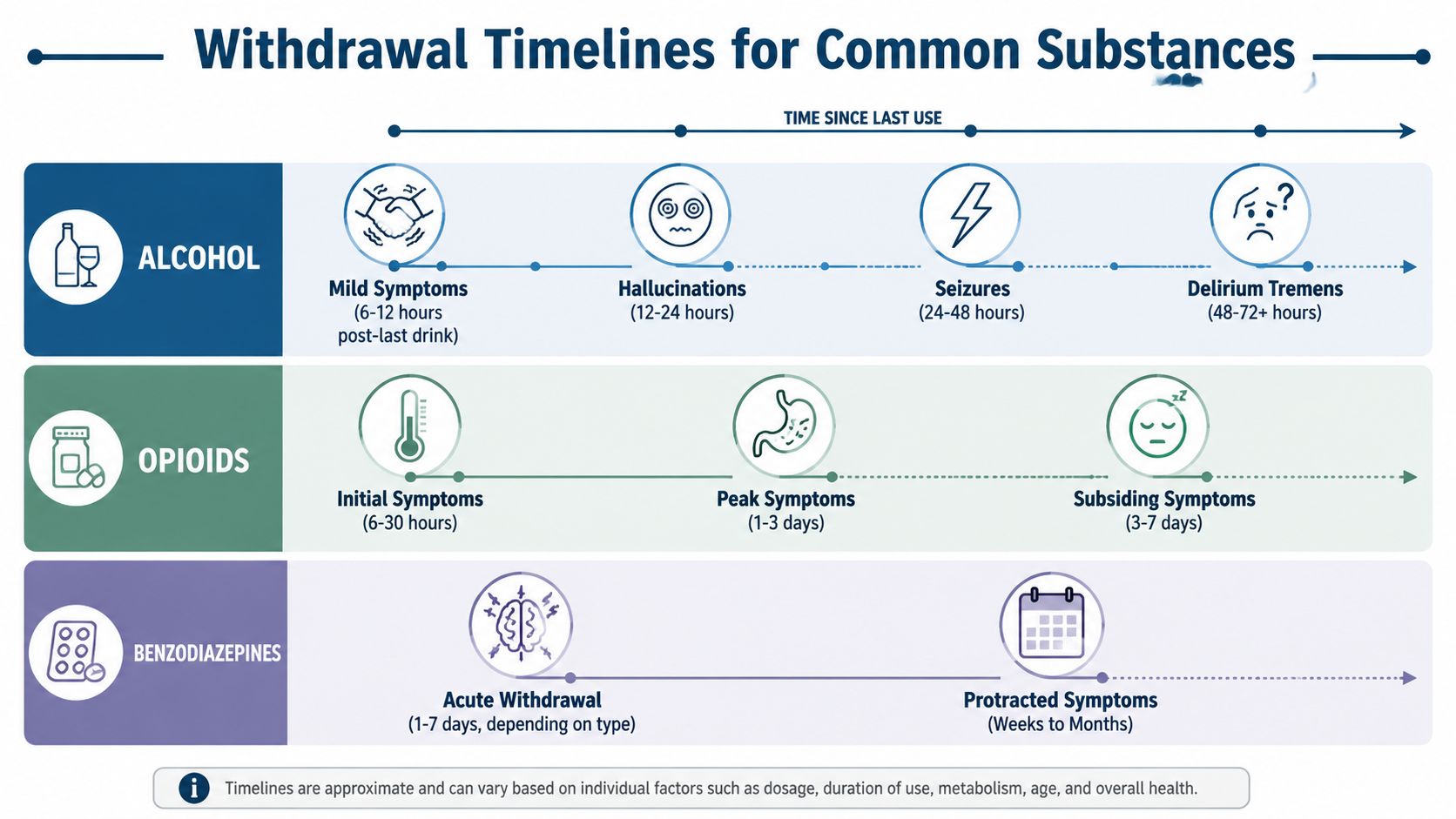
Alcohol withdrawal
Alcohol withdrawal often becomes serious early. That is one reason people underestimate it.
Symptoms may begin within hours of the last drink and can build quickly over the first couple of days. The early phase often includes anxiety, tremor, sweating, nausea, restlessness, and insomnia. In some cases, the picture escalates to hallucinations, confusion, or seizures. The risk window can open before a person has accepted that detox is underway.
For a professional trying to keep appearances intact, this creates a poor margin for error. A person may plan to answer email from home, attend a virtual meeting, or just stay in bed and wait it out. If symptoms intensify, that plan falls apart fast. Alcohol detox is often safest when the first days are medically managed in a setting that can respond immediately if the course worsens.
Opioid withdrawal
Opioid withdrawal is usually less defined by dramatic medical events and more by intense physical misery, strong craving, and rapid erosion of judgment. Patients often describe it as impossible to ignore. Body aches, sweating, chills, stomach upset, diarrhea, agitation, and insomnia can make even basic tasks feel unmanageable.
That has practical consequences for professionals. Even if a person is technically able to sit through a call or open a laptop, concentration drops, irritability rises, and the urge to use again can become the dominant priority. In a well-run detox program, the goal is not merely to wait for the body to adjust. The goal is to reduce distress, maintain hydration and sleep as much as possible, and lower the chance of impulsive relapse during the hardest stretch.
For readers looking at the broader public health context, Integrative Psychiatry of America on opioid trends provides useful background. At the bedside, the immediate issue is simpler. People need stabilization, comfort, and enough support to get through the period when cravings are loudest.
Benzodiazepine withdrawal
Benzodiazepine withdrawal usually requires a longer view. This is the timeline that surprises many executives, physicians, attorneys, and other high-achieving adults who have come to rely on medications like Xanax, Ativan, or Valium for sleep, travel, or performance-related anxiety.
Symptoms can emerge unevenly and may include rebound anxiety, insomnia, tremor, panic, sensory sensitivity, and in severe cases, seizures or significant confusion. The course is often longer than alcohol or opioid detox, especially when use has been regular or prolonged. Rushing the process can make symptoms harder to control and can create unnecessary medical risk.
Families and professionals who want a closer look at the pacing involved can review how long Xanax withdrawal lasts. In many cases, careful tapering and close observation are what protect both safety and functioning.
A planning view for busy professionals
| Substance | Practical planning concern | Why the timeline matters |
|---|---|---|
| Alcohol | Early instability | Serious complications can appear quickly after stopping |
| Opioids | Intense discomfort and craving | Distress can overwhelm judgment and disrupt work almost immediately |
| Benzodiazepines | Longer, less predictable course | Care often needs a slower schedule and closer symptom tracking |
A luxury detox setting does not shorten every timeline. It improves how those days are handled. For professionals, that trade-off matters. The body still goes through withdrawal, but the process can be quieter, safer, and far less disruptive when clinicians plan around the actual timeline instead of hoping symptoms stay mild.
The Critical Role of Medically Supervised Detox
A common executive scenario looks like this. Someone decides to stop over a long weekend, keeps the plan private, and expects discipline to carry them through. By the second night, sleep disappears, anxiety surges, blood pressure climbs, and the urge to drink or use again starts to feel less like a choice and more like a way to stop the distress.
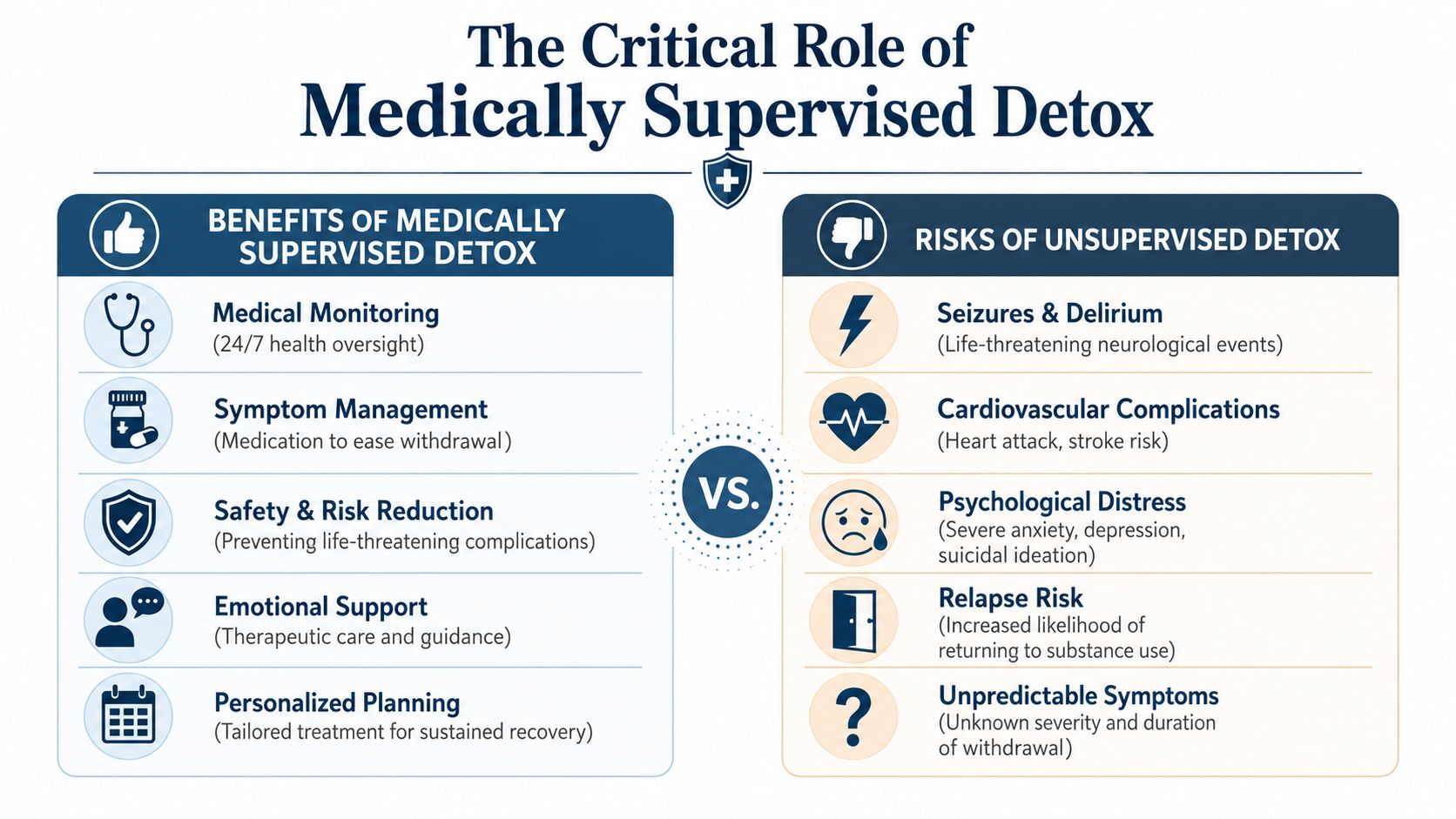
That is why detox needs medical supervision. Withdrawal is not a test of willpower. It is a shifting clinical process that can change quickly, especially with alcohol, benzodiazepines, and heavy or prolonged substance use.
What supervision actually does
In practice, supervision means a clinician is not just tracking whether a person feels bad. The team is reading patterns. Heart rate, blood pressure, hydration, tremor, orientation, agitation, nausea, sleep loss, and mental status all matter because the combination tells us whether someone is stabilizing or moving toward a dangerous complication.
Medication can play an important role, but timing and fit matter. The right medication, given at the right point, can lower risk, ease suffering, and help a person stay in treatment long enough to get through the acute phase safely. The wrong setting leaves too much to guesswork.
Good detox care also protects judgment. That matters for professionals who are used to solving problems alone. Withdrawal can distort decision-making fast. A person may minimize symptoms, overestimate their ability to work through them, or leave care too early because they feel pressure to get back online.
Strong medical detox programs provide:
- Continuous clinical observation: Changes are caught before they become crises.
- Symptom-based medication support: Care is adjusted to what the body is doing, not to a fixed script.
- Assessment of psychiatric and medical factors: Anxiety, depression, dehydration, blood pressure problems, and sleep disruption affect the detox plan.
- A controlled environment: Fewer triggers, fewer opportunities to abandon care in a moment of panic, and more room to stabilize with privacy.
What home detox misses
Unsupervised detox often breaks down on comfort before it breaks down on safety. Nausea, sweating, panic, restlessness, chills, shakiness, and insomnia can become severe enough that returning to substance use feels like immediate symptom management. That is one reason relapse during detox is so common outside structured care.
The medical risks are more serious with certain substances, but even a "milder" withdrawal can derail functioning. A dehydrated, sleep-deprived executive who is trying to answer emails, join calls, or make financial decisions is not operating at full capacity. In my experience, that is where private self-management creates the very professional disruption people hoped to avoid.
For professionals who need a clear picture of what structured care includes, medical detox treatment at Reflections shows how supervised stabilization is handled in a confidential clinical setting.
Why professionals benefit from higher-touch detox
High-achieving people usually tolerate discomfort well. That strength can become a liability in withdrawal. They delay care, conceal symptoms, and try to preserve normal output while their nervous system is becoming less stable.
A well-run, medically supervised detox reduces disruption in concrete ways. Symptoms are treated earlier. Sleep has a better chance of returning. Anxiety is managed instead of allowed to spiral. If limited work contact is clinically appropriate, it can be planned rather than improvised in the middle of a crisis.
Privacy matters here too. The safest option is often the most discreet one. A contained detox admission is far less visible than an emergency room visit, a missed board meeting, a driving incident, or a collapse in front of colleagues or family. For executives, physicians, attorneys, founders, and other professionals with real reputational exposure, that trade-off is often the deciding factor.
The Executive Detox Experience at Reflections
For a professional accustomed to privacy, pace, and high standards, treatment environment matters. It's not a superficial concern. It shapes whether a person enters care early enough to benefit from it.
A well-designed executive detox experience is quiet, contained, and respectful from the first point of contact. Admission is handled discreetly. The setting feels residential rather than institutional. The room is private. The tone is clinical without being cold.
What stabilization should feel like
The first priority is assessment. The clinical team evaluates substance use, current symptoms, medical and psychiatric history, sleep disruption, anxiety level, and co-occurring mental health concerns. That creates the basis for an individualized detox plan rather than a one-size-fits-all schedule.
For executives and other high-functioning professionals, that plan also has to reflect reality. Some residents need to preserve limited contact with key colleagues, urgent legal matters, business transitions, or family responsibilities. In a high-end setting, clinically appropriate access to electronics can reduce panic and remove a major barrier to seeking help.

The luxury difference is practical, not cosmetic
People often hear the word luxury and assume it means decorative extras. In detox, the more important meaning is controlled comfort.
That usually includes:
- Private rooms: Rest matters, and privacy lowers stress during a vulnerable period.
- Calm surroundings: Noise, exposure, and chaos increase agitation.
- Highly credentialed clinicians: Complex withdrawal and dual-diagnosis presentations require expert judgment.
- Respect for professional identity: A person doesn't stop being a leader, founder, physician, attorney, or executive when they enter treatment.
Privacy supports honesty. When people feel protected, they usually disclose substance use patterns, mental health symptoms, and relapse triggers more accurately.
The best executive detox experience also avoids another common mistake. It doesn't treat stabilization as the finish line. Withdrawal management is only the first task. Once the body begins to settle, the treatment team can start addressing the drivers underneath the substance use, including trauma, anxiety, depression, burnout, grief, and chronic performance pressure.
That transition is where many professionals begin to feel something unexpected. Relief. Not because detox is easy, but because it's finally being handled properly.
Holistic Strategies for Managing Discomfort
Medication is often necessary in detox. It isn't the whole answer. Detox side effects affect the body, mood, sleep, concentration, and sense of control. A more complete approach addresses all of those at once.
Comfort improves when the whole person is treated
Withdrawal often strips away the substance a person has been using to regulate stress. That can leave anxiety, irritability, fear, and racing thoughts exposed. In professionals with co-occurring mental health concerns, those symptoms may feel as disruptive as the physical ones.
That's why detox care works better when it includes dual-diagnosis thinking from the start. If a person is withdrawing and also struggling with panic, depression, trauma symptoms, or obsessive overthinking, both layers need attention. For readers who want a simple outside resource on that mental loop, this discussion of coping with overthinking and anxiety offers practical perspective.
Supportive interventions that actually help
Holistic care should be grounded and useful, not theatrical. The most helpful strategies are often the most straightforward.
- Nutrition support: Regular, well-prepared meals help restore stability when appetite has been poor or erratic.
- Sleep protection: Quiet routines, lower stimulation, and clinical support around insomnia can reduce one of the most distressing parts of withdrawal.
- Psychotherapy: Brief, focused sessions can help patients tolerate fear, shame, and uncertainty without immediately acting on them.
- Mindfulness and somatic work: These approaches can reduce autonomic arousal and help a person feel less trapped inside physical discomfort.
- Gentle movement and body-based care: When introduced appropriately, they can ease tension and improve regulation.
A broader view of these supportive modalities appears in holistic wellness programs, where the emphasis is on integrating physical comfort, emotional regulation, and long-term recovery planning.
What doesn't work well
Extreme restriction, unsupervised fasting, improvised supplement stacks, and heroic self-management usually make detox harder. They often increase uncertainty at the exact moment a person needs more structure.
The goal isn't to impress anyone with toughness. It's to reduce suffering enough that the patient can remain engaged, think clearly, and move into the next phase of treatment with some psychological steadiness.
Recognizing Emergencies and Planning Your Next Steps
A senior executive can look composed on a video call in the morning and be medically unstable by evening. That shift is one reason I advise patients and families to stop treating withdrawal as a problem to monitor privately once warning signs appear.
Some detox symptoms are uncomfortable but expected. Others signal a medical emergency and need immediate care, especially with alcohol, benzodiazepines, or heavy polysubstance use.
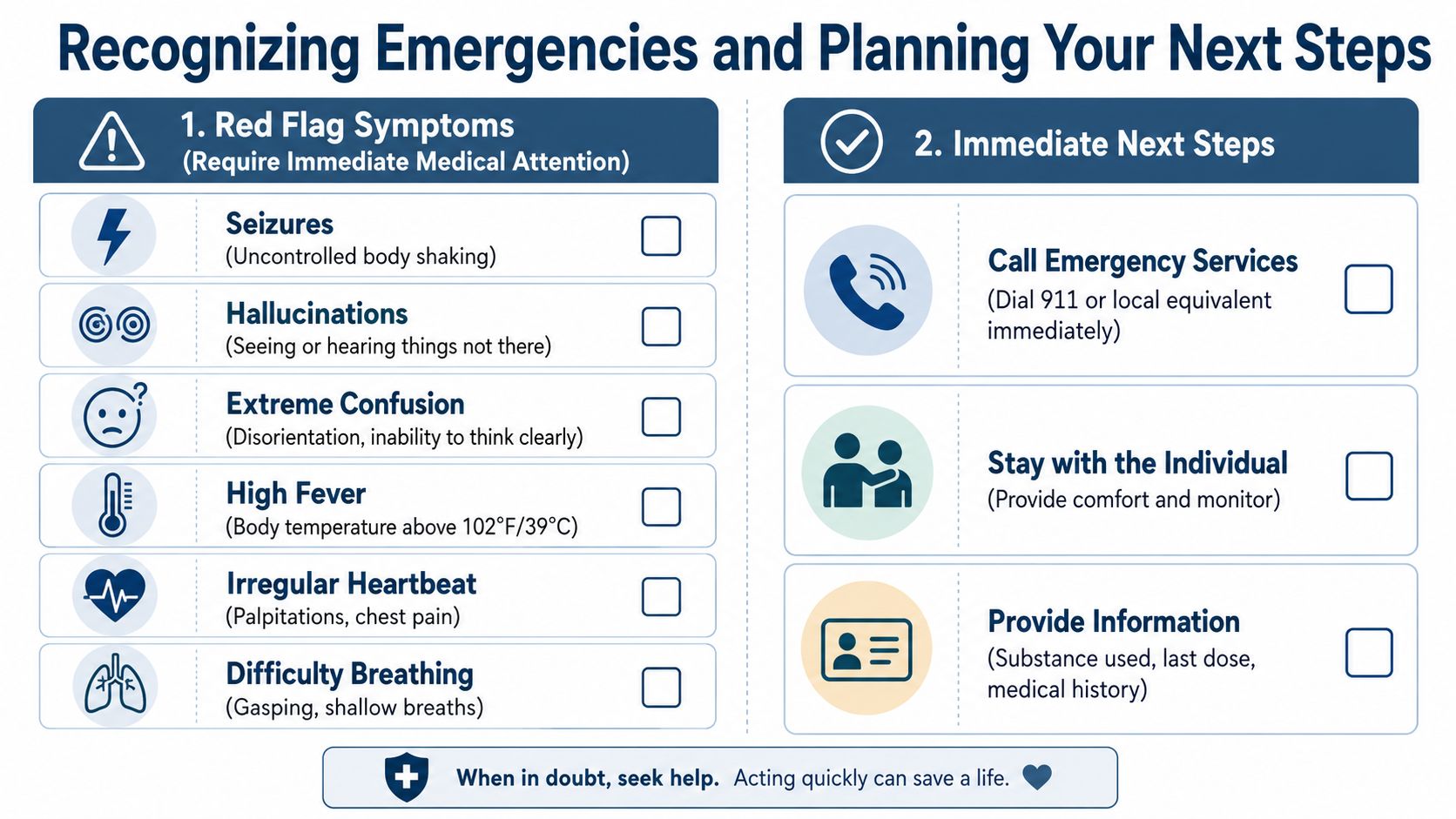
Red flags that require immediate emergency care
Call emergency services right away if a person in withdrawal develops any of the following:
- Seizures: Any convulsive episode or loss of consciousness needs emergency evaluation.
- Hallucinations: Seeing, hearing, or strongly believing things that are not present can indicate dangerous escalation.
- Severe confusion: Disorientation, inability to recognize familiar people or surroundings, or marked agitation should not be watched at home.
- Difficulty breathing: Slow, shallow, labored, or interrupted breathing requires urgent help.
- Chest pain or irregular heartbeat: These symptoms raise concern for cardiac stress or another acute complication.
- High fever: Fever during withdrawal can point to a serious medical problem, not just routine discomfort.
Stay with the person. Keep the setting quiet and reduce stimulation. If possible, tell responders what was used, when it was last used, what medications are prescribed, and whether there is any history of seizures, heart disease, or psychiatric instability.
Planning the next step after the crisis
Once the immediate danger is addressed, the next decision should be practical and specific. For professionals, that means asking not only whether a detox program is medically sound, but whether it can protect privacy, preserve dignity, and limit unnecessary disruption to work responsibilities.
The right questions are straightforward:
- What level of medical monitoring is available during the first several days?
- How does the team manage anxiety, insomnia, panic, or other psychiatric symptoms at admission?
- How is confidentiality handled for executives, physicians, attorneys, founders, or public-facing clients?
- Are private rooms available?
- Can patients keep limited, clinically appropriate access to a phone or laptop when business continuity matters?
Those details matter. A patient is more likely to accept help when treatment feels medically serious and professionally workable.
Families and colleagues can help by staying calm, gathering medication lists, and avoiding confrontational debates during a crisis. The goal is to get the person into care in the safest, fastest way possible.
After acute withdrawal settles, sleep often remains disrupted longer than patients expect. That affects mood, judgment, and work capacity. For a simple consumer-friendly supplement to clinical guidance, these insights for truly restorative sleep may be useful.
A dramatic collapse is not required before someone qualifies for help. Early action is often the more discreet option, the safer option, and the one that gives a high-functioning professional the best chance of stabilizing without a wider personal or career fallout.
If detox side effects have become a private fear, confidential help is available. Reflections provides California-licensed, Joint Commission-accredited luxury dual-diagnosis care with private rooms, clinically managed detox, and appropriate access to electronics for professionals who need to stay connected while getting well. The first conversation can be discreet, practical, and focused on what safe next steps look like.