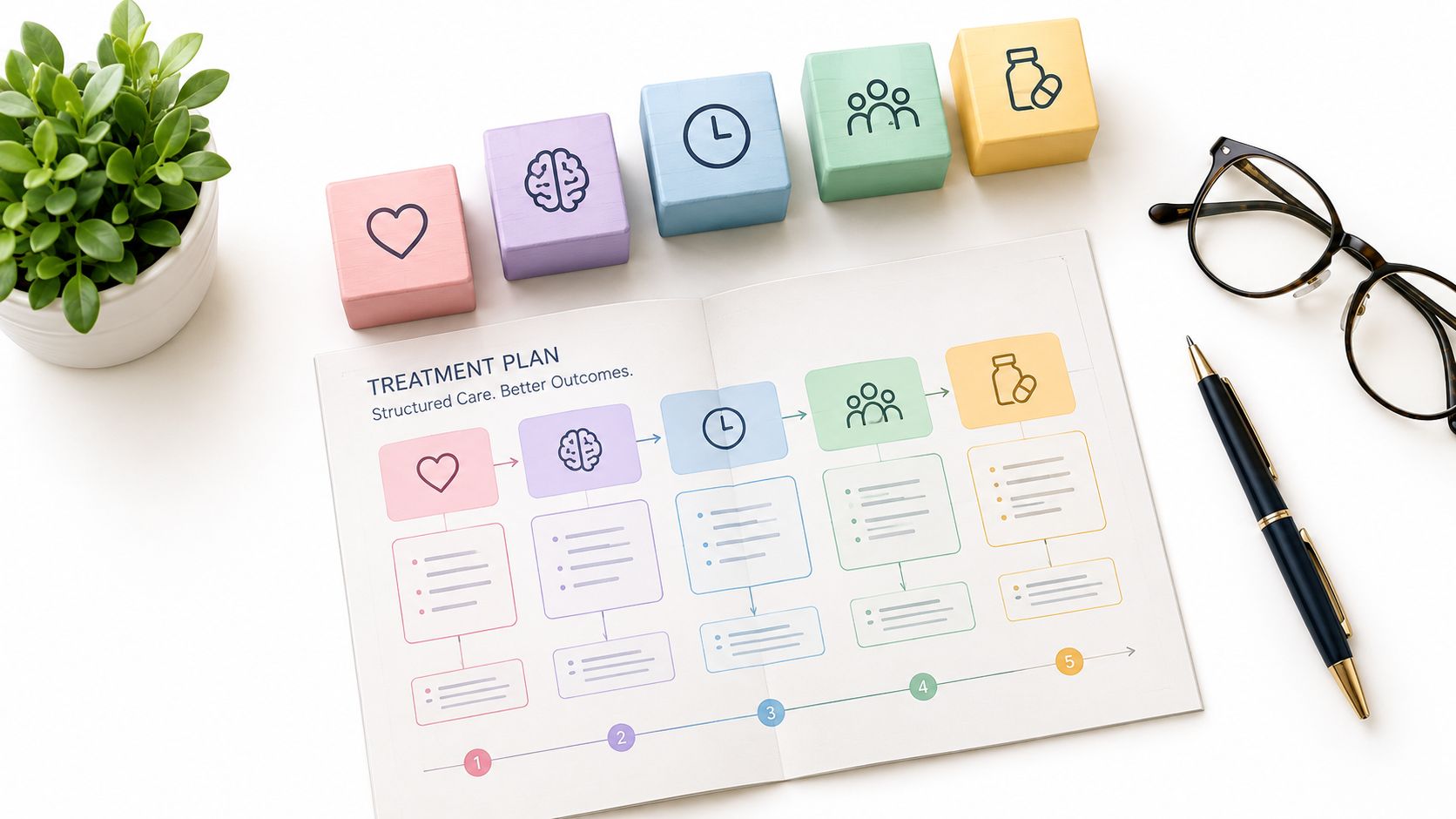

Understanding private rehab with personalized therapy plans
If you are considering private rehab with personalized therapy plans, you are likely looking for more than a standard 30 day program. You may have already tried traditional treatment, gained some tools, yet still feel like the deeper issues have not been addressed.
Private rehab with personalized therapy plans focuses on you as an individual rather than fitting you into a preset track. Your history, genetics, mental health, trauma, relationships, and goals become the basis for care. This approach aligns closely with emerging research that shows addiction and mental health outcomes improve when treatment is tailored to a person’s unique profile instead of relying on one size fits all methods.
In practice, this means high frequency one on one sessions, a flexible schedule that adjusts as your needs change, and close collaboration between you and a multidisciplinary clinical team. If you want treatment that genuinely meets you where you are, understanding how these private, customized programs work can help you decide if they are the right fit.
How personalized rehab differs from standard programs
Most traditional or state funded rehab programs must serve many people with limited resources. As a result, they often rely on standardized curricula, larger groups, and less individual attention. Private rehab with personalized therapy plans is structured very differently.
Individualized assessment and treatment mapping
Your experience starts with a comprehensive intake assessment. In high quality private facilities, this usually includes:
- Detailed substance use and mental health history
- Medical evaluation and lab work
- Trauma history and family dynamics
- Cognitive, emotional, and personality assessments
- Review of prior treatment attempts and what has or has not worked
Private centers like Live Again Detox use this intake process to build individualized detox and treatment plans, instead of relying on generic protocols that are common in resource constrained public programs.
From this assessment, your team creates a map for care, including how many individual sessions you will receive each week, which therapies will be emphasized, and how your mental health, physical health, and substance use will be addressed together. Programs such as an individualized addiction treatment program or custom dual diagnosis treatment center are built precisely this way.
Higher intensity of one on one therapy
In a traditional rehab, you might see a therapist once per week alongside multiple large group sessions. In a therapy focused private program, you typically have multiple individual sessions each week, often daily or close to it. This can take the form of a rehab with multiple individual therapy sessions or an intensive individual therapy rehab program.
This higher frequency allows you to:
- Move beyond surface level symptom management
- Process complex trauma and long standing patterns in real time
- Adjust coping strategies quickly as new issues emerge
- Work in depth on specific themes, such as perfectionism, shame, or relationship patterns
Research supports this type of individualized, evidence based approach. Personalized plans that include tailored therapy modalities, medication management, and continuous adjustment are associated with better engagement and long term sobriety.
Smaller caseloads and more access to staff
Private facilities typically keep client caseloads lower. For example, Live Again Detox notes that a lower client to staff ratio allows closer medical monitoring and more one on one attention during detox.
This structure continues into the treatment phase. Smaller caseloads mean your therapist and medical team can truly know you, track subtle changes, and respond quickly if your mood, anxiety, or cravings shift. For individuals with complex dual diagnosis presentations, this level of attention can be essential.
Why personalization matters for dual diagnosis and complex cases
If you are dealing with both substance use and mental health challenges, a generic model often falls short. Personalized rehab directly addresses this gap.
Integrating mental health and addiction care
Dual diagnosis is the rule rather than the exception in private rehab with personalized therapy plans. Personalized programs integrate:
- Psychiatric evaluation and medication management
- Individual psychotherapy targeting mood, anxiety, trauma, or personality factors
- Addiction focused therapies to address cravings, triggers, and relapse risk
- Lifestyle, sleep, nutrition, and physical health support
American Addiction Centers notes that successful addiction treatment requires personalized, evidence based plans delivered by medical professionals, and that these plans must be continuously evaluated and modified to meet evolving needs.
If you have been through standard programs that treated your depression or trauma as secondary, a dual diagnosis treatment with daily therapy sessions or high acuity mental health treatment program can feel fundamentally different. Mental health is central, not an afterthought.
Addressing root causes, not just symptoms
You may already know that substance use has not been the core problem. It may be how you have coped with:
- Early attachment injuries
- Chronic stress and burnout
- Complex or developmental trauma
- Perfectionism and achievement pressures
- Deep seated shame, grief, or unresolved losses
Personalized programs are intentionally built as therapy focused rehab for root cause healing. An intensive psychotherapy rehab program or intensive trauma therapy residential program gives you the time and clinical depth required to unpack and resolve these layers, instead of simply teaching skills to avoid relapse.
Research underscores this direction. Personalized care that targets individual histories, environments, and psychological patterns improves outcomes and reduces relapse risk by tailoring coping strategies to your specific triggers and stressors.
Core elements of private rehab with personalized therapy plans
Although every high end private center will have its own model, most share a set of core elements when they commit to a personalized approach.
Comprehensive, collaborative treatment planning
Your plan is not a static document created once and forgotten. Instead, you and your team revisit and adjust it regularly as therapy uncovers new information or as your symptoms change.
Treatment planning usually includes:
- Clear, jointly defined goals for both mental health and substance use
- Specific therapy modalities chosen for your profile, such as CBT, EMDR, schema therapy, or somatic work
- A plan for addressing family and relational dynamics
- Medical and psychiatric strategies, including medication decisions if needed
- A structured daily schedule that balances intensity with integration time
Facilities like The Dune East Hampton describe this process as beginning with in depth assessments, followed by collaboratively setting goals that can adapt throughout recovery. This dynamic approach is especially important if your presentation is complex or your life circumstances shift during treatment.
Tailored mix of therapies and modalities
Because your plan is individualized, the blend of therapies is not fixed. It may include:
- Evidence based approaches such as CBT, DBT, motivational interviewing, and trauma focused therapies
- Family therapy to repair or clarify relationships
- Creative or experiential therapies like art, music, or movement work
- Holistic elements such as yoga, mindfulness, and body based regulation skills
Private programs have more freedom to update and refine their therapeutic offerings. Duffy’s Rehab notes that private centers often provide a broader array of therapies and holistic options, and that they update and tweak programs more frequently than public facilities.
In a customized mental health and addiction treatment setting, your team uses this flexibility to keep your plan aligned with what is most effective for you rather than what is easiest to schedule.
Multiple individual sessions per week
High frequency one on one therapy is one of the most defining features of these programs. Instead of relying mostly on groups, you receive intensive individual time in a setting like an individual therapy focused residential program.
This is particularly valuable if you:
- Prefer privacy and find large groups overwhelming or unhelpful
- Have high stakes professional or personal concerns you do not want to unpack in groups
- Need very targeted work on trauma or specific psychological themes
- Have not progressed in lower intensity models despite motivation
Programs like Gateway Rehab report that personalized treatment plans, which include the use of evidence based therapies and Medication Assisted Treatment as appropriate, are associated with 40 to 60 percent of participants maintaining long term recovery, higher than generalized approaches in similar populations.
Deep trauma and attachment work
If trauma, attachment injuries, or complex grief are part of your story, you will likely need significant dedicated time for processing. A deep trauma healing residential treatment model or intensive trauma track lets you move beyond stabilization and into restructuring long standing patterns.
Personalized addiction medicine research points to matching therapy types to individual neurocognitive profiles and histories as a promising way to improve outcomes, especially around trauma and emotional regulation. In practice, that means not everyone receives the same trauma protocol. Instead, your past, your nervous system, and your preferences shape the approach.
Medical care, detox, and medication in personalized rehab
If you are entering treatment with active substance use, you may need detox and ongoing medical or psychiatric care. Private centers with personalized plans usually integrate these services closely with therapy.
Medically supervised detox in a private setting
Private inpatient facilities such as Live Again Detox provide 24/7 medically supervised detox with a lower client to staff ratio, which allows for closer monitoring and more one on one support during this vulnerable phase.
Personalization here includes:
- Tailoring detox protocols to your substance use history and physical health
- Adjusting medications based on your response in real time
- Managing co occurring medical or psychiatric issues during withdrawal
- Integrating early supportive therapy, not just symptom management
Compared to state funded programs that must lean on standardized detox protocols because of limited resources, private detox environments can respond with more nuance to your specific needs.
Medication assisted and psychiatric treatment
For opioid, alcohol, and certain other substance use disorders, Medication Assisted Treatment (MAT) can greatly reduce cravings and relapse risk when combined with therapy. American Addiction Centers and Legacy Treatment Services both highlight the role of MAT using medications like methadone, buprenorphine, and naltrexone as part of personalized outpatient and inpatient plans.
In a personalized program, psychiatric and medication decisions are not generic. Instead, they are tied to:
- Your genetic and biological profile where information is available
- Your previous responses to medications
- Co occurring conditions such as bipolar disorder, PTSD, or ADHD
- Your values and preferences around medication use
Ongoing collaboration between your therapist, psychiatrist, and medical providers supports a fully integrated plan, whether you are in residential care or transition to intensive outpatient.
Environment, access, and cost considerations
Affluent individuals often have more options, which can be both a benefit and a source of decision fatigue. Understanding the practical differences between private rehab with personalized therapy plans and other models can clarify your choices.
Healing focused environments
Private facilities typically invest in more comfortable, restorative settings. Live Again Detox, for example, describes private or semi private rooms, nutritious home cooked meals, and peaceful outdoor spaces as part of a calming environment that supports healing, in contrast to the more clinical or institutional feel of many state funded facilities.
Duffy’s Rehab also notes that guest experience tends to be more thoughtful in private centers, since guests and families are paying for treatment. This often translates into better amenities and environments designed intentionally to support recovery rather than simply manage risk.
If you are highly sensitive to environment or if privacy is critical for professional or personal reasons, this difference can be a major factor.
Faster access to care
When you or someone you love is finally ready to accept help, waiting weeks for a bed can be dangerous. Private facilities like Live Again Detox and Duffy’s Rehab emphasize that they can often admit clients within 24 to 48 hours, and that private programs generally have far shorter waitlists than state funded options.
For high acuity mental health or severe substance use cases, the window of opportunity for treatment can be brief. Immediate or rapid admission in a therapy driven addiction treatment center or high acuity mental health treatment program can protect that momentum.
Cost, insurance, and financial realities
Private inpatient and outpatient programs with personalized therapy plans are more resource intensive, and that is reflected in cost. American Addiction Centers outlines how pricing varies by:
- Level of care intensity
- Length of stay
- Facility location and amenities
- Scope of services and medical needs
- Insurance coverage and financial arrangements
That said, private centers are not exclusively for the ultra wealthy. Live Again Detox notes that it accepts private insurance, Medicaid, and Medicare and assists with verifying benefits and managing balances, making private rehab more accessible than many assume. Some facilities offer sliding scale options or payment plans.
If you are comparing programs, it can be useful to look beyond day rate and ask:
- How many individual sessions per week are truly included
- Whether psychiatric care and medication management are in house
- How aftercare and alumni support are structured
- What level of staff training and accreditation the program maintains
CARF accredited facilities, for instance, must meet standards for individualized care and professional staffing, which can be a useful quality marker.
What to look for in a therapy driven private program
Not every private program offers the same level of personalization or therapeutic depth. As you evaluate options for private rehab with personalized therapy plans, you can use the following questions to differentiate offerings.
Ask programs to be specific about how many individual sessions you will receive each week, who will provide them, and exactly how treatment plans are adjusted over time.
Key points to clarify with any potential program include:
- Intensity of individual therapy
- How many one on one sessions per week are included as standard, not as add ons
- Whether sessions are provided by licensed clinicians experienced with complex dual diagnosis
- If the program structure resembles an intensive psychotherapy rehab program or more of a generic group model
- Depth of dual diagnosis expertise
- How psychiatric and addiction care are integrated day to day
- How often your medications and mental health plan are reviewed
- Experience with specific conditions that you are navigating
- Trauma and root cause focus
- Whether the program offers a dedicated intensive trauma therapy residential program or trauma track
- How they approach attachment, early experiences, and chronic stress
- What “root cause work” looks like in concrete terms, session by session
- Customization and flexibility
- How frequently your treatment plan is formally updated
- How the team responds if you are not progressing as expected
- Whether family involvement, work concerns, or other life realities can be integrated into your plan
- Aftercare and long term support
- What ongoing therapy, coaching, or alumni networks are available
- How they coordinate with outpatient providers once you leave
- How relapse prevention is tailored to your personal triggers and environment
Programs that can answer these questions in detail are more likely to deliver the kind of highly individualized, high frequency one on one care you are seeking.
Moving forward with a personalized treatment path
If you have already tried conventional treatment and are still searching for meaningful, lasting change, private rehab with personalized therapy plans offers a different path. By centering intensive individual work, fully integrating dual diagnosis care, and tailoring every element of treatment to your history and goals, these programs are designed to address the root causes of suffering, not only the visible symptoms.
Exploring options such as a therapy focused rehab for root cause healing or an intensive individual therapy rehab program can help you find an environment that matches both the complexity of your situation and your expectations for care.
If you are unsure where to start, national resources like SAMHSA’s free, confidential helpline can connect you with treatment facilities, including private options that emphasize individualized therapy plans. From there, you can narrow your search to programs that truly prioritize depth, personalization, and sustained support so that your next treatment experience is not just another attempt, but a turning point.