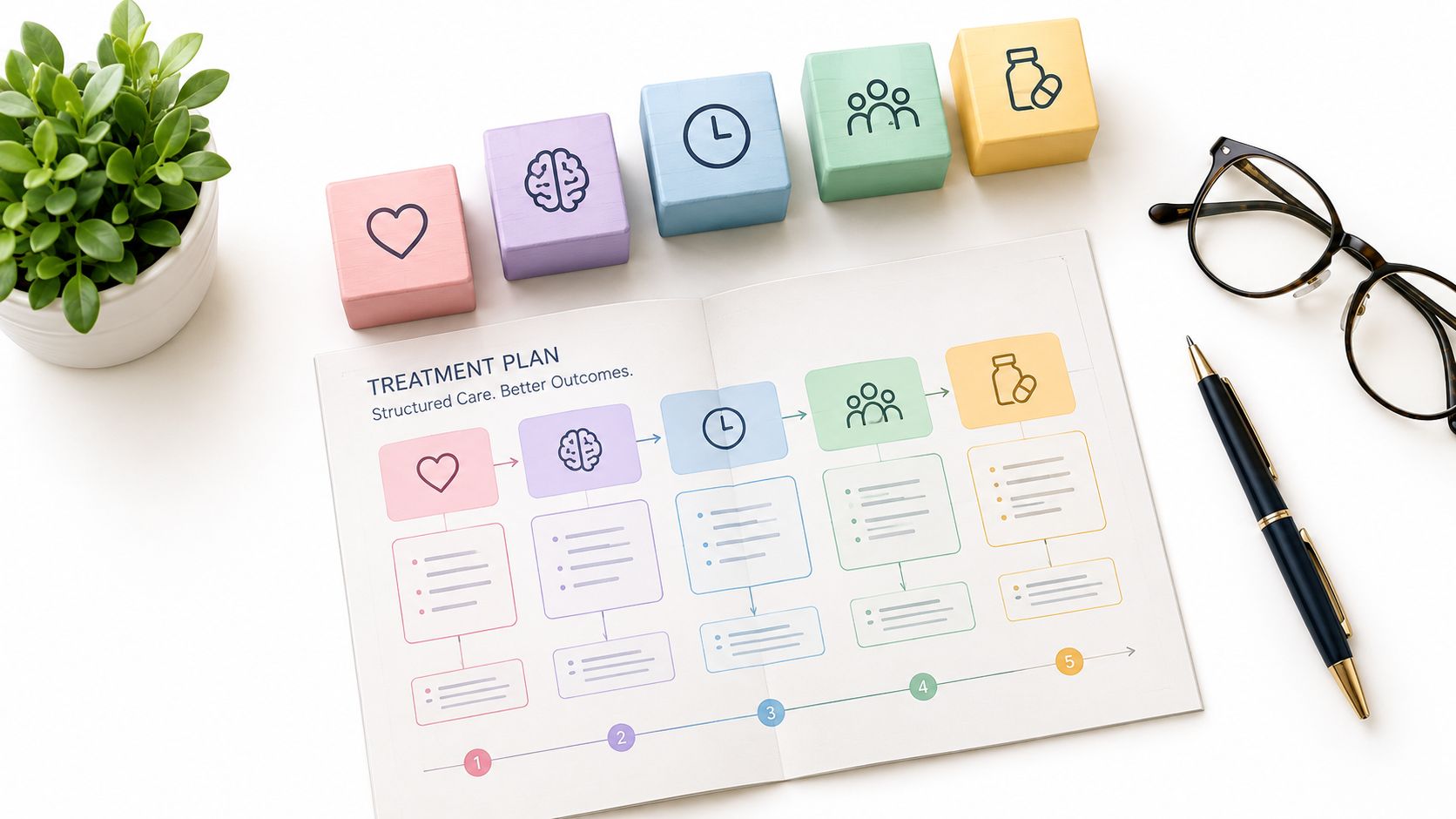

Intensive individual therapy rehab program
When you have already tried traditional rehab, short-term outpatient therapy, or medication alone, it can be frustrating to feel like nothing truly changes at the core. An intensive individual therapy rehab program is designed specifically for people in your position, who need high-frequency, one-on-one work that goes far deeper than standard care. Instead of fitting you into a pre-set track, the program is built around you, your history, and the root causes that keep driving your symptoms or substance use.
In this setting, you are not just attending groups and checking boxes. You are entering a highly focused, therapy-driven environment where multiple individual sessions each week, and sometimes each day, are used to unravel long-standing patterns, trauma, and dual diagnosis issues that other programs have not fully addressed.
What makes an intensive individual therapy rehab program different
In a typical rehab, individual therapy might be limited to one session a week, with the rest of your schedule organized around groups and educational lectures. In an intensive individual therapy rehab program, that balance is reversed. Individual work becomes the central pillar of your treatment.
You can expect significantly more therapist facetime. Intensive models often include several hours of one-to-one therapy per week, combined with specialized sessions that focus on trauma, attachment, or specific mental health concerns. This level of contact allows your clinical team to respond quickly to what you are experiencing in real time instead of waiting a week to process a crisis or breakthrough.
Research on intensive outpatient and residential formats shows that when care is consistent and structured, outcomes often match or exceed more traditional inpatient stays. A large review of intensive outpatient programs found that these models can be as effective as residential treatment in reducing substance use and supporting abstinence, with 50 to 70 percent of participants maintaining abstinence at follow up. While that research focuses on IOPs, the same principle applies in high-frequency, therapy-centered residential care: intensity and continuity matter.
How intensive therapy supports dual diagnosis
If you live with both addiction and mental health concerns, you already know how intertwined they can be. Anxiety leads to drinking, drinking worsens sleep, poor sleep fuels depression, and depression lowers your ability to resist using. Standard programs may address one side more than the other. An intensive individual therapy rehab program is structured to work on both, deeply and in parallel.
In a true dual diagnosis setting, you are not treated as “an addict who also has anxiety” or “a depressed person who happens to drink.” Your psychiatrist, primary therapist, and other clinicians collaborate to understand how all of your symptoms interact. For many people, this kind of dual diagnosis treatment with daily therapy sessions is the first time both parts of the equation receive equal attention at the same time.
Frequent sessions allow you to explore:
- How early experiences, attachment wounds, or trauma shaped the way you cope
- How mood shifts, panic, or intrusive memories directly precede use or impulsive behavior
- How perfectionism, shame, or chronic stress feed both mental health symptoms and relapse risk
The result is a treatment plan that does not separate your struggles into silos. Instead, it becomes a unified map of your internal world, with clear strategies for each piece.
Moving beyond standardized rehab models
If you have been through more standardized care, you may recognize the feeling of being “one of many.” The programming is often fixed. The group topics repeat. Your individual sessions are focused on staying stable in the moment instead of digging into why you feel the way you do.
An intensive individual therapy rehab program intentionally steps away from that model. The focus shifts from symptom control to root cause healing. This is where a therapy focused rehab for root cause healing becomes especially valuable. On any given week, your time might be directed toward:
- Unpacking specific formative experiences that shaped your beliefs about yourself
- Working actively on complex grief, betrayal, or relational trauma
- Revisiting recent relapses or crises in detail to understand not just what happened, but why it felt almost inevitable at the time
Instead of relying primarily on groups to carry the therapeutic load, you are continually circling back to your own story in depth. Over time, this helps you identify patterns that shorter or less intensive treatments simply do not have enough contact time to uncover.
Key elements of a high-frequency one-on-one treatment model
Although each program will differ, intensive individual therapy rehab typically includes a set of core components that work together to create meaningful change.
Multiple individual sessions every week
At the center is a schedule with significantly more one-on-one work than standard programs. You might meet with your primary therapist several times per week and also participate in specialized individual sessions focused on trauma processing, family systems, or specific modalities like EMDR, somatic therapies, or schema-focused work. Programs that describe themselves as a rehab with multiple individual therapy sessions are usually signaling this higher level of intensity.
The advantage is continuity. Instead of making one step forward and waiting a week, you can make several steps in close succession, consolidate gains, and address new material as it arises. This kind of cadence can be particularly helpful if you are working through trauma memories, attachment injuries, or deeply ingrained defensive patterns.
Customized, deeply individualized treatment planning
From the outset, your treatment plan is built around your history and goals, not a generic timeline. This may include:
- A detailed clinical and psychosocial assessment that looks at your life story in context
- Psychiatric evaluation that considers trauma, mood, anxiety, and personality factors
- Identification of your primary treatment targets, such as dissociation, compulsive behaviors, or self-sabotage in relationships
Programs that emphasize an individualized addiction treatment program or customized mental health and addiction treatment make this high level of tailoring a priority. Your team adjusts your plan regularly based on your progress, so the work stays relevant and challenging without being overwhelming.
Integrated medical and psychiatric care
Many people entering intensive individual therapy rehab programs need careful medication management, complex diagnostic clarification, or help navigating physical effects of long-term substance use. Although the research on intensive outpatient programs notes that many did not include pharmacotherapy in earlier years, and suggests that combining medications with behavioral care could improve outcomes, modern high-acuity programs often integrate both.
In a quality high acuity mental health treatment program, your psychiatrist and therapist work closely together. This means that when your medication is adjusted, your therapy sessions can explore how that shift affects your thoughts, emotions, and cravings. You are not left to figure out the connection between the two on your own.
Intensive trauma and root cause work
For many people who do not respond well to standard rehab, unresolved trauma sits at the center of the struggle. This might be obvious, such as a history of childhood abuse or combat exposure. It might also be less visible, such as emotional neglect, enmeshment, or years of high-pressure performance environments.
An intensive individual therapy rehab program that also offers an intensive trauma therapy residential program or deep trauma healing residential treatment can address these layers directly. Instead of avoiding trauma until “after you are sober,” the work is carefully integrated into your treatment from early on, at a pace you can tolerate.
In practice, this can look like:
- Structured processing sessions multiple times per week, with time to stabilize between them
- Somatic or body-focused approaches that help you release stored physiological tension
- Attachment-focused therapy that explores how your earliest relationships influence how you connect, trust, and protect yourself now
Because your schedule centers on individual work, there is room to prepare thoroughly for difficult sessions and to debrief in detail afterwards, reducing the risk of feeling destabilized or left alone with activated material.
When therapy is intensive and contained within a residential setting, you have the rare chance to stay immersed in the work without the constant pull of daily responsibilities and crises.
Balancing intensity with structure and support
Intensity does not mean chaos. The most effective programs combine high-frequency therapy with a predictable structure that keeps you grounded. Research on intensive outpatient models highlights that having regular, scheduled sessions over time can enhance adjustment to life outside of treatment and reduce relapse risk.
In a residential setting, this might translate into:
- A daily schedule that alternates deep individual work with restorative activities
- Carefully selected groups that support, rather than replace, individual therapy
- Built-in time for reflection, journaling, physical movement, and rest
If you are someone who tends to push hard and then crash, the structure helps you pace yourself. Your team will monitor your stress level, sleep, and emotional regulation, adjusting the intensity of sessions when needed so that the work remains effective instead of overwhelming.
Matching the program to your profile and history
Not every intensive individual therapy rehab program is right for every person. The best fit depends on your clinical profile, your history with previous treatment, and your current level of functioning.
A good match is especially important if you:
- Have had multiple prior treatment episodes with only temporary improvement
- Live with complex PTSD, dissociation, or long-standing personality patterns
- Face high external demands, such as professional roles, public visibility, or family responsibilities, that make relapse particularly costly
- Have co-occurring conditions, such as depression, anxiety, or trauma, that have not responded well to standard outpatient therapy
In these circumstances, a custom dual diagnosis treatment center or therapy driven addiction treatment center that focuses on intensive, individualized care can offer a more appropriate level of intervention. The program should be capable of handling complexity, not just acute stabilization.
The role of privacy, environment, and lifestyle fit
As an affluent individual, you may also have specific expectations around privacy, comfort, and lifestyle. An effective intensive individual therapy rehab program can meet clinical needs without ignoring these practical realities.
A private rehab with personalized therapy plans typically offers:
- A discreet setting with a small number of clients, which maintains confidentiality and allows for highly individualized attention
- A higher ratio of licensed therapists and psychiatrists to clients
- The ability to tailor aspects of your schedule around essential professional or family obligations when clinically appropriate
The environment should support your ability to focus on the work. Comfort is not a distraction in this context. When your physical needs are well met, you are freer to engage fully with difficult emotional material.
Measuring quality and effectiveness in intensive programs
Because you are investing significant time, emotional energy, and financial resources, it is important to understand what makes an intensive individual therapy rehab program clinically sound, not just attractive on the surface.
Evidence indicates that outcomes are strongest when you complete the full course of treatment and continue in some form of aftercare. Data from addiction treatment in general show that less than 43 percent of people who start rehab complete it, yet those who do and who remain engaged in care are much more likely to stop misusing substances, reduce criminal behavior, and improve social and psychological functioning.
When you evaluate programs, look for:
- Accreditation by respected bodies, such as CARF, which signals adherence to high standards of care
- Use of evidence-based therapies, like cognitive behavioral therapy and other modalities with strong research support
- A clinical team with deep experience in treating complex dual diagnosis and trauma, not only primary addiction
- Ongoing assessment and adjustment of your treatment plan rather than a one-time intake that never changes
Programs that highlight an intensive psychotherapy rehab program or individual therapy focused residential program are usually structured in a way that makes progress more measurable. You and your team can track changes in mood, cravings, functioning, and self-awareness over time.
Integrating aftercare and long-term support
Even in the most intensive setting, treatment is still a beginning, not an end. The transition out of a highly structured, therapist-rich environment needs to be handled carefully. Effective programs build aftercare into your plan from the start rather than as an afterthought in the final week.
Best practices from outpatient and intensive outpatient treatment emphasize the importance of solid aftercare planning to maintain gains and prevent relapse. In your case, this might include:
- Stepping down to a tailored intensive outpatient plan with several individual sessions each week
- Continuing trauma or specialized therapy with the same or a carefully coordinated clinician
- Participation in alumni or support communities that match your preferences for privacy and peer group
Participation in aftercare and alumni programs is strongly linked to sustained recovery outcomes, in part because they provide accountability and ongoing connection to a recovery-focused community. Your intensive residential stay should lay the groundwork for this long-term network, not leave you to build it from scratch on your own.
Is an intensive individual therapy rehab program right for you
Ultimately, the question is whether your current and past treatments have truly addressed the roots of your struggles. If you find yourself cycling through the same patterns despite prior rehab, outpatient therapy, or medication trials, it may be time to consider a more intensive, individually tailored approach.
A high-frequency, one-on-one program gives you the rare opportunity to focus deeply on your internal world with a skilled team at your side. Instead of working around the margins of your life, treatment becomes a concentrated period of discovery, healing, and restructuring. For many people in your position, this is what finally shifts the trajectory that no shorter or more standardized model has been able to change.
If you are exploring your options, look for programs that clearly prioritize individual therapy, dual diagnosis expertise, and root cause healing over volume and uniformity. When those elements are in place, an intensive individual therapy rehab program can truly transform not only your recovery, but your understanding of yourself and what a different future can look like.