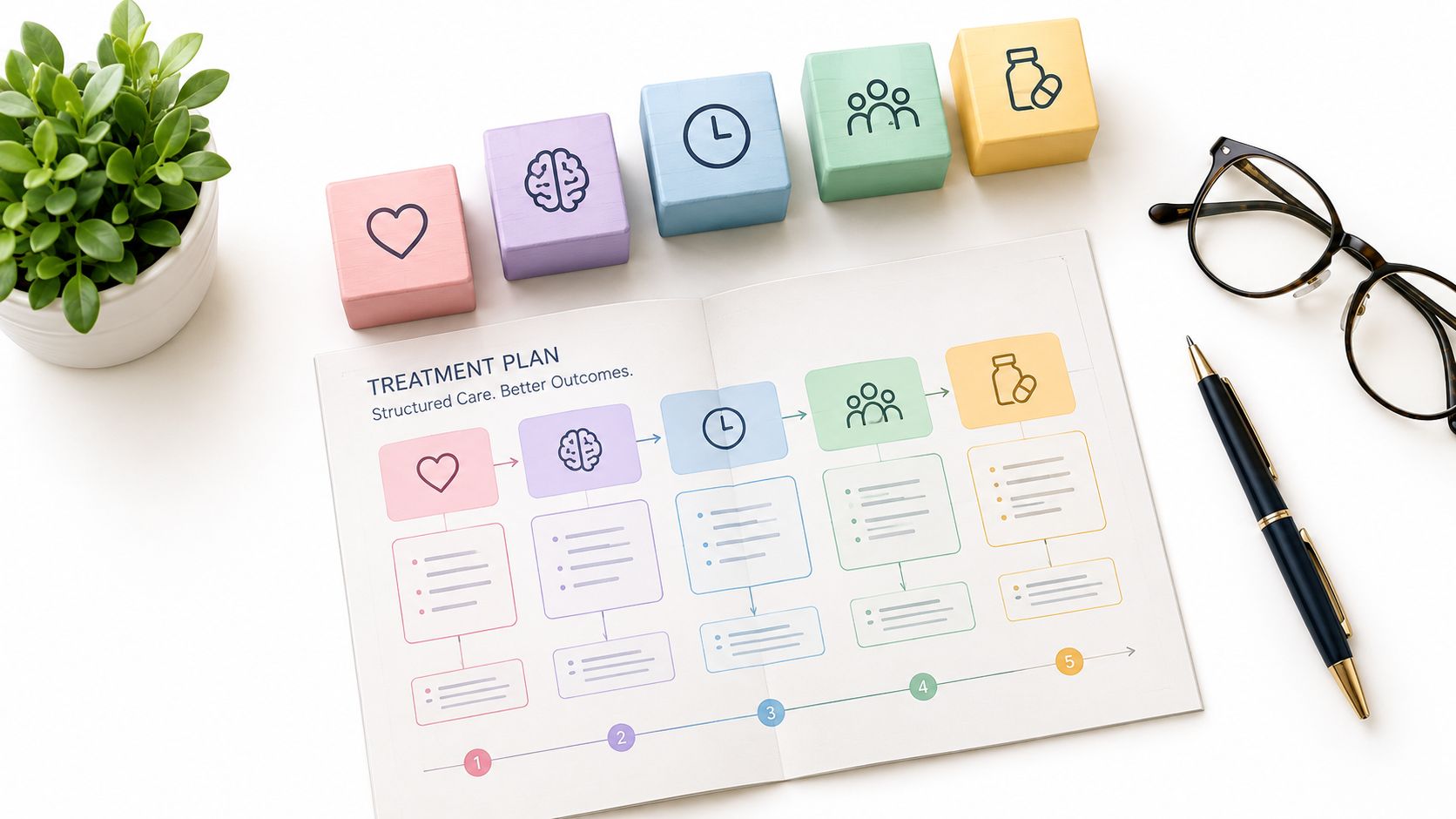

What an intensive trauma therapy residential program offers
If you have tried traditional programs and still feel stuck, an intensive trauma therapy residential program can give you a very different experience. Instead of a standard schedule of occasional groups and limited one-to-one time, you step into an immersive setting designed to help you work through the root causes of your symptoms with frequent individual sessions, highly customized planning, and 24/7 support.
In a residential trauma program, you live onsite, away from daily pressures and triggers. This structured, immersive environment helps you stabilize, stay engaged in therapy, and develop long-term coping strategies that you can rely on after you leave. For someone with complex trauma or co-occurring conditions, this level of focus can be the difference between short-term relief and meaningful, lasting change.
Residential mental health and trauma programs typically run 30 to 90 days, with extended options of 6 to 12 months when symptoms are severe or treatment resistant . Longer stays are often associated with better outcomes, including fewer relapses and a higher quality of life.
Why intensity matters for trauma healing
If you live with chronic anxiety, depression, PTSD, or substance use tied to unresolved trauma, once a week therapy may not be enough. You start to open up, the session ends, and you spend the next six days trying to hold everything together on your own.
An intensive trauma therapy residential program changes that rhythm. Instead of sporadic support, you receive concentrated care with frequent individual sessions, structured daily routines, and a team that keeps a close eye on progress and safety.
Depth of work, not just more hours
Intensity is not simply about more therapy hours. It is about creating the conditions for deeper work:
- You are removed from everyday triggers, crises, and responsibilities so your nervous system has a chance to settle.
- You meet with therapists often enough that you can stay with what surfaces, rather than shutting it down for days or weeks.
- You can move between different modalities, such as exposure work, EMDR, somatic approaches, and skills training, in a coherent, guided way.
Intensive programs that integrate multiple evidence-based therapies and holistic interventions within a 24/7 setting help you process traumatic events and build coping skills in a safer, more supportive environment.
Managing complexity and high acuity
If you have suicidal thoughts, self harm urges, severe mood swings, or co-occurring addiction, you may need more than a standard outpatient model. Residential trauma programs provide round-the-clock medical supervision and clinical support, which is especially important when PTSD, mood disorders, or substance use overlap.
This level of care aligns closely with what you would expect from a high acuity mental health treatment program, but with a trauma focused lens and a strong emphasis on individualized, dual diagnosis work.
How trauma focused residential care works
Although each program has its own model, most intensive trauma therapy residential programs share several core elements: environment, structure, dual diagnosis integration, and high frequency individual care.
A safe and stabilizing environment
Healing from trauma requires a sense of safety. Leading residential trauma programs emphasize:
- Physically secure, comfortable settings that reduce exposure to triggers
- Staff trained to recognize trauma responses as adaptive survival strategies rather than “resistance” or “defiance”
- Policies that support health, such as tobacco free campuses with help for smoking cessation
Programs like Benchmark Transitions prioritize emotionally safe environments where you can stabilize without fear and feel supported by professionals who understand trauma response and compassionate care.
Structured but individualized daily schedule
You can expect a structured day that balances intensity and recovery. Pennsylvania residential trauma programs, for example, often include morning mindfulness, individual trauma focused therapy, group sessions, and recreational activities within a secure setting with continuous staff supervision.
The structure gives your nervous system predictability while your treatment plan stays flexible. A multidisciplinary team regularly reviews your progress and tailors your stay based on symptom severity, co-occurring disorders, and your individual response to treatment.
If you need a high degree of customization, you may benefit from a custom dual diagnosis treatment center or customized mental health and addiction treatment that extends this level of personalization even further.
Individualized dual diagnosis care
If you are considering an intensive trauma therapy residential program, there is a good chance you are not dealing with trauma alone. Depression, anxiety, substance use, eating disorders, or personality related challenges often coexist with PTSD and complex trauma.
Addressing only one side rarely works. Effective programs integrate dual diagnosis care from the start.
Comprehensive assessment and diagnosis
High quality trauma informed residential programs use in depth psychological assessments on intake to identify:
- Trauma history and types of traumatic events
- Current PTSD or complex PTSD symptoms
- Co-occurring mental health disorders
- Substance use patterns and related risks
This level of assessment supports truly individualized addiction treatment and mental health care rather than a one size fits all track.
Evidence based trauma and addiction therapies
Residential trauma programs draw from several proven modalities, often combining them within a coherent plan. Depending on your needs, you might work with:
- Trauma focused Cognitive Behavioral Therapy (CBT)
- Cognitive Processing Therapy (CPT)
- Eye Movement Desensitization and Reprocessing (EMDR)
- Prolonged Exposure therapy
- Somatic therapies that address chronic tension, hypervigilance, and other bodily expressions of trauma
Programs focused on dual diagnosis may also incorporate DBT skills, relapse prevention, medication management, and other supports to stabilize mood and reduce substance use. This kind of integrated approach is central to dual diagnosis treatment with daily therapy sessions and similar high intensity models.
High frequency one on one sessions
For affluent individuals who have not improved in standard programs, the most important differentiator is often the frequency and depth of individual work. In many traditional rehabs, you may see a primary therapist once or twice a week and fill the rest of your time with groups.
Intensive trauma programs aimed at root cause healing shift that ratio. You spend far more time in one-to-one therapy and related specialized sessions.
Moving beyond a group heavy model
Group therapy has value, but it cannot fully replace individual work when you are dealing with complex trauma, attachment wounds, or intricate personality dynamics. A program built as a therapy focused rehab for root cause healing will typically emphasize:
- Multiple individual sessions per week, often several sessions across different specialties
- Extended session lengths when clinically appropriate
- Direct work on specific traumatic memories, beliefs, and patterns of relating
This approach is similar to a rehab with multiple individual therapy sessions or an intensive individual therapy rehab program, but in a setting specifically organized for trauma and dual diagnosis.
Coordinated team based treatment
In some leading intensive programs, you may work with several therapists rather than only one. A qualitative study of a two week inpatient trauma program in Oslo, for instance, found that meeting 11 to 12 different therapists through a therapist rotation model was generally experienced as positive, since it provided multiple perspectives and reduced dependency on a single relationship.
Participants in that program described the experience as beneficial but exhausting. They reported:
- Greater emotional connection to their trauma history
- Increased acceptance and ownership of past trauma
- Reduced numbness and dissociation
- Better access to a wider range of emotions
At the same time, many felt there were moments when the intensity tipped into being overwhelming, which highlights the importance of a team that can calibrate pace and intensity day by day based on your capacity.
If you prefer a deeply personal relationship with one primary therapist, you might seek an individual therapy focused residential program or private rehab with personalized therapy plans that balances continuity with specialist input.
Comparing residential, IOP, and outpatient options
You might be weighing an intensive trauma therapy residential program against other models such as intensive outpatient programs (IOPs) or enhanced outpatient care. Understanding the differences can help you choose the right level of support.
Residential vs intensive outpatient
Intensive outpatient programs are structured and robust, but you do not live at the facility. A typical IOP lasts 8 to 12 weeks, with 9 to 15 hours of therapy and skills training spread over 3 to 5 days per week. IOPs commonly use CBT and DBT to help you manage intense emotions, anxiety, depression, and trauma related symptoms while you continue living at home.
IOPs can serve as a step down after residential care or a step up when weekly therapy is not enough. They are especially useful when you have a stable living environment and a lower level of acute risk.
Residential trauma programs, in contrast, remove you from your usual environment completely. You receive 24/7 support from trained professionals who can help you manage nightmares, flashbacks, panic attacks, and crises around the clock. This added containment is critical if your symptoms significantly disrupt daily life or compromise safety.
If you are considering a staged approach, you might start in a residential setting, then transition to an intensive psychotherapy rehab program or IOP once you are more stable.
Residential vs standard outpatient therapy
Standard outpatient therapy, even at 1 or 2 sessions a week, is usually not immersive enough for:
- High acuity PTSD or complex trauma
- Ongoing suicidal ideation or self harm
- Significant dissociation
- Severe co-occurring addiction or mood disorders
Intensive trauma residential programs provide a higher level of support, integration, and monitoring, which can be especially important if you have tried outpatient care without seeing significant improvement. For individuals in this position, a therapy driven addiction treatment center that prioritizes frequent one-to-one sessions can provide a more appropriate level of care.
Holistic and family integrated components
High end trauma residential programs recognize that trauma lives not just in the mind but in the body, relationships, and daily routines. Your treatment plan is likely to integrate somatic, relational, and lifestyle oriented elements.
Mind body and lifestyle supports
Many programs include:
- Mind body therapies such as yoga, breathwork, and mindfulness led by certified instructors
- Structured self care time for exercise, relaxation, and restorative practices
- Nutritional support and lifestyle interventions that stabilize energy and mood
These holistic components help regulate your nervous system and create a foundation for long term recovery. Structured schedules that include self care activities have been shown to enhance daily functioning and help manage PTSD symptoms more effectively.
If you are looking specifically for profound, integrated trauma work, you may resonate with a deep trauma healing residential treatment model that explicitly prioritizes this type of mind body integration.
Family and support system engagement
Trauma rarely affects only one person. Family relationships and close connections often carry the impact, and they can play an essential role in recovery.
Programs like those at Rogers Behavioral Health highlight family involvement as a key element of PTSD treatment. They educate loved ones about symptoms, treatment approaches, and how to support you during and after the program, which can ease the transition back home.
For you, this can mean:
- Family therapy sessions to address patterns that may be reinforcing symptoms
- Education for partners, parents, or adult children about trauma and nervous system responses
- Clear aftercare plans that include boundaries, communication strategies, and support resources
This relational work aligns with the goals of a private rehab with personalized therapy plans, where your support network is considered part of your long term wellness strategy.
Planning your stay and aftercare
Choosing an intensive trauma therapy residential program is a significant commitment of time, energy, and resources. Understanding what to expect around length of stay, insurance, and aftercare can help you plan confidently.
Length of stay and intensity
Residential trauma and mental health treatment in many states, including Florida, commonly ranges from 30 to 90 days, with extended care options up to 6 to 12 months when conditions are chronic or treatment resistant. Longer durations often correlate with more sustainable outcomes, especially when trauma co-occurs with mood disorders or addiction.
At the same time, intensity must be carefully calibrated. Research on a two week inpatient program in Oslo found that while high intensity helped participants progress and process trauma, many felt overwhelmed at times, which raised questions about the optimal level of intensity. This underscores the importance of regular clinical reviews and a team willing to adjust pace as needed.
If you want maximum therapeutic contact within a manageable timeframe, you might focus your search on an intensive psychotherapy rehab program that clearly outlines session frequency, modalities, and opportunities for rest.
Insurance, logistics, and referrals
Most insurance plans, including Medicaid, Medicare, and private insurers in states like Florida, cover medically necessary residential mental health treatment, including intensive trauma programs, as long as certain criteria are met. Coverage usually requires pre authorization and the use of in network facilities.
Many residential trauma centers have staff who specialize in navigating insurance benefits, sliding scale options, and payment plans. For example, Pennsylvania programs often help patients understand coverage and may leverage programs like Behavioral HealthChoices to expand access.
Admission processes can also differ. Some programs, such as Touchstone’s Intensive Residential Treatment Services, require a referral from a mental health provider, completed on a specific form and faxed to the program for review.
If you are working with an existing outpatient therapist or psychiatrist, you can involve them in this process to ensure your residential plan fits into a cohesive, long term treatment strategy.
Aftercare and post traumatic growth
A well designed intensive trauma therapy residential program will start planning your aftercare from the beginning. This can include:
- Step down to IOP, virtual IOP, or structured outpatient programs
- Ongoing individual therapy, sometimes with the same clinician or agency
- Transitional support, housing coordination, or sober living if addiction is involved
- Relapse prevention and crisis planning
Programs like Benchmark Transitions emphasize long term trauma informed aftercare that includes outpatient services, transitional support, and relapse prevention to maintain gains made in residential treatment.
With this level of continuity, many people experience post traumatic growth, such as improved relationships, greater resilience, stronger coping skills, and a deeper appreciation for life, sometimes within the first few months of intensive treatment.
Is an intensive trauma therapy residential program right for you
If you are an accomplished, high functioning person who has tried standard therapy or traditional rehab programs without lasting change, you may not need to work harder. You may need a different model.
You are likely a good candidate for an intensive trauma therapy residential program if:
- You can identify traumatic or overwhelming experiences that still feel “unfinished”
- You have not fully responded to weekly therapy or group heavy rehabs
- You are managing co-occurring conditions that complicate treatment
- You want frequent, in depth one on one work rather than a generic track
- You are ready to step away from daily life temporarily to focus on healing
In that case, exploring options like an intensive individual therapy rehab program or individual therapy focused residential program that specifies high frequency individual sessions and customized dual diagnosis care can be a practical next step.
The right program will not just help you cope. It will give you the time, expertise, and intensity of care needed to address root causes at a depth that shorter or less personalized models often cannot reach.
References
- (PMC)