
An executive can still close deals, lead a board meeting, and appear entirely composed while alcohol, prescription medication, stimulants, depression, trauma, or anxiety steadily erode judgment and stability. The warning sign often arrives: outpatient therapy is scheduled, prescriptions are filled, and work continues, yet relapse keeps returning, sleep becomes unreliable, and the home environment makes recovery nearly impossible.
For high-profile professionals, when is residential treatment necessary isn't answered by whether someone has “hit rock bottom.” The better question is whether the person can remain safe, medically stable, abstinent, and psychologically engaged without 24/7 structure. Residential care becomes the right recommendation when ordinary outpatient contact can't contain the risks or change the conditions maintaining the disorder.
Recognizing the Tipping Point for Inpatient Care
A chief executive once described the problem in practical terms. The person could attend therapy between meetings, delegate during a crisis, and travel with a carefully managed appearance. Yet the pattern remained unchanged: substance use intensified after difficult calls, sleep deteriorated, and each attempt to regain control lasted only until the next major pressure event. Outpatient treatment had provided insight, but not enough structure to interrupt the cycle.
That distinction matters. Residential treatment is generally necessary when outpatient care can't stabilize safety, functioning, or abstinence, while the person still doesn't require acute hospitalization. The decision isn't based on social status, professional achievement, or a dramatic public collapse. It rests on the interaction between clinical severity, impaired daily functioning, relapse risk, and the person's ability to recover in the environment where use continues.
Executives often minimize the warning signs because they can compensate for impairment at work. A missed family commitment can be explained away. A short temper becomes “leadership pressure.” A second prescription or repeated return to alcohol becomes a private matter. Families assessing high performer burnout causes should look beyond productivity and examine whether the person's coping system is failing outside the boardroom.
The signs that outpatient care has reached its limit
Residential admission deserves serious consideration when several of these patterns appear together:
- Repeated relapse: The person returns to use despite therapy, medication management, professional consequences, or sincere intentions.
- Environmental reinforcement: Home, travel, colleagues, or social routines keep exposing the person to substances, secrecy, and destabilizing stress.
- Functional deterioration: Work may continue, but judgment, relationships, sleep, self-care, or reliability are clearly declining.
- Loss of behavioral control: The individual can't consistently follow agreed boundaries, attend appointments, or use coping skills during pressure.
- Escalating psychiatric symptoms: Depression, impulsivity, panic, agitation, or hopelessness interferes with treatment participation.
- Insufficient support: Privacy, wealth, and staff at home don't substitute for a clinically supervised recovery environment.
A high-functioning presentation can delay intervention. Guidance on the hidden signs of addiction in executives can help families identify deterioration that performance metrics conceal.
Practical rule: If the person can function only by maintaining access to the substance, controlling the setting, or relying on constant rescue from others, outpatient treatment may no longer be the safest level of care.
Residential care creates distance from triggers while providing repeated skills practice, clinical observation, and a predictable daily rhythm. For an executive, that isn't a punishment or a career-ending withdrawal. It's a controlled intervention designed to preserve health, judgment, and the capacity to return to demanding responsibilities with a more sustainable foundation.
Clinical Thresholds and Safety Indicators
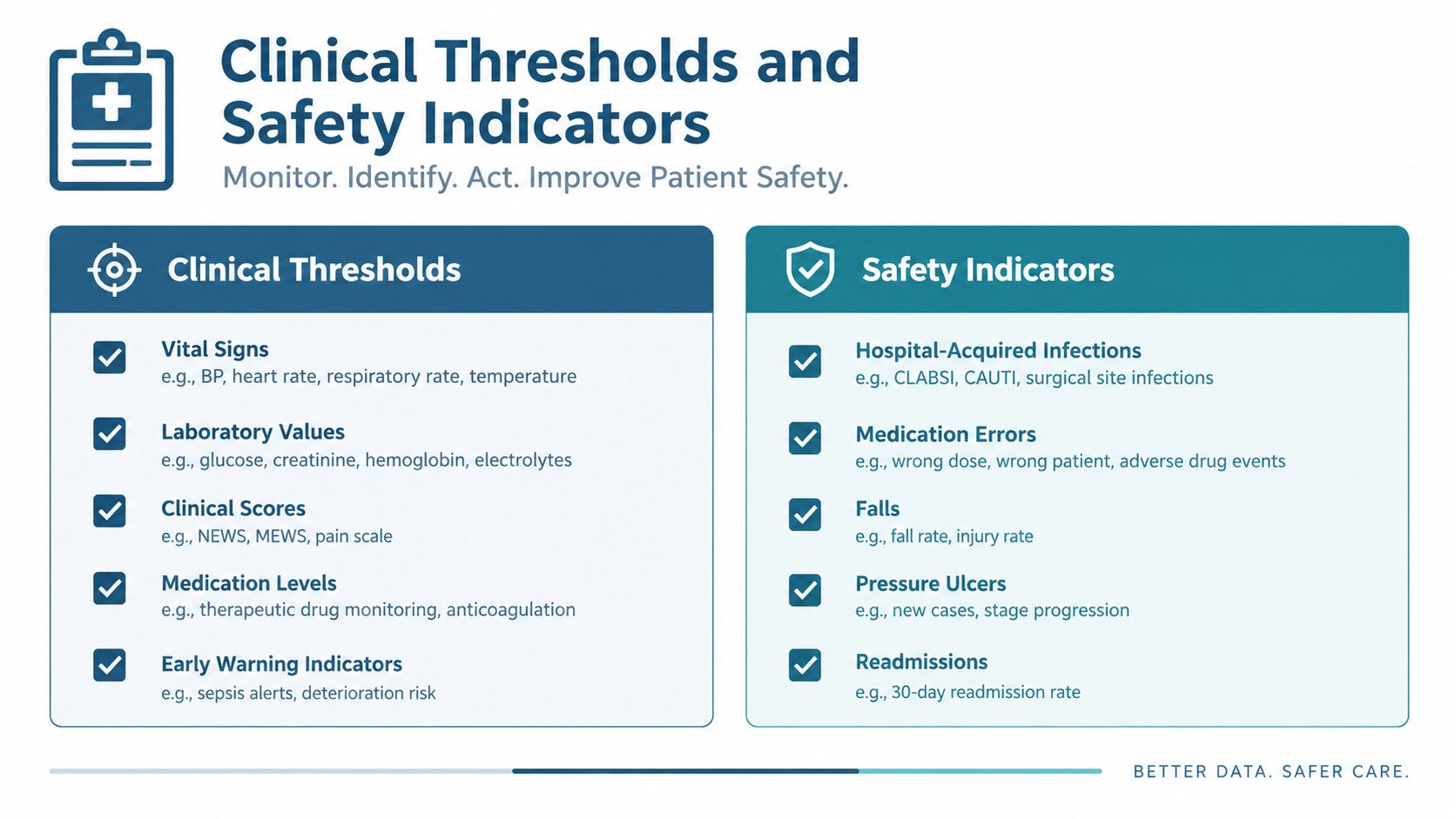
Residential treatment becomes medically necessary when scheduled appointments can't adequately manage a predictable risk. Clinicians and payers typically examine three connected questions: How severe is the disorder? How impaired is daily functioning? Can the person remain safe in the current environment? A diagnosis alone doesn't answer those questions.
The threshold rises sharply when withdrawal, psychiatric instability, or treatment nonadherence creates a pathway to serious harm. Medical-necessity criteria include serious risk of harm to self or others associated with substance use, unstable medical status, severe withdrawal risk, and psychiatric symptoms that prevent meaningful participation in outpatient treatment. Depression with suicidal thoughts and acute psychosis are examples of psychiatric conditions that can make lower-intensity treatment unsafe, as described in residential treatment criteria for complex behavioral health needs.
The clinical indicators that change the recommendation
Withdrawal risk requires medical judgment. Alcohol or benzodiazepine withdrawal can become moderate, severe, medically dangerous, or physically intolerable enough that continuous monitoring is needed. A person who has previously experienced serious withdrawal, cannot reliably reduce use, or lacks a safe setting for observation shouldn't attempt withdrawal alone.
Psychiatric instability changes the level-of-care calculation. Suicidal thoughts, acute psychosis, severe mood disruption, dangerous impulsivity, or an inability to follow a safety plan may require a more contained setting. If imminent danger is present, emergency psychiatric or medical services take priority over a standard residential admission.
Repeated treatment failure is clinically meaningful. A person who repeatedly relapses after outpatient therapy may not need more appointments. The person may need removal from cues, round-the-clock accountability, medication oversight, and enough clinical contact to practice new responses before returning home.
The environment can make outpatient care ineffective. An executive may have a comfortable home, but comfort isn't the same as recovery support. A household organized around secrecy, conflict, substance availability, unmanaged psychiatric symptoms, or constant work demands can defeat a well-designed outpatient plan.
Residential treatment should be the lowest level of care that can deliver treatment safely and effectively, not a default destination and not a fixed-length prescription. A private, clinically advanced program such as high-end rehab for complex treatment needs should begin with a full assessment, determine whether detox or medical management is required, and define the safeguards needed for the individual's symptoms.
Comparing Levels of Care for Working Professionals
A working professional can be capable of attending meetings and still be unable to recover safely at home. The decision boundary sits between apparent productivity and actual stability. If the person repeatedly destabilizes in the same setting, the setting is part of the clinical problem.
| Level of Care | Time Commitment | Environment | Best Suited For |
|---|---|---|---|
| Standard outpatient | Scheduled appointments while living independently | Home, work, and usual social setting | People who can maintain safety and apply recovery skills between visits |
| Intensive outpatient program | Multiple treatment contacts while living outside the program | Daily life remains largely unchanged | People who need more therapeutic contact but can manage the home environment |
| Partial hospitalization program | A highly structured treatment day without residential living | The person returns home after programming | People who need intensive daytime care and have a safe, supportive residence |
| Residential treatment | On-site living with continuous structure and clinical availability | A protected therapeutic residence | People whose symptoms, relapse pattern, support system, or environment require immersive care |
Where executives most often misjudge the boundary
Standard outpatient care works when the individual can stay abstinent between sessions, manage medication responsibly, sleep sufficiently, and respond to stress without returning to dangerous coping strategies. IOP or PHP may be appropriate when the person needs more frequent therapy but can reliably return to a safe home each day.
Residential treatment is different because the program controls the recovery environment. The person doesn't merely discuss triggers during a scheduled appointment. The person encounters stress, cravings, interpersonal friction, and difficult emotions inside a setting where clinicians can intervene and skills can be practiced immediately.
Decision standard: Residential care is justified when it is the least restrictive setting that can still contain the person's risks and provide effective treatment.
The difficult case involves a professional who isn't acutely suicidal, psychotic, or medically unstable but keeps relapsing in a triggering home environment. That person may look appropriate for IOP on paper, yet the home setting can repeatedly undo progress. The correct assessment asks whether work and study represent genuine stability or the last remaining area the person can control.
A detailed inpatient versus outpatient rehab comparison can help families organize the discussion, but the final recommendation must come from a qualified clinical assessment. A private residential program becomes reasonable when distance from triggers, close monitoring, and uninterrupted therapeutic work are necessary to produce stability that outpatient care hasn't achieved.
Navigating Dual Diagnosis and Co-Occurring Disorders
Substance use rarely explains the entire clinical picture in an executive or high-earning professional. Alcohol may quiet trauma symptoms. Stimulants may compensate for depression, exhaustion, or attention problems. Sedatives may appear to manage anxiety while worsening mood, memory, and dependence. Dual-diagnosis complexity often determines the need for residential care.
The assessment should proceed in a disciplined order rather than assuming the substance is the only diagnosis.
Start with the full clinical picture
First, clinicians should establish what happens before, during, and after substance use. They should examine mood shifts, sleep, impulsivity, trauma responses, anxiety, depressive symptoms, interpersonal changes, medication history, and periods of functioning without intoxication or withdrawal.
Second, the team should determine whether mental health symptoms interfere with treatment participation. A person who can understand coping skills but can't use them during panic, depression, mania, dissociation, or craving needs a setting where clinicians can provide immediate support and adjust the plan.
Third, the team should evaluate medication complexity. Withdrawal management, psychiatric medication optimization, side-effect monitoring, and substance interactions require coordination. Residential treatment offers a controlled environment for observing changes rather than relying on an executive's memory during a chaotic workweek.
Why multidisciplinary care matters
A serious dual-diagnosis program should bring together psychiatry, psychology, therapy, addiction counseling, and family work. PhD-level psychologists and psychiatrists can contribute diagnostic depth, while LMFTs and certified addiction counselors can address relationships, behavior, relapse patterns, and accountability.
Treatment may include CBT for distorted thinking, DBT for emotion regulation and distress tolerance, ACT for values-based behavior, motivational interviewing, trauma-focused work, and carefully selected experiential therapies. EMDR may be appropriate for some trauma presentations, but only after the team confirms that the client has enough stability to tolerate the work.
Residential treatment is particularly valuable when substance use and psychiatric symptoms reinforce each other. The person receives ongoing observation, structured routines, medication oversight, individual therapy, intensive groups, and family involvement without having to recreate a safe clinical environment at home.
Clinical priority: Accurate diagnosis comes before aggressive treatment. A sophisticated program should clarify what the person is treating, what requires immediate containment, and what can be addressed after stabilization.
Maintaining Career Obligations in Executive Rehab
A founder facing payroll decisions, a partner responsible for clients, or a senior operator overseeing a complex organization may view residential treatment as a threat to professional stability. That concern often delays care beyond the point supported by clinical judgment. Residential care can protect the person's health without requiring unrestricted separation from every legitimate professional responsibility.
The right program does not reproduce the executive's normal workweek. It creates a controlled schedule that protects treatment first while allowing limited attention to duties that cannot be delegated immediately. Executive-focused programs commonly use scheduled device access, rather than unrestricted connectivity. One described model provides protected work windows of about 60 to 90 minutes on weekday afternoons or evenings, with laptop and phone use limited to designated spaces and times, as outlined in this description of structured work access during executive residential rehab.

Connectivity must serve treatment
Electronics access should cover necessary decisions, urgent approvals, a brief leadership check-in, or communication with a trusted delegate. It should not restore ordinary full-time office demands. A description of structured electronics access in trauma-informed residential treatment explains that clients may use cell phones and laptops under defined rules for necessary responsibilities, as discussed in structured electronics access in trauma-informed residential treatment.
The treatment team should set work windows around therapy, sleep, meals, medical monitoring, and recovery time. If every approved session becomes a crisis meeting, the program has preserved the workload instead of the executive's capacity. Set a short list of decisions the client may handle, then assign everything else to designated coverage.
Privacy and personal space support engagement
Private rooms give executives space for confidential calls, decompression, and uninterrupted sleep. A high-end residential setting can provide private rooms for every resident in both detox and rehabilitation, while maintaining clinical structure and appropriate observation.
Before admission, the executive and treatment team should identify duties that require direct involvement, appoint trusted coverage, define communication boundaries, and decide what information remains private. The result is a planned interruption of uncontrolled professional pressure, not an unexplained disappearance. Career continuity becomes a care-planning task, while clinical containment remains the priority.
The Value of Private Pay and Luxury Environments
Private pay residential treatment is not valuable because expensive furniture heals addiction. It's valuable when the environment removes barriers that cause high-profile clients to disengage. Privacy, discretion, comfort, and individualized attention can make it easier for a professional to speak about substance use, psychiatric symptoms, financial pressure, family conflict, and behavior that would be concealed in a less private setting.
A premium program should offer more than an upscale address. Families should look for a California-licensed and Joint Commission-accredited provider, a highly credentialed clinical team, private accommodations, medical capability when appropriate, and a treatment plan that addresses both mental health and substance use. Accreditation alone doesn't guarantee a personal outcome, but it gives families a concrete standard for evaluating governance, safety, and clinical operations.
What a serious luxury program should provide
- Clinical depth: Psychiatrists, psychologists, licensed therapists, addiction counselors, and adjunctive clinicians should collaborate rather than operate in isolated silos.
- Privacy by design: Private rooms, discreet admissions, controlled information sharing, and secure communication protocols should protect the client's identity and dignity.
- Integrated treatment: CBT, DBT, ACT, motivational interviewing, trauma therapies, family work, mindfulness, fitness, nutrition, and somatic approaches should be selected according to clinical need.
- Medical coordination: Clinically managed withdrawal and medication optimization should be available when appropriate, with medication kept purposeful rather than excessive.
- Executive practicality: Structured electronics access, protected work windows, and clear boundaries should support essential obligations without allowing work to dominate treatment.
- Continuing care: Discharge planning should include therapy, psychiatric follow-up, family support, alumni connection, and relapse-response planning.
Luxury also changes the social experience of treatment. A private room and calm setting can reduce unnecessary stimulation, while a strong staff presence allows the team to notice subtle changes before they become crises. For executives accustomed to controlling every variable, the most therapeutic feature may be a setting where responsibility is temporarily shared with professionals who understand both clinical risk and reputational sensitivity.
Next Steps for Accessing Discreet Residential Care
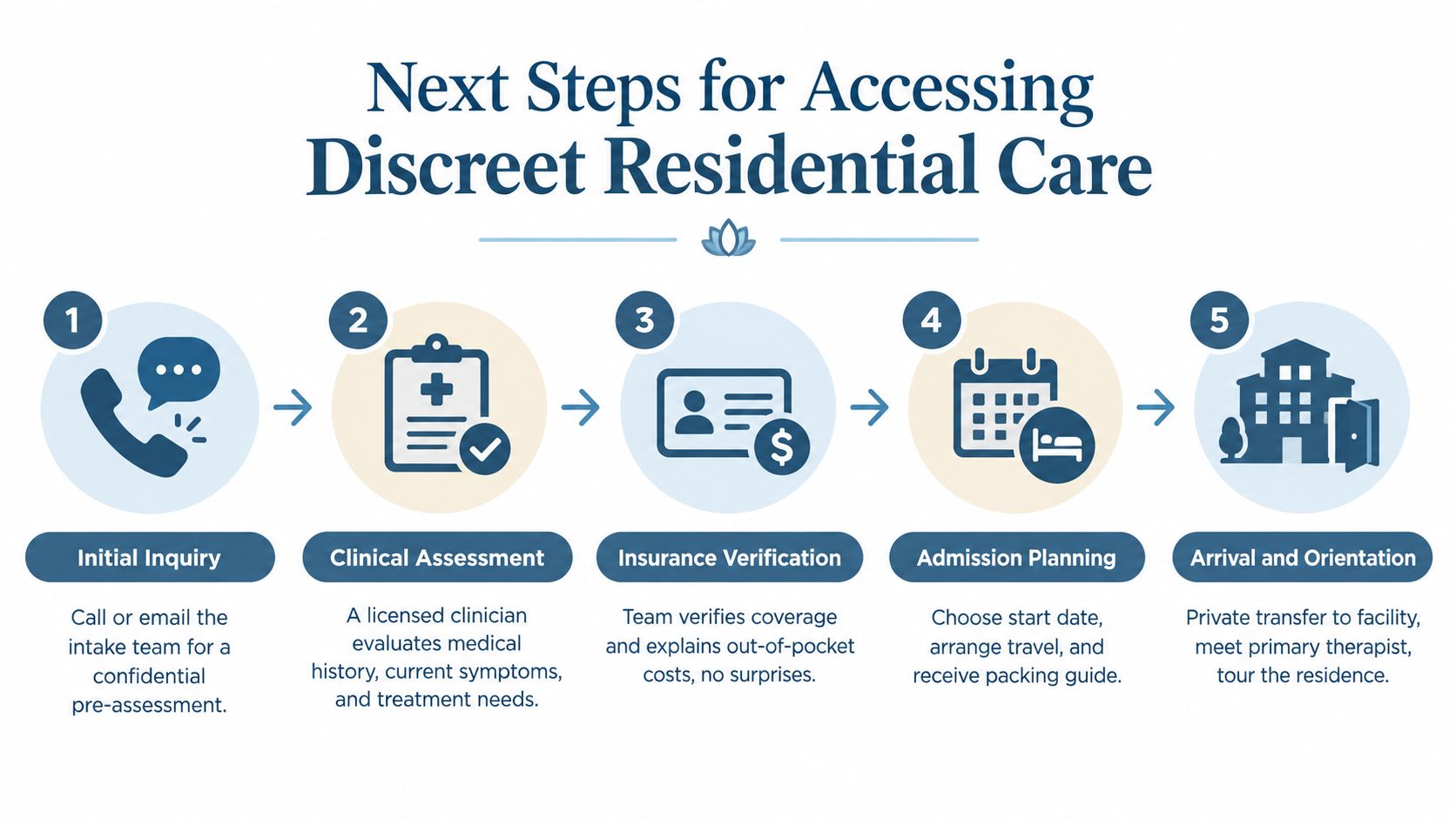
Families shouldn't wait for a public crisis to begin the admissions process. A confidential pre-assessment can clarify whether the person needs medically managed withdrawal, residential treatment, PHP, IOP, or emergency intervention. The conversation should include current substance use, withdrawal history, psychiatric symptoms, medications, medical conditions, prior treatment, relapse patterns, home supports, and immediate safety concerns.
A practical admissions sequence
- Initial inquiry: Contact a private admissions team by phone or email and explain the situation without minimizing risk. The team should identify urgent safety issues and outline the next clinical conversation.
- Clinical assessment: A licensed clinician reviews medical history, current symptoms, substance use, psychiatric history, medication needs, and treatment goals. The assessment should determine the safest level of care rather than assume residential admission.
- Financial and coverage review: Private pay families should receive a clear explanation of out-of-pocket costs, available benefits if applicable, payment expectations, and what services are included.
- Admission planning: The family and program coordinate the start date, travel, medication information, work delegation, communication boundaries, and packing requirements.
- Arrival and orientation: The client enters the residence, meets the primary therapist and clinical team, learns the daily structure, and receives a confidential orientation to the property and expectations.
Detox and residential care should be coordinated
Detox and rehabilitation serve different purposes. Medical detox focuses on safe withdrawal and stabilization. Residential rehabilitation addresses the behaviors, psychiatric conditions, relationships, triggers, and routines that sustain recovery after substances leave the body. Some clients need both, while others can begin residential treatment without a detox phase after clinical evaluation.
Family involvement should be planned, not improvised. Relatives may help provide history, establish boundaries, coordinate business coverage, attend private family sessions, and participate in educational workshops. A discreet program should also prepare the transition beyond residential care, including medication follow-up, outpatient therapy, relapse planning, and ongoing support for work and relationships.
Immediate action: If there's imminent danger, severe withdrawal, suicidal intent, acute psychosis, or serious medical instability, families should contact emergency medical services rather than arranging a routine admission.
Reflections offers private-room detox and residential rehabilitation, multidisciplinary dual-diagnosis care, structured access to phones and laptops, and discreet support for executives managing essential professional responsibilities. Families and professionals who need to determine whether residential treatment is necessary can visit Reflections to begin a confidential conversation about assessment, admission planning, and clinically appropriate next steps.