
An executive can spend years managing crises for other people while losing control of sleep, emotional regulation, and substance use. The breaking point may arrive before a board meeting, during an acquisition, or while preparing for an earnings call. Residential treatment then becomes a business decision as well as a clinical one, involving privacy, fiduciary duties, equity vesting, family responsibilities, and the practical question of how much professional continuity is safe.
Trauma informed residential treatment should stabilize the person without treating professional identity as a liability. For executives and high-profile professionals, the right program must combine clinical depth with discretion, structured accountability, and carefully supervised access to work tools. The important comparisons aren't limited to private rooms or attractive surroundings. They involve staffing, psychiatric capability, trauma screening, treatment fidelity, retention, family work, and the quality of the transition home.
The trade-offs are real: privacy versus transparency, intensity versus autonomy, and fidelity versus comfort. A premium program earns its position by managing those tensions deliberately, not by disguising hospitality as clinical excellence.
When an Executive Faces the Treatment Decision
A chief financial officer has an upcoming board cycle, worsening insomnia, and a dependence on alcohol or medication that has moved from private coping strategy to operational risk. Hypervigilance makes ordinary questions feel threatening. Concentration slips during financial review. The executive knows residential care is necessary, yet worries that stepping away will expose weakness, unsettle investors, or disrupt a transaction already in motion.
That decision rarely looks like a clean break. A senior leader may need to coordinate with a board chair, preserve confidentiality, protect family members from unnecessary disclosure, and determine which responsibilities can be delegated. A high-end program must understand those pressures without allowing them to become excuses for avoiding treatment.
Clinical stabilization without identity erasure
Trauma can affect sleep, threat perception, impulse control, mood, and the ability to tolerate uncertainty. Substance use may temporarily blunt those symptoms while making the underlying cycle more dangerous. A competent residential team addresses both conditions together, rather than treating addiction first and postponing trauma indefinitely.
The environment matters because executives often arrive overcontrolled, overextended, and skilled at performing competence. A private room can provide decompression and dignity. Supervised electronics access can preserve carefully selected work obligations. Neither feature should function as unrestricted escape from treatment.
Practical rule: Work continuity is clinically useful only when the treatment team defines its limits, timing, and purpose.
The executive also needs a decision vocabulary. Questions about accreditation, psychiatric coverage, trauma screening, family participation, device policy, and discharge planning reveal more than a tour or polished admissions call. A program that can't explain how it handles a board call, a panic response, or early disengagement hasn't demonstrated executive-level readiness.
The best choice won't necessarily be the most expensive or the most secluded. It will be the program that protects privacy while creating connection, provides autonomy without surrendering structure, and delivers trauma work with enough fidelity to produce meaningful change.
What Trauma Informed Residential Treatment Actually Means
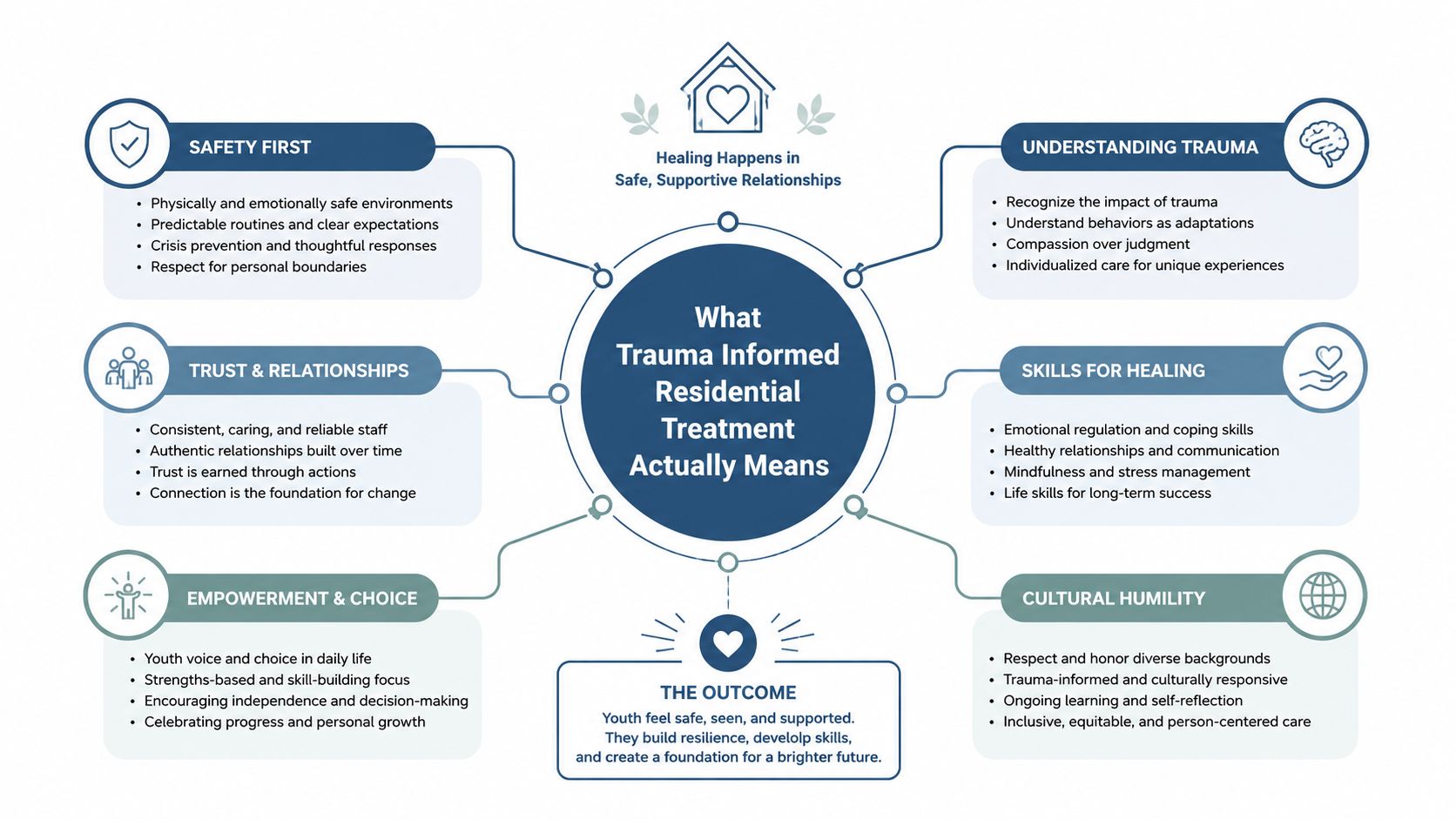
The model begins with a clinical posture, not a décor package. The SAMHSA trauma-informed approaches framework defines a trauma-informed organization as one that understands trauma's widespread impact, recognizes related signs and symptoms, integrates that knowledge into policies and practices, and actively resists retraumatization.
SAMHSA's framework formalizes six principles. A luxury program should translate each principle into observable operations.
Six principles in an executive setting
- Safety: Private rooms, controlled access, clinically appropriate nursing coverage, predictable routines, and therapy spaces that protect confidentiality.
- Trustworthiness and transparency: Clear explanations of restrictions, named clinical leadership, understandable billing, documented consent procedures, and honest outcome reporting.
- Peer support: Small, carefully managed cohorts where executives can participate without being placed in a large, anonymous unit.
- Collaboration and mutuality: Shared treatment planning, regular clinical reviews, and a genuine opportunity to discuss goals, pacing, and barriers.
- Empowerment, voice, and choice: Elective modalities, meaningful participation in medication decisions, and appropriate choice in fitness, mindfulness, and experiential work.
- Cultural, historical, and gender issues: Identity-aware assessment and treatment for clients whose trauma is connected to family history, culture, gender, public role, or institutional harm.
A private room can support safety, but it can also encourage isolation. Controlled laptop access can support professional continuity, but it can also become compulsive avoidance. The principle isn't the amenity itself. The principle is how clinicians use the amenity to support recovery.
Adoption is not fidelity
Programs often display the six principles without showing how those principles affect intake, staffing, supervision, crisis response, or discharge. A serious buyer should ask how clinicians identify dissociation, how staff respond to agitation, whether seclusion is avoided or reviewed, and who audits treatment-plan adherence.
The difference between language and implementation is central. A trauma-informed therapy approach should shape the client's daily experience, not merely appear on a website. For executives, that means the program can explain how privacy, autonomy, device access, family contact, and professional responsibilities fit within a clinically coherent plan.
SAMHSA also reports that more than half of people seeking substance use treatment have experienced one or more lifetime traumas, and that clients with trauma histories tend to have worse treatment outcomes than those without them. SAMHSA's treatment guidance also documents trauma-informed care availability in substance use treatment centers rising from 32.36% in 2015 to 45.37% in 2020, a statistically significant increase. Adoption is growing, but the buyer still has to test whether a specific program delivers the model consistently.
How Luxury Trauma Informed Care Differs from Standard Rehab
Premium trauma-informed care isn't standard rehab with better furniture. The difference should appear in the clinical operating model, from the first assessment through continuing care.
| Dimension | Standard Residential | Trauma Informed Luxury |
|---|---|---|
| Staffing | Broad clinical coverage with less individualized attention | Highly accredited multidisciplinary team, dedicated case management, specialized trauma and dual-diagnosis capability |
| Environment | Shared rooms or communal living arrangements may be typical | Private rooms, discreet spaces, dedicated work areas, and controlled electronics access |
| Screening | Trauma and co-occurring disorders may emerge during treatment | Trauma history, psychiatric symptoms, substance use, sleep, safety, and functional demands assessed early |
| Clinical design | Fixed schedule with limited personalization | Individualized pacing, phase-based trauma work, medication optimization, and executive-specific planning |
| Outcomes | Completion and discharge may receive more attention than continuity | Retention, symptom change, family engagement, relapse planning, and post-discharge coordination are tracked |
| Professional continuity | Device restrictions may be broad or inconsistently explained | Laptops, phones, secure communications, and work windows are supervised and clinically bounded |
The staffing question deserves particular attention. High-end care should provide access to clinicians who understand trauma and co-occurring disorders, not merely addiction counselors who refer complex psychiatric issues elsewhere. The team should be able to manage medication, sleep disruption, anxiety, depression, PTSD symptoms, and substance use within one coordinated plan.
The environment is part of treatment
Private rooms can reduce exposure to unnecessary stimulation and protect confidentiality. Dedicated workspace can help a senior professional handle a defined business obligation without turning the residential setting into an office. Reflections describes private luxury rooms and limited, supervised electronics access, including laptops, phones, secure communication systems, scheduled work time, private workspaces, and confidential virtual meetings when clinically appropriate, as outlined in its executive rehabilitation model.
That flexibility has a cost. Every work window competes with rest, therapy, and emotional availability. The program must decide when access supports stabilization and when it reinforces avoidance.
Screening and outcomes expose the real difference
A premium program should identify trauma patterns and dual-diagnosis risks at admission, then track how the client responds. It should also explain what happens after discharge, including psychiatric continuity, family communication, employer boundaries, and relapse prevention.
The price gap, therefore, should reflect staffing intensity, privacy infrastructure, clinical specialization, and continuity planning, not thread count. A luxury setting without clinical accountability is expensive accommodation. A clinically serious setting uses comfort to make difficult treatment more tolerable, never to replace it.
Evidence Based Modalities Used in High End Programs
A strong program doesn't present one therapy as a universal answer. Executives with trauma and substance use disorders often intellectualize distress, maintain control through work, and struggle to notice bodily cues until symptoms become severe. Treatment must therefore combine cognitive methods, behavioral skills, motivational work, trauma processing, psychiatric care, and regulation practices.
| Modality | Clinical Function | Typical Cadence |
|---|---|---|
| CBT | Identifies threat-based thoughts, avoidance, and beliefs that sustain substance use | Individual and group work across the treatment week |
| DBT | Builds distress tolerance, emotion regulation, interpersonal effectiveness, and crisis skills | Skills groups with individual reinforcement |
| ACT | Helps clients act according to values without waiting for discomfort to disappear | Integrated into individual therapy and recovery planning |
| Motivational interviewing | Resolves ambivalence and strengthens engagement without coercive confrontation | Daily clinical language across sessions and check-ins |
| EMDR-informed work | Processes trauma memories while monitoring arousal, readiness, and stabilization | Individual sessions after assessment and preparation |
| Somatic work | Develops awareness of physical activation and practical regulation strategies | Individual, group, and experiential settings |
| Psychiatric support | Addresses medication, sleep, mood, anxiety, PTSD, and withdrawal-related needs | Assessment, monitoring, and medication reviews |
Core work comes before adjunctive work
CBT, DBT, and ACT give executives a structure for recognizing patterns that professional achievement may conceal. Motivational interviewing keeps the clinician from turning treatment into a contest of wills. The approach is especially important when the client agrees that substance use is harmful but remains unwilling to relinquish the coping function it serves.
Trauma processing requires pacing. EMDR-informed treatment should follow stabilization and readiness assessment, not begin because it sounds appealing in a brochure. A program describing EMDR therapy for addiction should explain preparation, consent, titration, post-session regulation, and how clinicians respond if symptoms intensify.
Session cadence must be individualized, but a serious executive program commonly considers three to five individual sessions and two to four group sessions in a treatment week. Those figures are planning ranges, not guarantees, and the clinical rationale matters more than filling a calendar.
Dual diagnosis is non-negotiable
Trauma symptoms, depression, anxiety, sleep disturbance, bipolar symptoms, and substance use can amplify one another. Medication management and sleep-focused work should sit inside the treatment plan, with a goal of using the minimum effective pharmacology rather than reflexively adding medications. Neurofeedback may have a role when clinically warranted, but it shouldn't displace psychotherapy or psychiatric assessment.
High-end programs may also offer mindfulness, meditation, fitness, massage, nutrition, expressive therapies, equine work, or trauma-informed intensives. These can help clients practice regulation in a different setting. They become decorative, however, when a program runs them in place of evidence-based core treatment.
Clinical filter: An adjunct is valuable when it strengthens regulation, insight, or engagement with the primary treatment plan. It isn't valuable merely because it looks premium.
What a Day Inside a Luxury Program Looks Like
A well-designed day alternates clinical intensity with recovery time. Trauma processing demands attention and physiological capacity, so a schedule that fills every hour can overwhelm the very nervous system the program is trying to stabilize.
A representative weekday
The day may begin around 7 a.m. with vitals, medication check-in, and grounding practice. A quiet breakfast establishes routine without forcing immediate disclosure. Around 9 a.m., individual therapy can address trauma stabilization, substance-use patterns, or a specific executive challenge.
A mid-morning skills or process group gives the client a place to practice emotional regulation and receive peer feedback. Lunch may include optional peer support rather than mandatory social performance. The afternoon can hold EMDR-informed or somatic work, followed by time for decompression.
Supervised device windows may allow a defined board call, secure message, or work review. The point is not unrestricted access. The point is to preserve essential continuity while preventing work from consuming the treatment day. Fitness, walking, breathwork, or another regulation practice can follow, with dinner and an evening wind-down group or a suitable recovery alternative.
Structure and latitude need boundaries
Medication, meals, safety checks, and core therapy are not optional. Clients can have more latitude in fitness modality, quiet time, experiential activities, and evening programming. Private rooms and quiet hours support deeper processing, but staff must actively engineer connection through groups, family work, and purposeful peer contact.
A weekend often carries a lighter clinical load. Family sessions, restorative activities, and carefully planned off-site excursions can help the client test regulation outside the therapy room. The schedule should still protect medication consistency, recovery routines, and clinical observation.
The right question isn't whether a program feels comfortable. It is whether the day creates enough safety for difficult work while preserving enough autonomy for an executive to practice responsible choice.
Family Involvement and Long Term Support
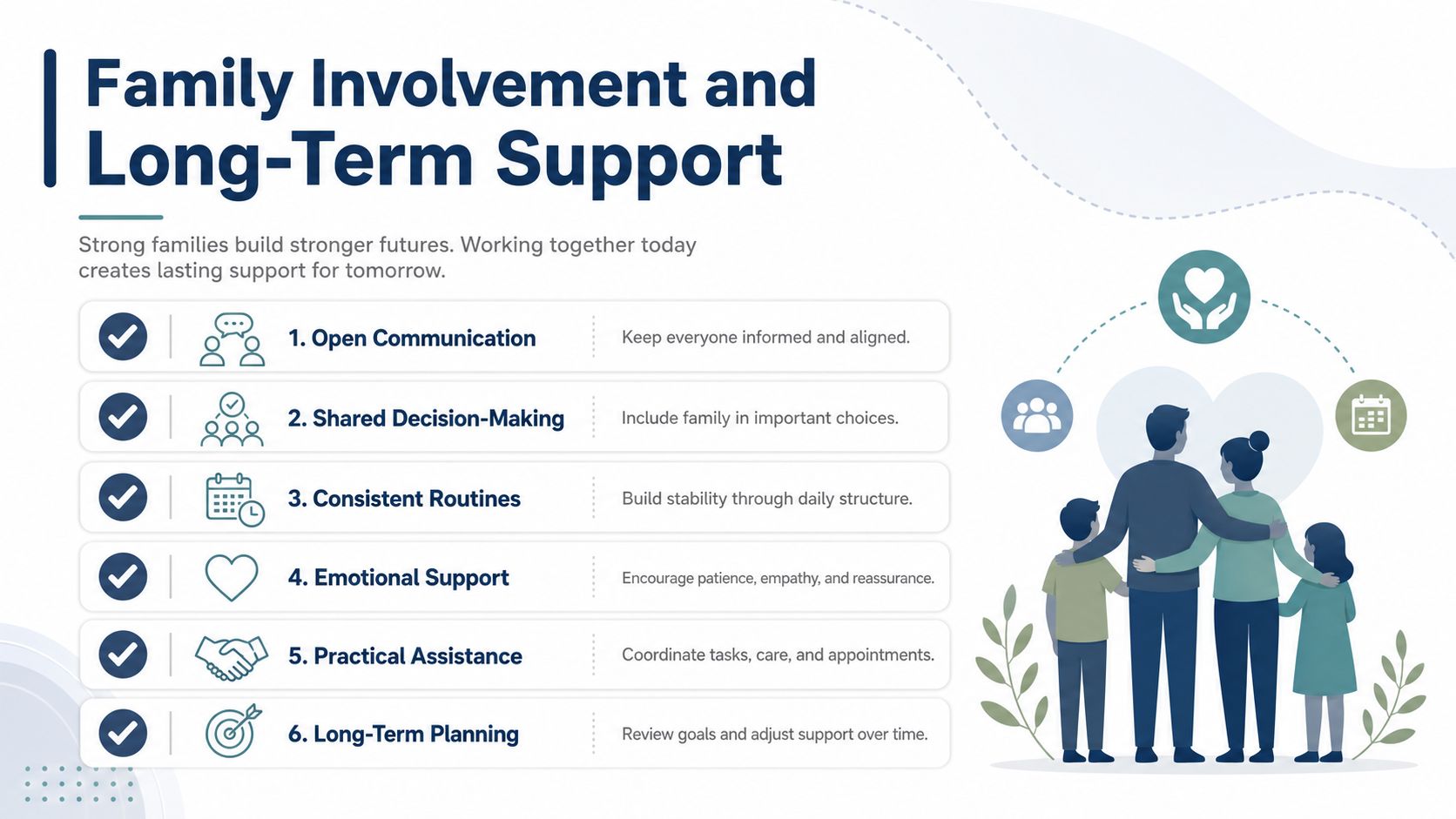
Family involvement is clinical infrastructure, not a courtesy amenity. Trauma and substance use alter communication, trust, boundaries, and expectations throughout a household. If partners or adult children don't understand the client's triggers and accommodation patterns, discharge can return the executive to the same relational system without new skills.
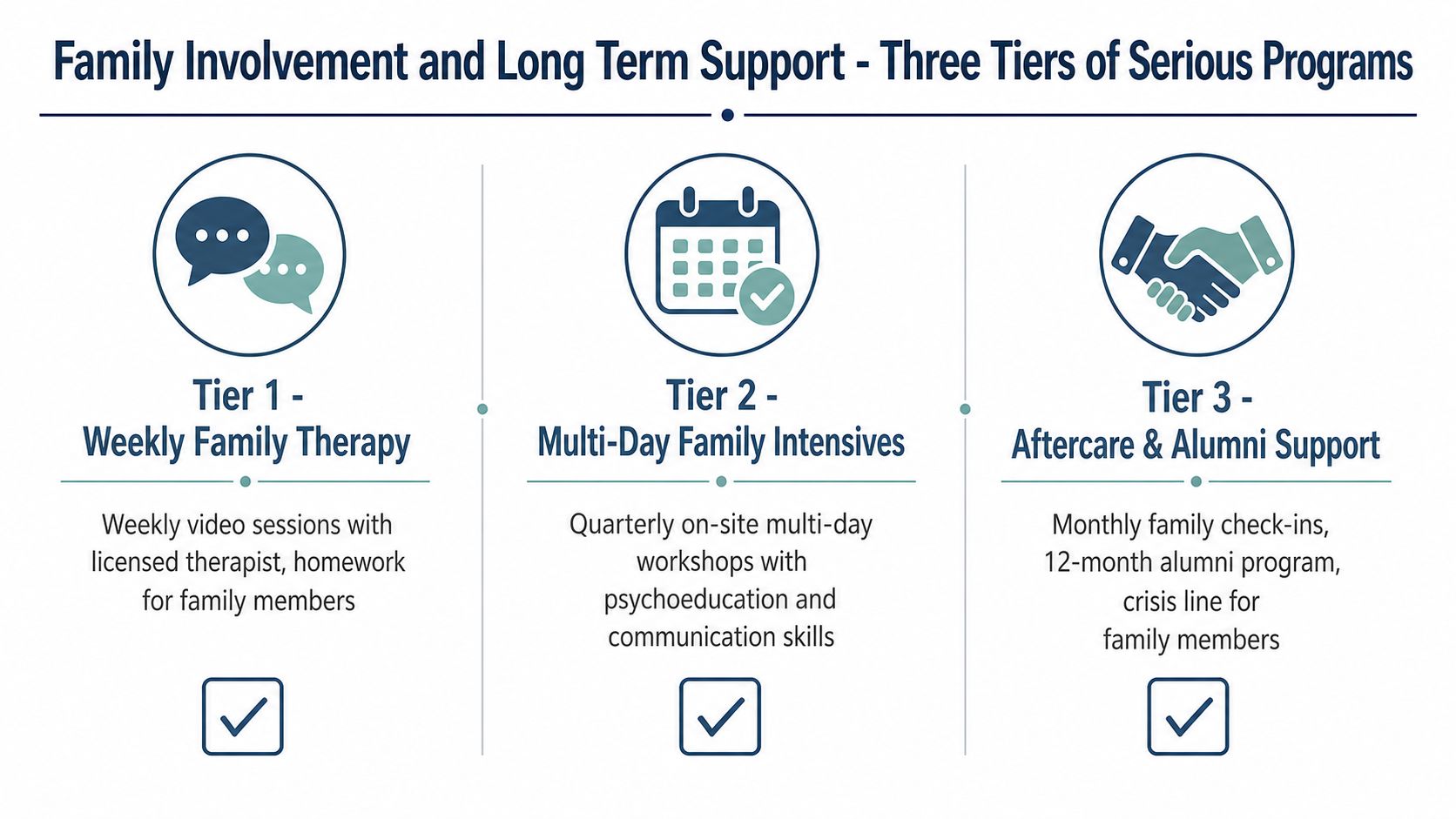
Three levels of meaningful participation
The first level is private family therapy with the primary clinician. These sessions clarify what the family knows, what it fears, and what the client needs to change. The second is psychoeducation, including multi-family workshops that teach trauma responses, substance-use cycles, boundary setting, and communication skills. The third is structured conjoint work before discharge, where the family practices agreements instead of relying on promises.
Family therapy for addiction recovery should include clear consent boundaries. A spouse may need practical guidance, while a parent or adult child may need a different role. The client retains privacy, but the family receives enough information to support safety and accountability.
Family participation can accelerate recovery, but poorly timed sessions can surface relational trauma before the client has enough stability to manage it.
Continuing care must match executive reality
High-end planning should address the transition from residential care to ordinary pressure. Useful components can include step-down intensive outpatient services with the same provider, alumni cohorts, in-person gatherings, sober coaching, recovery monitoring aligned with a return-to-work plan, and coordination with the client's existing therapist or psychiatrist.
A generic alumni newsletter is not a continuity strategy. The discharge plan should specify warning signs, medication follow-up, crisis contacts, family responsibilities, meeting or therapy commitments, and the process for adjusting care if symptoms return.
The employer relationship also requires discipline. The program can help the client create communication protocols that disclose only what is necessary, define a return-to-work pace, and identify who handles urgent responsibilities. Privacy doesn't mean avoiding planning. It means planning without unnecessary exposure.
Smart Questions to Ask Before You Enroll
Marketing language is easy. Implementation is harder. A program can claim to be trauma-informed while offering limited psychiatric coverage, vague family involvement, weak supervision, or no meaningful follow-up.
The adoption-versus-retention problem deserves direct attention. A feasibility trial in a young-adult residential substance use service delivered its trauma-informed model as intended about 88% of the time, while 48% of clients completed the full 6-week program. The same study reported a medium effect on substance use at three months, d = 0.67, alongside significant improvements in depression, anxiety, and PTSD symptoms, as documented in the published feasibility study. Fidelity matters, but a program must also keep clients engaged long enough to benefit.
Ask these questions before signing an agreement:
| Question to Ask | Strong Answer Signal | Weak Answer Signal |
|---|---|---|
| Which trauma screening tools are used at intake? | Named tools, clinical interpretation, and reassessment plan | “The team gets to know each client” |
| Who leads trauma treatment? | Clearly identified licensed clinicians with relevant training | General references to “specialists” |
| How are clinicians supervised? | Scheduled supervision, case review, and escalation procedures | Informal consultation only |
| How does the program assess dissociation and destabilization? | Specific stabilization and pacing protocols | Immediate trauma processing for everyone |
| What psychiatric coverage is available? | Defined psychiatrist access and medication review process | On-call coverage with no clear frequency |
| What happens when a client disengages? | Outreach, clinical review, family coordination with consent, and revised planning | Discharge for noncompliance without analysis |
| How are electronics handled? | Written device windows, privacy controls, and clinical limits | Either total access or blanket prohibition |
| Can an executive take a board call? | Case-by-case approval with protected therapy and rest periods | Admissions promises unrestricted work |
| What does family programming include? | Private sessions, education, and pre-discharge planning | A single family call |
| How is treatment fidelity monitored? | Protocol review and documented supervision | Website language without measurement |
| Which outcomes are tracked? | Retention, symptoms, substance use, and follow-up | Satisfaction alone |
| What happens after discharge? | Named step-down services and clinician coordination | Generic alumni contact |
| What does the full bill include? | Itemized costs and clear exclusions | Vague bundled pricing |
A program's response style matters. Admissions directors should welcome informed scrutiny. Evasive answers, unexplained restrictions, and promises that sound too convenient are disqualifiers for a high-stakes clinical decision.
Choosing the Right Program for Your Career and Recovery
Executives should choose based on four criteria. First, the program must demonstrate fidelity to the six SAMHSA principles, not merely mention them. Second, it needs real dual-diagnosis capability, including psychiatric care and trauma treatment. Third, it should track retention and follow-up rather than presenting only testimonials. Fourth, its operational systems must protect the client's career without allowing work to undermine treatment.
The most expensive setting isn't automatically the most trauma-informed. The quietest setting isn't automatically the safest. Privacy, autonomy, and comfort have clinical value only when staff use them to support connection, accountability, and regulated participation.
A practical buyer checklist
- Clinical structure: Confirm the program has a written trauma-informed model, clear stabilization phases, and trained supervision.
- Dual-diagnosis depth: Verify psychiatric coverage, medication management, sleep support, and co-occurring-disorder treatment.
- Executive operations: Request the written policy for phones, laptops, board calls, secure communication, and work windows.
- Family and discharge planning: Review the schedule for family sessions, education, conjoint preparation, and continuing care.
- Outcome transparency: Ask how the program evaluates completion, symptom change, substance-use progress, and post-discharge engagement.
The final decision should name the trade-offs explicitly. Privacy may reduce unwanted exposure but increase isolation. Clinical intensity may accelerate stabilization but interrupt business obligations. A program's philosophy may fit one executive's preference and frustrate another's. The right selection is the one whose clinical demands, privacy protections, professional boundaries, and long-term support align with the client's actual risks.
A California-licensed, Joint Commission-accredited provider such as Reflections offers private residential care for adults with co-occurring mental health and substance use disorders, with trauma-informed psychotherapy, psychiatric support, family involvement, and appropriate electronics access for balanced engagement with work and loved ones. Executives considering this level of care can review Reflections to assess whether its private detox and residential programs fit the clinical and professional requirements described above.