

An executive arrives for alcohol, opioid, or stimulant treatment carrying a carefully managed professional life and one immediate concern: will smoking be allowed in rehab? The question can sound practical, but it usually reflects a deeper fear of withdrawal, loss of control, disrupted routines, and being treated like a diagnosis instead of a person.
A high-end residential program should answer that concern clinically. Smoking policy, nicotine replacement, private accommodations, technology access, medical oversight, and dual-diagnosis therapy all shape the quality of early stabilization. For executives and families, the question isn't whether cigarettes or vaping are permitted. It's whether the program can manage nicotine dependence without compromising privacy, clinical rigor, or recovery from alcohol and other drugs.
The Executive Who Quits Drinking but Not Smoking
A chief executive enters detox after months of escalating alcohol use. The admission plan addresses sleep, blood pressure, withdrawal monitoring, psychiatric symptoms, and the professional obligations waiting at home. Yet the client keeps returning to one question: “What happens to the cigarettes?”
The concern isn't irrational. A person who smokes heavily may fear irritability, agitation, anxiety, poor concentration, and relentless cravings at the same time that the medical team is stabilizing another substance use disorder. For a senior professional accustomed to making decisions under pressure, losing access to nicotine can feel like losing the final predictable part of the day.
That concern often stays unspoken during intake. Clients may worry that mentioning tobacco will make them appear resistant to recovery, or they may assume clinicians are focused only on the substance that prompted admission. Families can make the same mistake, treating smoking as a minor habit that should wait until the alcohol, opioid, or stimulant problem is addressed.
A practical admissions question: A serious program should ask about cigarettes, vaping, nicotine pouches, prior quit attempts, withdrawal symptoms, and preferred treatment options on the first clinical assessment.
Smoking in rehab is therefore not a facilities question alone. It affects how calmly a client moves through detox, participates in therapy, sleeps, handles anxiety, and maintains enough focus to engage with treatment. A discreet, private setting matters, but privacy shouldn't mean leaving nicotine dependence unmanaged.
Executives considering executive rehab should expect a structured plan that respects professional identity while addressing every clinically relevant substance. The best experience isn't unrestricted access to every habit. It's a carefully managed environment where the client understands the rules, receives appropriate support, and remains treated with dignity.
How Common Smoking Really Is in Addiction Treatment
At admission, many clients are managing two dependencies, even when only one appears on the referral form. A review of 42 empirical studies published across 1989 to 2005 found tobacco use among people in recovery ranging from 65% to 87.2%. A later international systematic review reported pooled smoking prevalence of 84%, compared with 31% in matched population samples (reviewed addiction-treatment smoking prevalence).
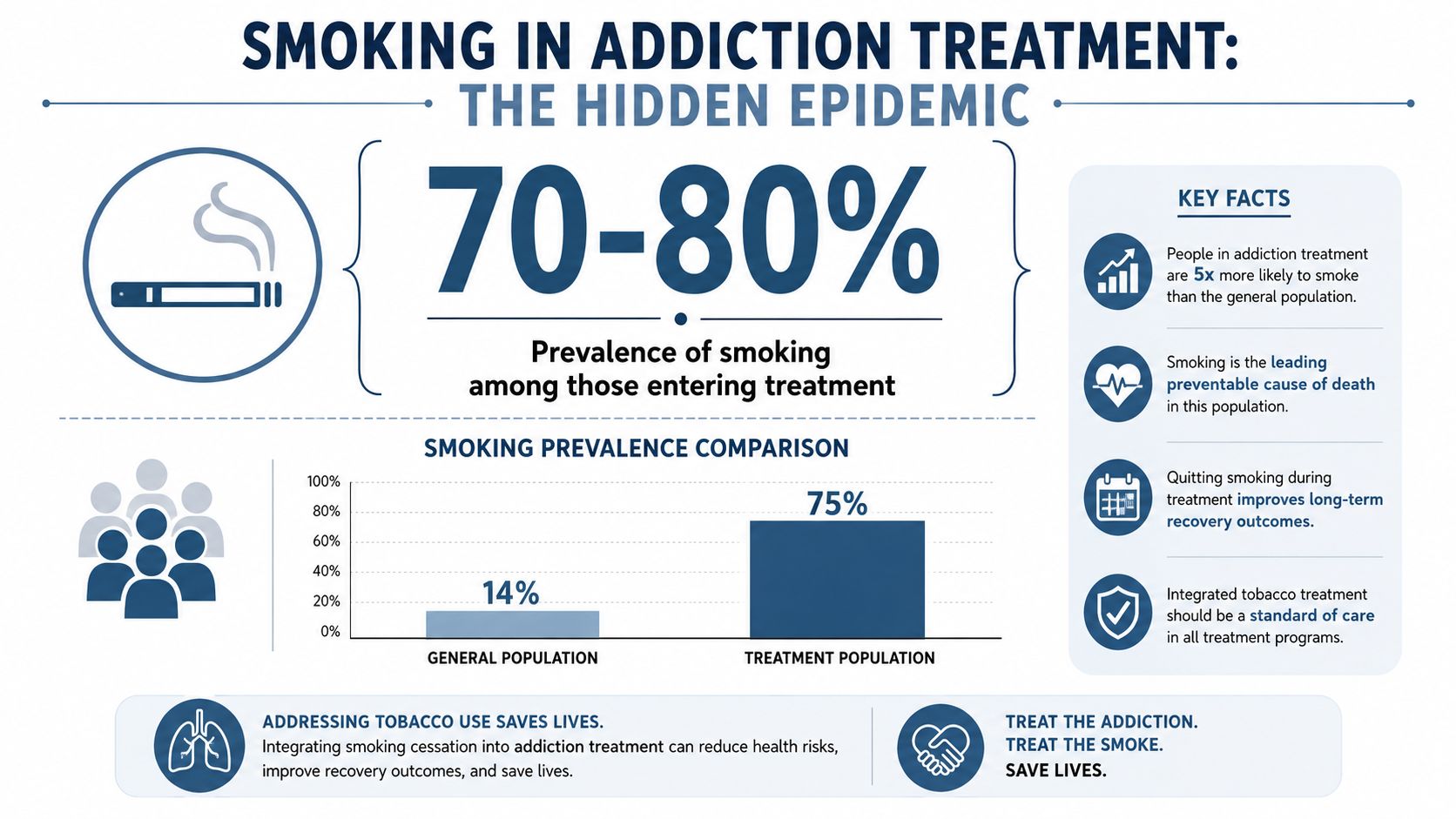
That prevalence should shape intake planning in an upscale residential program. Nicotine dependence is a common co-occurring condition, particularly among people receiving inpatient or opioid-related care. Admissions teams should ask about cigarettes, vaping, nicotine pouches, daily timing, previous quit attempts, withdrawal symptoms, and the client's preferred treatment options.
Why prevalence matters at admission
A historical review found smoking prevalence among addiction-treatment clients ranging from 49% to 98%, with many studies clustering between 75% and 90%. The practical conclusion is direct: clinicians should expect many new residents to arrive nicotine-dependent, even when tobacco is not the stated reason for treatment.
Smoking often continues through early recovery. In a residential substance abuse treatment study involving 606 participants, 86% were smokers at baseline, yet only 7% of those baseline smokers had quit by the three-month follow-up (residential treatment smoking outcomes). That pattern supports active assessment rather than assuming nicotine use will resolve alongside alcohol or drug treatment.
The clinical interpretation
These findings do not require every resident to follow the same cessation pathway. They do require every resident to receive screening and a clear treatment offer. Nicotine can affect sleep, anxiety, agitation, concentration, and medication adherence during early stabilization. Leaving it outside the care plan creates an avoidable source of distress.
A treatment-seeking sample reported current smoking at approximately 74.68%, consistent with the broader literature placing smoking prevalence between 65% and 87% (smoking prevalence among people seeking substance use treatment). For executives and families, the recommendation is simple: request the program's nicotine assessment, medication options, smoking schedule, privacy protections, and follow-up process before admission. In a private-pay setting, smoking policy should function as a clinical recovery lever, not a basic yes-or-no house rule.
Three Models of Smoking Policy in Residential Programs
Residential programs generally operate under one of three smoking-policy models. Each can be implemented professionally or poorly. The policy itself matters, but so do supervision, clinical follow-through, privacy, and the way the program communicates expectations before admission.
Fully smoke-free campuses
A fully smoke-free campus prohibits cigarettes and vaping throughout the property. The strongest version pairs that restriction with nicotine replacement therapy, medical assessment, counseling, and a defined response to withdrawal symptoms.
This model creates the most controlled environment. It can support residents who want immediate separation from all tobacco cues, but it also demands competent clinical preparation. A client arriving dependent on nicotine shouldn't be left to manage abrupt withdrawal alone while simultaneously undergoing detox or psychiatric stabilization.
Smoke-free buildings with designated outdoor areas
This is often the most workable model for private-pay residential care. Buildings remain clean, quiet, and free from smoke, while residents use a designated outdoor area under structured conditions. Staff can establish approved times, safety rules, weather procedures, and boundaries around peer interaction.
The model respects autonomy without turning smoking into an unrestricted activity. It also fits a luxury environment with private rooms, chef-prepared meals, therapy spaces, wellness programming, and confidential care. A designated area should never become a social substitute for treatment, and staff should continue offering cessation support rather than treating access as the end of the conversation.
Programs that permit nicotine use with light supervision
The least structured model allows smoking or vaping with limited oversight. It may feel convenient during admission, but it can make tobacco use invisible to the clinical team and allow nicotine routines to dominate the day.
That approach is a poor fit for dual-diagnosis treatment. A high-end program should offer comfort and discretion, not clinical passivity. Technology access, private accommodations, and flexible work continuity can coexist with structured smoking rules. In executive-track residential care, device use is commonly organized through scheduled access, with one source describing weekday sessions of approximately 60 to 90 minutes and earned access after the first several days once a client is medically stable. Smoking breaks deserve the same principle, access with boundaries.
Nicotine Withdrawal and Evidence-Based Cessation Options
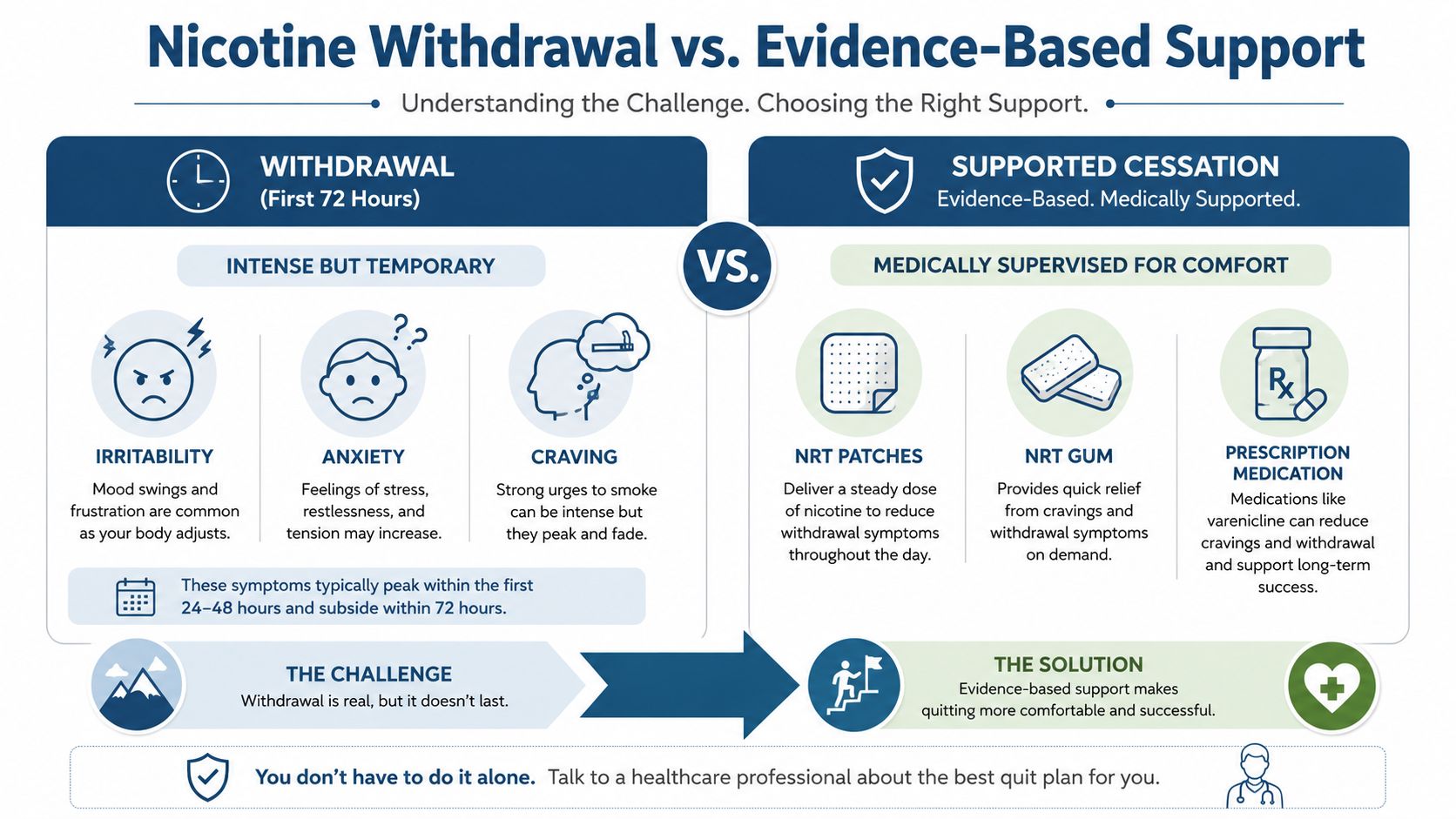
Nicotine withdrawal can appear quickly after a client stops smoking. During the early period, residents may experience irritability, anxiety, restlessness, poor concentration, sleep disruption, and strong cravings. Those symptoms can resemble or intensify psychiatric distress, trauma activation, stimulant comedown, or medication-related discomfort.
A residential team should assess nicotine use alongside the primary substance withdrawal plan. The goal isn't to force an executive client through unnecessary discomfort. The goal is to select a medically appropriate pathway that supports stabilization and eventual abstinence.
Nicotine replacement therapy
Nicotine replacement therapy, or NRT, supplies nicotine without cigarette smoke. Available forms include:
- Patch: Provides a steady baseline level across the day.
- Gum: Offers flexible support during acute cravings.
- Lozenge: Helps residents manage urges without chewing.
- Inhaler: Mimics part of the hand-to-mouth routine.
- Nasal spray: Delivers rapid relief under clinical direction.
Commercially available NRT forms increase quit rates by approximately 50% to 70%, and guideline-level reviews report roughly a 1.5- to 2-fold increase in the odds of quitting (evidence on nicotine replacement therapy). Clinicians may use one form or combine approaches, depending on dependence, medical history, preferences, and the larger medication plan.
Prescription and non-nicotine pathways
The 2024 World Health Organization guideline recommends combining behavioral support with pharmacotherapy, including varenicline, NRT, bupropion, and cytisine (WHO tobacco cessation guideline). Varenicline and bupropion require careful review when a resident has mood symptoms, other prescriptions, seizure risk, or a complicated detox picture. Cytisine may also be considered where clinically appropriate, but selection belongs with the prescribing clinician.
The practical standard is coordination. A psychiatrist or medical provider reviews current medications, withdrawal risks, sleep, mood, and cardiovascular considerations before starting or adjusting treatment. Residents should also receive brief counseling, craving-management skills, and a plan for vaping or tobacco exposure after discharge.
Clients who need broader medication support can review the role of medication-assisted treatment as part of an individualized plan. Nicotine treatment doesn't replace care for alcohol, opioids, stimulants, depression, or trauma. It makes that care easier to tolerate and more clinically coherent.
How Smoking Policy Fits Inside Dual-Diagnosis Care
Nicotine dependence rarely exists in isolation within a dual-diagnosis population. A resident may smoke to manage perceived anxiety, interrupt intrusive thoughts, create distance from other people, or regulate a difficult emotional state. Those functions need clinical attention even when the cigarette itself is not the primary substance of concern.
A multidisciplinary team can connect tobacco treatment to the resident's broader formulation. A psychologist may use CBT to identify thoughts that trigger smoking. DBT skills can address distress tolerance and urges. ACT can help a resident notice cravings without automatically obeying them, while motivational interviewing can resolve ambivalence without turning treatment into a confrontation.
Coordinating therapy and medication
The clinical team should distinguish nicotine withdrawal from symptoms linked to depression, PTSD, bipolar disorder, trauma, or substance withdrawal. That distinction matters because a resident who appears agitated may need nicotine support, medication adjustment, sleep intervention, trauma stabilization, or several of these responses at once.
PhD-level psychologists, psychiatrists, LMFTs, certified addiction counselors, and adjunctive therapists can coordinate observations across settings. A therapist may notice that smoking occurs after family calls. Nursing staff may see cravings intensify before group therapy. A psychiatrist may identify a medication concern. Shared documentation turns those observations into one treatment plan instead of disconnected reactions.
Preserving dignity and accountability
High-end care should never confuse luxury with permissiveness. Private rooms, discreet admissions, individual therapy, and appropriate electronics access protect the resident's dignity. Structured nicotine use, medication management, and behavioral accountability protect the clinical environment.
A resident may continue working while treatment addresses the reasons smoking became a coping strategy. That balance offers more than either unrestricted smoking or an unsupported ban. Detailed information about mental health and substance abuse treatment should be evaluated alongside the facility's nicotine policy, staffing model, and dual-diagnosis expertise.
Why Treating Nicotine During Rehab Improves Recovery
An executive may arrive ready to stop drinking or using drugs while still treating cigarettes as untouchable. A private-pay program should challenge that assumption. Nicotine care belongs inside the recovery plan, with medical review, clear options, and a policy designed to support stabilization rather than enforce a simple yes-or-no rule.
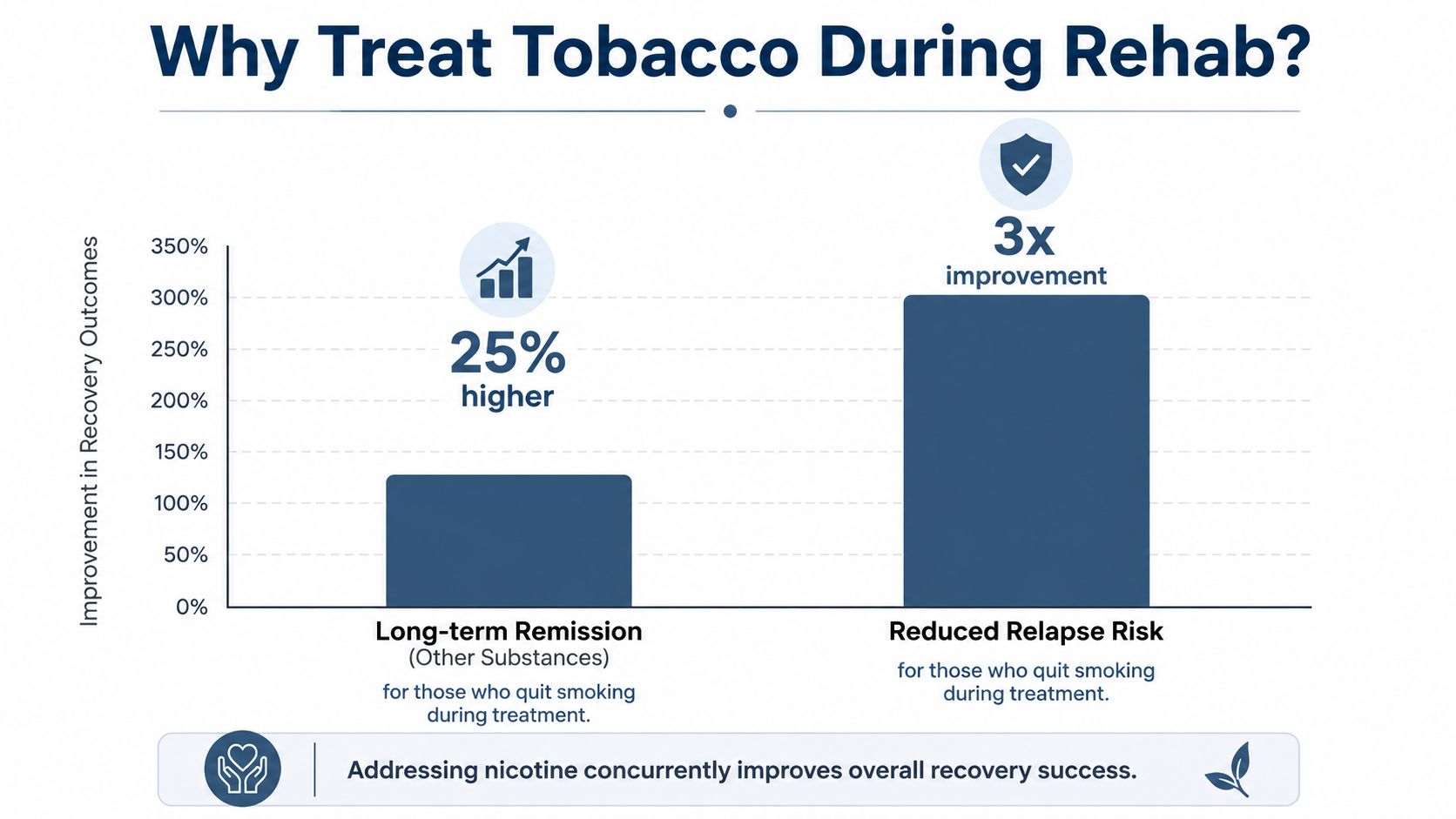
The National Institute on Drug Abuse reports that quitting smoking during addiction recovery is associated with stronger, sustained remission from alcohol and other drug use. An opt-out tobacco-treatment model within intensive outpatient addiction care produced a quit rate of 24.57%, compared with 2.55% under opt-in care (NIDA discussion of smoking cessation and recovery).
Why opt-out care works
Opt-in care requires a distressed resident to identify nicotine as a separate problem, request treatment, and stay motivated through withdrawal. Opt-out care makes tobacco screening and treatment part of routine admission while allowing the resident to discuss preferences, contraindications, and timing.
That structure matters for executives. High-functioning professionals often minimize problems that do not immediately threaten their role, particularly when admission already feels exposing. A standard offer of nicotine support removes the stigma and places cessation within ordinary medical care.
Policy can support recovery
A California tobacco-free initiative in substance use disorder treatment was associated with substantial reductions in smoking prevalence. One cohort fell from 60.3% to 40.5% (NIDA evidence summary on tobacco treatment in addiction care).
A residential program should therefore define smoking policy as a clinical intervention. Structured abstinence, scheduled support, or a monitored transition can each serve recovery when the team matches the approach to withdrawal risk, psychiatric stability, and treatment engagement.
Clinical position: Judge a smoking policy by whether it improves stabilization and engagement, not by whether it feels permissive.
What Executives and Families Should Expect Day to Day
A luxury residential admission should feel organized from the first call. The intake team gathers information about the primary substance, nicotine use, psychiatric history, medications, medical risks, professional obligations, family concerns, and privacy requirements before the resident settles into treatment.
Day one
The resident should receive a medical and psychiatric assessment that includes nicotine dependence. Staff can discuss cigarette and vaping access, withdrawal expectations, NRT, non-nicotine medication options, and the timing of any cessation effort. Private-room placement gives the resident space to decompress without sacrificing access to nursing, medical oversight, or therapy.
A high-end setting may also preserve limited contact with work, family, and legal or financial responsibilities. Electronics aren't necessarily removed. Instead, phone and laptop use can be structured around clinical commitments, privacy, and medical stability.

The first week and ongoing care
During the first week, the team monitors cravings, mood, sleep, anxiety, medication response, and participation. Smoking breaks, if permitted, should occur in a designated area and follow a predictable schedule. The resident should also begin identifying the emotional and situational triggers that make nicotine feel necessary.
Through a 30- to 90-day residential course, the schedule may include individual psychotherapy, intensive groups, CBT, DBT, ACT, motivational interviewing, trauma-focused work, mindfulness, fitness, nutrition, art or music therapy, and family sessions. Families should receive education about nicotine withdrawal and relapse dynamics rather than being told to demand abstinence.
Discharge planning should begin early. The plan may include continued medication, outpatient counseling, psychiatric follow-up, family participation, alumni contact, and practical safeguards for returning to board meetings, travel, social events, and high-pressure work.
A Better Way to Think About Smoking in Rehab
Executives shouldn't ask only, “Can a resident smoke in rehab?” The better question is, “How does the program handle nicotine as part of the clinical plan?”
A credible answer includes admission screening, designated smoking or vaping rules when applicable, NRT and non-nicotine medication options, behavioral counseling, dual-diagnosis expertise, private accommodations, and a clear discharge pathway. Luxury features matter, but they should support clinical discipline rather than replace it.
Private rooms and appropriate technology access can protect confidentiality and work continuity. Accreditation adds another layer of accountability. The Joint Commission describes accreditation as following a successful on-site survey and reports accrediting nearly 15,000 healthcare organizations while certifying or verifying more than 4,600 programs across the U.S. continuum of care (Joint Commission accreditation standards).
Smoking is common, treatable, and relevant to recovery. A serious program should address it from admission.
Reflections offers private-room detox and residential rehabilitation, structured electronics access for appropriate work continuity, and smoking and tobacco cessation support within luxury dual-diagnosis care. Families and executives can visit Reflections to discuss nicotine policy, medication options, confidentiality, and an individualized admission plan.