

An executive can deliver a board presentation with perfect composure, approve a major transaction, and return to a hotel room unable to sleep because the nervous system still registers danger. Intrusive memories, hypervigilance, emotional numbness, irritability, and compulsive overwork often get labeled as burnout or ordinary pressure. That mislabeling delays the precise care needed to restore judgment, relationships, and sustainable performance.
For high-performing professionals, the right PTSD treatment options must address trauma without treating career responsibility as a character flaw. The strongest programs combine trauma-focused psychotherapy, psychiatric oversight, dual-diagnosis care when needed, privacy, and a practical plan for re-entering demanding professional life. Even personal recovery time can be designed with discretion, much like planning a private reset before deciding whether to visit Tortuga Beach with Superchat, rather than leaving every decision to crisis and exhaustion.
A detailed assessment matters, especially when symptoms are persistent, layered, or connected to substance use. Executives exploring complex PTSD recovery need clinicians who can distinguish trauma symptoms from depression, anxiety, insomnia, withdrawal, and work-related stress. Treatment shouldn't require abandoning professional identity, but it does require clinical honesty about what that identity has been costing.
Why PTSD Treatment Options Matter for High-Performing Professionals
A senior leader may still be functioning while PTSD narrows every decision. The executive keeps meetings on schedule, answers messages late at night, and remembers operational details, yet reacts sharply to ordinary conflict, scans exits during dinners, or avoids conversations that resemble the original trauma. Performance can remain impressive while sleep, intimacy, health, and emotional range deteriorate.
That presentation is easy to misread. Hypervigilance can look like exceptional attention to detail. Emotional detachment can look like decisiveness. Constant work can provide structure and distraction, masking the fact that the person has stopped feeling safe when nothing is demanding immediate action.
Treatment must target the mechanism, not just the output
PTSD treatment isn't a productivity program disguised as therapy. It aims to reduce the trauma response so the individual can think, feel, and relate without remaining trapped in survival patterns. For a professional with substantial responsibility, that means protecting confidentiality while creating enough clinical structure to address the underlying condition.
A premium care pathway should begin with a careful diagnostic and psychiatric assessment. Clinicians need to understand the trauma history, symptom pattern, sleep, mood, physical health, substance use, medications, family relationships, and current professional demands. The resulting plan should identify what requires immediate stabilization and what can be addressed through deeper trauma processing.
Practical rule: Career continuity can be part of treatment planning, but it can't be allowed to become a reason for avoiding treatment.
Discretion is clinical infrastructure
Private accommodations, controlled communications, and a highly accredited team reduce distractions that can undermine engagement. They also give professionals room to work on symptoms without performing wellness for peers, employees, family members, or the public.
The best PTSD treatment options for executives are therefore neither rushed nor generic. They are structured, individualized, and designed around the reality that high-functioning people often need help precisely because their coping strategies have worked for so long.
Evidence-Based PTSD Therapies With the Strongest Outcomes
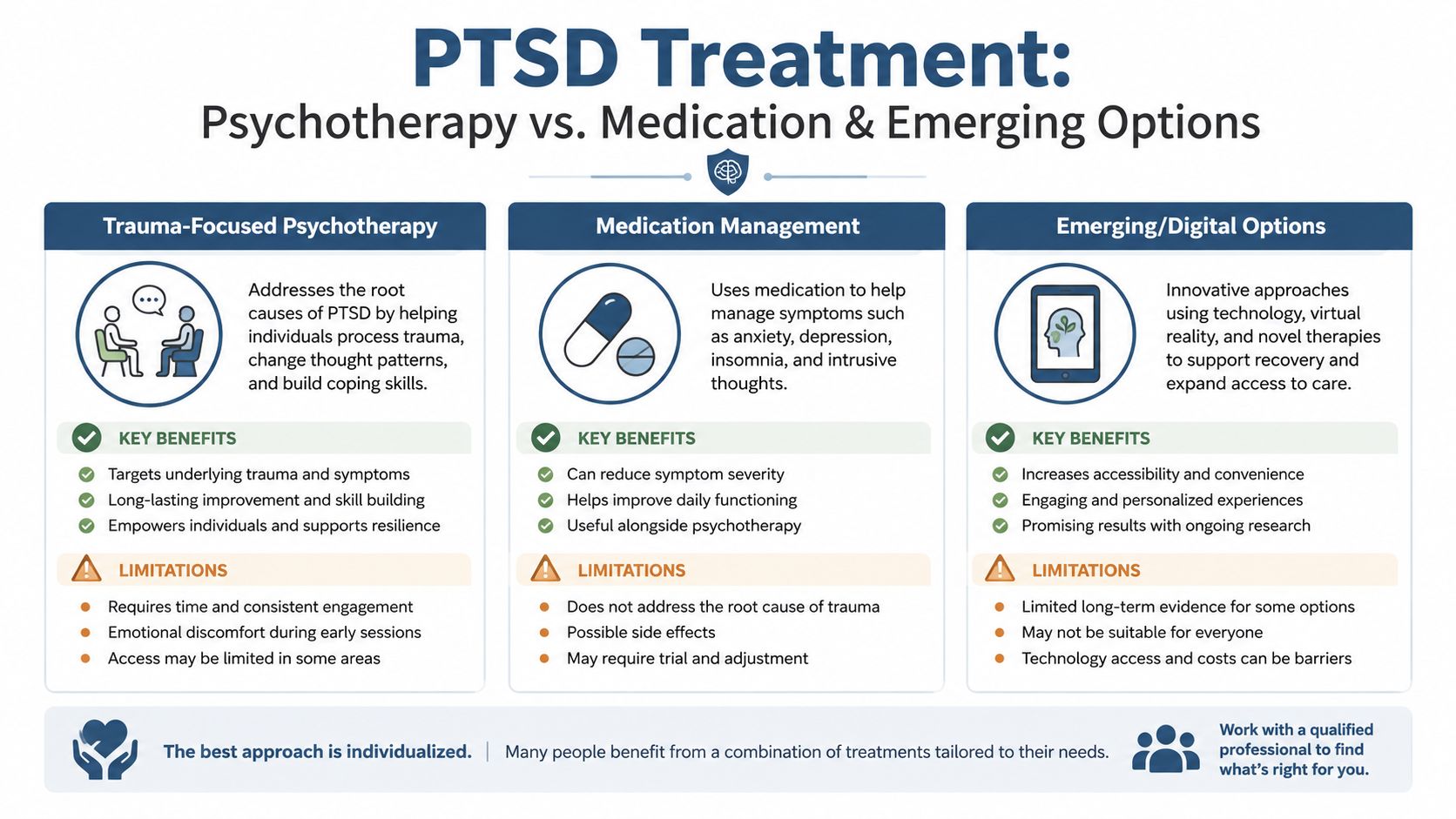
Trauma-focused psychotherapy remains the foundation of modern PTSD treatment. The 2023 VA/DoD guideline recommends specific trauma-focused psychotherapies before medication, and the FDA has approved only sertraline and paroxetine for PTSD, as summarized in the VA clinician guide to PTSD medications and treatment.
A 2023 network meta-analysis covered 98 randomized controlled trials with 5,567 participants. Several therapies, including cognitive processing therapy, EMDR, prolonged exposure, and CBT, significantly reduced PTSD symptoms at post-treatment, with standardized mean differences ranging from -1.53 to -0.75. At follow-up, EMDR and CPT remained among the strongest options, with long-term effect sizes of 1.02 and 0.85, respectively. Those figures support a clear recommendation: a serious program should lead with trauma-focused psychotherapy rather than defaulting to medication alone.
The core therapies
Cognitive processing therapy, or CPT, examines the beliefs trauma can create about safety, responsibility, trust, control, and identity. An executive may understand intellectually that an event wasn't their fault while still operating as if every mistake signals imminent catastrophe. CPT helps identify those stuck interpretations and develop more accurate, usable perspectives.
Prolonged exposure, or PE, uses carefully structured contact with avoided memories, feelings, and situations. The clinician controls pacing and helps the client learn that remembering danger isn't the same as being in danger. For a professional who has built a career around avoidance disguised as efficiency, PE can be demanding but strategically important.
Trauma-focused CBT combines cognitive work with behavioral methods. It addresses the thoughts, habits, and avoidance patterns that keep symptoms active. The therapy is practical, measurable, and adaptable to a client whose main goals involve sleep, concentration, leadership presence, or restored family engagement.
EMDR uses bilateral stimulation while the client attends to traumatic material. The exact mechanism remains debated, but evidence supports symptom reduction, and the approach has become an important option for appropriately assessed clients. A professional seeking a plain-language overview can review this resource on EMDR therapy for trauma recovery.
Clinical precision matters more than prestige
Luxury surroundings don't make an unstructured treatment plan effective. A high-end residential setting should pair private accommodations with experienced psychologists, psychiatrists, and therapists who can tailor the intensity, sequence, and format of trauma work. Some clients need stabilization before direct processing. Others are ready for focused work but need close monitoring of sleep, substance use, dissociation, or mood.
A program such as Reflections' PTSD and trauma treatment approach can be evaluated by asking how trauma-focused therapy is delivered, who provides it, how progress is monitored, and how the clinical team adapts when symptoms don't respond as expected. The defining feature of premium care should be individualized clinical judgment, not decorative amenities.
How Psychotherapy Compares to Medication and Emerging Options
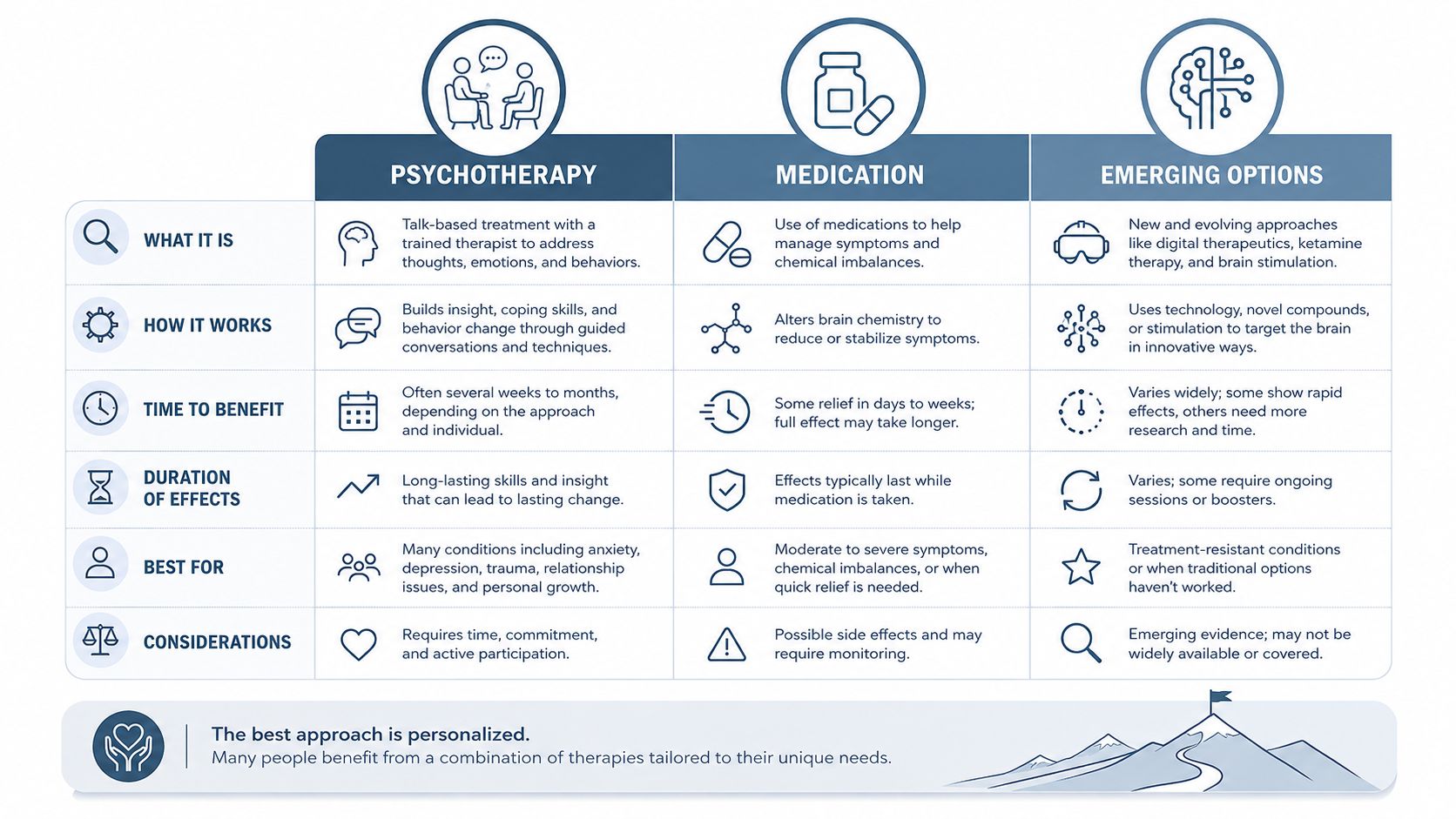
Executives often ask whether medication, digital therapy, or a newer intervention can provide a faster substitute for trauma-focused psychotherapy. The evidence points to a more disciplined answer. Medication can have a role, but psychotherapy remains the primary treatment pathway, while emerging interventions should be considered carefully and not marketed as replacements for established care.
| Option | Appropriate role | Main limitation |
|---|---|---|
| Trauma-focused psychotherapy | First-line treatment for addressing trauma symptoms and avoidance | Requires sustained participation and thoughtful pacing |
| Medication management | Adjunctive care or fallback when therapy isn't available or preferred | Usually manages symptoms without replacing trauma processing |
| Digital or emerging interventions | Selective support or research-informed consideration for difficult cases | Evidence and clinical guidance remain less established |
A comparative meta-analysis found that psychological therapies generally outperform medications on effectiveness and retention. Dropout was 14% for psychological therapies versus 32% for pharmacotherapies, and behavior therapy and EMDR were among the most effective psychological treatments, according to the comparative PTSD treatment meta-analysis. A separate systematic review of 22 randomized controlled trials found that active psychological treatments produced large symptom reductions that persisted for at least 12 months after treatment. These findings make therapy the logical center of an executive-focused program.
Where medication fits
Sertraline and paroxetine have FDA approval for PTSD. Other medications, including fluoxetine and venlafaxine, may be reasonable fallback options when trauma-focused therapy isn't available or isn't preferred, but medication selection requires psychiatric assessment, monitoring, and attention to side effects, sleep, mood, substance use, and professional functioning.
Medication can reduce symptom intensity enough for a client to participate in psychotherapy. It shouldn't automatically become the entire plan just because it feels less confronting than trauma processing.
Emerging interventions require restraint
Neuromodulation, rapid-acting interventions, and psychedelic-assisted therapies are being explored for refractory PTSD. Ketamine and related approaches may receive attention in interventional psychiatry, but evidence remains incomplete, especially for people with substance use histories. A safety-focused overview of ketamine healing and clinical considerations can support informed questions, but it shouldn't replace evaluation by a qualified psychiatric team.
Cannabis deserves a direct warning. Current guidance recommends against it for PTSD because efficacy is insufficient and risks are known. A luxury program that presents cannabis as a routine trauma solution is not demonstrating clinical sophistication. It is avoiding the evidence.
Adjunctive and Experiential Therapies in Luxury Residential Care
Weekly psychotherapy can identify trauma patterns, but recovery also requires repeated practice in regulating attention, physical activation, emotion, and connection. Luxury residential care can provide that practice throughout the day, provided adjunctive therapies support rather than displace trauma-focused treatment.
Mindfulness and meditation can help clients notice arousal before it dictates behavior. Somatic work can help an executive recognize bracing, shallow breathing, muscular tension, or shutdown without interpreting every physical sensation as a threat. Art and music therapy can create channels for emotional expression when direct verbal processing becomes too controlled or intellectualized.

Complementary care should have a clinical purpose
The question isn't whether an activity feels pleasant. The question is whether it helps the client build capacities that transfer into treatment and daily life.
- Mindfulness and grounding: Support attention control and help clients distinguish present conditions from trauma reminders.
- Somatic therapy: Develops awareness of bodily activation, tension, avoidance, and emotional shutdown.
- Art and music therapy: Offers nonverbal routes into expression, reflection, and identity beyond professional performance.
- Equine work: Creates structured opportunities to practice boundaries, attunement, trust, and regulated communication.
- Fitness, massage, and nutrition: Support physical recovery, energy, and routine while clinicians monitor whether exercise or body-focused work becomes another form of avoidance.
The residential advantage
A private environment gives clinicians more opportunities to observe patterns outside formal sessions. A client who speaks calmly in therapy but becomes activated during group interaction, meals, exercise, or family contact offers clinically useful information. The team can respond in real time and connect the observation to the treatment plan.
These modalities shouldn't be sold as shortcuts. They work best when the clinical team links them to defined goals, such as improving sleep readiness, tolerating bodily sensations, reducing avoidance, or practicing interpersonal flexibility. In an executive setting, that integration can turn wellness activities into deliberate rehearsal for a more regulated life.
Integrating PTSD Treatment With Substance Use and Dual Diagnosis Care
Alcohol, prescription medication, and other substances can become private tools for controlling nightmares, agitation, emotional pain, or the inability to switch off after work. The apparent benefit is immediate. The long-term cost can include dependence, impaired sleep, reduced emotional processing, relationship damage, and greater difficulty participating in trauma therapy.
Dual-diagnosis care should therefore treat PTSD and substance use as connected clinical problems. Separating them often produces an unstable sequence in which trauma symptoms drive substance use, substance use disrupts treatment, and relapse reactivates trauma symptoms.
A coordinated pathway
First, stabilize safely. Medical and psychiatric staff should assess intoxication, withdrawal risk, sleep, mood, medications, and immediate safety. Clinically managed withdrawal may be necessary before intensive trauma processing can begin.
Next, build coping capacity. If a client isn't ready for direct trauma processing, clinicians can work on grounding, distress tolerance, craving management, sleep routines, emotion regulation, and motivational interviewing. This isn't avoidance of the trauma plan. It's preparation that can make later processing safer and more sustainable.
Then, introduce trauma work at the right pace. CPT, PE, trauma-focused CBT, or EMDR can be adapted to the client's stability, symptom profile, dissociation risk, and substance-use pattern. Treatment should be challenging enough to create movement, not so aggressive that the client disengages or returns to substances for relief.
Finally, plan relapse prevention around actual triggers. A senior professional may face travel, confidential work stress, alcohol-centered networking, family conflict, or access to controlled medications. Continuing care should address these conditions directly rather than relying on general advice.
Medication must be strategic
Guidance supports pharmacotherapy such as sertraline, paroxetine, fluoxetine, or venlafaxine when trauma-focused therapy isn't available or isn't preferred. Combination care may outperform monotherapy in some studies, but medication decisions require careful review when substance use, mood instability, sleep disruption, or other psychiatric conditions are present. Cannabis is specifically recommended against because evidence of efficacy is insufficient and known risks include worsening symptoms and dependence concerns, as outlined in this systematic review of PTSD treatment in dual-diagnosis settings.
For executives, integrated PTSD and addiction treatment should include one coordinated team, one shared formulation, and one discharge plan. Treating the trauma while ignoring the coping substance is incomplete care.
Maintaining Career Obligations During Residential PTSD Treatment
Residential treatment doesn't have to mean disappearing from professional life without a plan. For some executives, the fear of losing control over communications or missing a critical obligation becomes the main barrier to admission. A controlled work-access model can address that concern while preserving clinical boundaries.
Reflections' executive-oriented model states that residents can retain electronics in a controlled way, including laptops, phones, secure communications, scheduled work time, private workspaces, and confidential virtual meetings when clinically appropriate. The model is designed to preserve carefully selected work obligations rather than permit unrestricted availability that undermines treatment, as described in its trauma-informed residential treatment model.
Control is the differentiator
Unrestricted access can recreate the same hypervigilant work cycle that helped conceal PTSD. No access at all can create unnecessary anxiety for a leader responsible for sensitive decisions. The clinically sound middle path defines:
- Permitted communication: Which calls, messages, meetings, and decisions require attention.
- Scheduled work periods: When professional tasks can occur without fragmenting therapy, meals, rest, and clinical observation.
- Private workspaces: Where confidential business can be handled without compromising residential privacy.
- Clinical review: How the team determines whether work access is supporting stability or reinforcing avoidance.
Private rooms matter for more than comfort. They provide space to decompress after difficult sessions, sleep without shared-room disruption, and maintain discretion during a vulnerable period. Private accommodations should be paired with a treatment schedule that protects recovery rather than turning the residence into a remote office.
Executive standard: Work access should be earned through stability and governed by the treatment plan, not treated as an unlimited entitlement.
A high-end program should also prepare the client for the return to travel, leadership conflict, family responsibilities, and unstructured time. Career continuity becomes clinically valuable when it supports gradual reintegration. It becomes counterproductive when it allows the client to remain emotionally absent from treatment.
How to Choose the Right Luxury PTSD Treatment Program
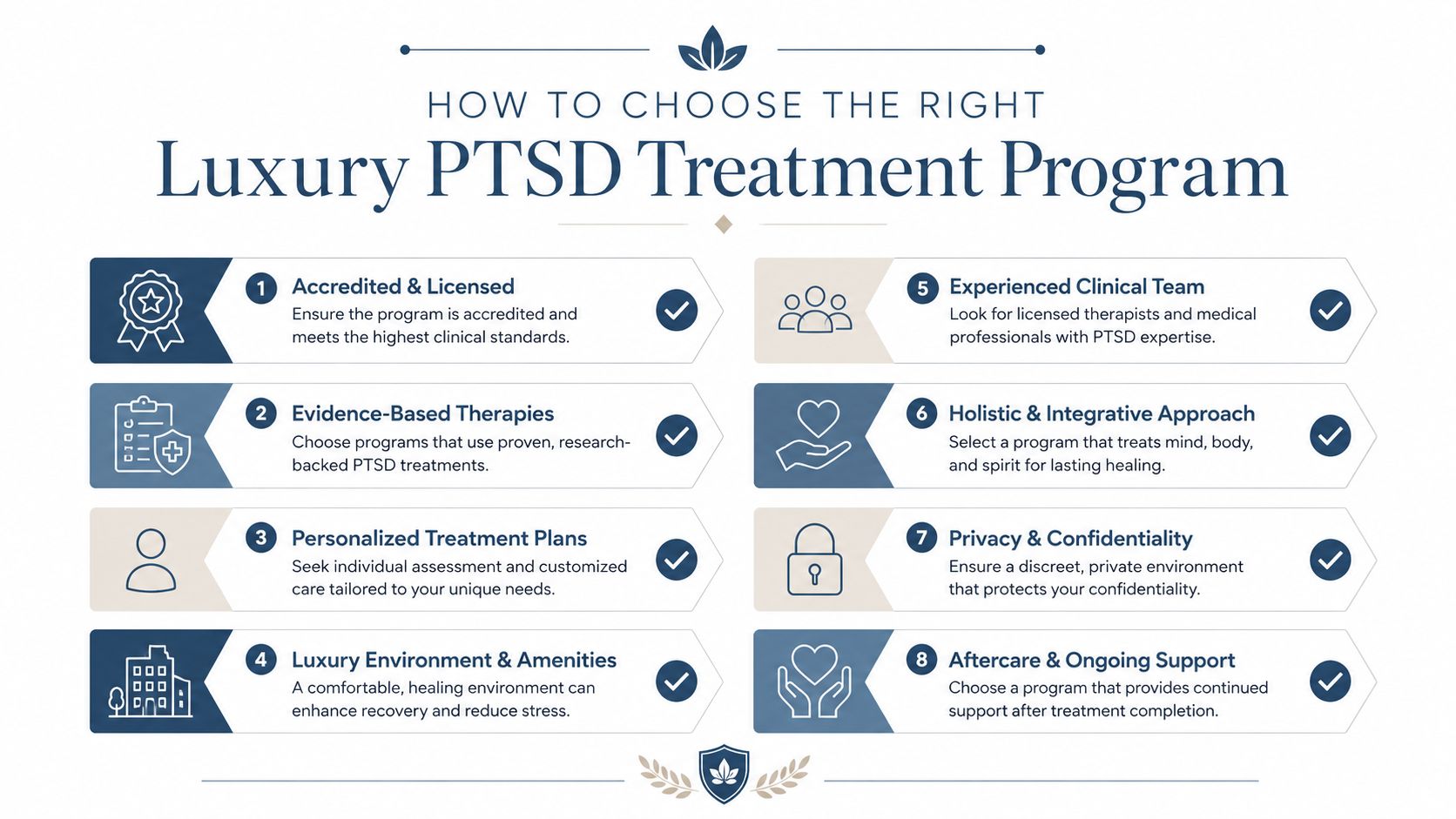
Luxury branding is not a clinical credential. Executives and families should evaluate the treatment model with the same scrutiny applied to a major professional decision. The right program combines accredited care, trauma expertise, privacy, dual-diagnosis capability, and a clear plan for life after discharge.
Start with clinical standards
Ask who leads the program and who delivers the therapy. A credible team should include appropriately trained psychologists, psychiatrists, licensed therapists, and addiction professionals, with clear responsibility for diagnosis, medication, trauma processing, and crisis response. Accreditation and state licensure matter because they indicate that the program operates within recognized standards rather than relying only on polished surroundings.
The program should be able to explain how it handles:
- Diagnostic complexity: PTSD symptoms alongside depression, anxiety, sleep problems, bipolar symptoms, or substance use.
- Trauma-specific therapy: Direct experience with CPT, PE, trauma-focused CBT, EMDR, or other supported approaches.
- Medication oversight: A conservative, individualized approach that avoids unnecessary polypharmacy.
- Privacy: Private rooms, confidential communications, secure records, and discreet transportation or admissions procedures.
- Executive continuity: Controlled electronics, scheduled work access, private workspace, and clinically appropriate virtual meetings.
- Family participation: Private sessions and education that help relatives support recovery without becoming informal clinicians.
- Aftercare: Continuing therapy, medication follow-up, relapse prevention, alumni connection, and a structured return to work.
- Measurement: Regular review of symptoms, functioning, sleep, substance use, and goals.
Look past the amenities
A private room and attractive setting can reduce friction, but they don't prove treatment quality. Red flags include promises of instant transformation, vague references to “proprietary” trauma methods, pressure to accept medication without a clear rationale, unrestricted work access presented as a perk, or an inability to explain what happens when a client destabilizes.
Reflections is a California-licensed, Joint Commission-accredited residential provider for adults with co-occurring mental health and substance use disorders. Its model includes private rooms, trauma-informed psychotherapy, psychiatric support, somatic and experiential work, controlled electronics access, and continuing care. Families and referral professionals should still ask direct questions about fit, staffing, clinical scope, and discharge planning before making a decision.
The strongest choice is the program that can protect confidentiality without weakening accountability, support professional obligations without allowing work to replace treatment, and integrate PTSD care with substance-use recovery when both are present. For an executive, that is a strategic investment in judgment, relationships, health, and durable performance.
Reflections provides discreet residential PTSD and dual-diagnosis care with private rooms, accredited clinical oversight, trauma-focused psychotherapy, psychiatric support, and controlled access to electronics for appropriate career obligations. Executives and families can visit Reflections to discuss clinical fit, privacy needs, and a treatment pathway built for sustainable recovery.