
A chief executive can close a financing call, approve a crisis memo, and still spend the night unable to sleep, flooded by threat responses that appear disconnected from the current situation. For high-achieving professionals, complex PTSD recovery has an additional constraint: treatment must address serious clinical needs without casually exposing confidential business matters, abandoning fiduciary responsibilities, or forcing a public absence that creates unnecessary risk.
Luxury care should therefore mean more than attractive surroundings. It should combine accredited clinical depth, discreet operations, private accommodation, dual-diagnosis capability, and practical access to essential work responsibilities. A credible program designs treatment around the executive's actual life, while still protecting the uninterrupted attention required for stabilization and trauma work.
When the Board Call Comes From a Treatment Suite
At 2 a.m., a CFO in a private trauma suite answers a call from a private-equity backer. She's still in stabilization, her nervous system remains activated, and the next morning's board preparation is already underway. Her COO is covering the meeting logistics, but the CFO still has to clarify a covenant issue, protect a confidential transaction, and sound composed enough to reassure the people financing the company.
That scene captures the central problem. Severe CPTSD symptoms can collide directly with fiduciary duties, NDAs, board expectations, and public visibility. Hypervigilance may keep an executive scanning every message for danger. Dissociation may interrupt memory and concentration. Sleep disruption can make a routine decision feel like an existential threat. A professional who has spent years appearing controlled may enter treatment only after performance, health, and relationships have begun to fail at the same time.
The answer isn't to treat career obligations as evidence that the client isn't serious about recovery. It's to engineer the treatment environment properly. A private-pay executive program should establish boundaries around work access, determine which responsibilities can continue safely, and identify a delegate for matters that require full clinical focus. Appropriate access to phones and laptops can preserve selected continuity, but unrestricted work becomes another form of avoidance if clinicians don't define its limits.
Executive standard: Privacy and career continuity should support treatment, not replace it.
High-end care also requires physical privacy. Private rooms for every resident, including in detox and rehabilitation, reduce unnecessary exposure and give clients a controlled space for sleep, decompression, and confidential calls. Secure communications, discreet arrivals, staff trained to protect sensitive information, and a clear plan for public-facing concerns matter as much as décor.
Executives evaluating confidential executive rehabilitation should ask a harder question than whether a facility feels luxurious. The relevant question is whether its clinical team can manage complex trauma, substance use, medical risk, work access, and privacy as one coordinated operating problem.
What Complex PTSD Actually Means for High-Functioning Adults
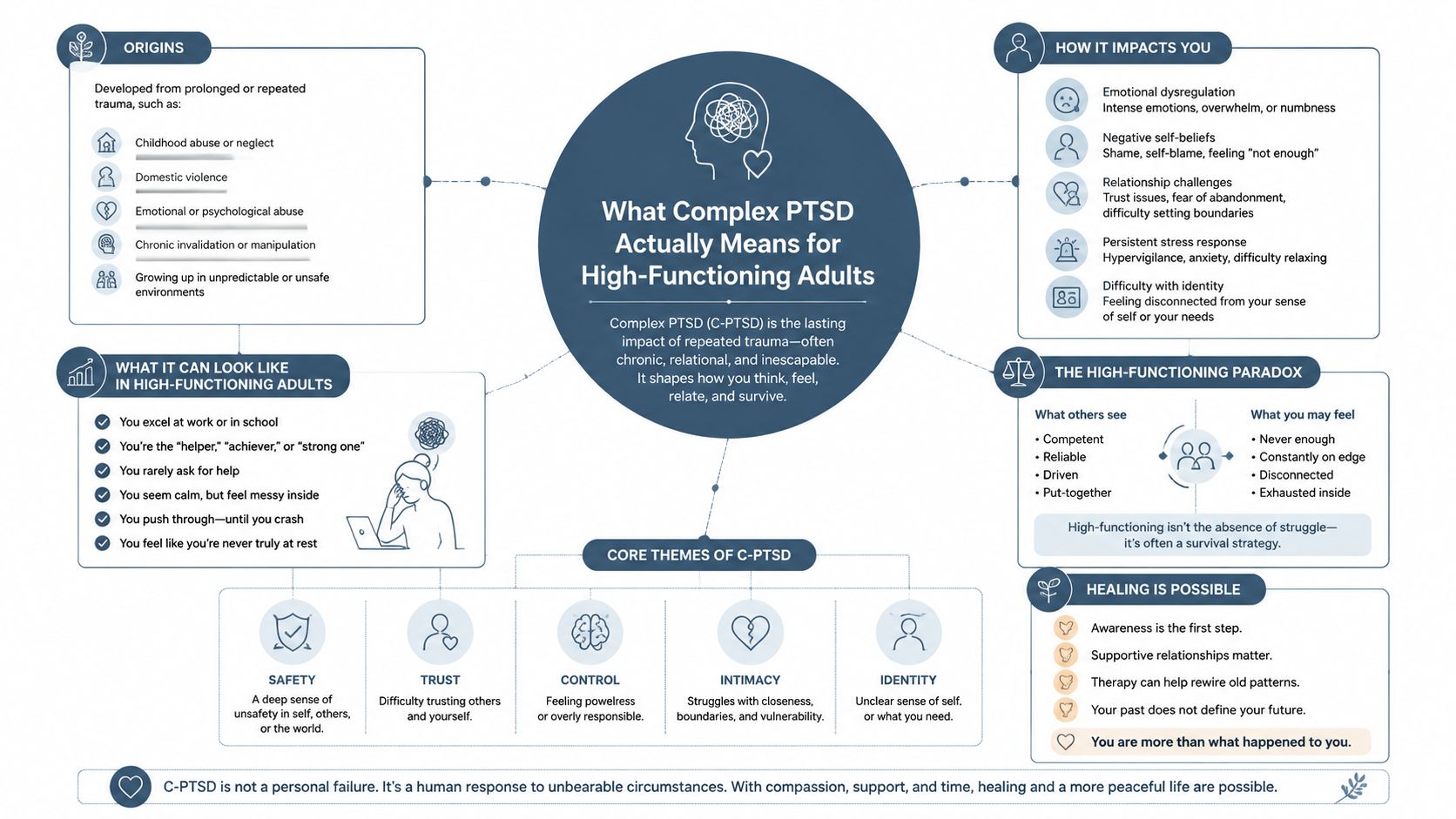
Complex PTSD is not merely a more intense version of ordinary work stress. The concept was first proposed by Judith Herman in 1992 to describe the long-term effects of repeated interpersonal trauma, and the diagnosis was later formalized in the World Health Organization's ICD-11 framework. ICD-11 distinguishes core PTSD symptoms from disturbances in self-organization, especially affect dysregulation, negative self-concept, and relationship difficulties. The historical shift matters because treatment must address identity and relationships, not only fear-based symptoms. The U.S. Department of Veterans Affairs explains the development and clinical framework of complex PTSD.
Translate symptoms into professional behavior
The PTSD cluster includes re-experiencing, avoidance, and a persistent sense of threat. In an executive, hypervigilance can look like decisive leadership when it reflects an inability to tolerate uncertainty. Avoidance may appear as delegation, constant travel, or endless strategic work that keeps painful material out of awareness. Re-experiencing can surface as intrusive memories, body reactions, nightmares, or disproportionate responses to criticism.
The disturbances in self-organization require a different lens:
- Affect dysregulation: Anger, panic, shutdown, or emotional flooding may follow a difficult board exchange. The executive may recover quickly in public and then remain physiologically activated for hours.
- Negative self-concept: Chronic shame can be mislabeled as imposter syndrome. A person may dismiss promotions, praise, or financial success because internal beliefs still say that failure is inevitable or that worth depends entirely on performance.
- Relational difficulty: Distrust, emotional distance, people-pleasing, or controlling behavior can impair partnerships and senior-team relationships, even when the executive remains highly competent.
Separate CPTSD from burnout
Burnout generally reflects prolonged occupational strain and depleted capacity. CPTSD can include exhaustion, but it also involves trauma-linked threat responses and deeper disturbances in emotion, identity, and attachment. A high performer shouldn't self-diagnose from a checklist. The useful intake questions concern repeated trauma exposure, dissociation, shame, relationship patterns, substance use, sleep, and the situations that trigger disproportionate reactions.
A qualified clinician should distinguish CPTSD from PTSD, depression, anxiety, bipolar symptoms, medical conditions, and burnout. That distinction determines whether treatment focuses only on symptom relief or includes a broader, phase-based plan for stabilization, trauma processing, and reintegration.
Evidence-Based Treatment Pathways That Match Professional Demands
A high-functioning client doesn't need a larger menu of fashionable therapies. The client needs a sequenced treatment architecture that matches clinical risk, processing tolerance, and business obligations. Trauma-focused psychotherapy has the strongest support for reducing core PTSD symptoms in CPTSD. A 2025 review found benefits from trauma-focused CBT, exposure-based therapy, and EMDR, with improvements also reported in negative self-concept and interpersonal functioning, although those broader domains tend to respond less consistently. The 2025 review of CPTSD treatment evidence provides the relevant clinical synthesis.
EMDR and trauma-focused CBT usually deserve priority when the client can tolerate structured processing. DBT skills add emotion regulation, distress tolerance, and interpersonal effectiveness. ACT can help executives stop organizing every decision around avoidance, control, or self-judgment. Somatic approaches, including Somatic Experiencing, can help clinicians work with activation and bodily signals, while neurofeedback or HRV biofeedback may serve as adjunctive regulation tools rather than substitutes for trauma psychotherapy.
The evidence is not uniform across outcomes. In the summarized 2019 meta-analysis, CBT, exposure alone, and EMDR outperformed usual care for PTSD symptoms, with standardized effects ranging from g = -0.90 for CBT to g = -1.26 for EMDR. Those figures come from the Frontiers clinical review. They shouldn't be treated as a promise for an individual client, and they don't mean identity or relational impairment will resolve at the same pace.
Rank modalities by executive fit
| Modality | Best For | Evidence Strength | Pacing for Executives |
|---|---|---|---|
| Trauma-focused CBT | Threat appraisals, avoidance, structured cognitive work | Strong for core PTSD symptoms | Direct, measurable, and compatible with scheduled work |
| EMDR | Distressing memories and trauma-linked activation | Strong for core PTSD symptoms | Requires careful resourcing and protected processing time |
| DBT skills | Affect dysregulation, impulsivity, conflict, crisis tolerance | Strong as an integrated skills approach | Highly practical between sessions and during demanding work periods |
| ACT | Experiential avoidance, shame, values conflict | Useful adjunctive framework | Fits decision-making when paired with trauma-focused care |
| Somatic approaches | Body activation, shutdown, interoceptive awareness | Supportive and adjunctive | Gentle pacing can improve tolerance for deeper work |
| Neurofeedback and HRV biofeedback | Regulation and arousal management | Adjunctive role | Can be scheduled around core psychotherapy |
Phase-based care is the correct default for complex presentations. Stabilization comes first, followed by trauma processing, then consolidation and relapse prevention. A client with dissociation, severe affective instability, or active substance use shouldn't be pushed into intensive memory work just because the client is intellectually astute.
A weekly plan might combine individual trauma therapy, DBT-informed skills, psychiatric review, family work, and carefully limited work blocks. Programs describing trauma-informed therapy should explain exactly how clinicians pace processing, track DSO symptoms, and decide when a client is ready for greater intensity. Supportive conversation alone isn't an adequate benchmark for durable CPTSD recovery.
Dual Diagnosis Care When Trauma and Substance Use Overlap
Executives often present with a substance-use pattern that has been mistaken for the primary problem. Alcohol may be used to force sleep after a day of hyperarousal. Stimulants may be used to sustain performance through exhaustion. Prescribed benzodiazepines may blunt panic while worsening sedation, memory, or dependence risk. Opioids may become a method of emotional shutdown rather than a recreational choice.
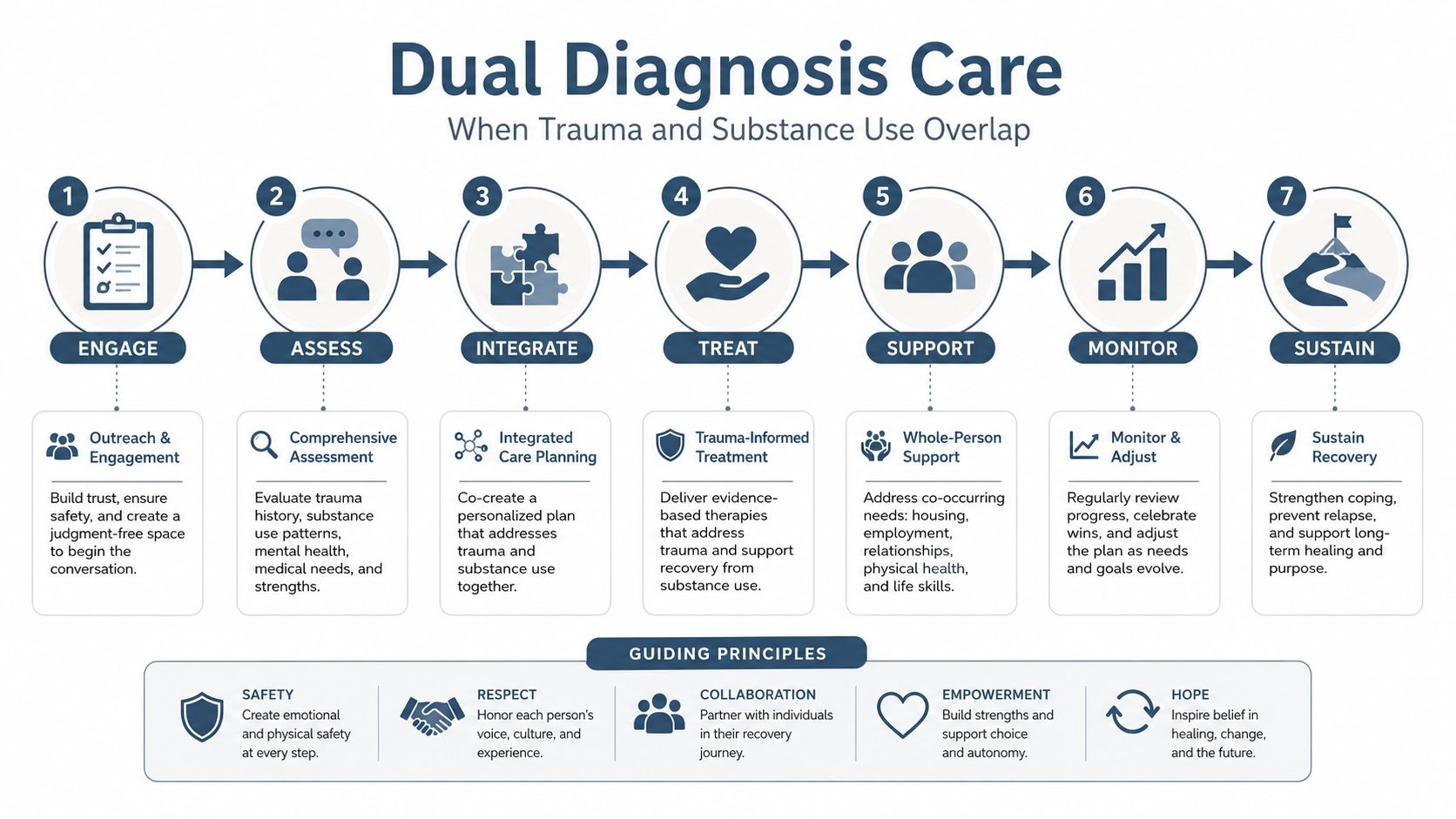
This overlap should be treated as the clinical baseline, not a complication added after admission. Recent evidence found CPTSD in 34.8% of treatment-seeking SUD samples, compared with 5.8% for PTSD, and greater severity in affect dysregulation, negative self-concept, and relationship disturbance was associated with psychological dependence. The PubMed review addresses CPTSD and substance-use disorder overlap.
Sequence care without splitting the diagnosis
During acute detox, clinicians should prioritize medical safety, withdrawal management, sleep, nutrition, medication review, and immediate stabilization. Direct trauma processing at that point can overwhelm the client and make cravings harder to manage. Once the client can tolerate distress without automatically reaching for a substance, trauma work can return in graduated form.
Integrated care means the psychiatrist, therapist, nursing staff, and addiction clinicians share one formulation. The team tracks whether a “panic attack” reflects trauma activation, withdrawal, medication effects, sleep deprivation, or several factors at once. Medication-assisted treatment may be appropriate for some substance-use disorders, but prescribing decisions belong to an integrated medical team that considers the full clinical picture.
A serious program should raise concern if it:
- Treats substance use alone: Detox without trauma assessment leaves the relapse engine untouched.
- Delays trauma formulation indefinitely: Stabilization shouldn't become a permanent excuse to avoid clinically indicated work.
- Runs trauma groups during acute instability: Group exposure can increase activation when clients lack basic regulation capacity.
- Refers dual diagnosis elsewhere: On-site psychiatric and addiction expertise creates faster, safer clinical decisions.
- Ignores executive-specific triggers: Travel, deal pressure, access to prescriptions, public scrutiny, and sleep disruption require explicit planning.
The same standard applies to alcohol-specific care. Executives considering integrated PTSD and alcohol addiction treatment should insist that sobriety and trauma recovery are planned together, not delivered as separate episodes.
Residential, IOP, and Outpatient Compared Through an Executive Lens
The right level of care depends on symptom severity, occupational risk, confidentiality needs, and substance-use status, not on a generic preference for flexibility. Residential treatment offers the deepest environmental control. IOP protects more calendar continuity. Standard outpatient preserves the most autonomy, but it assumes that the client can regulate between appointments and remains safe in the existing environment.
| Factor | Residential | Intensive Outpatient | Standard Outpatient |
|---|---|---|---|
| Clinical intensity | Highest, with continuous structure and coordinated care | High, with scheduled treatment blocks | Lower, centered on individual appointments |
| Career continuity | Requires a planned absence, with selected work access when clinically appropriate | Can preserve defined duties and meetings | Usually compatible with full work schedules |
| Privacy | Controlled setting, private room, discreet operations | Depends on home and travel environment | Client manages privacy personally |
| Medical support | On-site or closely coordinated medical oversight | Available through scheduled clinical services | Usually external or appointment-based |
| Family coordination | Easier to organize within the treatment plan | Possible, but more dependent on calendars | Requires separate coordination |
| Best fit | Severe symptoms, active detox, unsafe triggers, or unstable support | Moderate acuity with reliable housing and baseline safety | Stable clients stepping down or managing less acute symptoms |
Residential care has a real cost for a partner, founder, or senior operator. The professional may need a temporary delegation plan, controlled communications, and a board explanation that protects privacy without disclosing clinical details. That interruption can be justified when ongoing symptoms are already impairing judgment, sleep, relationships, or substance control.
IOP can work for a client who has completed stabilization, has a secure home environment, and can protect treatment blocks from recurring work intrusion. Standard outpatient is most appropriate after stronger structure has restored baseline functioning, or when symptoms are manageable and support is dependable. It is a weak choice for active withdrawal, escalating substance use, severe dissociation, or a workplace that repeatedly triggers crisis.
Luxury facilities should disclose what the private-pay tier includes. Private rooms in both detox and rehabilitation, secure Wi-Fi, coordinated medical care, family sessions, and appropriately managed electronics access are meaningful only when the clinical team also defines limits and accountability. Reflections provides private-room detox and residential rehabilitation with appropriate electronics access, allowing selected engagement with work, school, and loved ones while treatment remains central.
A Realistic Recovery Timeline From Stabilization to Reintegration
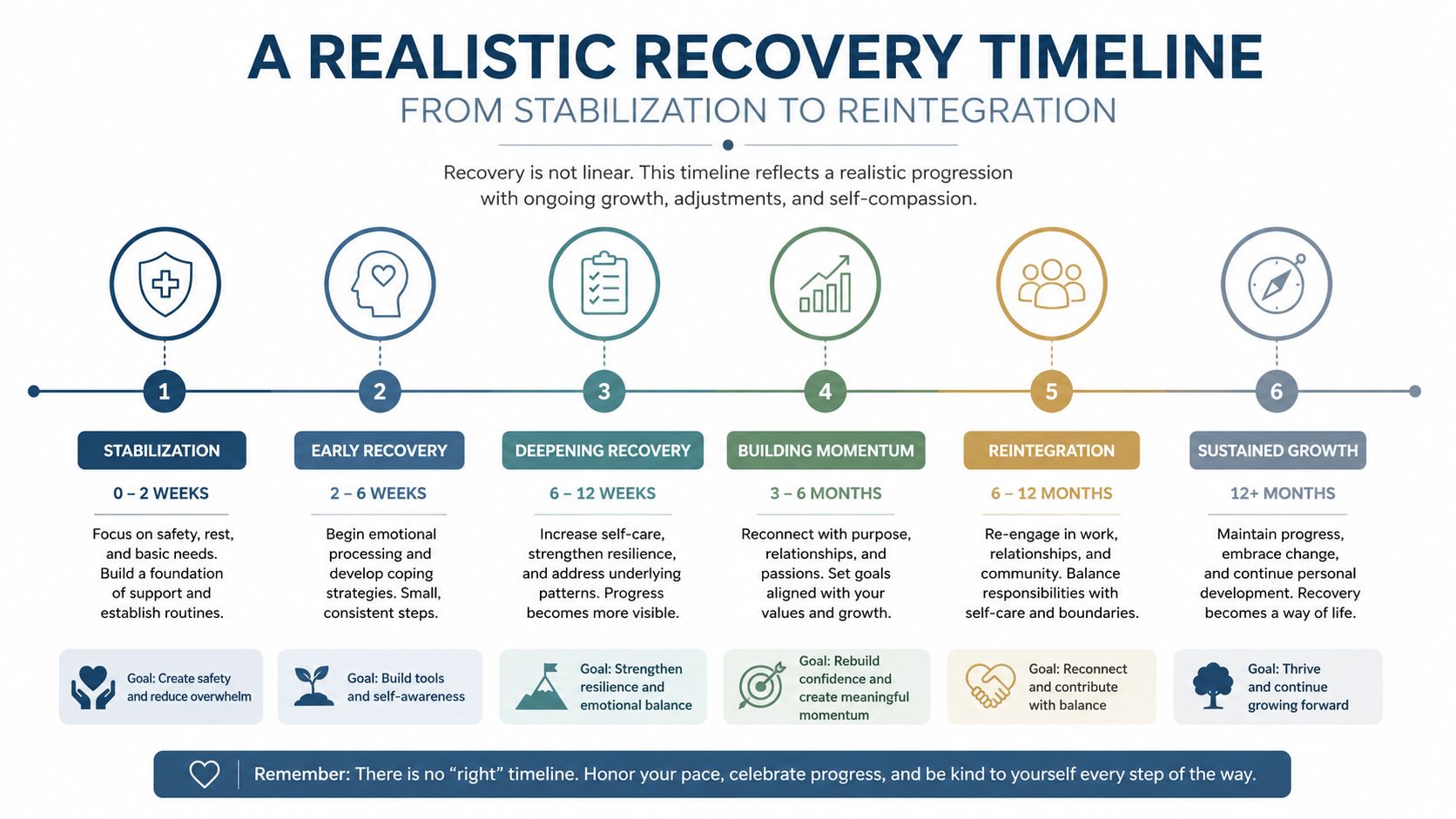
A 30 to 90 day treatment arc is a planning framework, not a guarantee. The early phase should protect the client from premature exposure work. Later phases should convert symptom gains into functioning at home, in relationships, and inside the professional role.
Days 1 through 10
The opening period focuses on medical stabilization, safety planning, psychiatric review, sleep, and a trauma and substance assessment. Trauma processing generally shouldn't begin before the team understands withdrawal risk, dissociation, medication effects, and the client's ability to regulate activation.
Milestones include a written safety plan, identified emergency contacts, a preliminary diagnosis, a medication strategy where appropriate, and clear rules for work access. If acute substance use or severe dissociation remains active, this phase should extend.
Weeks 2 through 4
The client learns psychoeducation, grounding, affect-regulation skills, distress tolerance, and communication strategies. Stabilizing somatic work, breath protocols, and EMDR resourcing can prepare the nervous system for later processing without forcing traumatic recall.
The team should track sleep consistency, cravings, dissociation, emotional escalation, attendance, and the ability to recover after a trigger. A high-functioning client may look composed while still lacking internal stability, so observable functioning matters more than polished presentation.
Weeks 5 through 8
Graduated trauma processing can begin when the client demonstrates sufficient tolerance. Dual-diagnosis groups address cravings and trauma-linked cues together, while family or partner sessions begin when disclosure and safety can be managed appropriately.
The clinician adjusts the pace if work pressure produces destabilization. Executives may need rehearsal for difficult calls, travel, delegation, and boundary-setting rather than assuming that insight automatically transfers into the boardroom.
Weeks 9 through 12
Reintegration planning should include return-to-work rehearsal, relapse-prevention mapping, family communication, medication follow-up, and transition into IOP or private outpatient care. A written continuing-care schedule should name providers, appointment frequency, emergency contacts, early-warning signs, and rules for handling renewed substance urges.
For professionals whose exhaustion has been labeled burnout, a practical clinician burnout recovery plan can complement, but never replace, trauma and addiction treatment. The key distinction is whether the plan addresses the underlying trauma pattern as well as workload.
Family, Alumni, and Continuing Care That Protects the Long Game
Discharge is not the finish line. For an executive returning to a 70-hour work week, it's the point at which the treatment environment disappears and the old triggers return. Continuing care must function as an operating system, not a list of optional referrals.
Family participation belongs inside that system. Spouses and adult children need psychoeducation about hyperarousal, shutdown, shame, and relapse warning signs. Structured couples sessions can address reactivity, secrecy, and boundary repair. Clinicians should also define what can be shared when business information is protected by NDAs, so family involvement doesn't become an accidental confidentiality breach.
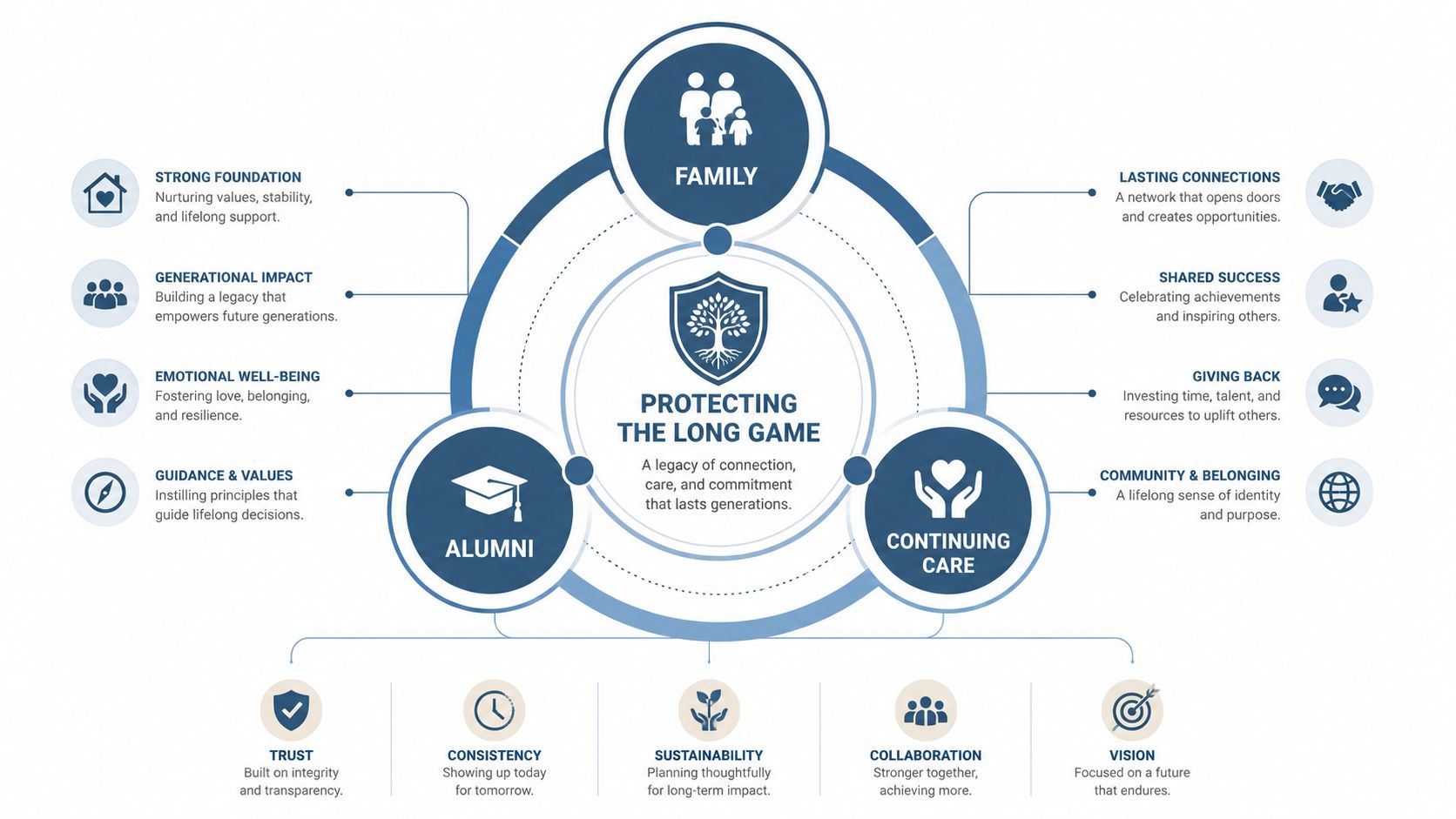
Build the continuing-care stack
A durable plan should include weekly trauma-informed therapy for at least six months, with scheduled EMDR or somatic follow-up when clinically indicated. A named psychiatrist should manage medication decisions, while sleep, exercise, nutrition, and workload are reviewed as part of relapse prevention rather than treated as lifestyle decoration.
Alumni programming can provide a confidential peer structure that fits executive rhythms. Monthly cohorts, secure messaging, and periodic intensives give clients access to people who understand public responsibility, travel, leadership pressure, and the difficulty of disclosing vulnerability inside a professional network.
The written relapse plan should identify early signs such as escalating alcohol use, missed sleep, isolation, compulsive work, sudden irritability, or avoidance of therapy. It should state who gets contacted, which appointments increase, and when a higher level of care becomes necessary.
Long-term rule: Recovery is only as durable as the system an executive returns to.
Choosing an Accredited Luxury Program Without Getting Sold To
A polished facility can still provide thin clinical care. Executives should verify the infrastructure before discussing amenities, location, or room design.
Start with accreditation and licensure. The facility should hold Joint Commission or CARF accreditation. Each clinician's license should be verifiable through the relevant state board, and clinicians delivering EMDR should hold EMDRIA certification. Dual-diagnosis treatment should be available on-site, with a psychiatrist integrated into the weekly treatment team rather than available only through referral.
Then demand operational specifics:
- Therapy hours: Ask for the actual weekly schedule, separating individual therapy, groups, family work, psychiatric care, and experiential services.
- Staffing: Request the staff-to-client ratio and the average clinician caseload.
- Clinical authorship: Confirm whether a board-certified trauma specialist writes or supervises treatment plans.
- Privacy controls: Look for encrypted communications, discreet arrival procedures, NDA-trained staff, and a documented media-management plan.
- Work access: Ask who approves phone and laptop use, how board calls are scheduled, and what happens when work begins undermining treatment.
Luxury should support privacy and recovery, not distract from clinical accountability. A serious intake call should also ask the program's percentage of clients with CPTSD versus single-event PTSD, family-program availability, alumni retention metrics, and aftercare integration process. If staff can't answer directly, the executive should pause before signing.
Reflections offers California-licensed, Joint Commission-accredited private residential and detox care for adults with co-occurring trauma, mental health, and substance-use concerns, with private rooms, multidisciplinary treatment, appropriate electronics access, family involvement, and continuing-care support. Executives and high-profile professionals can visit Reflections to discuss confidential admission planning and determine whether its clinical structure fits the demands of complex PTSD recovery.