
Drug detox generally takes 3 to 10 days for most substances, while long-acting opioids and benzodiazepines can stretch stabilization to several weeks. The right answer depends on the substance, dose, duration of use, and medical history.
An executive may be trying to protect a board meeting, close a transaction, answer investor questions, or keep a leadership team from noticing a crisis. That pressure often leads to the wrong question: “Can detox fit into a weekend?” The correct question is whether the planned window is long enough to manage withdrawal safely and restore reliable judgment.
Detox is measured in days because acute withdrawal often resolves within that range, but the calendar is only a starting point. Alcohol, short-acting opioids, long-acting opioids, benzodiazepines, and stimulants follow different patterns. A discreet, medically supervised setting gives a professional a safer way to plan around work without pretending that physiology can be negotiated.
What Drug Detox Really Means for a Working Professional
Drug detox is the medically supervised process of clearing a substance from the body and stabilizing acute withdrawal. It isn't a cure for substance use disorder, and it doesn't resolve the psychological, behavioral, or relational issues that support continued use. Those require treatment after the body reaches a safer baseline.
For a working professional, detox planning has two separate objectives. The first is clinical safety. The second is operational continuity, including privacy, device access, delegated authority, and a realistic return-to-work plan. Protecting a career matters, but it can't justify unmanaged withdrawal in an office, hotel, or home.
The timeline follows the substance
Most acute detox programs last about 3 to 10 days, although the duration changes substantially by drug class and individual risk profile. New Bridge Foundation's withdrawal timeline summarizes typical withdrawal as 3 to 10 days overall and notes that some patients complete detox in roughly 5 to 14 days depending on the substance, dose, and health status.
Longer-acting substances create a different planning problem. Benzodiazepine withdrawal may persist for weeks to months, while methadone can extend opioid detox to 10 to 20 days. American Addiction Centers' detox guidance explains why a patient withdrawing from alcohol or a short-acting opioid may stabilize within about a week, while someone tapering from benzodiazepines may require substantially longer monitoring.
A practical executive framework
A responsible plan starts with four questions:
- What substance was used? The drug class determines the likely onset, peak, and duration of withdrawal.
- What was the dose and pattern? Daily use, high doses, long-term dependence, and abrupt cessation increase complexity.
- What else is present? Medical conditions, psychiatric symptoms, prescribed medications, and polysubstance use can change the level of care.
- What must remain protected? Board duties, client confidentiality, family responsibilities, and access to essential electronics should be addressed before admission.
Practical rule: A detox calendar should be built around the highest-risk withdrawal window, not the next available gap in the executive schedule.
The strongest programs treat electronics access as a clinical planning issue, not a privilege contest. A private room, appropriate boundaries, and supervised access to a phone or laptop can help residents handle urgent responsibilities while clinicians focus on stabilization.
Typical Detox Timelines by Substance Class
The question “how long does drug detox take” has no single answer because each substance class creates a different withdrawal curve. The table below provides planning ranges, not permission to self-manage withdrawal.
| Substance Class | Onset | Peak Withdrawal | Full Resolution / Stabilization |
|---|---|---|---|
| Alcohol | Often within 6 to 12 hours after the last drink | Commonly 24 to 72 hours; seizure risk is highest around 24 to 48 hours, and delirium tremens may appear around 48 to 72 hours | Acute symptoms often resolve in about 3 to 7 days, although some symptoms may persist longer |
| Short-acting opioids, including heroin and some prescription opioids | Often within 6 to 24 hours | Usually days 1 to 3 | Acute symptoms commonly resolve in about 5 to 10 days |
| Long-acting opioids, including methadone | Often delayed to roughly 24 to 72 hours | Later and more prolonged than short-acting opioids | Acute withdrawal may extend to roughly 10 to 21 days or longer |
| Benzodiazepines | Roughly 1 to 7 days, depending on the medication | Variable, with symptoms potentially continuing well beyond the acute phase | Withdrawal may last weeks to months; gradual tapering can take longer |
| Stimulants, including cocaine and methamphetamine | A crash may develop within the first day | Fatigue, low mood, sleep disruption, and cravings can dominate the early period | Acute withdrawal commonly lasts about 7 to 10 days, with some timelines extending to 1 to 3 weeks |
| Nicotine | Symptoms develop after stopping and build over the early withdrawal period | Irritability, concentration problems, and cravings may be prominent | SAMHSA-related guidance places withdrawal around 2 to 4 weeks |
| Cannabis | Symptoms can emerge after stopping regular use | Sleep, appetite, mood, and concentration may fluctuate | Symptoms are usually shorter than sedative withdrawal, but discomfort and cravings can continue |
Alcohol demands particular caution. Withdrawal often begins within 6 to 12 hours, peaks at 24 to 72 hours, and usually resolves in 3 to 7 days. A person can feel functional during an executive call and still enter a dangerous withdrawal window later, which is why alcohol detox shouldn't be scheduled solely around perceived morning wellness. The acute alcohol timeline is detailed in Rehab.com's detox overview.
Short-acting opioids often produce an earlier, more predictable curve, while methadone and other long-acting opioids delay onset and extend stabilization. Community and residential guidance recognizes that opioid detox can run longer than a standard short admission, with some settings extending treatment to 4 weeks inpatient or residential and up to 12 weeks in community care when tapering and monitoring require it. The NCCHC medication-assisted treatment guidelines provide that broader context.
Benzodiazepines are the category most likely to punish an overly aggressive schedule. A taper may take weeks, months, or longer, and people can feel unwell after the final opioid dose as well. Professionals evaluating Xanax or another benzodiazepine should review how long Xanax withdrawal can last before promising a fixed discharge date. For a broader explanation of how programs calculate duration, Oceans Luxury Rehab's detox duration guide offers additional planning context.
Personal Factors That Quietly Extend the Timeline
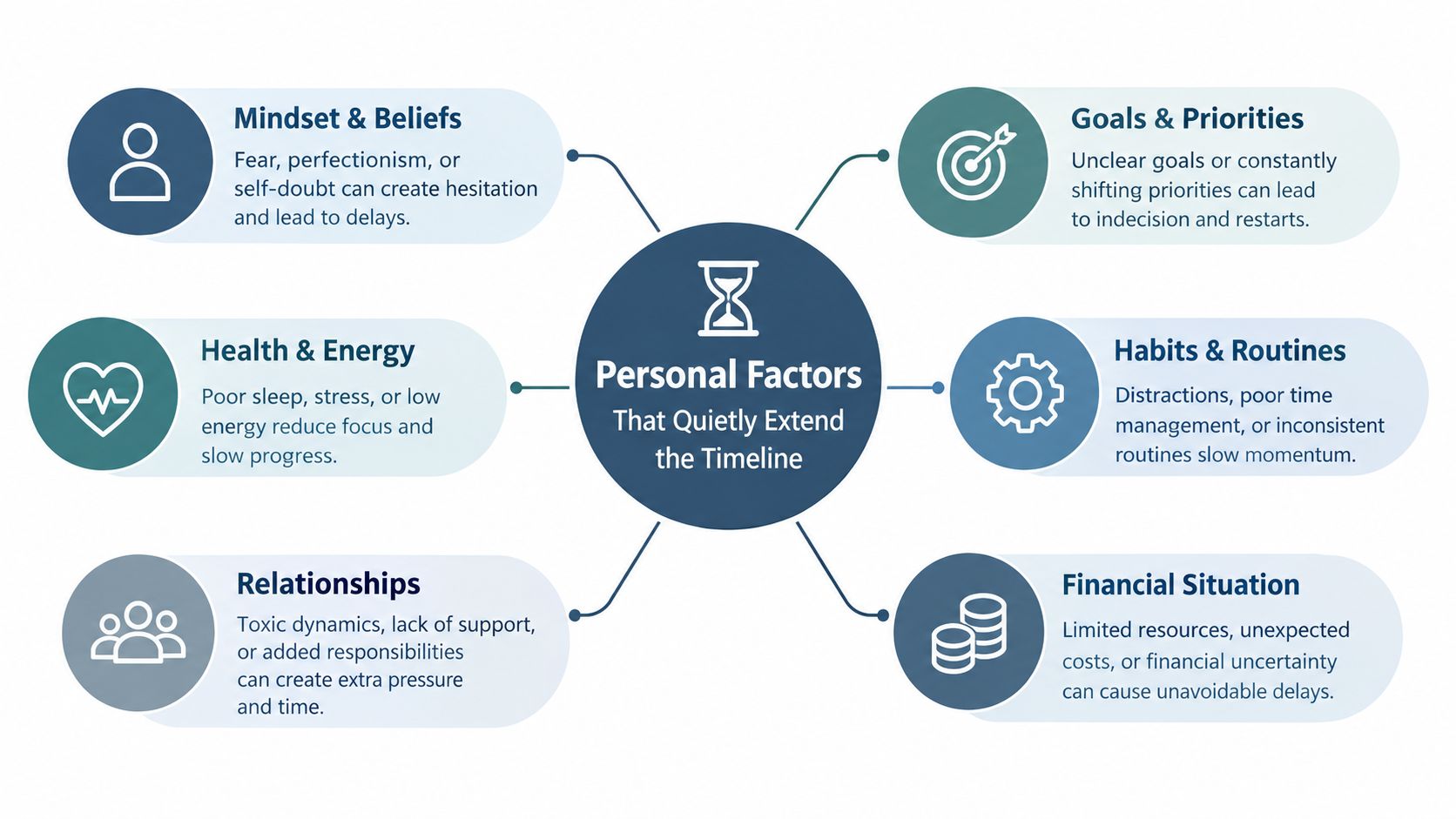
Two executives can stop the same substance on the same day and still require different monitoring plans. The difference usually comes from variables that aren't visible on a calendar, including the intensity of dependence, the last dose, medical history, and the presence of other substances.
Severity changes the starting point
Daily dose matters, but it isn't the only determinant. Length of use, route of administration, frequency, and the time of the last dose all shape withdrawal. A person who has used a substance intermittently may have a different course from someone who has taken a high dose every day for years.
Polysubstance use creates a second problem. Alcohol combined with benzodiazepines can complicate sedative withdrawal, while opioids combined with stimulants can obscure which symptoms are emerging first. Clinicians may need to monitor several overlapping withdrawal curves rather than treating one predictable syndrome.
Medical and psychiatric history affects decisions
Liver disease can restrict medication choices. Cardiac conditions can make heart-rate and blood-pressure changes more consequential. Chronic pain may complicate opioid withdrawal, and a seizure history raises the stakes for alcohol or benzodiazepine cessation. Clinicians need this information before medication selection and dose titration, not after a complication appears.
Depression, anxiety, PTSD, and severe occupational burnout can intensify insomnia, agitation, hopelessness, and cravings. The result is a more uncomfortable stay. Psychiatric symptoms can impair judgment and increase the chance of leaving care before stabilization.
Age, metabolism, hydration, and accumulated sleep debt also influence how a resident responds. Vomiting, diarrhea, poor intake, and travel can produce dehydration while a person is trying to manage work from a hotel room. A private residential setting allows the team to observe these changes and adjust the plan before they become a reason for emergency escalation.
The level of care must match the variables
An executive who needs to remain reachable may benefit from controlled electronics access, but that doesn't mean outpatient care is automatically appropriate. If several risk factors converge, the clinically sensible decision may be residential monitoring for longer than the initial estimate.
Decision standard: The right discharge date is the date on which the person is medically stable, cognitively reliable, and connected to the next level of care.
Why Medically Managed Residential Detox Changes the Equation
Home detox looks discreet until a complication exposes the lack of backup. Alcohol and benzodiazepine withdrawal can involve seizures or delirium tremens. Opioid withdrawal can produce severe gastrointestinal symptoms and dehydration, while long-acting opioids may delay the point at which symptoms become obvious.
A high-occupancy professional also faces practical failure points. A missed medication window during travel, an untreated blood-pressure change during a client call, or a withdrawal crisis in an office can create both medical and reputational consequences. Privacy is not protected when a crisis forces an emergency response in a public setting.
Residential care provides controlled response
In a medically managed residential program, clinicians can monitor vital signs continuously, evaluate emerging symptoms, and adjust pharmacotherapy in real time. A controlled taper is particularly important for long-acting opioids and benzodiazepines, where stopping too quickly can create an avoidable setback.
The setting also supports discreet logistics:
- Private rooms: Residents can recover without sharing sleeping space, and private rooms can be available in both detox and rehabilitation programming.
- Confidential arrival: Transportation and admission planning can reduce unnecessary exposure.
- Device access: Appropriate access to phones and laptops can support urgent business decisions without turning treatment into an unmanaged remote-work arrangement.
- Escalation capacity: Staff can respond quickly if a history of polysubstance use reveals a second withdrawal risk.
Executives considering medication-assisted opioid care can also review how to find a Suboxone doctor in PA when building a medication pathway. The relevant point is coordination. Medication decisions should fit the person's substance history, medical status, and next stage of treatment, rather than being made in isolation.
Why home attempts often take longer
Unsupervised withdrawal commonly creates a stop-start pattern. The person reduces use, becomes uncomfortable, resumes use to meet a work obligation, and then repeats the cycle. That pattern can prolong instability and make the next attempt harder to assess.
A medically supervised approach may shorten the total disruption by preventing avoidable complications and keeping the resident engaged through the highest-risk period. More detail on the clinical model appears in medical-assisted detox information, but the core recommendation is direct: professionals with significant dependence or uncertain medical risk shouldn't attempt withdrawal alone.
The Three Phases of Withdrawal and What Each One Feels Like
Withdrawal rarely arrives as one clean event. It unfolds through an onset period, a peak period, and a sub-acute period. The symptoms differ by substance, but the executive impact is consistent: sleep, concentration, emotional regulation, and decision quality can deteriorate before the person recognizes the severity.
Phase one is the onset
Within roughly 6 to 24 hours for many substances, anxiety, tremors, insomnia, sweating, nausea, diarrhea, and restlessness may begin. A professional may still answer messages, but the work product often becomes slower, more reactive, and less precise. Cognitive fog can compromise board-level judgment before physical symptoms look dramatic.
For short-acting opioids, early symptoms may resemble a severe flu, with aches, yawning, sweating, stomach distress, and anxiety. For alcohol, tremors and increased anxiety can appear first. This phase is the point at which a clinical assessment should establish the last dose, substance combinations, vital signs, and likely escalation risks.
Phase two is the peak
The peak often falls around 24 to 72 hours, depending on the substance. Alcohol withdrawal is especially concerning because seizures are most likely around 24 to 48 hours, while delirium tremens can emerge around 48 to 72 hours. Confusion, hallucinations, unstable vital signs, or severe agitation require immediate medical management.
Opioid withdrawal may bring intense gastrointestinal distress and relentless restlessness, making a remote work call unrealistic. Stimulant withdrawal may feel less medically dramatic but can produce crushing fatigue, depressed mood, impaired concentration, and powerful cravings.
Phase three is sub-acute recovery
After the acute phase, sleep architecture, mood, motivation, and concentration may remain unstable. Stimulant withdrawal can last 7 to 10 days or extend to 1 to 3 weeks in some timelines, while benzodiazepine symptoms may persist for weeks or months. These symptoms can resemble depression or burnout, but they still require clinical assessment.
The danger point isn't limited to the first night. A resident who appears physically stable may still lack the sleep, emotional control, or judgment required to resume high-stakes leadership. Medical oversight should continue when symptoms remain unpredictable, medication changes are underway, or the person has a history of severe withdrawal.
Planning Next-Stage Treatment Without Losing Career Momentum
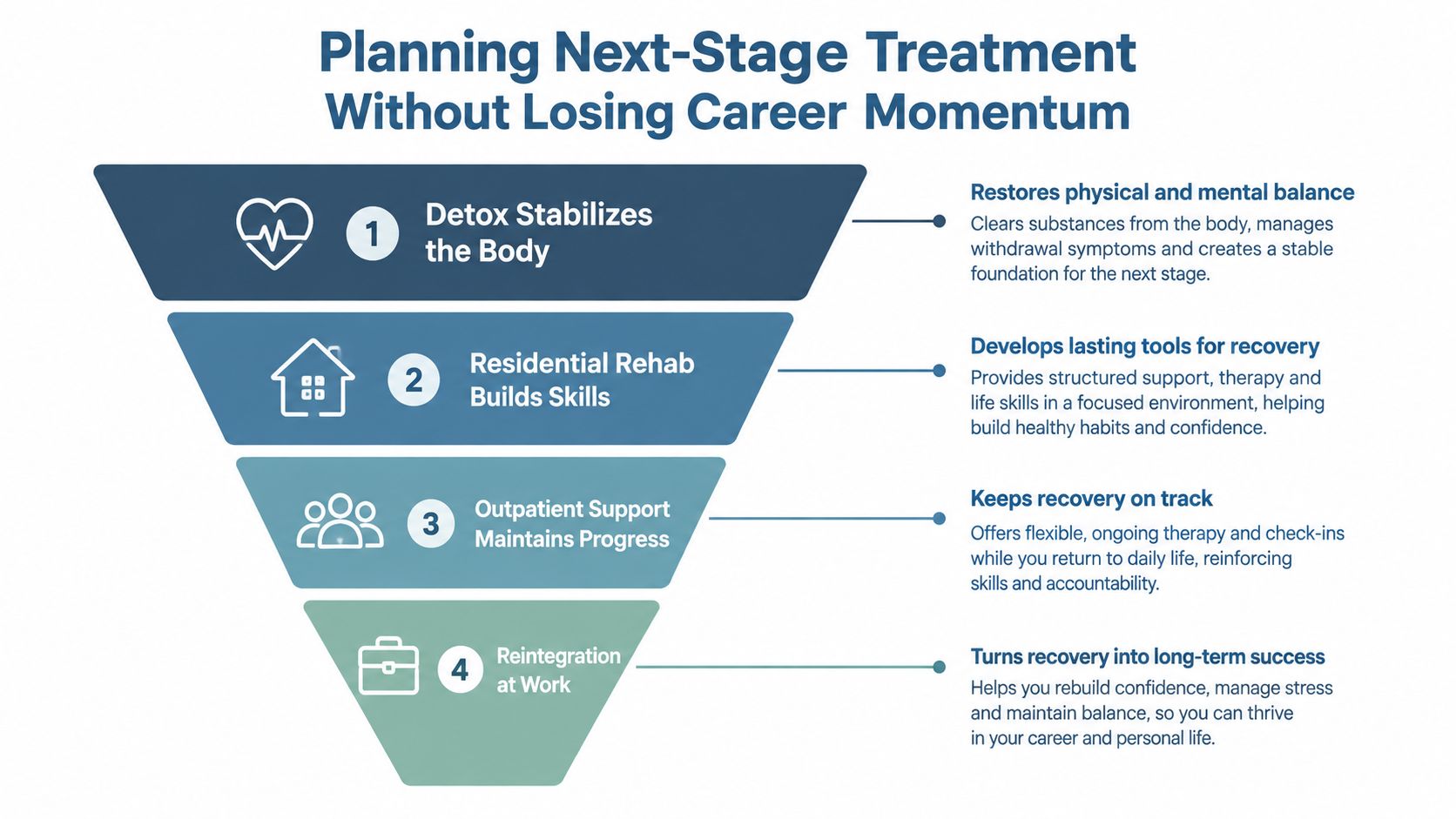
An executive may need to protect a board meeting, limit who knows about treatment, and retain controlled access to electronics. Those obligations do not make early discharge safe. Detox stabilizes the body, while residential rehabilitation addresses the decisions, relationships, coping failures, and workload patterns that can sustain substance use.
Use a deliberate sequence:
- Detox stabilizes physiology. Clinicians manage withdrawal, hydration, sleep, medication needs, and immediate safety before work demands return.
- Residential rehabilitation addresses patterns. Individual therapy, psychiatric care, skills groups, family work, and relapse planning examine the drivers beneath substance use.
- Continuing care supports reintegration. Intensive outpatient care, virtual appointments, and structured aftercare planning maintain accountability as professional responsibilities resume.
- Professional duties resume in phases. Delegation, communication limits, and workload restoration should follow clinical readiness, not pressure from the organization.
Career protection needs an operating plan
A discreet treatment episode requires preparation. Before admission, the executive and treatment team should identify decisions that cannot wait, assign temporary authority, prepare concise board communication, and coordinate leave or disability benefits where appropriate. The return plan should account for business cycles, travel, sleep stability, and relapse risk under pressure.
Electronics access can preserve continuity when it is controlled. A resident may need to approve a transaction or respond to a genuine emergency without spending the day in email. The clinical team should set specific access windows and boundaries, protecting privacy while keeping treatment engagement intact.
The plan should also name who receives updates, which matters remain delegated, and when access will be reviewed. That structure prevents a temporary exception from becoming a return to the same workload that contributed to the crisis.
Executive recommendation: Treat residential care as continuity planning for the person who carries the organization's highest decision load.
Treatment length must match the clinical picture. Reflections provides private residential care, dual-diagnosis treatment, clinically managed medication-assisted withdrawal when appropriate, private rooms, family involvement, and structured continuing care for adults managing co-occurring mental health and substance use concerns. Its programs typically range from 30 to 90 days, followed by continuing support, as described in the publisher information.
The cost of extended care should be weighed against relapse-driven hospitalization, public impairment, damaged client trust, or a regulatory inquiry. Follow-up care cannot guarantee that relapse will not occur, and verified evidence does not support a precise claim that detox without follow-up care doubles the probability of heavy use within a specified period. The defensible recommendation is direct: detox alone is incomplete treatment. Stopping at stabilization leaves the underlying disorder unaddressed.
Common Misconceptions Executives Have About Detox
Myth one: Willpower can compress a benzodiazepine taper. It can't. Benzodiazepine withdrawal may continue for weeks to months, and a rapid schedule can create avoidable instability. The taper must reflect the medication, dose history, symptoms, and seizure risk.
Myth two: A weekend of rest equals stabilization. It doesn't. Alcohol withdrawal can intensify after the initial symptoms, with seizures most likely around 24 to 48 hours and delirium tremens appearing around 48 to 72 hours. A person who feels better after sleeping may still be approaching the highest-risk window.
Myth three: Stimulants have no physical withdrawal. Stimulant withdrawal may center on fatigue, altered mood, sleep disruption, poor concentration, and cravings rather than the same visible symptoms associated with alcohol or opioids. The crash can still impair judgment and make a demanding work schedule unsafe.
Myth four: Privacy requires home detox. Privacy and safety aren't opposites. A private residential room, controlled communications, confidential transport, and appropriate access to electronics can protect discretion without placing withdrawal management on a spouse, assistant, hotel employee, or executive alone.

Myth five: Finishing detox means the problem is solved. Detox clears substances and manages acute withdrawal, but it doesn't rebuild coping skills, repair relationships, treat trauma, or address depression and anxiety. A transition into residential rehabilitation or another clinically appropriate level of care is the responsible next step.
Executives should also verify accreditation rather than relying on luxury branding. Joint Commission accreditation involves a review at least every three years, with surveyors assessing compliance with hundreds of national safety and quality standards, according to the Joint Commission's behavioral health accreditation information. That benchmark doesn't replace personal clinical evaluation, but it provides a meaningful quality screen.
The direct answer remains substance-specific. Most acute detox lasts days, while benzodiazepines, long-acting opioids, polysubstance use, and co-occurring medical or psychiatric conditions can require weeks of careful stabilization. An executive should schedule a confidential clinical assessment before choosing a date, not after withdrawal has already begun.
Reflections offers California-licensed, Joint Commission-accredited luxury residential care with dual-diagnosis treatment, private rooms, clinically managed withdrawal support, appropriate electronics access, family involvement, and continuing-care planning for executives and working professionals. Visit Reflections to discuss a confidential assessment and build a detox and rehabilitation plan around medical safety, privacy, and essential career responsibilities.