

The board meeting is tomorrow, the phone won't stop, and the person making every decision knows that something is no longer sustainable. Alcohol, stimulants, prescription medication, anxiety, depression, trauma, or burnout may be affecting judgment and relationships, yet stepping away from the company can feel almost as threatening as continuing. For executives, the right residential program must provide more than privacy and attractive surroundings. It must deliver disciplined clinical care without treating professional responsibility as a character flaw.
Why Executives Look for a Different Kind of Rehab
An executive may reach out after missing a critical meeting, hiding escalating substance use from a partner, or realizing that sleep and mood have become dependent on medication or alcohol. A founder may still be closing deals while privately managing panic attacks. A senior professional may appear composed at work while family members see withdrawal, irritability, or dangerous coping patterns.
The dilemma is rarely whether help is needed. The harder question is whether treatment can happen without creating a professional crisis.
Public or conventional inpatient care can feel incompatible with a high-visibility role. Shared rooms, rigid communication restrictions, limited privacy, and a program designed for a broad population may make an executive delay admission. That delay carries its own risk. Co-occurring mental health and substance use disorders are common, with SAMHSA estimating that approximately 21.2 million U.S. adults experienced both in the past year. SAMHSA's co-occurring-disorders overview also reports earlier estimates of 21.5 million adults, or 8.4%, living with co-occurring any mental illness and substance use disorder, while 7.4 million, or 2.9%, had both serious mental illness and substance use disorder.
Privacy must support treatment
A private setting matters to executives because confidentiality affects family relationships, professional standing, and public exposure. But privacy shouldn't become an excuse for clinical isolation. The facility still needs a clear assessment process, qualified psychiatric support, structured therapy, crisis procedures, and a plan for communication with appropriate family members.
Reflections is a California-licensed, Joint Commission-accredited residential provider focused on adults with co-occurring mental health and substance use disorders. Its executive-oriented model is described through executive rehab services, including private accommodations and appropriate access to electronics for residents who need to manage limited career obligations.
Practical rule: A program that promises discretion but can't explain clinical oversight, medication management, and discharge planning isn't offering executive care. It's offering concealment.
The four questions serious buyers should ask
Before enrolling, an executive or family member should demand clear answers:
- What happens clinically? The program should explain how psychiatric symptoms, substance use, trauma, medication, and relapse risk are assessed together.
- What makes the setting different? Private rooms and technology access matter, but only when they support engagement rather than avoidance.
- What does a normal day involve? Prospective residents need a realistic schedule, not a resort description.
- How does recovery continue afterward? Residential stabilization is only useful when the next phase is planned before discharge.
The strongest luxury option is therefore not the one with the most impressive amenities. It's the one that makes rigorous treatment workable for a person whose career, family, and reputation all demand careful handling.
Inside the Clinical Program at Reflections
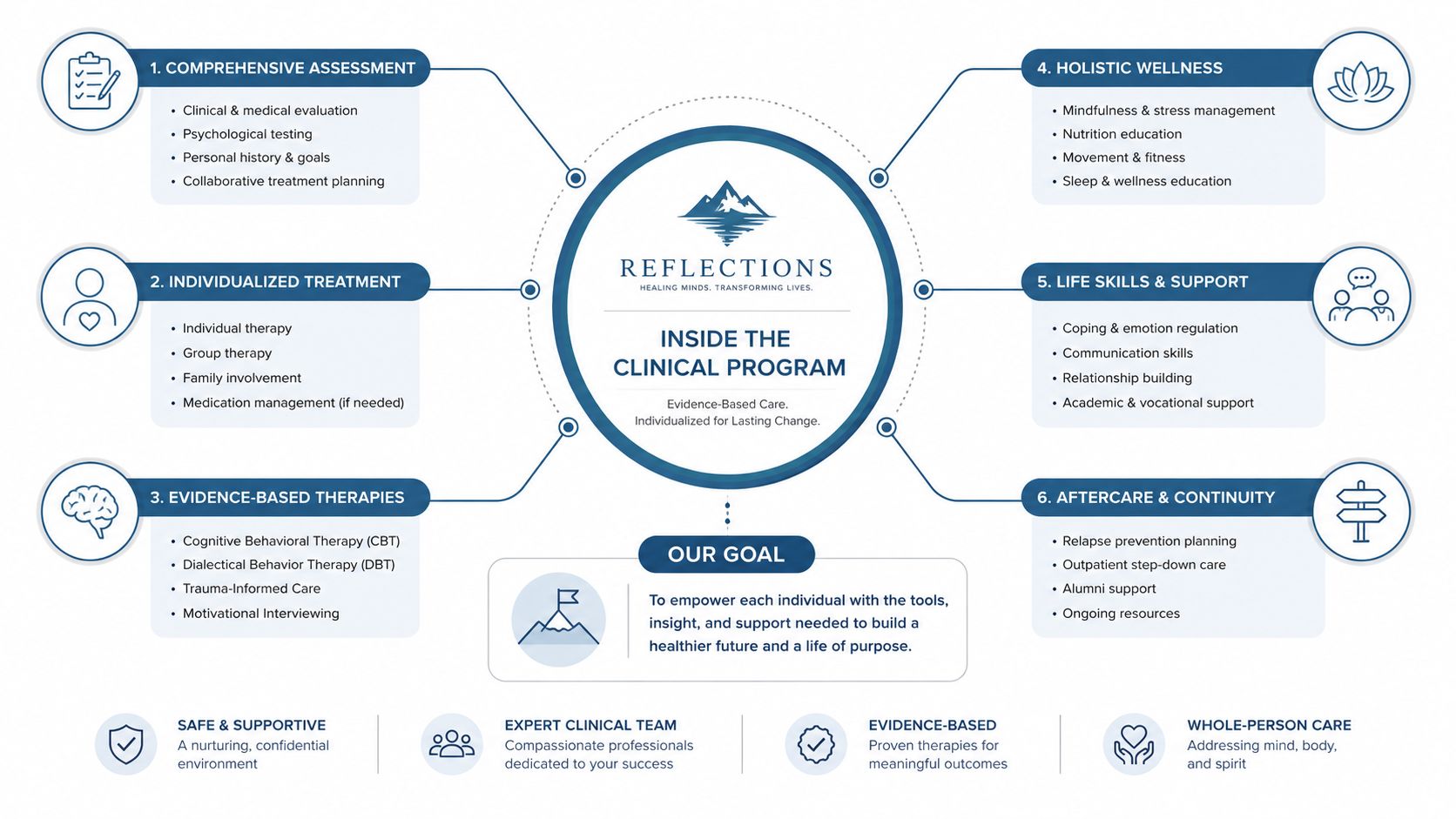
Dual-diagnosis care should mean one coordinated clinical picture. A resident shouldn't have depression treated by one disconnected service while addiction is addressed elsewhere, with neither team understanding how medication, trauma, sleep, cravings, and mood influence one another.
That integrated approach has strong clinical logic. Independent evidence on co-occurring-disorder treatment describes multidisciplinary residential care associated with improvements in substance use, psychiatric symptoms, quality of life, and social functioning. The same evidence base reports significant reductions in illicit substance use, intoxication, alcohol-use days, and ASI drug and alcohol composite scores from admission to follow-up after discharge. The clinical evidence summarized in the NCBI Bookshelf also identifies ACT with adjunct substance-use services, along with integrated CBT, motivational interviewing, and family services, as important models for co-occurring disorders.
Assessment becomes an operating plan
Reflections' clinical model combines CBT, DBT, ACT, motivational interviewing, individual psychotherapy, and intensive group work. Each modality serves a different purpose. CBT helps identify the thinking patterns and behaviors that maintain substance use or anxiety. DBT builds emotional regulation and distress-tolerance skills. ACT helps residents act according to values instead of reacting to unwanted thoughts and feelings. Motivational interviewing addresses ambivalence, which is common when a successful professional knows change is necessary but still feels attached to familiar coping strategies.
The staffing model supports that integration. Care includes an Executive Clinical Director, PhD-level psychologists, psychiatrists, LMFTs, certified addiction counselors, and adjunctive therapists working in art, music, somatic, equine, mindfulness, fitness, massage, and nutrition. Those services aren't substitutes for psychiatric and addiction treatment. They give residents additional ways to regulate stress, process emotion, rebuild physical routines, and participate in recovery when verbal therapy alone doesn't reach the problem.
Medication decisions also need to remain connected to the whole treatment plan. Reflections describes clinically managed medication-assisted withdrawal, sub-acute detox, and medication optimization when appropriate, with an emphasis on minimal, effective pharmacology. Executives evaluating psychiatric medication management should ask who prescribes, how changes are monitored, how withdrawal risks are handled, and how medication decisions will be revisited after discharge.
Family belongs in the clinical picture
Family involvement can expose patterns that an intake interview misses. Partners may understand sleep disruption, secrecy, mood changes, access to substances, or workplace stress in ways the resident can't yet describe. Private family sessions and educational workshops can also help relatives stop enabling harmful behavior without abandoning the person.
The important distinction is that family participation should be clinically purposeful. It should address communication, boundaries, safety, expectations, and the transition home, not just invite relatives to observe treatment.
How Reflections Compares With Other Luxury Dual-Diagnosis Programs
Luxury programs can look similar from the outside. Private rooms, attractive grounds, chef-supported meals, fitness options, and discreet admissions are easy for a prospective resident to notice. The meaningful differences sit underneath the surface, in how the program handles psychiatric complexity, accountability, family systems, and the return to work.
The first comparison is integrated care versus parallel tracks. A strong program treats mental health and substance use as connected conditions. A weaker structure may place the resident in addiction groups while psychiatric symptoms receive limited attention, or may focus on wellness activities without a clear medical and behavioral treatment plan.
Accreditation is the second filter. Joint Commission behavioral health accreditation follows an onsite survey in which surveyors assess compliance with formal standards. The Joint Commission's behavioral health accreditation information makes clear that accreditation functions as an operational benchmark, not merely a promotional label. It gives buyers a reason to ask about governance, documentation, safety, staffing, and continuous compliance.
A buyer's comparison framework
| Decision Criterion | What Strong Looks Like | Why It Matters for Executives |
|---|---|---|
| Integrated dual-diagnosis care | Mental health, addiction, medication, and trauma are managed in one coordinated plan | Prevents fragmented treatment while the resident is making high-consequence decisions |
| Accreditation and governance | Verifiable behavioral health accreditation and survey-ready systems | Shows that safety and process standards receive formal oversight |
| Staff credentials | Psychiatrists, psychologists, licensed therapists, addiction counselors, and defined clinical leadership | Clarifies who is responsible for assessment, treatment, and escalation |
| Work access | Electronics policies that permit limited professional communication when clinically appropriate | Helps protect essential obligations without allowing work to replace treatment |
| Family involvement | Private sessions, education, boundaries work, and transition planning | Improves the likelihood that home and work relationships can support recovery |
| Continuing care | A documented step-down plan, referrals, follow-up, and alumni connection | Extends treatment beyond the residential environment |
Reflections positions itself within this executive-focused model by combining accredited clinical operations, multidisciplinary care, private rooms, and controlled electronics access. That doesn't remove trade-offs. A resident still needs to attend therapy, accept clinical limits, and tolerate periods when work access is reduced because stabilization takes priority.
The correct question isn't, “Does this program feel luxurious?” It is, “Can this program keep the resident clinically engaged while protecting the responsibilities that need attention?”
What Daily Life Looks Like for an Executive in Residence
An executive may arrive with a company waiting for decisions, a family expecting contact, and symptoms that require immediate attention. The daily schedule must create enough clinical structure to interrupt substance use and enough controlled flexibility to handle defined responsibilities. Residential treatment is not remote work. Therapy, medical monitoring, sleep, and recovery practice set the pace.
The day has a deliberate rhythm
A morning check-in, clinical observation, or medication review may come first. Individual psychotherapy and group sessions then examine substance use, anxiety, depression, trauma, grief, relationship patterns, and relapse risk. Experiential work, including mindfulness, meditation, somatic practices, art, music, equine therapy, fitness, massage, and nutrition, gives residents practical ways to regulate stress and notice early warning signs.
Work access belongs in protected windows, not throughout the day. A resident may review an urgent matter, speak with family, or coordinate with a delegated colleague. The boundary matters. If every break becomes a series of calls and messages, the resident remains in executive-response mode and has less opportunity to examine the conduct and conditions that led to admission.
Private rooms change the recovery environment
Reflections offers private rooms for residents in both detox and rehab. During detox, privacy supports rest, communication with clinicians, and management of discomfort without a shared sleeping space. During residential care, the room provides a quiet place to decompress, read, journal, meditate, or sleep after demanding clinical work.
A private room does not provide treatment. It reduces unnecessary stimulation and social performance, which can make it easier to stay engaged with treatment.
Electronics need clear boundaries
Executive programs commonly manage cell phone and laptop access around therapy hours, essential communication, treatment phase, and clinical recommendation. Rules differ by program and may tighten during detox or periods of instability. Residents should receive the policy before admission, not discover it after arrival.
At Reflections, electronics access can support limited career obligations while remaining subject to clinical boundaries. Ask what happens during detox, whether devices are secured during groups, who determines an urgent business exception, and how access changes as stabilization progresses. The right arrangement protects a defined responsibility without allowing work to replace recovery.
Accreditation, Outcomes, and What Quality Really Means at This Price Point
Private-pay treatment creates a demanding standard. A polished property can improve comfort, but it can't establish clinical quality. At this price point, buyers should be more interested in medication governance, crisis response, documentation, staff supervision, treatment-plan reviews, and discharge coordination than in décor.
Joint Commission behavioral health accreditation is valuable because it requires an onsite survey against formal standards. Surveyors assess whether the organization operates according to defined expectations for care delivery and oversight. Buyers can use this explanation of Joint Commission accreditation to understand why accreditation is stronger than an unverified claim that a program is “high end” or “clinical.”
What buyers should verify
A serious admissions conversation should produce specific answers about:
- Assessment: How are psychiatric symptoms, substance use, trauma, medical history, and safety risks evaluated?
- Treatment planning: Who writes the plan, who updates it, and how does the resident participate?
- Medication: Who prescribes and monitors medication during withdrawal stabilization and residential care?
- Crisis response: What happens if a resident becomes suicidal, psychotic, medically unstable, or at serious relapse risk?
- Coordination: How do psychiatrists, therapists, counselors, and family clinicians share information?
- Discharge: What services, appointments, family supports, and relapse-prevention steps are arranged before departure?
The evidence favors integrated treatment reinforced by continuing care. Family involvement also deserves attention. A 2026 systematic review found an association between family engagement in substance use treatment, reduced substance use, and improved family functioning, while a U.S. government treatment chapter links family counseling with engagement, retention, cost-effectiveness, and outcomes. The family-engagement review supports a clear conclusion: family work isn't a decorative add-on to luxury treatment.
The expensive mistake: Paying for a beautiful setting while accepting vague answers about clinical responsibility, medication, family participation, and the transition home.
Quality means the program can demonstrate how residents are assessed, treated, protected, and supported after discharge. Amenities should make that work more tolerable, not distract from whether the work is being done.
Admissions, Logistics, and Questions to Ask Before You Commit
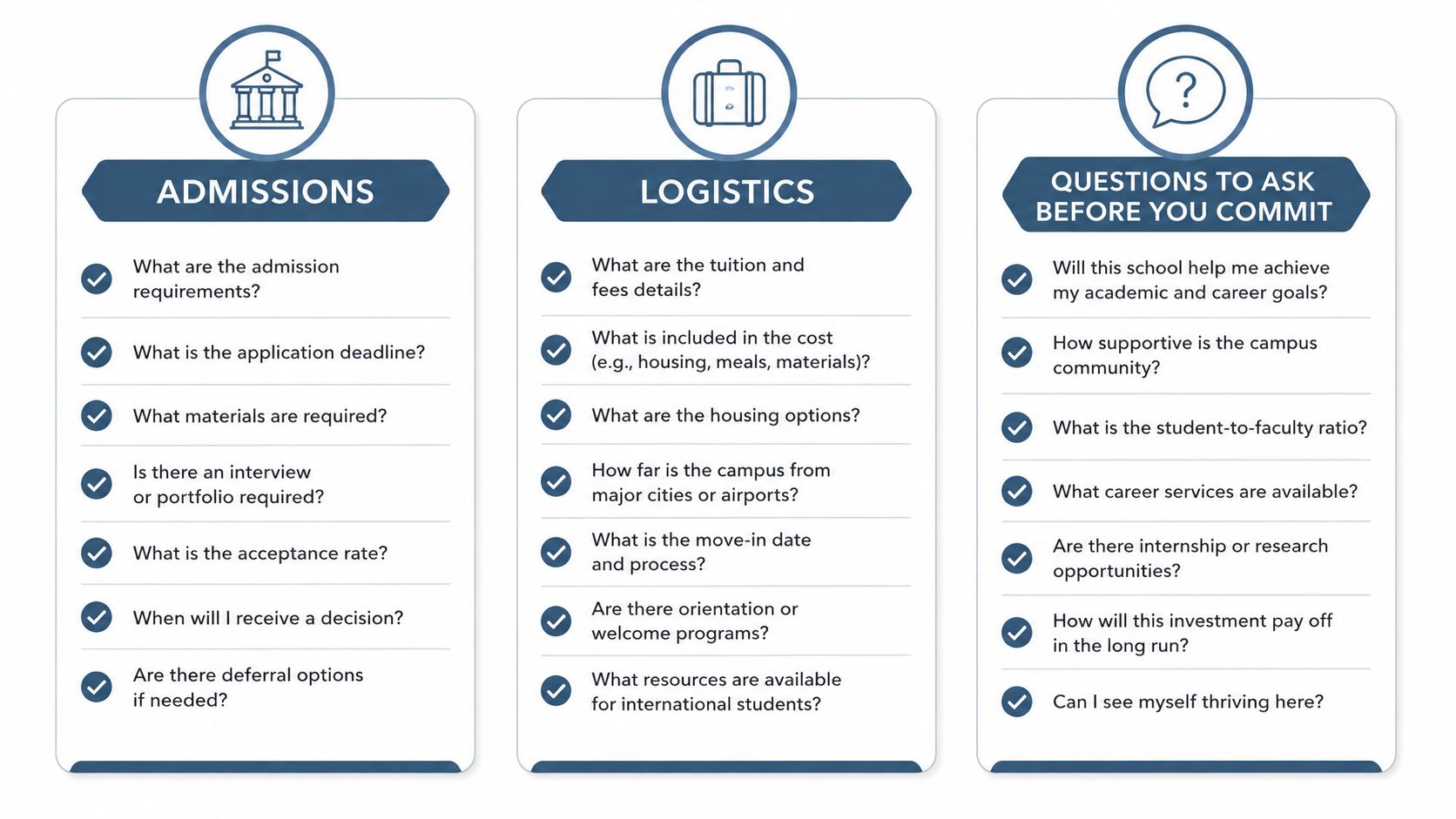
Admissions should begin with a confidential conversation, not a pressure-filled sales pitch. The coordinator needs enough information to determine whether the program can safely address the resident's substance use, psychiatric symptoms, medical needs, withdrawal risk, and professional constraints.
The next steps generally include a clinical pre-assessment, review of payment or out-of-network benefits, discussion of the appropriate level of care, and coordination of arrival. Because Reflections is an expensive private-pay program, prospective residents should ask directly about self-pay expectations, out-of-network benefits, deposits, exclusions, and the financial responsibility that remains after any insurance review.
A practical admissions sequence
- Start with the clinical facts. The family or executive should describe current substance use, diagnoses, medications, withdrawal history, safety concerns, and recent changes in functioning.
- Clarify the operating model. Ask whether detox and rehab are clinically connected, who manages medication, and how psychiatric symptoms are addressed each day.
- Set work expectations. Confirm electronics access during the first phase, therapy hours, emergency communication procedures, and circumstances that could require temporary restrictions.
- Plan family participation. Ask when private sessions begin, how relatives receive education, and how boundaries are handled.
- Review the financial structure. Request a written explanation of private-pay costs, out-of-network benefits, authorization requirements, and items not covered.
- Demand a discharge plan early. The program should explain continuing care, local referrals, family support, alumni connection, and what happens if symptoms return.
A prospective resident should also ask whether private rooms are available throughout both detox and rehab, what the daily schedule looks like, which clinicians will be involved, and how long the assessment process takes. Questions about average length of stay should be answered as a clinical discussion, not a fixed promise.
Admissions advice: The best time to ask about aftercare is before admission. If the answer is vague at intake, it usually won't become specific at discharge.
Executives don't need a program that promises uninterrupted access to work. They need a program that distinguishes urgent responsibilities from avoidance and builds a controlled path back to leadership.
What Recovery Looks Like After Reflections
Residential treatment is a period of stabilization and intensive work, not a permanent substitute for daily life. Reflections' programs typically range from 30 to 90 days, depending on clinical need, progress, safety, medication response, and readiness for the next level of care.
The transition should include structured step-down planning, continuing-care coordination, alumni programming, and flexible services after residential treatment. Family workshops continue monthly, giving relatives a place to strengthen communication, boundaries, and support as the executive resumes responsibilities.
For a professional, success means more than returning to the office quickly. It means addressing the anxiety, depression, trauma, grief, burnout, or other co-occurring symptoms that made substance use feel necessary. It means leaving with a workable plan for sleep, medication, travel, pressure, family communication, cravings, and high-stakes decision-making.
The executive-friendly features matter because they make admission more realistic. The clinical model matters because privacy and work access alone won't change the underlying pattern. Continuing care matters because the return to leadership, family life, and public responsibility is where new habits face their first serious test.
Reflections offers private rooms across detox and rehab, integrated dual-diagnosis treatment, accredited clinical oversight, and appropriate electronics access for executives who need a clinically serious path back to work. Visit Reflections to begin a confidential conversation about fit, admissions, payment options, and continuing care.