

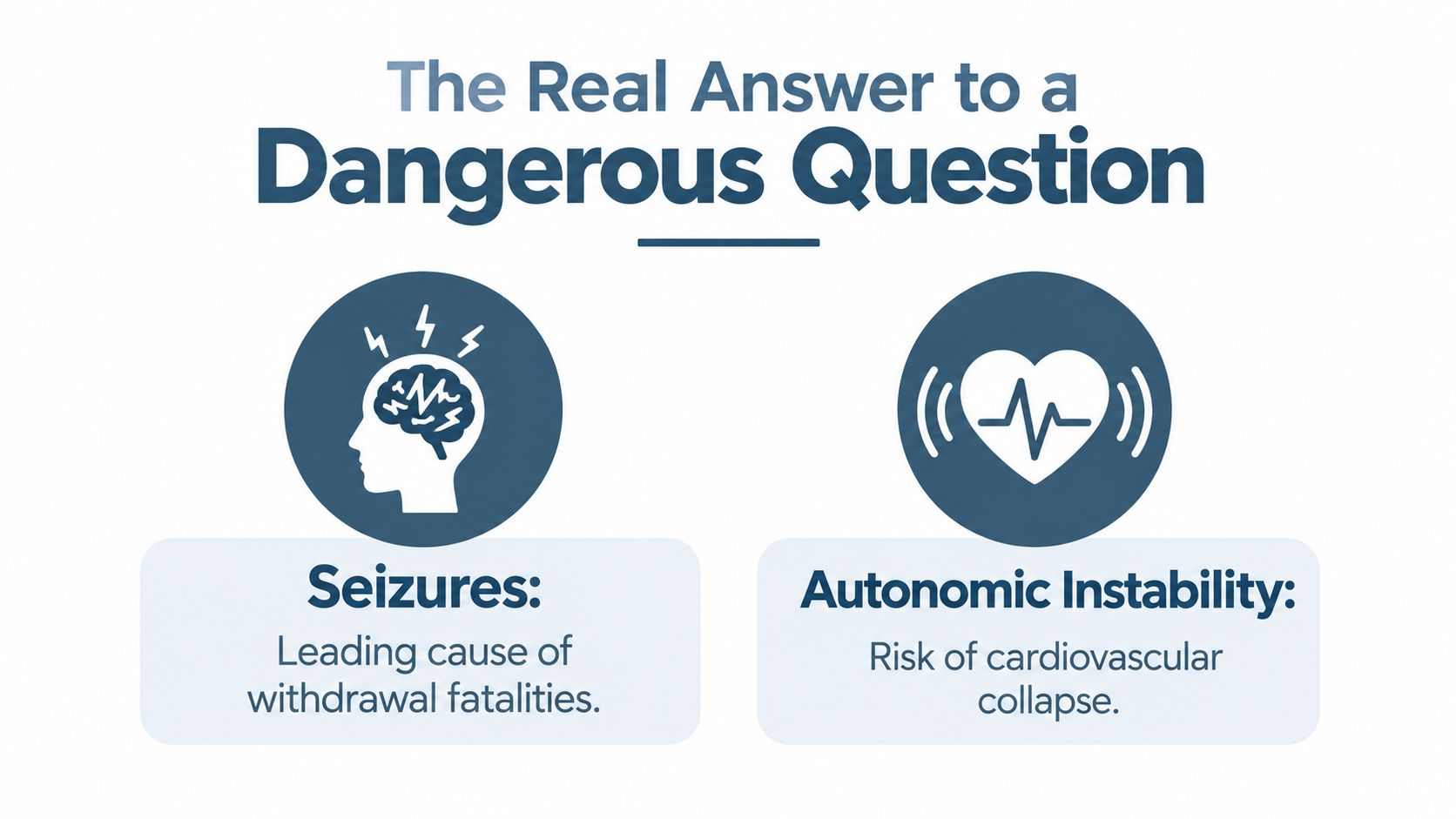
Yes, Xanax withdrawal can be fatal in rare cases, almost always through seizures or severe autonomic instability triggered by abrupt cessation after high-dose or long-term use. The core point is that this risk is largely preventable with medically supervised tapering.
That answer still leaves an important question unanswered. Can you die from Xanax withdrawal if the medication was prescribed, taken as directed, and used to keep a demanding career on track? Physical dependence can develop without recreational misuse, and a missed refill, rushed self-taper, or attempt to quit over a weekend can expose the brain to a dangerous change before anyone realizes what's happening.
For executives, C-suite leaders, and working professionals, the risk often hides behind competence. A person may manage a company, attend meetings, travel regularly, and maintain a controlled medication supply while the nervous system has adapted to alprazolam. A private, clinically supervised plan protects health without treating professional responsibilities as irrelevant.
Answering the Question Directly
Can Xanax withdrawal be fatal? Yes, but death is uncommon and usually follows a recognizable medical pathway. The clearest pathway is a seizure after abrupt discontinuation or a rapid dose reduction. Severe autonomic instability, such as dangerous changes in heart rate, blood pressure, or body temperature, can add further danger. Delirium, aspiration during a seizure or profound confusion, and simultaneous withdrawal from alcohol or other sedatives can make the situation more difficult to manage.
A 2015 review reports that suddenly stopping benzodiazepines after 1 to 6 months of use can cause life-threatening seizures, with grand mal seizures reported 1 to 12 days after discontinuation. The FDA labeling for alprazolam also warns about seizures, severe mental and nervous-system changes, hallucinations, and suicidal thoughts after sudden cessation. It recommends tapering by no more than 0.5 mg every 3 days (alprazolam safety label). These findings are described in the clinical review of benzodiazepine withdrawal risks.
Why the risk is easy to underestimate
A prescription can create false reassurance. Someone may take every pill as directed, avoid recreational use, and never show signs of overdose, yet still develop physical dependence. The brain adapts to repeated exposure, regardless of the person's intentions.
Risk increases with higher doses, longer use, rapid cessation, older age, alcohol or opioid exposure, and other sedating medications. The alprazolam label identifies withdrawal seizures and status epilepticus as reported complications and notes increased risk at doses above 4 mg per day. That threshold does not predict a seizure for every person, but it makes unsupervised discontinuation particularly unsafe.
The danger also has a more common, less dramatic side. Withdrawal can lead to severe anxiety, insomnia, confusion, falls, dehydration, or other complications that prompt hospitalization even when death is not the outcome. A large analysis of benzodiazepine discontinuation found higher mortality among discontinuers, with and without opioid exposure. The association does not prove that withdrawal alone caused every death, but it supports medical oversight rather than an abrupt self-directed stop, as discussed in the large-scale analysis of benzodiazepine discontinuation.
For broader plain-language context, Molly Hawke MD on benzodiazepine risks discusses benzodiazepine safety. A private clinical plan can turn that information into a medication review, symptom monitoring, and a taper schedule that limits disruption to work.
How Xanax Changes the Brain Over Time
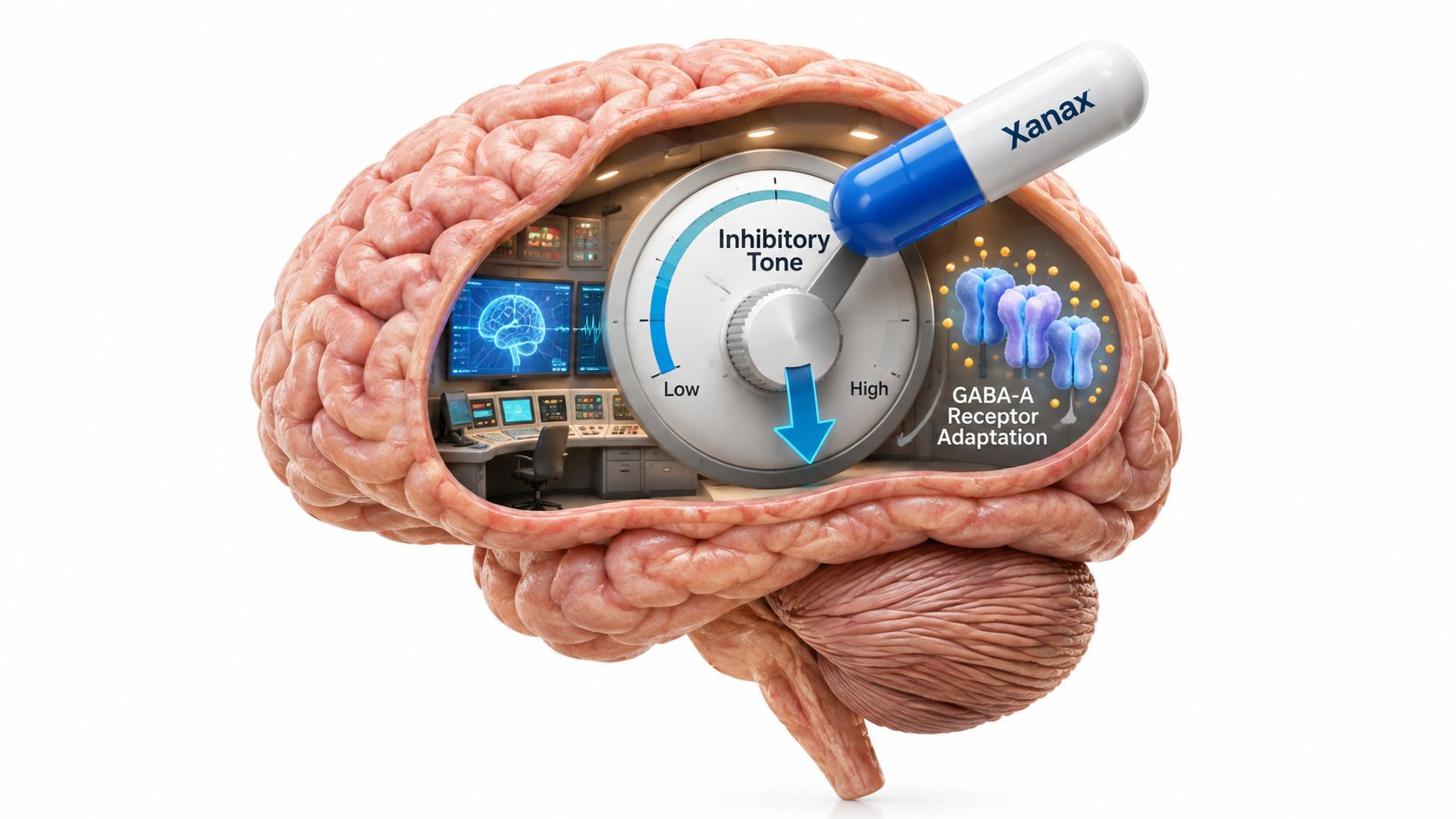
Xanax, or alprazolam, strengthens the activity of GABA-A receptors, which help slow excessive electrical activity in the brain. The medication can reduce anxiety, physical tension, panic symptoms, and arousal. With repeated exposure, however, the nervous system adjusts to the medication's presence.
A useful analogy is a thermostat. If Xanax repeatedly turns down the brain's level of arousal, the brain attempts to compensate by reducing its sensitivity to inhibitory signals. Receptor responsiveness can change, while excitatory systems involving glutamate remain ready to increase activity. The person may feel stable while taking the medication because the drug and the adapted nervous system now balance each other.
What happens when the drug disappears
Abrupt cessation removes the medication before the brain has time to restore its own inhibitory balance. The inhibitory “thermostat” remains turned down, while excitatory signaling can become relatively unopposed. That mismatch produces hyperexcitability, not merely worry about stopping.
Early effects may include rebound anxiety, tremor, sweating, insomnia, palpitations, gastrointestinal distress, sensory sensitivity, and irritability. At the severe end, the same overactive state can produce perceptual changes, delirium, psychosis, and seizures. Expert guidance describes rapid dose reduction as capable of causing life-threatening seizures and delirium, with some complicated cases requiring continuous observation, vital-sign checks, and seizure-risk assessment, as described in this guideline-level review of benzodiazepine tapering.
Why alprazolam can feel especially abrupt
Alprazolam is relatively short-acting compared with longer-acting benzodiazepines such as clonazepam or diazepam. Its effects can fade sooner, creating sharper dips between doses. Some people notice rising anxiety or physical agitation before the next scheduled dose, then interpret the relief after taking it as proof that the underlying anxiety has suddenly worsened.
That cycle can encourage increasingly rigid dosing and make missed doses more destabilizing. The resulting symptoms are physiological withdrawal signals, even when the medication began as a legitimate treatment and the person has followed the prescription.
Clinical principle: A calm appearance doesn't prove that withdrawal is safe. The relevant questions are dose, duration, timing, co-occurring substances, medical history, and the pace of reduction.
The brain needs time to recalibrate. A prescriber may use a direct alprazolam taper or consider a longer-acting strategy, depending on the individual's health, medication history, and response. Neither approach should be designed from a generic internet schedule.
The Xanax Withdrawal Timeline and Symptoms
Could a demanding workday conceal the beginning of Xanax withdrawal? A senior executive may wake after only a few hours of sleep with shaking hands, a racing heart, and difficulty preparing for a presentation. Travel fatigue, a difficult quarter, or returning anxiety may seem like obvious explanations. The timing becomes more informative when symptoms follow a missed dose or a rapid reduction.
The first hours
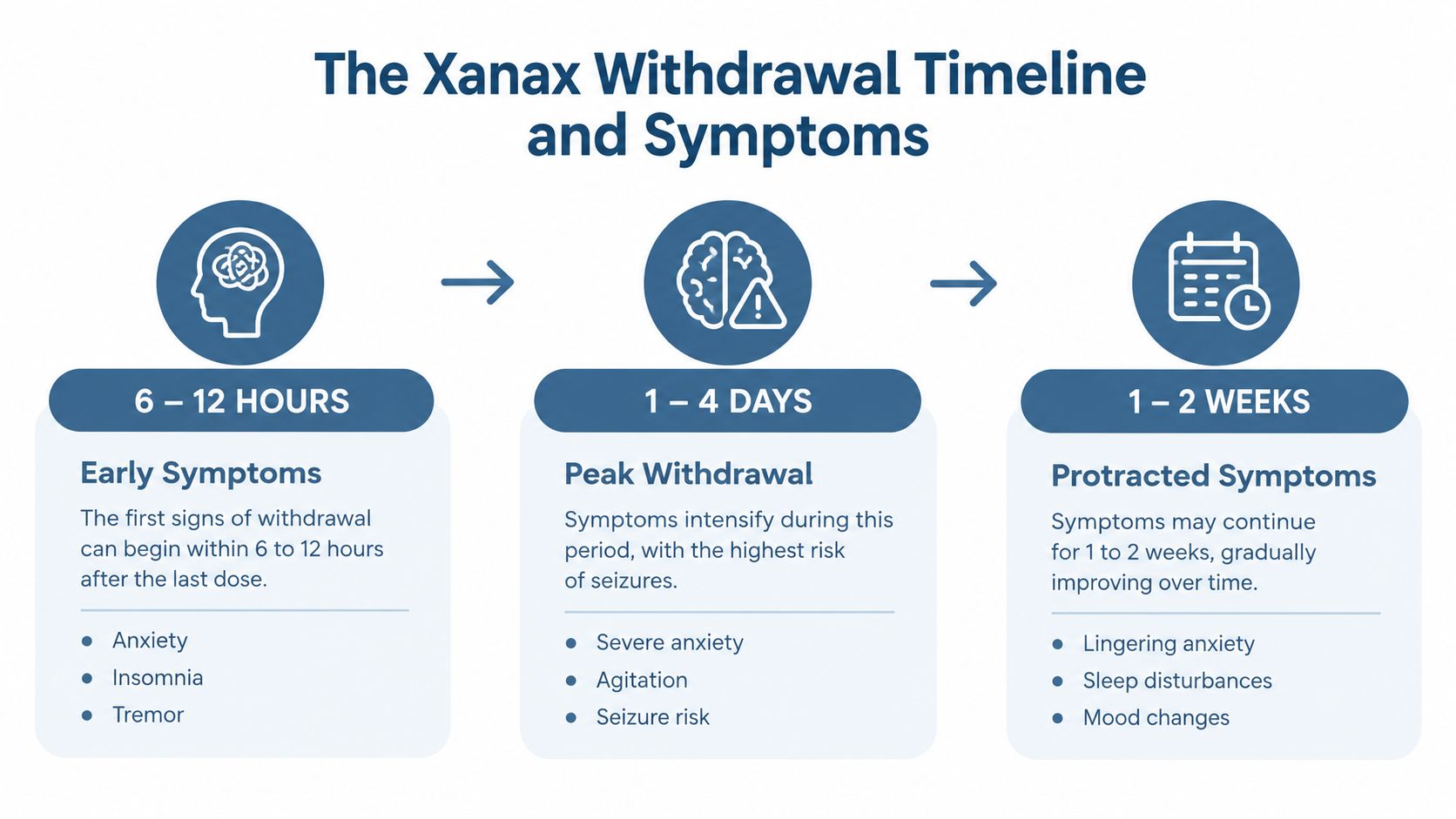
Within roughly 6 to 12 hours after the last dose, early symptoms may include rebound anxiety, irritability, insomnia, tremor, sweating, palpitations, and gastrointestinal distress. Someone may still answer emails, yet concentration and emotional control can become unreliable. Driving, operating equipment, negotiating, or making high-consequence decisions may be unsafe.
Symptoms can intensify over the following days. Marked anxiety, panic, shaking, muscle discomfort, sweating, and severe sleep disruption are common features. For people with high-dose or prolonged exposure, seizures become the rare but potentially fatal withdrawal pathway clinicians watch for. Status epilepticus, meaning a prolonged or repeated seizure state, requires immediate hospital care. Autonomic instability and combined withdrawal from alcohol or other sedatives can add further danger, which is why a symptom timeline cannot replace clinical assessment.
Days four through fourteen
During the subacute phase, physical symptoms may ease while anhedonia, dysphoria, sensory hypersensitivity, anxiety, and disrupted sleep continue. These problems can impair judgment and leadership after the most dramatic physical signs have passed. A return to work too soon may prompt self-treatment with alcohol, stimulants, excessive caffeine, or extra medication, increasing instability and the likelihood of hospitalization.
A fuller explanation of symptom duration appears in this guide to how long Xanax withdrawal can last. The timeline is a guide, not a promise. Dose changes, duration of use, other substances, liver function, sleep, and psychiatric conditions can alter the course.
A 30-day executive calendar
A practical professional plan protects the first several days as a medical window, rather than scheduling uninterrupted travel or board-level decisions. Work contact can increase during the following weeks when symptoms remain stable and the treating team agrees.
Protracted withdrawal, sometimes called PAWS, can persist for months in some people. Symptoms may be psychological or sensory, including anxiety, low mood, poor sleep, and difficulty tolerating stimulation. A private plan includes continuing care, medication review, therapy, and a gradual return to demanding responsibilities. Acute symptom relief does not always mean recovery is complete.
Who Is Most at Risk of Severe Complications
Withdrawal risk is better understood as a profile than as a single dose threshold. A person taking a prescribed dose for a short period may have fewer risk factors than someone using a larger dose for a long time, but severe withdrawal has been reported even after less than 15 days of use and at therapeutic doses. Higher dose and longer duration still increase concern, and the clinical discussion of Xanax withdrawal risk factors describes how age, polypharmacy, psychiatric comorbidity, and alcohol or opioid use can compound danger.
Consider a hypothetical 45-year-old executive taking 4 mg per day for two years while drinking alcohol nightly. That profile differs substantially from a person who used a low prescribed dose briefly, has no other sedatives in the system, and has reliable prescriber access. The example isn't a prediction of an individual outcome. It shows why clinicians assess the whole person rather than judging risk from the prescription label alone.
The risk profile in practical terms
| Risk Factor | Low Risk Profile | Moderate Risk Profile | High Risk Profile |
|---|---|---|---|
| Dose | Lower prescribed exposure with stable dosing | Regular use with dose changes or intermittent escalation | Higher daily exposure, especially above 4 mg per day |
| Duration | Shorter treatment period | Ongoing use with emerging dependence | Long-term use with strong physical dependence |
| Other substances | No alcohol, opioids, or sedatives | Occasional alcohol or another sedating medicine | Concurrent alcohol, opioids, or multiple sedatives |
| Medical factors | Stable general health | Sleep, liver, cardiovascular, or neurological concerns | Seizure history, hepatic impairment, serious medical instability, or prior complicated withdrawal |
| Psychiatric factors | Stable symptoms and support | Active anxiety, depression, or trauma symptoms | Severe psychiatric comorbidity, psychosis, or suicidal thinking |
| Treatment history | No previous difficult taper | Symptoms during earlier dose reductions | Failed rapid tapers, withdrawal seizures, or repeated withdrawal episodes |
Why high-functioning professionals can be vulnerable
Executives often have a controlled supply, private healthcare access, and the ability to conceal symptoms. Those advantages can delay help. A person may reduce doses independently during a holiday, then resume the prior amount after several uncomfortable days, or combine withdrawal with alcohol and sleep medication.
A self-screen should ask:
- Has use been long term or at a higher dose?
- Has a prior reduction caused tremor, panic, insomnia, confusion, or perceptual changes?
- Are alcohol, opioids, sleep medicines, or other sedatives involved?
- Is there a seizure history, liver disease, significant medical illness, or older age?
- Are depression, psychosis, suicidal thoughts, or severe trauma symptoms active?
- Can a qualified prescriber provide prompt follow-up and adjust the plan?
If several answers raise concern, an outpatient schedule may be inadequate. Guidance on post-acute withdrawal syndrome can help with longer-term planning, but it isn't a substitute for a clinician's assessment before reducing Xanax.
Medically Supervised Detox and Tapering
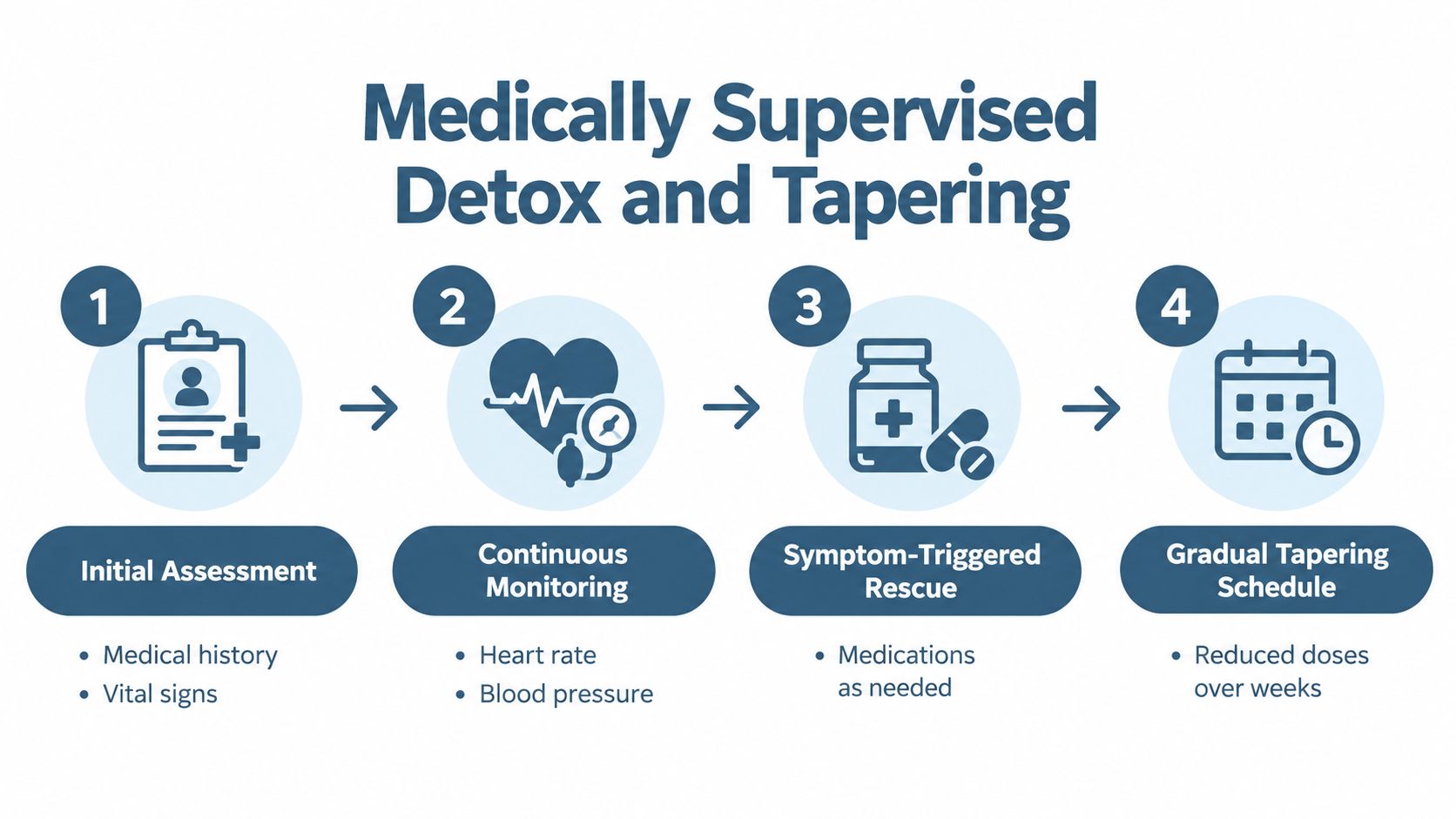
A private detox plan starts with information, not a predetermined dose schedule. The clinical team reviews the exact alprazolam dose, timing, duration, previous taper attempts, alcohol and drug use, prescriptions, medical conditions, sleep, psychiatric symptoms, and seizure history. Vital signs and mental status establish a baseline, while the team determines whether residential monitoring, hospital-level care, or outpatient management is appropriate.
What the first phase protects against
During medically managed withdrawal, clinicians monitor symptoms and vital signs, including heart rate and blood pressure, while watching for escalating agitation, confusion, hallucinations, tremor, or seizure activity. The purpose is not just comfort. Monitoring gives the team a chance to identify instability before a patient becomes unable to describe what's happening.
A clinician may use a gradual alprazolam reduction or transition to a longer-acting benzodiazepine such as diazepam or clonazepam. Longer-acting medication can create a steadier pharmacological baseline for some patients, reducing sharp interdose changes. The choice depends on liver function, age, other medications, prior response, and the treating prescriber's judgment.
Why taper pace must be individualized
The FDA labeling recommends reducing alprazolam by no more than 0.5 mg every 3 days, but a clinician may choose a slower pace when symptoms, medical conditions, or work demands justify it. Tapering principles associated with the Ashton approach emphasize gradual reductions and careful adjustment. A medically responsible schedule isn't a race to become medication-free. It is a controlled process that balances neurological safety, psychiatric stability, and the person's ability to function.
Some patients need adjunctive treatment or seizure-risk precautions. Those decisions require an addiction medicine or psychiatric prescriber who can evaluate interactions and changing symptoms. Patients shouldn't add anticonvulsants, sleep aids, alcohol, or borrowed medication independently.
What a high-end setting adds clinically
A discreet residential program can offer private rooms, predictable routines, private clinical conversations, and structured communication with family or professional supports. Reflections provides private rooms in both detox and rehabilitation programming, maintains appropriate access to electronics for residents who need contact with work or loved ones, and offers clinically managed subacute detox for benzodiazepine withdrawal. Details about medical-assisted detox can help a professional compare the level of monitoring with the demands of a home taper.
Privacy doesn't remove the need for honest disclosure. A person who continues working from a laptop must still tell the treating team about poor sleep, escalating anxiety, missed doses, alcohol use, and any neurological symptoms. The safest executive plan protects confidentiality while giving clinicians enough information to prevent avoidable complications.
Choosing the Right Level of Care
The right setting depends on medical risk and practical stability, not on status. A high-profile professional may prefer outpatient care to avoid visibility, while a person with high-dose use, alcohol exposure, a prior difficult taper, or limited support may need residential monitoring. The question is whether the setting can safely cover the period when symptoms could escalate.
| Setting | Monitoring Intensity | Ideal Candidate | Executive Consideration |
|---|---|---|---|
| Residential medically managed detox | Frequent clinical assessment with structured observation and vital-sign monitoring | Higher-risk use, significant co-occurring conditions, prior complicated withdrawal, or uncertain substance history | Offers privacy, private rooms, predictable scheduling, and distance from travel or work triggers |
| Partial hospitalization | Intensive daytime clinical support with residence outside the program | Medically stable people who need substantial structure but don't require continuous residential oversight | Can preserve some home or work connection, but requires a safe evening environment |
| Intensive outpatient | Scheduled clinical visits, medication management, and therapy | Lower-risk profiles with reliable prescriber access, stable housing, and informed support | Allows continued work more readily, but the patient must report symptoms promptly |
| Prescriber-guided home taper | Medication plan with follow-up determined by the prescriber | Lower-risk patients with stable dosing, no major interacting substances, and dependable monitoring | Provides maximum schedule flexibility, but places more responsibility on the household |
Home tapering isn't appropriate just because the person is disciplined or successful. It requires an accurate medication supply, a clinician who can respond quickly, a trusted person who understands warning signs, and a plan for emergency transfer.
Residential care may be the better fit when the person can't reliably separate work from treatment, has attempted to taper alone, uses alcohol or opioids, or has serious psychiatric symptoms. A short period of protected care can reduce exposure to the most vulnerable withdrawal window while allowing an individualized transition plan.
The concrete question for a physician is: “Given the dose, duration, other substances, medical history, psychiatric symptoms, and previous taper attempts, what level of monitoring is medically safest?” The answer should come before deciding how discreetly or quickly treatment can be arranged.
Warning Signs and Harm Reduction Next Steps
Some symptoms require emergency action rather than a call scheduled for later. A spouse, assistant, colleague, or family member should call 911 or seek emergency-department evaluation for any of the following:
- New-onset seizure: Clear the surrounding area, keep the person on their side if possible, don't restrain them, and don't put anything in their mouth.
- Loss of consciousness: Check breathing and responsiveness, and follow the dispatcher's instructions.
- Persistent vomiting: Don't force pills, food, or fluids when the person can't keep anything down. Seek urgent evaluation because dehydration and medication interruption can compound risk.
- Hallucinations or profound confusion: Stay nearby without arguing about what the person sees, remove access to weapons and vehicles, and request emergency help.
- Fever above 100.4°F with tremor: Report the temperature, medication history, and timing of the last dose to emergency clinicians.
- Suicidal ideation with a plan: Don't leave the person alone. Remove immediate means when safe and contact emergency services.
- Chest pain or severe palpitations: Stop exertion, keep the person supervised, and seek immediate medical assessment.
The same-day harm-reduction plan should be simple enough to follow during a demanding week:
- Don't stop cold turkey. Contact the prescribing clinician or an addiction medicine specialist before changing the dose.
- Create an accurate dose log. Record the medication strength, time taken, missed doses, and any other sedating substance.
- Avoid alcohol and stimulants. Alcohol can compound sedation and withdrawal instability. Stimulants and caffeine binges can intensify anxiety, palpitations, and insomnia.
- Secure remaining pills. A trusted person can hold the supply if impulsive re-dosing or accidental double dosing is a concern.
- Tell one trusted person. The contact should know the taper plan, emergency symptoms, and the location of the nearest emergency department.
- Keep a symptom diary. Note sleep, tremor, anxiety, nausea, blood pressure if instructed, confusion, and perceptual changes.
- Schedule a same-week intake. A qualified clinician can determine whether outpatient tapering, partial hospitalization, residential detox, or hospital care fits the risk profile.
A retrospective review of acute benzodiazepine withdrawal cases reported 0 deaths, although seizures occurred in 10% of cases overall. That finding supports a balanced conclusion: death from withdrawal is uncommon in monitored clinical settings, but severe complications can still require urgent care. Expert guidance continues to warn that abrupt discontinuation can rarely lead to seizures, psychosis, delirium, and death. Documented reports of death following alprazolam withdrawal seizures show that the danger isn't purely theoretical.
Emergency rule: A seizure, severe confusion, hallucination, suicidal plan, chest pain, or inability to keep medication down is a medical emergency. A private treatment preference should never delay emergency care.
For executives and high-earning professionals, the safest move is professional contact before the next dose change. A confidential setting can protect work continuity where clinically appropriate, while private rooms, electronic access, medical monitoring, dual-diagnosis care, and continuing support address the person rather than just the prescription.
Reflections provides private, medically managed benzodiazepine detox and residential dual-diagnosis treatment for adults who need discreet care without abandoning meaningful work and family responsibilities. The accredited clinical team can help evaluate Xanax withdrawal risk, create a supervised stabilization plan, and coordinate continuing care. Visit Reflections to discuss confidential treatment options.