

A senior leader can handle a merger, a board presentation, or a sudden staffing crisis, then still feel uncertain when a treatment center asks how payment will work. That uncertainty is normal. The good news is that payment plans available at a private residential program are usually designed to bring order to the financial side of care, so a family can focus on treatment, not a lump sum.
For executives and working professionals, the issue is rarely just price. It's privacy, timing, and whether care can be structured without disrupting work obligations or creating unnecessary visibility. A clear payment arrangement can support all three when it is explained well and documented properly.
Investing in Yourself A Guide to Financing Your Recovery
A professional who is used to making fast, high-stakes decisions may still hesitate when treatment becomes personal. The numbers matter, but so does discretion, and so does the ability to move forward without making a crisis feel bigger than it already is. That is why a private-pay conversation should start with clarity, not pressure.
A payment plan in a luxury treatment setting is not a vague promise to “figure it out later.” It is a pre-agreed schedule that replaces one large charge with a series of installments, with the terms set in advance and the due dates clearly identified. In other settings, a pay plan can even be separated from regular billing cycles, which shows how structured these arrangements can be when collections timing needs to be handled carefully, as described in Oracle's billing model for pay plans (Oracle pay plan definition).
Why structure matters for high-profile clients
At this level, financing is part of the admission decision, not an afterthought. A family may want to protect cash flow, preserve privacy, and avoid forced disruption to career responsibilities. A well-designed arrangement can do that by making the cost predictable and the next step obvious.
Practical rule: the best financial plan is the one that fits the treatment timeline, the household budget, and the client's need for confidentiality.
For a closer look at how residential care costs are typically framed, Reflections outlines treatment cost context on its own site in a dedicated overview of the average cost of addiction treatment. That kind of information helps families compare options with a fuller picture, instead of reacting only to the first number they hear.
The right question is not whether payment plans available exist. It is whether the plan supports a premium clinical experience without forcing a rushed decision. For many professionals, that balance is what makes treatment feel accessible.
Your Primary Financial Pathways for Treatment
A prospective client may be ready for care, while the family is still sorting out how the bill will be handled and on time. That is usually where the financing discussion begins for luxury residential treatment. The question is which route already fits the household, which details need confirmation, and which costs should be spaced out rather than paid all at once.
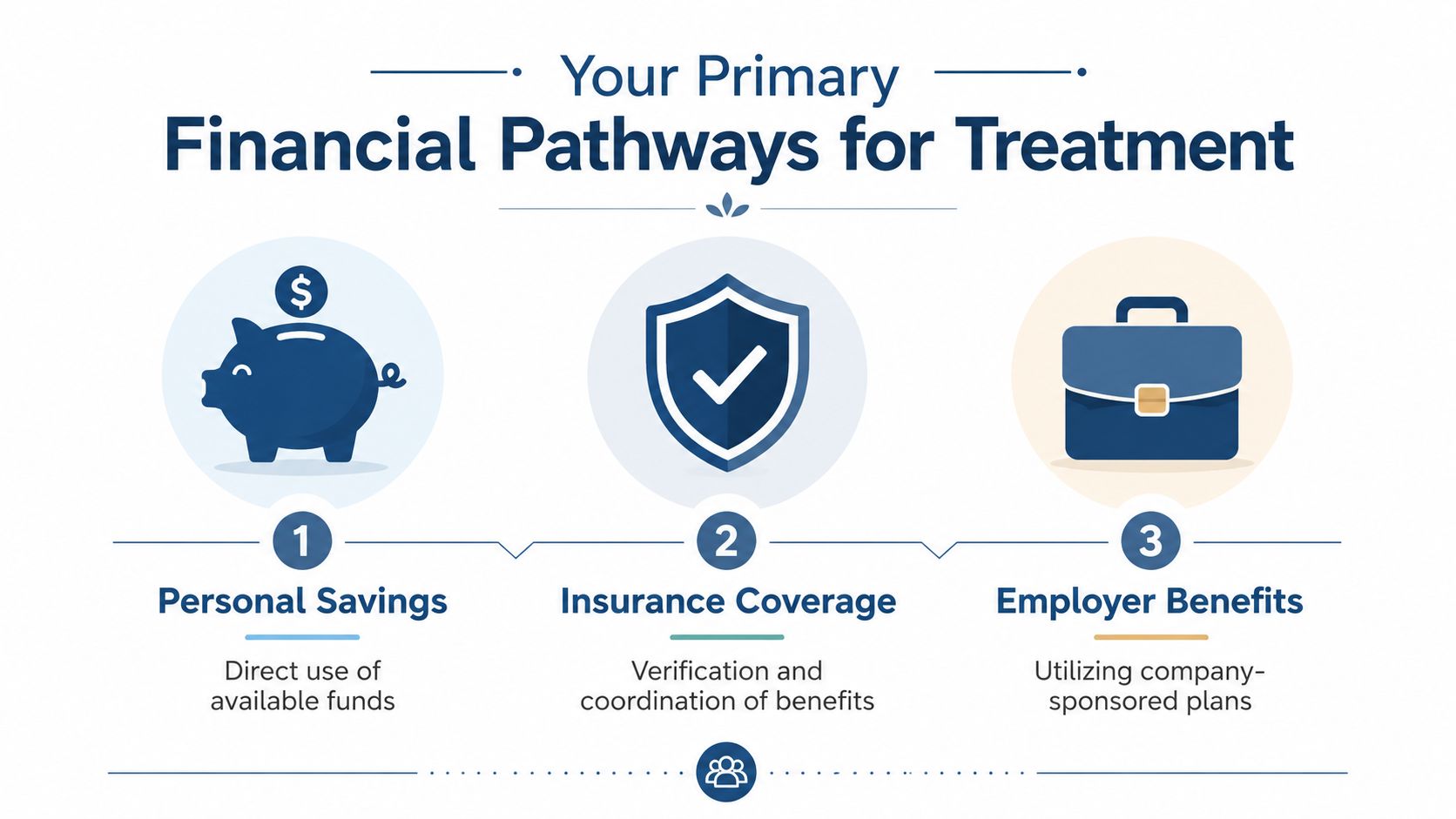
Direct private pay
Direct private pay gives families the most control over admission timing and billing privacy. There is no insurer waiting in the middle, so the financial discussion can stay focused on the treatment decision itself. For families who value discretion, that directness often feels easier to manage.
It also fits well with upscale residential care because the payment process stays straightforward. In an environment where quiet communication and limited administrative back-and-forth matter, private pay can reduce unnecessary attention around the admission process.
Insurance coverage
Insurance matters when a plan includes behavioral health or substance use benefits and the family needs help interpreting what those benefits cover. The key question is how the plan is structured, whether the treatment program is in network or out of network, and how deductibles and reimbursement rules affect the final bill. For executives and other high-profile clients, this review often focuses on how benefits can be used without creating avoidable disclosure or administrative strain.
A helpful starting point is Reflections' guide to a comprehensive framework for coordinating behavioral health benefits. It gives families a clearer way to review coverage before admission, instead of treating insurance as a vague yes-or-no answer.
Employer benefits
Some professionals already have employer-sponsored resources that can help at the start. That may include an Employee Assistance Program, pre-tax accounts, or broader benefits that support access to care. These resources do not replace clinical fit, but they can lighten the immediate financial load and shorten the path to admission.
Key takeaway: the strongest pathway is usually the one that reduces delay without adding avoidable administrative stress.
For readers comparing how payment plans available can support premium treatment, the choice is usually not one option versus another. It is often a combination of personal funds, insurance review, and employer-based support that protects confidentiality, limits disruption, and keeps the decision aligned with clinical need.
For a practical billing perspective on how out-of-network structures support practice operations, one helpful resource is boost practice revenue.
Navigating Insurance and Out-of-Network Benefits
Insurance often feels simple at first and then becomes confusing once the details matter. For private residential treatment, the key question is usually not whether a policy exists, but how the benefits are applied and what portion of the stay may be reimbursed. That is why out-of-network support can be useful for families trying to protect both privacy and financial control.
A good starting point is a Verification of Benefits, or VOB. The admissions team contacts the insurer, confirms active coverage, and reviews the relevant behavioral health benefits before admission. That helps the family avoid guessing and gives them a clearer picture of what the plan may do. For executives, owners, and other high-profile clients, that clarity matters because it reduces unnecessary back-and-forth during an already sensitive decision.
A helpful reference for detailed steps for verifying out-of-network benefits can make this review feel less opaque before a stay begins.
What a superbill does
If the client pays privately or uses out-of-network benefits, the program may provide a superbill, which is a detailed document the family can submit to the insurer for possible reimbursement. It does not guarantee payment, but it creates the paperwork needed for claim review. That difference matters, because reimbursement and direct coverage are not the same thing.
A superbill is a bit like a detailed receipt with clinical coding attached. It helps the insurer understand what was provided, while the family keeps the treatment choice separate from the payment source. For households that value discretion, that separation can be just as important as the financial relief itself.
For a practical billing perspective on how out-of-network structures support practice operations, one helpful resource is boost practice revenue. The mechanics of reimbursement matter because they influence how much of the expense a family may recover after treatment.
The most common mistakes to avoid
- Skipping verification: A family can assume a plan covers more than it really does, then run into avoidable surprises.
- Ignoring network status: Out-of-network care can still be useful, but only if the reimbursement path is understood first.
- Sending incomplete paperwork: Claims are easier to handle when the documentation is accurate from the beginning.
A discreet clinical setting should manage these steps without turning the process into a public event. Reflections keeps coverage coordination private, which is why families often review its insurance coverage for addiction treatment guidance before they decide on next steps.
The practical goal is straightforward. Use insurance where it helps, document the stay properly, and avoid guessing about what will or will not be covered.
Structured In-House and Third-Party Financing
When a family wants premium care but doesn't want to tie up all liquid funds at once, structured financing becomes a practical tool. It turns a single large obligation into a manageable schedule, which is familiar territory for many executives who already think in terms of cash flow, timing, and planned commitments.
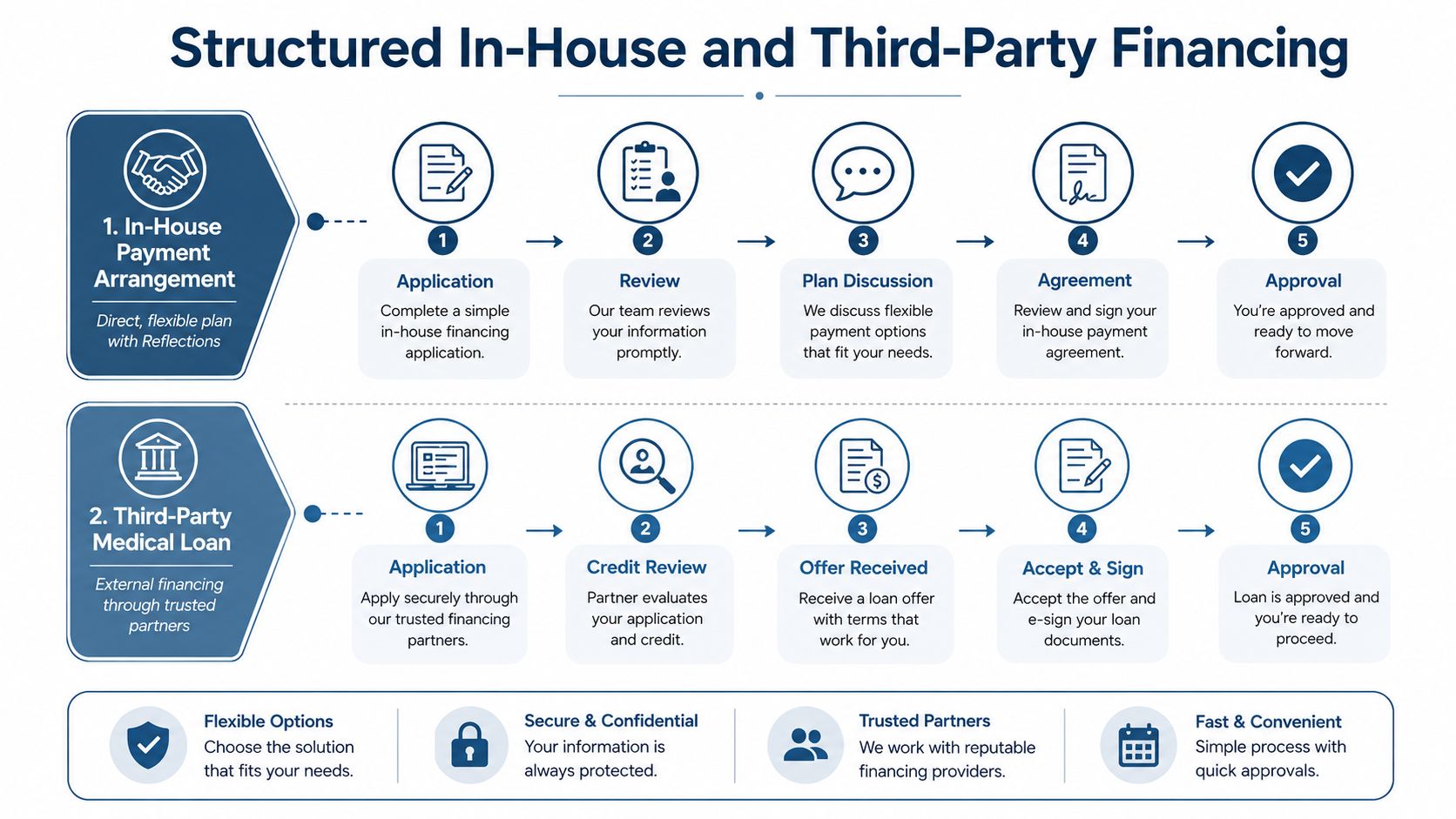
In-house arrangements
An in-house plan is typically the most direct version of payment plans available. It lets the treatment center and the family agree on a schedule for the out-of-pocket balance, often aligned with the length of stay or the family's preferred cadence. The value is control. The terms stay close to the treatment decision, and the process stays relatively simple.
This kind of arrangement works best when the family already knows the program is the right fit and just needs a more flexible way to bridge the gap between admission and full payment. It's especially useful for households that prefer not to involve additional lenders.
Third-party medical financing
Third-party financing introduces another layer, but it can also extend the repayment horizon in a way that a short in-house arrangement cannot. The application process usually focuses on the borrower's ability to repay and the loan structure itself, which may make sense for families looking to preserve liquidity during treatment or keep business and personal cash flow separate.
The tradeoff is that outside financing adds another decision point, so the family should review terms carefully before committing. That includes the repayment schedule, whether the total cost is fixed up front, and how the monthly obligation fits into the broader household budget.
Reflections includes a payment pathway on its own site through payment, which is the kind of page families often review after they've narrowed their treatment choice and want the billing details in one place.
A structured plan should feel orderly, not improvisational.
The main advantage of financing is that it turns a large clinical decision into something planned. For many professionals, that predictability is what makes treatment possible without sacrificing stability elsewhere.
Using Pre Tax and Employer Provided Funds
Professionals often overlook money that is already available to them. That is a mistake, because pre-tax and employer-sponsored benefits can sometimes be the cleanest way to reduce the immediate burden of care. The key is to check eligibility early and use each account according to its rules.
A Flexible Spending Account and a Health Savings Account can both be relevant for treatment-related expenses when the plan design and service type qualify. The details matter, especially for families who are trying to coordinate care without creating avoidable tax or documentation issues. For a clear overview of employer-side contribution and account rules, Benely's explanation of IRS rules for FSA is a helpful place to confirm how these accounts work in practice.
Where employer assistance fits
An Employee Assistance Program, or EAP, can be a confidential starting point. It may provide referrals, navigation support, or a short-term pathway into care while the family decides on the right residential setting. For a C-suite professional, that first contact can be especially useful because it offers a lower-friction way to begin asking questions.
These benefits do not replace the need for the right treatment environment, but they can reduce the amount that needs to be paid out of pocket right away. That matters when a family is trying to preserve privacy and avoid unnecessary administrative strain.
What to check before using these funds
- Eligibility first: Confirm that the expense category fits the account rules before making assumptions.
- Documentation next: Keep the paperwork organized so the benefit can be applied properly.
- Timing matters: Some accounts work best when the treatment dates and payment schedule are coordinated early.
Useful rule: benefits are only helpful if the family understands how to use them before the bill is due.
The value of pre-tax funding is not just lower friction. It's also the chance to use resources that may already be sitting inside a benefits package, instead of treating treatment as if it must all come from one new source.
Our Confidential Enrollment and Financial Process
A high-profile client usually wants two things at once, a discreet admission path and a financial plan that doesn't create noise. The process should feel calm, not chaotic. That's why the first call matters so much, because it sets the tone for everything that follows.
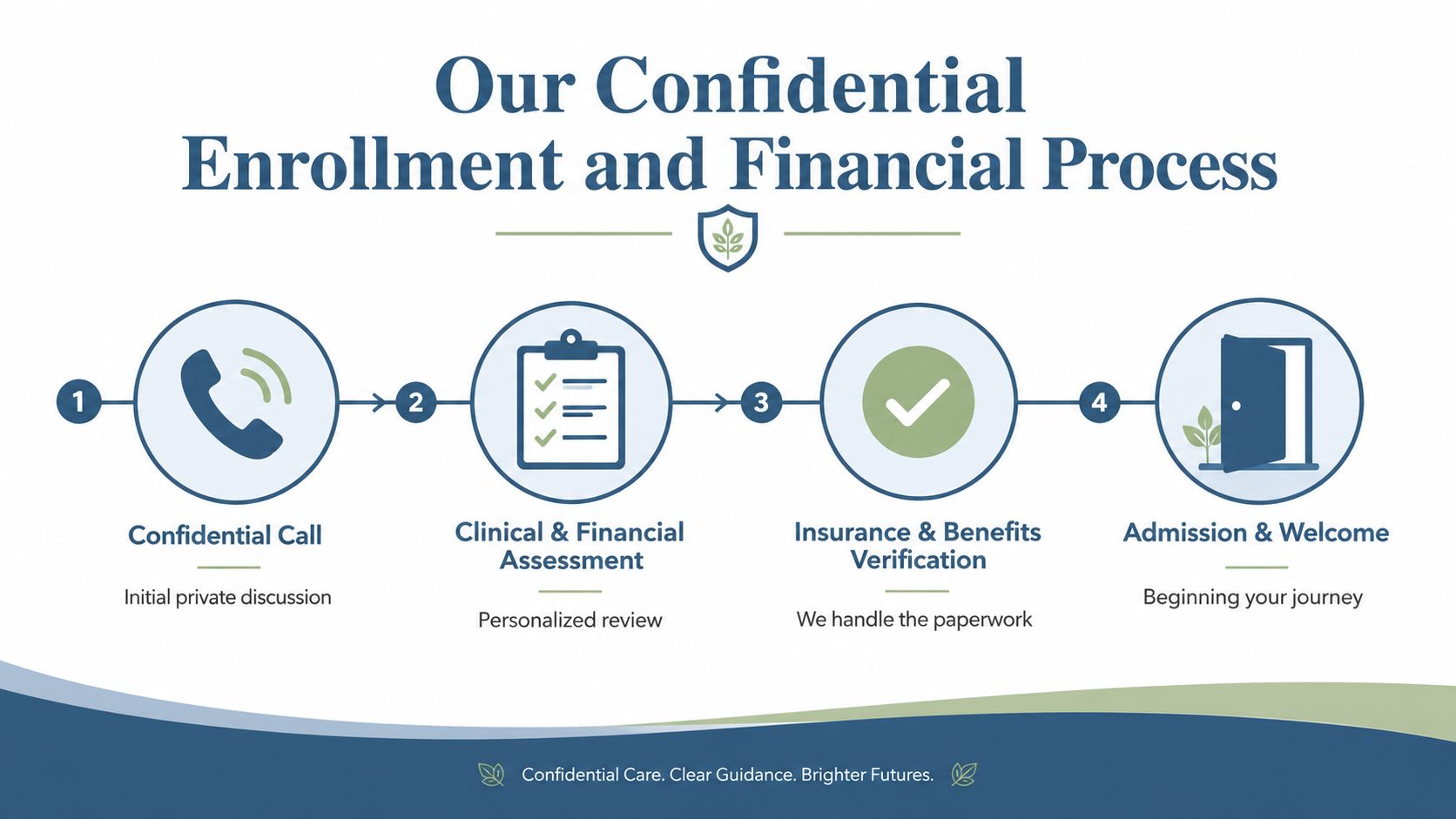
How the sequence usually works
The first conversation is private and direct. A family or professional shares the basic situation, then the admissions team gathers the clinical and financial information needed to move forward without unnecessary back-and-forth. After that, insurance or benefits verification can be completed, and the family receives a clearer sense of what the stay will require financially.
Once the coverage picture is understood, the team presents the payment structure. That may involve private pay, a structured arrangement, or a combination of benefits and financing. The family then reviews documentation, confirms the timing, and authorizes admission when everything is in place.
What confidentiality looks like in practice
Confidentiality is more than a promise. It means limiting unnecessary communication, keeping billing details organized, and handling information in a way that respects both privacy and family dynamics. For executives, that can make a major difference, especially when the treatment decision needs to stay inside a very small circle.
A professional may also want communication handled in a way that does not interfere with work obligations. Reflections allows residents to keep electronics, including cell phones and laptops, so they can remain in contact with professional responsibilities while in treatment. That detail matters because it helps the admission process fit real life instead of pretending work disappears.
Admission should feel discreet enough for a private family conversation and structured enough for a corporate decision.
Luxury residential care is still care, which means the financial process has to support the clinical decision, not distract from it. When the steps are clear, families can move with more confidence and less anxiety.
Frequently Asked Financial Questions
Families often reach the final stage of decision-making with a few practical questions still open, and those questions deserve clear answers. Privacy usually comes first. Billing details should stay discreet, and the admissions team should share only what is needed so employer-facing or family-facing exposure remains limited.
A second question is what happens if the budget changes during treatment. The safest approach is to speak with admissions or billing as soon as possible. A shift in financial circumstances is easier to address early, before a missed payment creates avoidable stress or confusion.
Travel and ancillary services also create uncertainty. Those items are not always handled the same way as residential clinical care, so families should ask for a written explanation of what is included and what is billed separately. A clear review at the start helps prevent surprises later.
Questions worth asking before admission
- Who receives billing notices? Families should confirm exactly how communications are sent and to whom.
- Can the plan be adjusted? If income or cash flow changes, flexibility should be discussed before a problem develops.
- What is separate from treatment? Transportation, upgrades, or other extras should be identified in writing.
For executives and their families, one point deserves special attention. A payment plan can make treatment easier to start, but it is not the same as a lower-cost setting. It is a way to organize payment over time while keeping the focus on clinical care, privacy, and the practical needs of a household that may also be managing work obligations.
If a private, clinically strong environment is the right fit, Reflections can walk families through coverage, private pay, and installment options in a discreet conversation that respects work obligations and personal privacy. To request a confidential financial discussion and review the payment plan that fits your household best, contact Reflections for a personalized payment plan discussion.