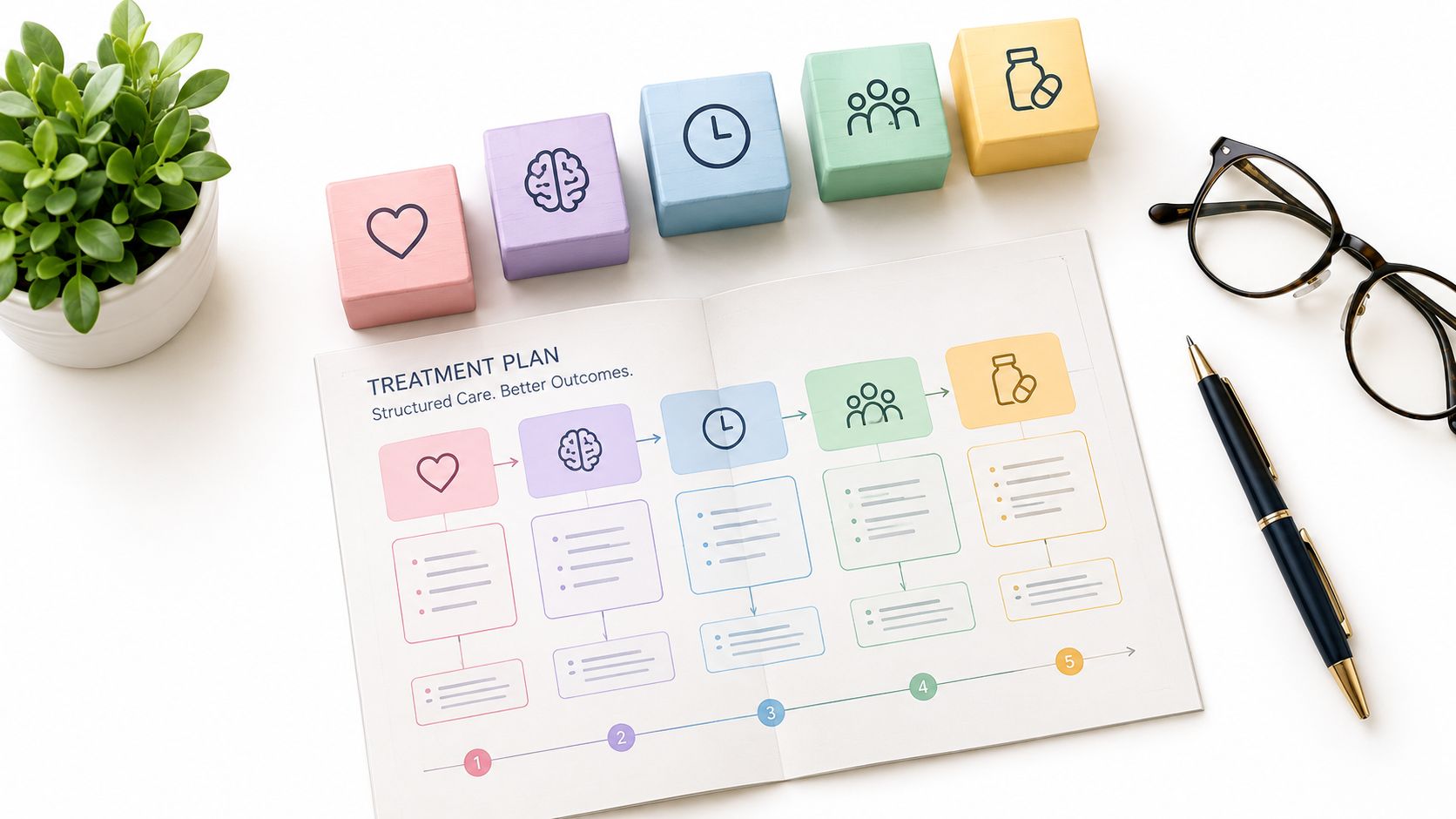

High end mental health and addiction treatment offers something very specific that you may not have found in traditional care. Instead of a crowded milieu, rotating staff, and rigid schedules, you step into a private, clinically sophisticated environment that is structured around your needs, your career, and your privacy.
If you are a high functioning executive or professional, you likely need intensive, evidence-based treatment that does not feel institutional, protects your reputation, and still allows you to maintain some connection to work. This guide walks you through what effective high end mental health and addiction treatment looks like so you can evaluate your options with clarity and confidence.
Understanding high end mental health and addiction treatment
High end mental health and addiction treatment typically refers to private, luxury residential or intensive outpatient programs that combine top tier clinical care with an elevated environment. You receive the same or greater level of evidence-based treatment as a quality hospital program, but in a setting that feels more like a private estate or boutique wellness retreat.
Luxury centers often provide private rooms, tranquil surroundings, and holistic therapies such as yoga, meditation, massage, and other wellness-focused services to support recovery beyond traditional methods. The aim is not indulgence for its own sake. The goal is to create a low stress, highly contained space where your nervous system can settle enough for deep therapeutic work.
At the same time, the best programs for professionals recognize that you may be managing a business, practice, or public profile. Programs like an executive rehab for professionals or a private mental health retreat for professionals are designed to meet that reality instead of fighting it.
Key differences from traditional and affordable rehab
Traditional and affordable rehab centers play a critical role in the treatment system. Many provide solid, research-backed care through structured, community-based programs. Understanding how high end treatment compares helps you see what you are actually paying for.
Traditional programs typically rely on treatments such as cognitive behavioral therapy, 12 step groups, counseling, and peer support, which have a strong track record of effectiveness for many people. Affordable programs often offer shared rooms and simple meals while still delivering evidence-based therapies with experienced staff, focusing on accessibility regardless of financial situation.
High end mental health and addiction treatment introduces several additional layers that matter especially for executives and high profile individuals:
- A much higher staff to client ratio for intensive individual attention
- Greater privacy and physical separation from your day to day environment
- Executive friendly scheduling or access so you can maintain essential responsibilities
- A more personalized, concierge style experience across the entire stay
The effectiveness of any program ultimately depends on clinical quality, fit, and aftercare, not just the level of luxury. As you evaluate options, you are really looking for a high quality private addiction and mental health treatment center that combines these elements in a coherent way, rather than amenities alone.
What “high end” really looks like in practice
In a genuinely high end program, luxury is not just about comfort. It is about creating conditions that support engagement in treatment and long term change.
You can expect a setting that often includes private rooms with en suite bathrooms, gourmet meals, spa like environments, massage therapy, and other supportive services that help you rest and reset during intensive work. Many centers sit on oceanfront or mountainside properties, or in secluded estates that are intentionally quiet and visually calming.
Clinically, many high end centers provide:
- Comprehensive medical and psychiatric evaluation on admission
- Access to leading medical and psychological specialists
- A mix of traditional therapies and innovative modalities, such as neurofeedback, biofeedback, art therapy, adventure therapy, or equine therapy, which complement evidence-based care
In a program such as a luxury rehab with individualized therapy, this often translates into more one on one therapy each week than standard programs provide, deeper trauma work, and more room to address complex professional and relational issues.
Why dual diagnosis expertise matters for professionals
If you are a high achieving professional, your symptoms rarely fit into a single box. Depression might show up as irritability and overwork. Anxiety might be masked by perfectionism or control. Substance use often evolves as a way to manage the pressure and emotional impact of high responsibility roles.
Dual diagnosis treatment specifically targets both mental health concerns and substance use at the same time. Leading luxury and executive programs conduct comprehensive assessments of your medical and psychological history, including screening for co occurring disorders, then build a plan that addresses both sides of the equation for long term recovery.
A high quality luxury dual diagnosis treatment center or luxury residential dual diagnosis program will:
- Treat the addiction and the underlying drivers such as trauma, mood disorders, or chronic stress
- Integrate psychiatric care, therapy, and medication management in a coordinated way
- Recognize how your professional identity, family role, and public image intersect with symptoms
If you are dealing with unresolved trauma in addition to substance use or mood issues, a specialized high end trauma and addiction treatment track can become especially important.
The role of concierge and executive level care
For many executives, the barrier to entering treatment is not denial about the problem. It is logistics, confidentiality, and fear of losing control of your business or reputation.
Executive level, concierge style programs are designed with this in mind. You might see specialized offerings such as a concierge addiction treatment program, executive inpatient mental health treatment, or executive rehab with private accommodations. These often include:
- Flexible scheduling of therapy and groups around limited essential work obligations
- Private workspaces or offices so you can manage critical responsibilities while in residence
- Discreet transportation and admissions processes
- Dedicated case managers or concierge staff to coordinate all aspects of your stay
The best confidential rehab for executives also maintain extremely small client to staff ratios and often require staff to sign non disclosure agreements, prioritizing confidentiality throughout. This level of discretion allows you to be more honest in treatment, because you are not spending your energy managing image and exposure.
Evidence based therapies you should expect
Regardless of how refined the environment may be, effective high end mental health and addiction treatment is still grounded in research backed care. You should expect robust use of evidence based therapies such as:
- Cognitive behavioral therapy, which helps you identify and shift the thought patterns and behaviors that maintain anxiety, depression, or substance use
- Motivational interviewing and related approaches that help you resolve ambivalence about change
- Trauma focused therapies when indicated
- Group therapy formats that are structured and clinically led
Elite mental health programs often integrate these with holistic methods such as yoga, acupuncture, mindfulness training, and somatic approaches to help regulate your nervous system and support emotional stability. The aim is to treat the whole person, including genetics, trauma history, and social and spiritual factors, using modalities like mindfulness, spirituality, and psychodynamic therapy to support lasting recovery.
If you are a high functioning professional, look for programs that explicitly address this population, such as high functioning professional addiction treatment. These programs understand how to work with denial that is masked by success, and how to challenge unhealthy patterns without undermining the strengths that helped you build your career.
Levels of care, length of stay, and pacing
Even at the high end, you are still working within familiar levels of care: residential, inpatient, partial hospitalization, and intensive outpatient. The differences lie in environment, staff ratios, and personalization.
Residential programs outside hospital settings often range from three to six weeks for short term care and six to twelve months for longer term therapeutic communities. Inpatient rehab services commonly last 28 to 30 days, with daily access to counseling, group therapy, and medically supervised detox when needed.
Leading high end inpatient mental health and addiction facilities frequently recommend stays of 30 to 90 days, emphasizing that extended treatment is often necessary for sustainable change. In well designed programs, aftercare planning begins early in your stay so that you are not simply discharged without support.
If you are considering a private dual diagnosis residential program, it can be useful to ask:
- How long do clients with similar profiles typically stay
- How intensity is managed so you are challenged, but not overwhelmed
- How the team coordinates transitions to outpatient, coaching, or ongoing therapy
The pacing of treatment should respect the reality that change at your level is not just about stopping a behavior. It requires reconfiguring stress responses, relational patterns, and sometimes the way you structure your professional life.
Costs, access, and insurance considerations
High end mental health and addiction treatment is a significant financial investment. The average cost of drug rehabilitation in the United States across all settings is about per person, with prices varying by services, length of stay, and facility quality. Luxury facilities typically charge substantially more.
Luxury rehab centers for substance use disorders often range between a month, compared with approximately per month for standard inpatient programs, according to recent estimates. In some global programs, costs can climb even higher, with certain centers charging the equivalent of tens of thousands of dollars per week for highly bespoke care.
Private rehabilitation facilities are usually more expensive than state run centers, but offer more comprehensive, intensive, and individualized treatment options, creating a tradeoff between cost and level of care. Some high end programs accept PPO insurance and work with you to secure partial reimbursement. Others operate entirely privately.
Although these numbers are significant, some health insurance plans may cover portions of luxury treatment, and many centers can help you explore financial solutions to offset costs while receiving top tier, individualized care. Clarifying your priorities, financial boundaries, and clinical needs will help you determine what level of investment makes sense for you and your family.
Privacy, confidentiality, and discretion
For many executives and public figures, privacy is not a preference. It is a requirement.
High end centers that focus on executives and high net worth individuals place privacy at the center of their model. Staff are often required to sign non disclosure agreements, programs limit admissions to maintain a smaller patient to staff ratio, and facilities are intentionally secluded to reduce visibility.
When you consider a discreet rehab for high net worth individuals or similar setting, it is reasonable to ask very direct questions about:
- How admissions, arrivals, and departures are handled
- How records are stored and who has access
- How the facility manages media requests or public inquiries
- Whether you can use an alias or limit information sharing even within the team
Programs designed as confidential rehab for executives or executive rehab for professionals are accustomed to navigating these issues and should be able to answer without defensiveness.
Aftercare and long term support
No matter how sophisticated the program, your long term outcome depends heavily on what happens after you leave. This is especially true if you are returning to a high pressure professional environment.
The most effective high end mental health and addiction treatment models plan for aftercare from the beginning. Post treatment support such as ongoing therapy, support groups, coaching, and structured follow up is essential for maintaining sobriety and emotional stability, particularly if you are transitioning out of a highly structured and amenity rich environment.
You might work with your team to design:
- A stepped down schedule of individual and group therapy
- Regular check ins with your psychiatrist or prescribing clinician
- Professional coaching to adjust work patterns and leadership style
- Safety plans for travel, stressful negotiations, or high risk events
If your chosen program is part of a broader system such as a private dual diagnosis residential program connected to outpatient services, this coordination can be seamless. If it is not, make sure you leave with concrete appointments and contacts, not just recommendations.
Evaluating programs and taking your next step
As you look at specific options, you will see many different labels: luxury residential dual diagnosis program, private mental health retreat for professionals, concierge addiction treatment program, and more. Names alone do not tell you whether a program is effective.
When you speak with admissions or clinical staff, consider focusing on questions in three categories:
- Clinical quality
- How are treatment plans individualized
- What is the team’s training and experience with high functioning professionals
- How are co occurring mental health issues and trauma addressed
- Structure and environment
- What does a typical day look like
- How many individual sessions will you have weekly
- How does the program support or limit work related activity
- Privacy and fit
- Who will know you are in treatment
- How flexible is the program if your needs shift mid stay
- How do they define success after discharge
If you are in crisis or still exploring whether you are ready for residential care, you can always access neutral guidance. In the United States, the SAMHSA National Helpline is a free, confidential, 24 hour treatment referral and information service for individuals and families facing mental health or substance use disorders. It connects callers with local facilities, support groups, and community organizations, including options that accept Medicare, Medicaid, or sliding fees. You can also text your ZIP code to 435748 (HELP4U) to receive help locating nearby services.
For many professionals, committing to a high end, clinically strong program is a decisive step toward reclaiming control of your life and career. By choosing a setting that respects your privacy, understands your responsibilities, and offers deep, individualized care, you put yourself in the best position to build recovery that is not just possible, but sustainable.