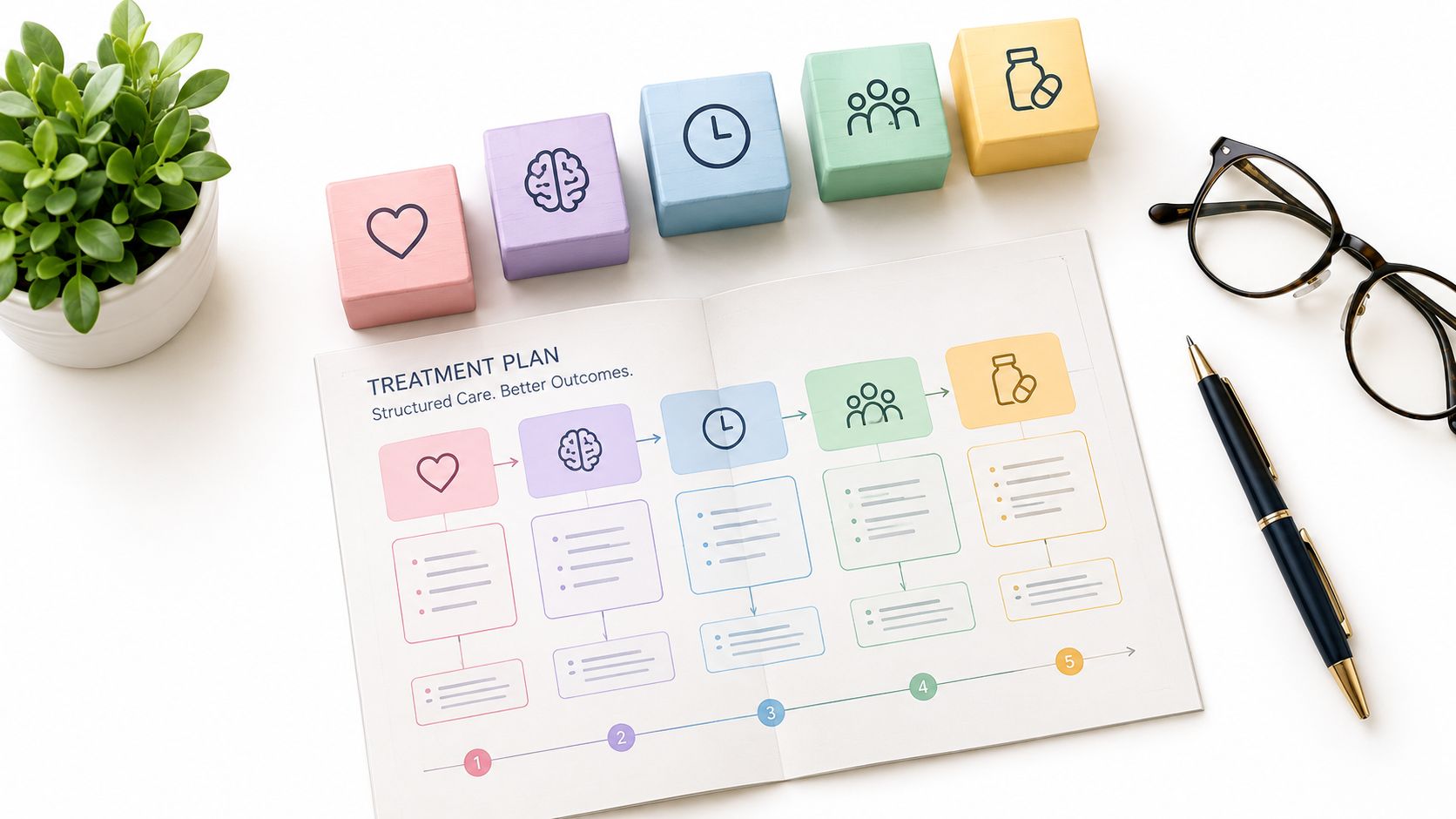

What a concierge addiction treatment program really means
If you are searching for a concierge addiction treatment program, you are likely looking for more than a standard 30 day stay in a crowded facility. You want intensive, clinically sophisticated care that respects your time, privacy, and professional responsibilities.
Concierge addiction treatment describes a premium model of care where providers deliberately work with a small number of clients and deliver highly individualized services. These programs typically offer a lower staff to patient ratio and, in some cases, a dedicated staff member or nurse for each client, which elevates the quality and consistency of care you receive.
For high performing professionals, this model can be the difference between feeling managed by a system and feeling supported by a team that understands how much is at stake for you personally and professionally.
How concierge care differs from traditional rehab
At first glance, many luxury programs appear similar. The key distinction with a concierge addiction treatment program is not only the setting, but the structure of care and level of personalization.
Lower caseloads and more direct access
In a concierge model, clinicians intentionally limit their caseload so they can focus intensively on a small group of clients. This means you spend more time in direct contact with psychiatrists, therapists, and medical staff rather than being filtered through layers of support staff.
Longer stay options, typically 60 days or more, are also more common than the traditional 30 day model. This allows you to spend more time with your providers, participate in deeper therapeutic work, and stabilize both substance use and co occurring mental health concerns at a more sustainable pace.
Highly tailored treatment planning
Concierge addiction programs build your plan from the ground up, taking into account your:
- Medical history
- Type and severity of substance use
- Co occurring mental health conditions
- Professional role and obligations
- Family, social, and legal context
Treatment intensity, session frequency, medication strategy, and even the types of therapy used are tailored to your profile rather than pulled from a standard protocol. Programs on platforms like Recovery.com are noted for combining individualized, evidence based care with luxury settings and private counseling to create this level of personalization.
Integrated mental health and addiction care
If you are an executive or high net worth individual, you are statistically more likely to be dealing with complex stress, burnout, anxiety, depression, or trauma alongside substance use. A strong concierge program operates as a dual diagnosis setting, meaning it treats addiction and mental health together rather than in isolation.
Connecting with a private dual diagnosis residential program or luxury dual diagnosis treatment center gives you access to this integrated approach, which is essential if you want your recovery to hold when you step back into a pressured environment.
Why executives and high performers choose concierge programs
If you are responsible for teams, companies, or portfolios, you face specific challenges in seeking help. A concierge addiction treatment program can match those realities rather than asking you to ignore them.
Protecting privacy and reputation
For many leaders, the primary barrier to entering treatment is not willingness, but exposure. Concierge centers are structured around discretion. They commonly use:
- Private or limited occupancy residences
- Secluded locations and controlled access
- Non disclosure agreements
- Thorough staff background checks
- Discreet transport and admission processes
These measures are central for programs that work with high profile clients and ultra high net worth individuals, where any breach of confidentiality can have outsized consequences. If privacy is a leading concern, you may also want to explore options like confidential rehab for executives or a discreet rehab for high net worth individuals.
Staying appropriately connected to work
You may not be able to disappear from your role for 30 days, and you also may not be able to stay in it fully without risking your health. Concierge programs are often designed to find the middle ground.
Within an executive rehab for professionals or executive inpatient mental health treatment setting, you can typically expect:
- Controlled and scheduled access to secure devices
- Space on site to manage essential communications
- Coordination with your outside advisors if needed
- Boundaries that protect your treatment time and progress
The intention is to preserve what is essential in your professional life without letting work become an ongoing escape from the therapeutic process.
Addressing high functioning patterns
Many professionals in your position meet criteria for addiction while still performing at a high level outwardly. This “high functioning” pattern often delays treatment, deepens denial, and complicates family dynamics.
A concierge addiction treatment program with expertise in high functioning professional addiction treatment focuses not only on obvious consequences, but also on the more subtle costs that are easier to ignore, such as emotional distance, decision fatigue, and erosion of judgment.
Core components of an effective concierge program
While amenities are often highlighted, the quality of the clinical work is what will determine your outcome. As you evaluate options, look closely at how each program structures its treatment day and what you will be doing beyond enjoying the setting.
Intensive, evidence based therapies
Concierge programs generally rely on therapies that have been studied and validated in addiction and mental health treatment, including:
- Cognitive behavioral therapy to identify and change thought patterns and behaviors that drive substance use
- Trauma focused therapies when relevant, especially within a high end trauma and addiction treatment model
- Motivational approaches that help you resolve ambivalence about change
- Family or couple sessions when appropriate, to address relational patterns and repair trust
Many concierge centers offer longer, more frequent, or exclusively 1 on 1 sessions compared to standard facilities, along with small therapy groups that allow for deeper, more focused work.
Holistic and specialized services
You can also expect access to holistic options, not as surface level add ons, but as integrated tools for regulation and resilience. Common examples include:
- Yoga and breathwork to interrupt stress cycles
- Meditation or mindfulness practices tailored to your temperament
- Physical training or functional movement
- Nutritional support aimed at recovery of energy, sleep, and cognition
These services can be particularly effective when they are built around your specific challenges, such as relapse behaviors, anxiety management, or insomnia.
If you value this depth of mind body integration, consider programs that are positioned as high end mental health and addiction treatment or a luxury rehab with individualized therapy.
Medical oversight and detox support
If you require detox, concierge addiction medicine can improve your experience significantly. Tailored medical management allows your team to:
- Match medications to the specific substance and your medical history
- Adjust protocols quickly based on your response
- Reduce the intensity of withdrawal symptoms as much as possible
- Monitor risk factors in real time
This precise approach is especially important with home based detox, although it is also a core advantage in residential settings.
Luxury environment, with a clinical core
Luxury in this context is not only about aesthetics, but about creating a setting that allows you to relax, reduce vigilance, and stay engaged in demanding therapeutic work.
According to Recovery.com, concierge addiction treatment programs often combine:
- Private suites or residences
- High quality, chef prepared meals
- Resort like grounds and amenities
- Access to fitness, spa, or nature based activities
These comforts are intentionally paired with in depth clinical programming to support recovery for affluent individuals with high pressure lives.
Some programs are ultra exclusive. For example, Bonaire Bespoke Recovery in Mallorca focuses on one client at a time, combining multilingual concierge services with clinical care at an estimated per week for 14 to 28 or more days. The Banyans in Brisbane operates as a world renowned luxury rehab with personal attendants and private transport, with rates starting at approximately per week. Kusnacht Practice in Switzerland offers one of the most expensive models globally, with concierge treatment starting around CHF 117,300 per week, primarily serving ultra high net worth individuals.
While you may not need that level of exclusivity, understanding the range of concierge offerings helps you calibrate what “luxury” and “personalization” can look like at different investment levels.
The true measure of a concierge addiction treatment program is how well comfort, privacy, and personalization serve your recovery goals, not the other way around.
Advantages and trade offs to consider
Concierge addiction treatment is not automatically superior for every person. It is important to understand both the benefits and the limitations so you can choose a model that fits your personality and needs.
Key advantages
You may benefit from concierge care if you are seeking:
- Deeply individualized treatment that fits your clinical profile and lifestyle
- Longer, more immersive stays that allow for lasting change
- High privacy protections and constrained visibility
- Direct, frequent access to senior clinicians
- A calm, non institutional setting that helps you stay engaged
Doctors who practice concierge addiction medicine highlight that limiting caseloads in this way usually leads to higher hourly or per client fees, but also allows them to focus intensively on each person.
Potential downsides
There are also trade offs to weigh honestly:
- Cost and perceived exclusivity. Higher fees can position concierge programs as services primarily for wealthy patients. However, some providers note that lower overhead costs and certain insurance arrangements can make this model more accessible than many assume, particularly in regions such as New York.
- Less built in peer community. Because caseloads are small and group settings limited, you may experience less of the communal support that is common in traditional centers. Some people find this focus on 1 on 1 work ideal, while others benefit from a broader peer network.
- Risk of over accommodation. If a program is overly flexible with work or family demands, it can unintentionally reinforce avoidance. It is important to choose a team that helps you maintain healthy boundaries, not simply replicate your current pace in a nicer setting.
For some executives, combining a concierge style environment with more structured group opportunities, as found in a luxury residential dual diagnosis program, can offer the best balance.
What to look for when choosing a program
Once you have decided that a concierge addiction treatment program may be right for you, the next step is to evaluate specific options. Focus on clarity around how the program actually works day to day.
Clinical depth and dual diagnosis expertise
Ask directly about:
- Credentials and experience of the leadership team
- Approach to mood, anxiety, trauma, or personality related concerns
- Philosophy of medication management
- How they handle complex or high risk cases
If your needs extend beyond substance use, prioritize programs that function as a private addiction and mental health treatment center or a private mental health retreat for professionals rather than addiction only facilities.
Structure, expectations, and outcomes
Have the team walk you through:
- A typical day and week in the program
- Expectations around group involvement and individual work
- Policies for phone, laptop, and business contact
- How they define and track progress
Clarify what aftercare or lifetime support is available once you leave. Many concierge programs on Recovery.com, for example, emphasize lifetime aftercare as part of their commitment to long term outcomes.
Fit with your values and personality
Finally, pay attention to:
- How you feel in early conversations with staff
- Whether you experience them as direct, transparent, and grounded
- How they respond to your concerns about work, family, or reputation
A strong program should be able to meet you as a whole person, not only as a “case” or a role. If you consistently feel heard and understood from the very first contact, that is often a reliable indicator of what the therapeutic relationship will feel like once you enter treatment.
Connecting with a high end mental health and addiction treatment provider that specializes in executives and professionals can make this alignment process far easier.
Taking the next step
If you are considering a concierge addiction treatment program, you are already acknowledging that what you have been doing is no longer sustainable. The question now is how to move toward change in a way that respects your life, responsibilities, and privacy.
A thoughtfully designed concierge setting, whether framed as executive rehab with private accommodations or a private dual diagnosis residential program, offers the chance to step out of crisis management and into deliberate, structured recovery.
You do not have to choose between your health and your career. With the right team, you can rebuild both.