
You can lead a company through a crisis, negotiate under pressure, and appear composed in every board meeting while privately relying on alcohol, sedatives, stimulants, or other substances to get through the day. Sleep becomes unreliable. Anxiety rises before important calls. Depression arrives as emotional flatness, irritability, or the conviction that stopping would damage a career that already feels unsustainable. For executives and high-profile professionals, anxiety, depression, and addiction often develop behind a highly functional public identity, which makes the problem harder to recognize and more consequential to ignore.
The Hidden Burden of High-Functioning Struggle
A senior executive may still approve budgets, answer messages, and deliver a strong presentation while drinking alone after work. A partner in a demanding firm may use medication to sleep, stimulants to maintain focus, and alcohol to come down. Colleagues see reliability. Family members may see withdrawal, impatience, or exhaustion. The professional may see only a temporary strategy that has become increasingly difficult to control.
That pattern isn't evidence of personal failure. Anxiety and depressive disorders commonly occur alongside substance use disorders, and the relationship can become self-reinforcing. A person may use a substance to quiet racing thoughts or emotional pain, then experience poorer sleep, withdrawal-related distress, and worsening mood. A concise overview of how anxiety and depression differ can help clarify symptoms, although only a qualified clinician can determine whether substance use, trauma, a medical issue, or an independent mood disorder is involved. The UK guide on anxiety and depression offers useful general context.

Why achievement can conceal deterioration
High performance can delay help because the usual external warning signs aren't present. The executive remains employed, maintains influence, and keeps obligations moving. Yet private functioning may deteriorate through secrecy, escalating use, emotional isolation, missed sleep, and an inability to relax without chemical assistance.
Professionals evaluating their situation can ask:
- Control: Has substance use become harder to limit, postpone, or stop?
- Function: Does work performance depend on using, recovering from using, or avoiding withdrawal?
- Mood: Do anxiety or depressive symptoms persist outside intoxication and withdrawal?
- Risk: Are there thoughts of self-harm, dangerous combinations, impaired driving, or unsafe access to medication?
A discreet, specialized pathway for high-functioning professional addiction treatment should respect the person's responsibilities while assessing the full clinical picture. The right response isn't cosmetic privacy around an untreated problem. It is integrated care that protects safety, examines causality, and supports recovery without reducing the client to a diagnosis.
Understanding the Global Scale of Co-Occurring Disorders
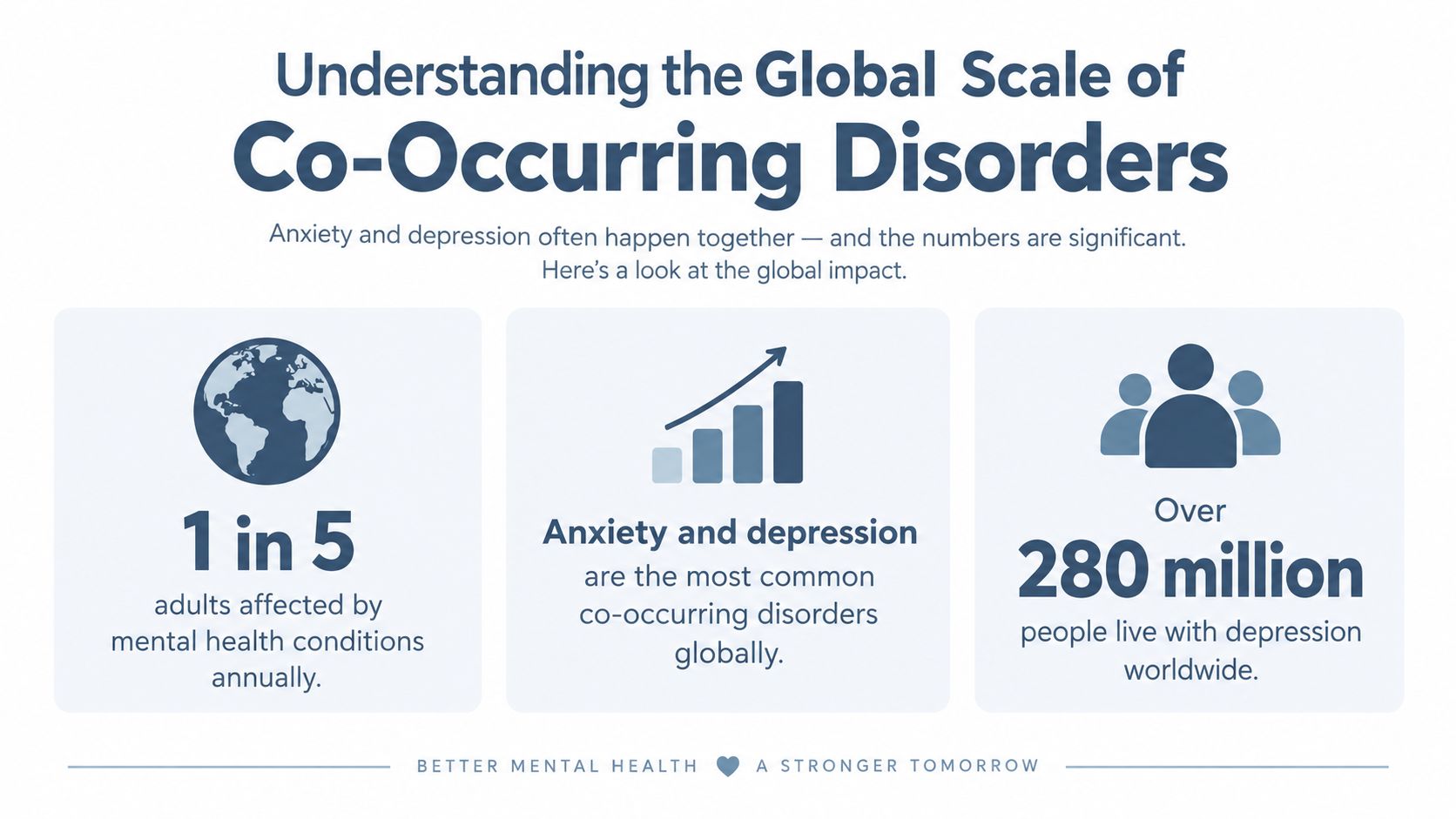
The scale of mental illness places an executive's private struggle in a wider clinical context. In 2023, nearly 1.2 billion people, about one in seven people worldwide, were living with a mental disorder, according to the World Health Organization's fact sheet on mental disorders. The same source identifies anxiety and depressive disorders as the most common categories, with approximately 470 million people living with an anxiety disorder and 322 million living with depression, including tens of millions of young people.
These figures don't diagnose any individual. They do challenge the assumption that anxiety or depression reflects weakness, poor discipline, or an inability to manage success. A chief executive may have unusual resources and still experience the same underlying clinical conditions as someone with far fewer supports. Status changes the consequences and the practical requirements of care, not the legitimacy of treatment.
What the wider picture means for executives
Substance-use disorders add another major and undertreated dimension. The United Nations Office on Drugs and Crime reported that approximately 292 million people used drugs in 2022, while an estimated 64 million had a drug-use disorder. Globally, only around one in 11 people with a drug-use disorder received treatment. These figures appear in the UNODC report on global drug use and treatment.
The practical conclusion is straightforward. Anxiety, depression, and addiction shouldn't be screened as separate concerns merely because the client arrives through a referral for one of them. A private-pay program serving executives needs the capacity to evaluate substance use, mood, sleep, trauma, suicidality, medication effects, and occupational pressure within one formulation.
A clinician may also need to distinguish ordinary stress from a disorder that has become persistent, impairing, or dangerous. The definition of co-occurring disorders provides a useful orientation, but a formal assessment should establish what is happening over time and what level of care can safely address it.
The Bidirectional Link Between Mood, Substance Use, and Trauma
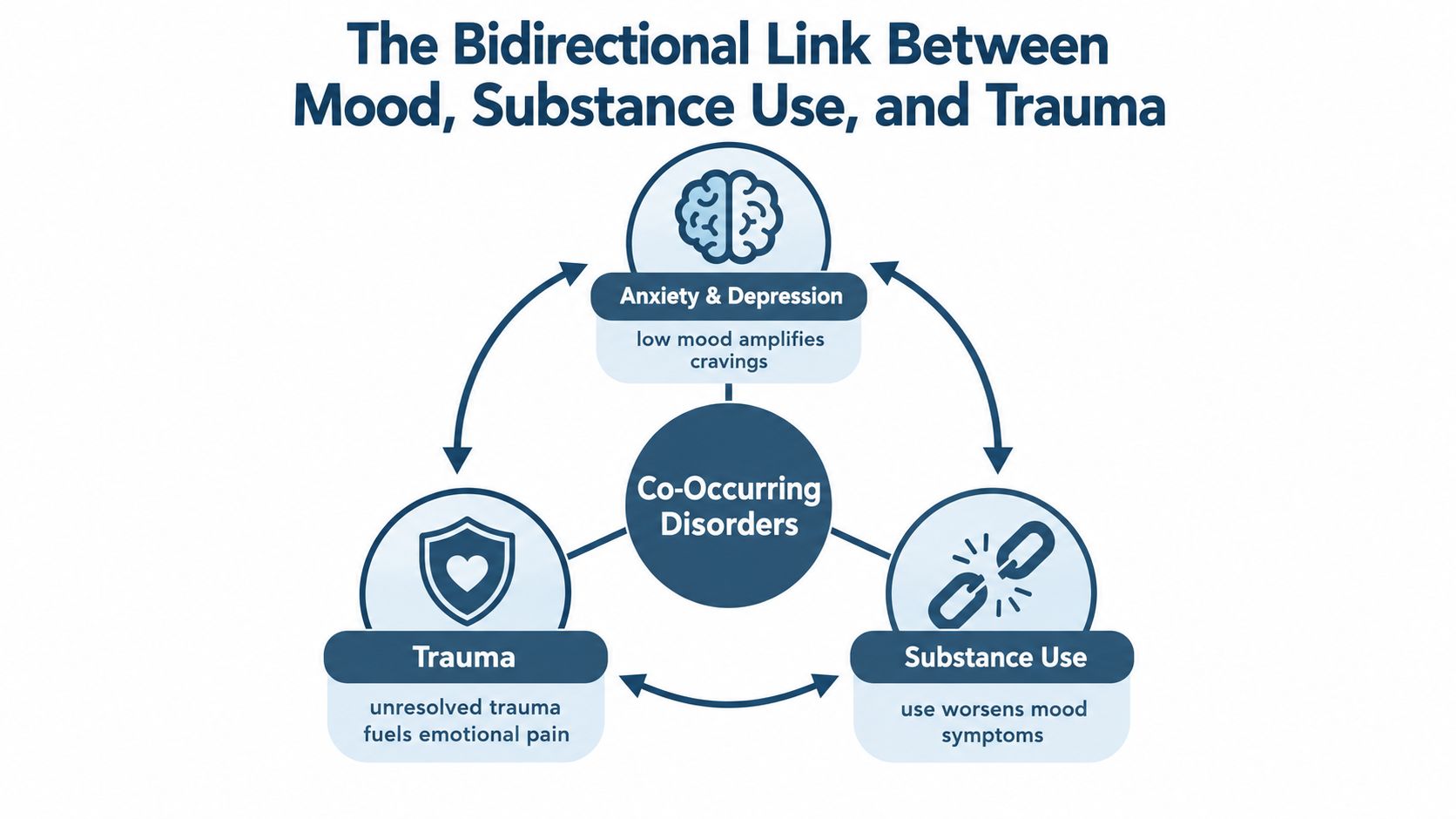
Substance use may begin as an efficient solution to an intolerable internal state. Alcohol can appear to reduce social tension. A sedative can seem to make sleep possible. A stimulant can temporarily counter depression, fatigue, or diminished concentration. The relief is real in the short term, but it doesn't resolve the underlying condition.
This is negative reinforcement. The person repeats the behavior because it removes or softens an unwanted feeling. With repeated exposure, tolerance, disrupted sleep, withdrawal, and emotional instability can make the original anxiety or depression more severe. Intoxication and withdrawal can also imitate psychiatric symptoms, which means an assessment conducted only during active use may produce an unreliable diagnosis.
The timeline matters more than a label
A careful team builds a longitudinal timeline:
- Before substance use: Were anxiety, low mood, trauma symptoms, or sleep problems already present?
- During intoxication: Which symptoms improve temporarily, and which become worse?
- During withdrawal: Does panic, irritability, hopelessness, or insomnia intensify?
- During recovery: Which symptoms persist after stabilization and require direct treatment?
Trauma can complicate every stage. Unresolved experiences may contribute to hyperarousal, avoidance, shame, emotional numbing, or a persistent sense of threat. Substance use may blunt those experiences temporarily while preventing the person from developing safer ways to regulate them.
The National Institute on Drug Abuse notes that roughly half of people who experience a mental illness during their lifetime also experience a substance use disorder, and vice versa, with mood and anxiety disorders among the most frequent comorbidities in addiction. The NIDA overview of co-occurring disorders explains why these conditions should be assessed together.
Clinical rule: Symptom relief after stopping a substance doesn't prove that the psychiatric disorder was substance-induced. Persistent symptoms during early recovery don't automatically justify indefinite medication either. Reassessment over time is part of competent care.
A treatment plan should therefore measure depressive severity, anxiety, sleep, cravings, and substance use at regular intervals. That approach helps clinicians separate medication effects, withdrawal, relapse risk, and genuine improvement. Further practical discussion of how addiction affects mental health can help families and professionals recognize the feedback loop without treating it as a moral problem.
Why Sequential Treatment Often Fails High Achievers
An executive may stop using a substance, return to relentless travel and decision pressure, and soon face the panic, insomnia, or depressive emptiness that preceded use. If treatment addresses addiction while leaving those pressures unchanged, relapse risk remains tied to the same working conditions, responsibilities, and coping demands.
Sequential care can also create a practical delay. A client may be expected to achieve prolonged sobriety before receiving meaningful psychiatric treatment, even when anxiety or depression is helping sustain substance use. For a high achiever, that delay can preserve the appearance of performance while the underlying cycle continues.
SAMHSA defines integrated care as concurrent treatment of a mental disorder and a substance use disorder by providers trained in both areas. The model may combine individualized psychotherapy, medication management when appropriate, motivational work, family involvement, and relapse prevention. Its purpose is to interrupt the cycle in which psychiatric symptoms increase craving while intoxication and withdrawal worsen mood and regulation.
What concurrent care should include
A capable program examines interacting risks in one clinical process:
- Safety: suicidality, overdose exposure, withdrawal severity, and access to substances.
- Clinical causality: symptoms before use, during use, during withdrawal, and after stabilization.
- Medication decisions: benefits, interactions, adherence, and changing risks as substance use shifts.
- Recovery behavior: cravings, triggers, sleep, emotional regulation, and willingness to use support.
- Continuity: outpatient care, family participation, peer support, and relapse planning after discharge.
Established psychiatric medication generally should not be discontinued solely because substance use continues. SAMHSA guidance supports individualized risk-benefit monitoring rather than a blanket medication ban, as described in this clinical guidance on co-occurring disorders.
For executives, concurrent care carries a real operational cost. It requires a more capable team, closer measurement, and coordination that protects confidentiality while treatment proceeds. The benefit is a clinical approach that addresses the system the client is living with, rather than postponing psychiatric care until work, sleep, and emotional stability have already deteriorated.
Navigating the Complex Pathway to Effective Care
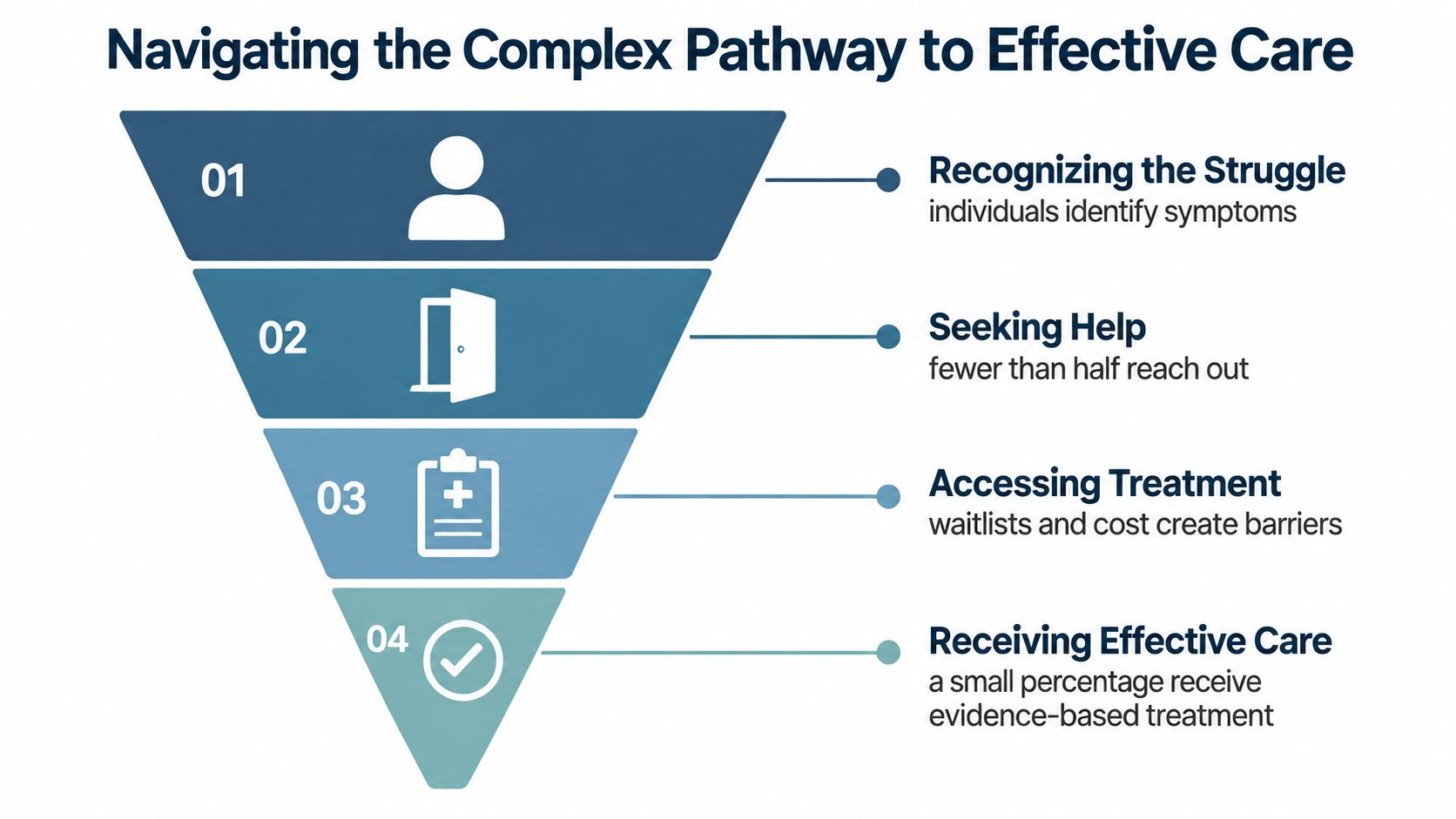
An executive may recognize deteriorating sleep, rising alcohol use, or persistent anxiety and still postpone treatment until responsibilities are covered. Access begins with recognition, but recognition does not guarantee effective care. A multinational study of 56,927 people across 21 countries found that only 6.9% of individuals with a 12-month mental health or substance-use disorder received effective treatment, while only 46.5% recognized a need for care, according to the British Psychological Society's summary of the study.
Barriers extend beyond stigma. People may underestimate severity, doubt that treatment will help, face financial or practical restrictions, or fear being judged. For senior leaders, the decision also involves confidentiality, travel, licensing, insurance, family privacy, and the effect of absence on employees, clients, or investors. The belief that treatment signals an inability to cope can keep a capable person functioning publicly while becoming less stable privately.
A useful first conversation with a prospective program should establish how decisions are made, not just what amenities are available. Ask whether the assessment considers anxiety, depression, trauma, substance use, medical conditions, withdrawal, and suicide risk within one clinical formulation. Clarify how psychiatry, psychology, addiction medicine, and therapy communicate, and who carries responsibility when priorities conflict.
Privacy must also function operationally. Request written policies covering records, access, disclosure, phones, laptops, meetings, urgent business decisions, and family contact. Treatment should protect legitimate work responsibilities without allowing work to displace stabilization. Ask how the team will monitor symptoms, cravings, sleep, medication, and relapse risk after residential care ends.
The route may include detox support, residential stabilization, psychotherapy, psychiatric adjustment, family work, and continuing care. Information about conditions addressed at LMI can help readers assess whether a provider evaluates the relevant clinical range. The decisive issue is whether those findings become one coordinated treatment plan.
Effective care rests on accurate assessment, coordinated decisions, measurable follow-up, and continuity after discharge. A discreet setting supports that work, but it cannot replace clinical judgment.
Privacy Protections and Clinical Accreditations for Executives
For an executive, confidentiality must work under pressure. Legal protections govern covered records, while operational discipline determines who can access information, how staff communicate, and what happens when work, family, or medical needs create urgency. A discreet setting requires both.
Under 42 CFR Part 2, records identifying a patient as having or having had a substance use disorder, when maintained by a federally assisted SUD program, receive specific restrictions on use and disclosure. The regulation generally limits disclosure to permitted circumstances. Covered records cannot be used to investigate or prosecute a patient without written consent or a court order. The current federal Part 2 regulation sets out the applicable requirements.
Before admission, request written answers to these questions:
- Record handling: Which records receive protection, who can access them, and how is access audited?
- Consent: When is written consent required, and what would a release authorize?
- Permitted disclosures: How does the program handle treatment coordination, emergencies, payment, legal demands, and oversight?
- State protections: Which additional privacy duties apply to the facility and client?
- Communication: How are calls, email, scheduling, transportation, and family contact managed?
These details matter when a public role, board responsibilities, or sensitive negotiations continue during treatment. Written policies also make it easier to identify gaps before admission, rather than relying on verbal assurances after a disclosure occurs.
Accreditation offers a useful quality signal when its scope is clear. Behavioral-health accreditors review organizations providing addiction treatment and mental-health services across residential, outpatient, partial-hospitalization, and detox settings. Their standards may address clinical-information protection, authorized disclosure, unauthorized access, and written procedures for health-information security, access, use, and disclosure.
Accreditation verifies standards for information security and disclosure; private rooms, electronics access, and outcomes must be verified with the provider directly. The selection process should examine clinical credentials and the daily mechanics of confidentiality, including who makes decisions, how exceptions are documented, and how privacy is maintained when business demands arise.
Distinguishing Luxury from Clinical Rigor in Treatment Models
Luxury and clinical quality overlap only when the environment supports treatment. Private rooms, refined surroundings, and flexible communication can reduce unnecessary stress, but they don't replace psychiatric assessment, withdrawal management, evidence-based therapy, or continuing care.
A rigid residential model may require complete disconnection from work and personal devices. That structure can benefit some clients, particularly when electronics increase access to substances, expose family members to conflict, or undermine sleep and participation. It can also create unnecessary disruption for an executive whose company, family, or legal responsibilities require limited, supervised communication.
A more specific model keeps the clinical boundaries while allowing appropriate contact. The distinction is not unrestricted access versus total isolation. It is provider-specific access governed by safety, privacy, therapeutic goals, and written rules.
Comparing the operating models
| Rigid model | Executive-focused model |
|---|---|
| Complete device separation may simplify boundaries | Approved phone and laptop access may support essential obligations |
| Work responsibilities are paused without individualized review | Career and family contact are structured around treatment participation |
| Privacy may depend mainly on physical separation | Privacy combines legal protections, policies, staff controls, and careful communication |
| Residential routines apply broadly | The team adapts access to acuity, sleep, confidentiality, and clinical progress |
Federal confidentiality rules protect covered records. They don't create a universal requirement that residential patients surrender cell phones or laptops, and they don't establish an entitlement to continuous electronic access. As explained in SAMHSA's treatment statutes and regulations guidance, a program that allows residents to retain electronics is implementing its own operational policy.
Reflections offers private rooms for residents in both its detox and rehabilitation programs, alongside appropriate access to cell phones and laptops so clients can manage essential career obligations. Its California-licensed, Joint Commission-accredited team provides dual-diagnosis care with psychiatric, psychological, addiction, family, and experiential components. Those features should still be assessed against a client's clinical needs, device-use risks, and treatment goals rather than treated as substitutes for clinical rigor.
Reclaiming Your Life with Discreet, Integrated Recovery
Treatment doesn't erase an executive identity. It gives that identity a safer foundation. A carefully selected residential program can protect confidentiality, address anxiety depression and addiction concurrently, and create enough structure for the client to examine trauma, sleep, medication, relationships, and work pressure without performing competence for everyone else.
Career fears deserve a practical response. A discreet program can establish communication rules, coordinate essential responsibilities, involve trusted family members, and build continuing care before discharge. Privacy is never an absolute promise, but legal protections, written policies, accredited operations, and disciplined staff practices can materially reduce avoidable exposure.
The strongest recovery plan respects both sides of the situation. It treats the substance use disorder and psychiatric symptoms with equal seriousness, while preparing the professional to return to leadership with better emotional regulation and sustainable support.
Reflections provides private-pay, luxury residential dual-diagnosis treatment with clinically managed detox support, psychiatric care, individualized psychotherapy, and appropriate access to electronics for essential work and family responsibilities. Visit Reflections to discuss discreet treatment for anxiety, depression, addiction, and related co-occurring conditions with its admissions team.