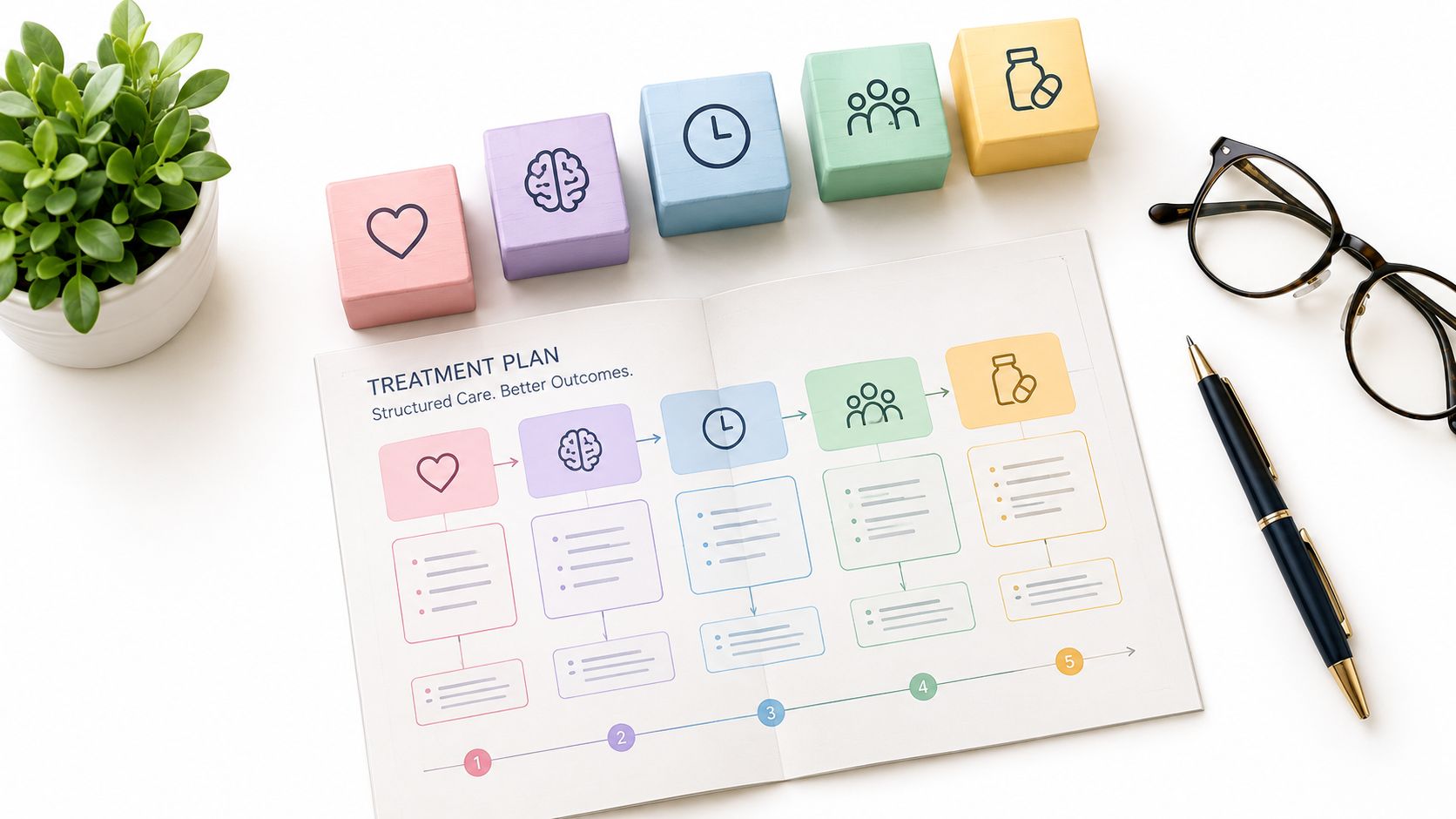

A board meeting doesn't pause because a drinking pattern finally crossed the line. A merger doesn't wait because sleep has collapsed, anxiety is running the day, or the family has started asking hard questions. For a CEO, partner, or senior operator, the problem isn't whether treatment is available. It's whether treatment can be serious enough to work while still respecting the fact that the person in question still has obligations, visibility, and consequences waiting on the other side.
That is where luxury rehab stops being a soft word for comfort and becomes an operational question. The right program has to manage dual diagnosis, protect privacy, support discreet electronics access, and build a return-to-work plan that doesn't unravel the gains made in residential care. Anything less is just an expensive interruption.
When Work and Recovery Cannot Wait Their Turn
A senior executive reaches a point no calendar can absorb. The symptoms are no longer hidden well enough to keep the boardroom intact, but the public role still demands judgment, communication, and a credible appearance of control. Traditional rehab models often assume the client can disappear into anonymity for a month. High-profile professionals rarely can.
The wrong instinct is to ask for nicer linens and a better view. The right instinct is to ask how the program protects dignity, confidentiality, and clinical momentum while still acknowledging that email, counsel, and selected work obligations may continue. For leaders who need to keep a hand on the business, working through rehab is not a luxury feature. It is part of the treatment design, and it has to be handled with discipline.
A financially serious client can buy privacy anywhere. What cannot be bought casually is a treatment setting that manages addiction, psychiatric instability, and professional continuity at the same time. That requires staffed coverage, individualized planning, and an approach that assumes the person is still living inside a real life, not escaping it.
Practical rule: If a program cannot explain how it handles phones, laptops, confidentiality, and board-level discretion, it is not built for executives. It is built for advertising.
The cost structure also reflects that market reality. In the United States, a 30-day luxury stay is typically about $30,000 to $100,000, while standard residential rehab is commonly $5,000 to $20,000 per month, making luxury programs roughly five to six times more expensive according to RehabPulse. In India, the broader substance abuse treatment market was valued at USD 655 million in 2024 and is projected to reach USD 2.1 billion by 2035, with luxury centers reportedly charging ₹2 lakh to ₹12 lakh per month versus ₹30,000 to ₹1.5 lakh at standard private facilities, according to Vedawellnessworld.
That price gap only makes sense if the care is different.
What a Clinically Serious Luxury Rehab Actually Looks Like
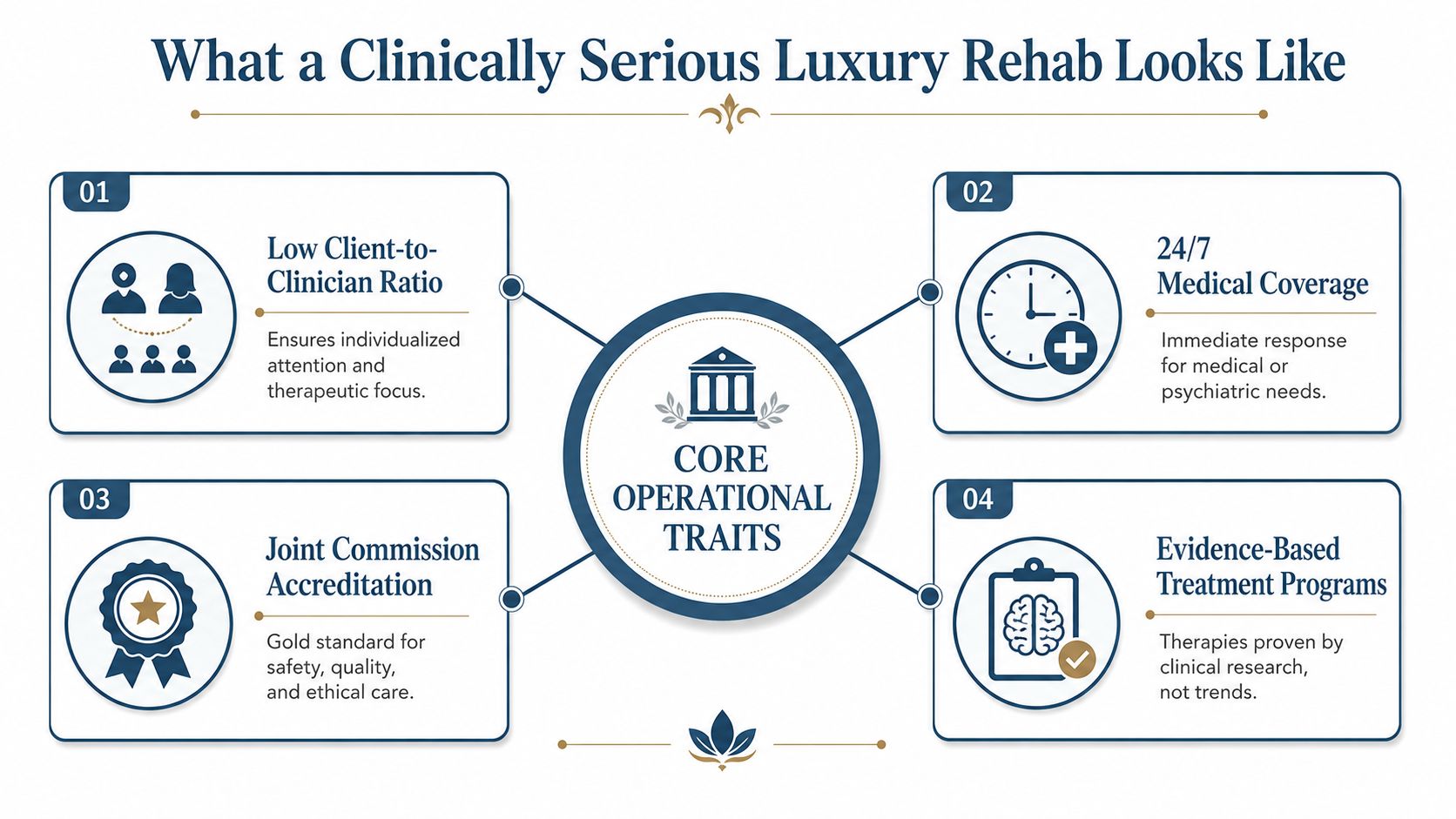
A serious program shows its quality in the staffing pattern first. The client-to-clinician ratio has to be low enough for the team to adjust treatment quickly, catch destabilization early, and keep individual work specific to the person in front of them. In upscale settings, descriptions often point to ratios as low as 1:1 to 4:1, and that matters because dual-diagnosis clients do not hold steady under thin coverage. Standard residential programs often run on heavier caseloads, which pushes treatment toward a generic rhythm that looks orderly from the outside and feels shallow in practice.
Ask who actually owns the treatment
A clinically serious program is run by senior clinicians, not by a rotating cast of junior staff. The client should be able to name the attending psychiatrist, the primary therapist, and the medical coverage model without being passed through a sales script. The team should explain withdrawal monitoring, medication optimization, and psychiatric escalation in plain language.
Luxury programs worth the cost keep 24/7 medical coverage in place. That is a risk-management decision, not a decorative feature. Detox, medication changes, sleep disruption, and psychiatric symptoms can shift fast, so the program needs to respond before a problem turns into a transfer.
Accreditation and evidence-based treatment should be built in, not bolted on. Reflections, for example, operates as a California-licensed, Joint Commission–accredited provider with dual-diagnosis care, individualized treatment, and a multidisciplinary team. That is what separates a real clinical setting from a polished property. Privacy alone does not hold recovery together. Structure does.
Compare substance, not scenery
A beautiful campus with weak treatment is still weak treatment. A smaller, more private setting with strong staffing and disciplined psychiatry is the better choice every time. If the program cannot speak clearly about assessment, individual sessions, medication support, and escalation pathways, the amenities are carrying the conversation.
The same standard applies when you compare integrated mental health and addiction care with surface-level programming. A client who presents as high functioning may still need treatment that addresses mood symptoms, trauma, sleep, and substance use together. Programs that separate those pieces force the person to do the integration alone, which is exactly where relapse risk returns. For families trying to organize medications for aging parents, the lesson is the same. Coordination matters more than appearance, and treatment only works when the moving parts are managed as one system.
For a closer look at dual-diagnosis treatment approaches, the question is simple. Does the program treat the whole clinical picture, or does it just look expensive?
Bottom line: ask about ratios, medical coverage, accreditation, and senior clinical oversight first. Ask about the pool last.
Dual Diagnosis and the Case for Multimodal Treatment
The executive who drinks to sleep is rarely dealing with alcohol alone. The drinking is often propping up anxiety, trauma, depressive symptoms, or mood instability that never got named cleanly. Treating the substance without treating the disorder underneath it is how people leave residential care sober for a while and then slide back under pressure.
That is why multimodal treatment is the right model. Industry descriptions consistently point to CBT, DBT, pharmacotherapy, family work, nutrition, fitness, mindfulness, art or music therapy, equine work, and massage as part of a full plan, because addiction rarely hangs from a single cause. It's usually reinforced by emotion regulation problems, interpersonal stress, sleep disruption, shame, and unresolved trauma.
A high-functioning client with generalized anxiety can look stable right up until the structure drops away. Alcohol may have been doing the work of sedation, emotional buffering, and social lubrication. Once it's removed, the underlying anxiety doesn't politely disappear. It surfaces, and if the program doesn't treat it directly, the client is left with cravings, sleeplessness, and a powerful reason to re-use.
Family caregiving often runs into the same problem. A relative can manage the visible burden while missing the medication and mood-management details that keep the whole system stable. A useful practical resource on that kind of coordination is organize medications for aging parents, because the logic is similar. You cannot sustain recovery, or caregiving, by treating one symptom in isolation.
What real dual-diagnosis care includes
A serious program doesn't just say “mental health supported.” It should show how support happens:
- CBT and DBT: used to target thought patterns, impulsivity, distress tolerance, and emotional regulation.
- Medication optimization: used carefully, with ongoing review instead of reflexive prescribing.
- Individual psychotherapy: used to work the trauma, shame, grief, or identity rupture beneath the use.
- Structured groups: used to reinforce accountability without flattening the individual case.
- Somatic and experiential work: used when the body carries the stress as tightly as the mind does.
Reflections' model is built around exactly that kind of integrated care, including CBT, DBT, ACT, MI, individual psychotherapy, intensive groups, mindfulness, meditation, art and music therapy, somatic and equine work, fitness, massage, and nutrition. That matters because executives don't need a gentler version of the same old plan. They need a more complete one.
Amenities Versus Outcomes and How to Tell Them Apart
A luxury campus can be clinically useful, or it can be expensive theater. The difference is whether the feature helps stabilization, sleep, engagement, or relapse prevention. A high-end setting should earn its cost through treatment quality, not through glossy interiors or a polished sales pitch.

Private rooms matter when sleep is fragile and privacy keeps the client regulated. Nutrition programming matters when appetite, blood sugar swings, or mood instability are part of the clinical picture. Fitness access matters when routine, affect regulation, and physical recovery all need structure. Those are not decorative extras. They are supports that make demanding treatment more livable and more durable.
A CEO or partner should sort the useful from the ornamental fast. Gourmet meals are only worthwhile if they fit the clinical plan. Spa-style services are only worthwhile if they do more than produce a pleasant afternoon. A specialty activity only deserves attention if it connects to trauma-informed work, emotional regulation, or returning to the body in a controlled way.
The right question is direct. What therapeutic job is this feature doing? If the answer is vague, the feature is probably decorative. If the answer is specific, the feature may justify itself.
Comfort still has a cost. It can lower resistance and help someone stay engaged, but it can also hide a program that is light on clinical pressure. That is why families and referring clinicians should ask whether the environment makes treatment easier to enter, or just easier to enjoy. A luxury rehab that cannot explain how it handles dual diagnosis, relapse prevention, and a real return-to-work plan is selling atmosphere, not outcomes.
Luxury rehab earns its price when comfort serves discipline. When comfort replaces discipline, the bill is just a receipt for a nicer stay. If the client also needs to find AI meeting note apps to keep work communication organized during treatment, the program should be able to explain exactly how that is handled. For questions about device access and boundaries, a clear policy such as can I bring my cell phone into rehab should be part of the evaluation, not an afterthought.
Privacy, Electronics, and Staying in the Room Professionally
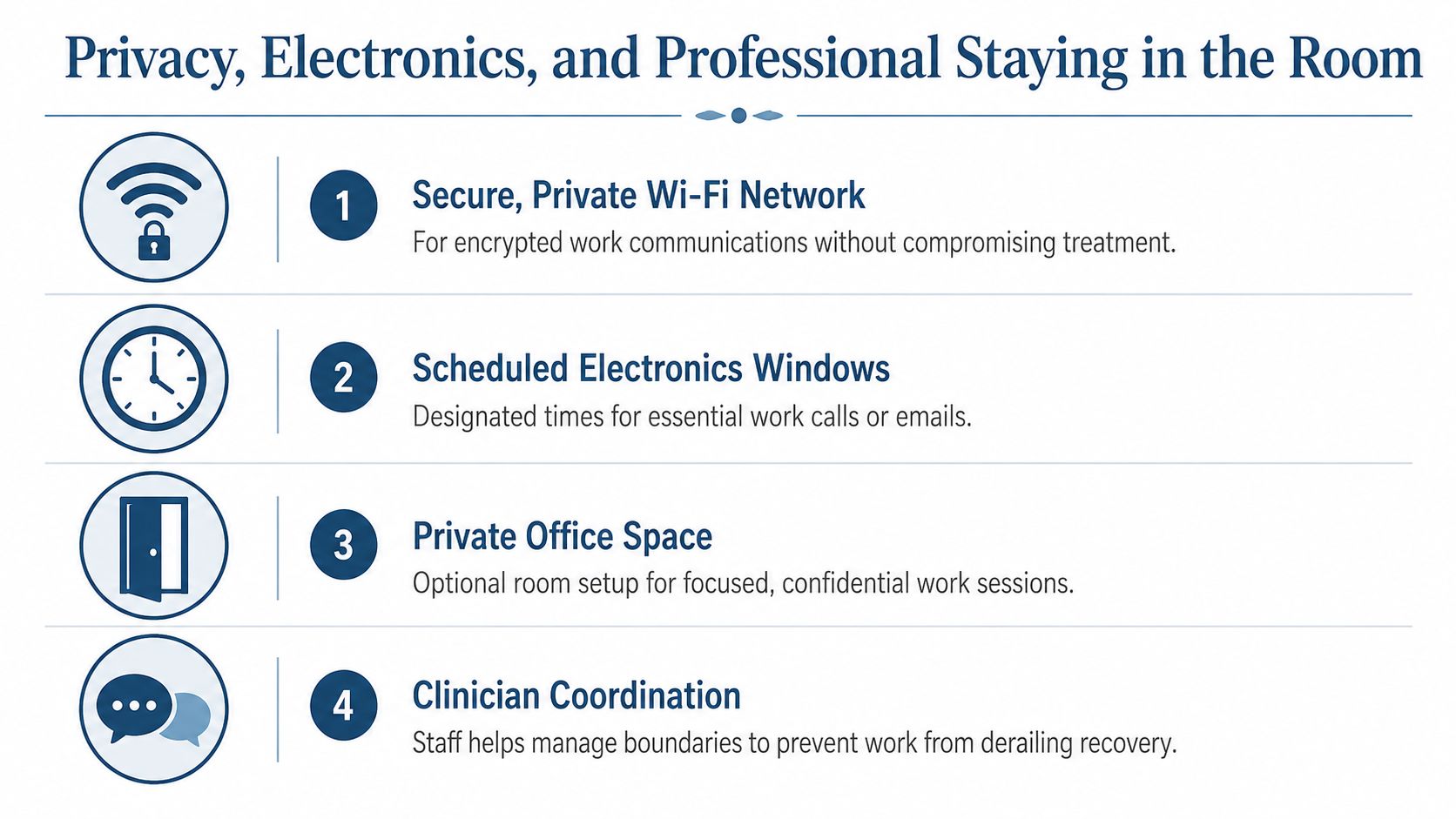
For executives, the question is whether privacy and electronics are managed well enough to protect recovery without severing the client from urgent responsibilities. A blanket ban on devices can work in some programs, but for a working professional with continuing obligations, it can become a blunt rule that weakens engagement instead of supporting it.
A clinically serious luxury program should provide secure, private connectivity and a schedule that separates necessary work from compulsive checking. That means planned windows for calls or email, clinician coordination around boundaries, and a room or office setup that allows confidential tasks without turning treatment into remote work. The point is controlled continuity, not uninterrupted productivity.
Practical rule: devices should be governed by the treatment plan, not by habit. If electronics control the day, treatment gets crowded out.
Discreet workflow matters from intake onward. The process should avoid public lobby exposure, and rooms should not be shared with strangers if privacy is part of the promise. Employer coordination, legal communication, and board-level discretion should be handled through staff who understand confidentiality and know how to keep the story narrow.
For a clear overview of bringing your cell phone into rehab, the key issue is not permission alone, it is how access is structured. Leaders who need to preserve memory and follow-through without carrying every detail in their head can also find AI meeting note apps, but the purpose is not productivity theater. The purpose is reducing cognitive load while keeping treatment time distinct from necessary work.
Reflections explicitly allows appropriate access to electronics, including phones and laptops, because some residents are still managing real careers and responsibilities. That only works when the program is built around boundaries, not loopholes. Private rooms, discreet communication, and clinical oversight are what keep that access from becoming an escape hatch.
The warning signs are obvious once a buyer knows where to look. If staff treat confidentiality as a selling point but cannot explain the process, the promise is thin. If a program calls itself executive-friendly but cannot define work windows, privacy controls, or escalation rules, it is not ready for a CEO.
Family Involvement and the Continuing Care That Actually Holds
Residential treatment is the opening move, not the whole game. A 30 to 90 day stay can interrupt a spiral, stabilize symptoms, and create insight, but that gain only holds if the home environment and the aftercare structure are built with equal seriousness. For a high-profile professional, relapse risk often rises after discharge, when travel resumes, pressure returns, and everyone assumes the worst is over.
Family sessions matter because they reset the system around the client. They clear up the hidden rules, the enabling patterns, the conflict cycles, and the misunderstandings that re-create stress at home. Monthly educational workshops do the same thing at a broader level, because family members need language, structure, and realistic expectations, not just hope.
Continuing care has to start early. Waiting until the last week of treatment is bad practice. The step-down plan should begin in the first week, while the team is still seeing how the client responds to structure, medication, group work, and boundaries. That way the discharge plan isn't aspirational. It's earned.
What holds after discharge
A strong post-residential plan usually includes a few concrete elements:
- Alumni programming: ongoing connection that keeps accountability visible.
- Flexible step-down services: support that matches the client's pace instead of forcing a cliff drop.
- Discreet outpatient follow-up: continued treatment without making a public spectacle of recovery.
- Family engagement: a home system that knows what support and what interference look like.
Reflections emphasizes family involvement through private sessions and monthly educational workshops, and it pairs that with continuing care, alumni programming, and flexible services. That matters because recovery in an executive life is not just about leaving a facility sober. It's about returning to planes, meetings, and pressure without surrendering the structure that made sobriety possible.
The honest test is simple. If the program does not begin planning for life after discharge almost immediately, it is selling admission, not durability. The post-residential architecture is what determines whether treatment lasted.
Choosing the Right Luxury Rehab and Knowing When It Fits
A serious buyer should reduce the decision to a short list. Does the program have accreditation? Does clinical leadership have real authority? Does it treat dual diagnosis instead of pretending the substance is the whole story? Can it handle electronics, privacy, and professional continuity without blurring boundaries? Does it involve family and build an aftercare plan early?
That is the evaluation. Everything else is secondary.
| Criterion | What to Ask | Strong Answer | Red Flag |
|---|---|---|---|
| Accreditation | Is the program licensed and accredited? | Clear state licensure and recognized accreditation | Vague claims about quality |
| Clinical leadership | Who directs care day to day? | Named senior clinicians with clear oversight | Sales staff can't identify the team |
| Dual diagnosis | How are co-occurring disorders treated? | Integrated psychiatric and addiction care | “We treat the whole person” with no detail |
| Electronics and work policy | How are phones and laptops handled? | Structured access with clinician boundaries | Blanket ban or unlimited access |
| Family programming | How are families involved? | Private sessions and education built into the plan | Families are left out until discharge |
| Continuing care | What happens after residential treatment? | Step-down planning, alumni support, outpatient continuity | No real discharge pathway |
Luxury rehab is the right call when the client has co-occurring disorders, professional obligations that cannot stop, a real need for discretion, and the financial means to pay for premium private care. It is not the right call if the program is mostly selling comfort, if the clinical team is thin, or if the aftercare plan is vague. The bill should buy intensity, privacy, and continuity, not just a nicer place to be sick.
Reflections is built for adults who need confidential, high-acuity residential care without pretending work and recovery live in separate worlds. The program combines dual-diagnosis treatment, private rooms, appropriate electronics access, family involvement, and continuing care so the plan still makes sense after discharge. A CEO, partner, or professional who needs that level of structure should visit Reflections and review whether the fit matches the clinical and operational demands of executive recovery.