

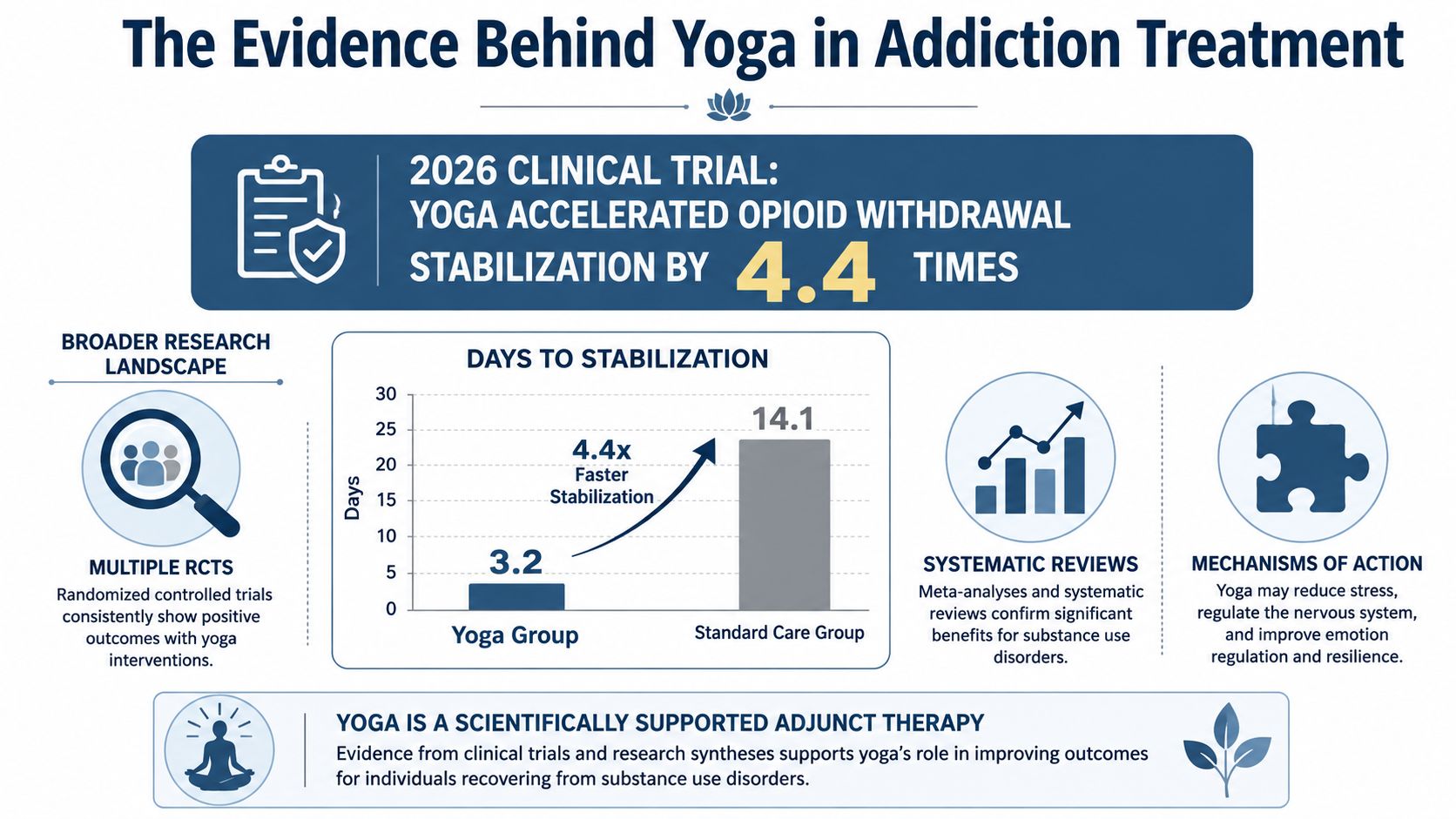
In a 2026 randomized clinical trial, people receiving yoga alongside standard buprenorphine treatment stabilized from opioid withdrawal 4.4 times faster than controls. Median stabilization fell from 9 days to 5 days, while the trial also reported improvements in heart rate variability, anxiety, sleep, and pain (clinical trial). For an executive balancing recovery with leadership responsibilities, that finding changes the question. Yoga isn't a replacement for medical care, but it may be a clinically useful way to make treatment more tolerable, measurable, and sustainable.
In a luxury executive rehab setting, yoga belongs inside a coordinated plan that includes qualified medical oversight, psychotherapy, medication management, trauma-informed care, private accommodation, and carefully managed work access. The standard should be clinical integration, not a resort-style wellness schedule.
The Evidence Behind Yoga in Addiction Treatment
The 59 male participants in a 2026 randomized clinical trial received yoga alongside standard buprenorphine treatment and stabilized 4.4 times faster than controls. Median stabilization moved from 9 days to 5 days. The 10 group yoga sessions, each lasting 45 minutes across 2 weeks, were also associated with better heart rate variability, anxiety, sleep, and pain outcomes (randomized clinical trial).
For an executive program, the practical implication is limited but meaningful. Yoga can be scheduled around clinical appointments and controlled work access, provided medical staff define participation limits and monitor withdrawal symptoms. A trauma-informed approach should offer choice, avoid forced physical contact, and allow clients to pause or modify movements. Accreditation and clinical supervision matter more than luxury presentation.
What the broader evidence supports
A 2021 systematic review identified 8 eligible studies examining yoga for substance use. Seven of the eight showed significant positive results, and seven of the eight reported favorable outcomes when yoga accompanied pharmacological treatment, including opioid substitution therapy (systematic review). The studies addressed tobacco, alcohol, opioids, and undefined substance use.
The evidence supports yoga as an adjunct, not a standalone cure. In executive treatment, that distinction protects clinical judgment and business continuity alike. Yoga may support withdrawal stabilization, stress regulation, sleep, pain management, and emotional awareness. It does not replace detoxification, medication-assisted treatment, psychotherapy, or psychiatric assessment.
A randomized trial involving adults with substance use problems and HIV found that a 12-week yoga program produced significantly fewer days of substance use than treatment as usual at 1, 2, and 3 months. It also reduced stress more than treatment as usual (randomized trial). The finding is relevant to relapse planning because stress can connect emotional activation with substance use.
What executives should measure
A clinically accountable program should track outcomes rather than describe yoga only as calm or wellness. Useful measures include:
- Substance use patterns: Use days, cravings, and high-risk situations.
- Autonomic regulation: Heart rate variability and related signs of physiological stability.
- Sleep and pain: Symptoms that can disrupt participation and increase relapse vulnerability.
- Anxiety and stress reactivity: How effectively the client recovers after activation.
- Treatment engagement: Attendance, practice willingness, and skill transfer outside sessions.
Executives need a structured intervention that adds value to established care and can be reviewed with the same discipline as other treatment components. A complementary meditation approach for recovery can extend regulation practice without turning yoga into a substitute for clinical treatment.
How Yoga Rewires the Stress Response System
Addiction can keep the nervous system in a state of emergency. For an executive balancing treatment with work obligations, that may appear as poor sleep, rapid threat responses, physical tension, racing thoughts, or an urgent need to escape discomfort. Yoga for addiction recovery addresses this pattern through breathing, movement, attention, and deliberate recovery pauses. In an accredited, trauma-informed program, those practices are taught as clinical skills that support treatment, not as generic wellness activities.
The nervous system problem
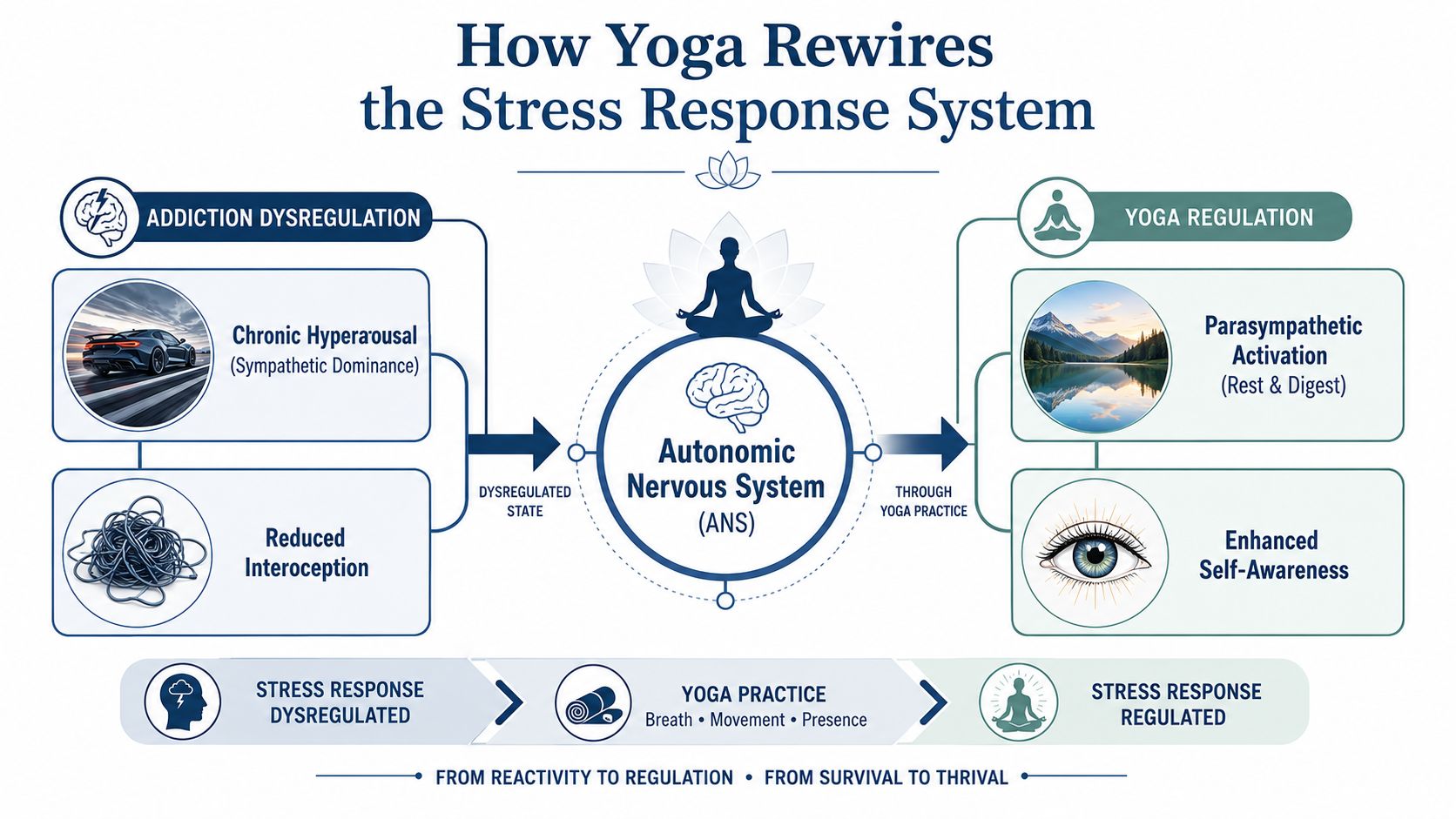
The autonomic nervous system regulates functions that operate largely outside conscious control, including heart rate, breathing, digestion, and readiness to respond. Withdrawal, trauma activation, and prolonged substance use can leave the sympathetic branch dominant. The client may experience agitation, vigilance, muscular tension, shallow breathing, or difficulty settling after a demanding meeting or interpersonal trigger.
Yoga does not remove these signals. It creates repeated practice in noticing them without acting immediately. Slower breathing can widen the interval between activation and behavior. Gentle, choice-based movement can also reduce the sense that the body is unsafe or uncontrollable.
That distinction matters in executive rehabilitation. A brief regulation practice can be scheduled around clinical appointments and work responsibilities, provided the treating team has assessed medical stability and the instructor follows trauma-informed boundaries.
Three mechanisms clinicians can observe
Vagal regulation describes the body's capacity to shift toward rest and recovery. Breath-centered practice may support parasympathetic activity, which is associated with digestion, restoration, and lower arousal. The response varies by client, so the program should monitor tolerance rather than assume that every breathing exercise is calming.
Heart rate variability offers a measurable view of autonomic flexibility. Findings from an opioid withdrawal trial reported improvements in heart rate variability alongside better anxiety, sleep, and pain outcomes (trial findings). The result supports tracking regulation over time, not promising that one session permanently changes the nervous system.
Interoceptive awareness means recognizing internal sensations such as chest tightness, a shallow breath, stomach discomfort, or rising agitation. Earlier recognition gives the client more time to use an agreed coping response before escalation becomes a crisis or craving becomes behavior.
Practical rule: The aim is to increase the client's ability to notice activation, choose a response, and return to baseline safely.
Cortisol is often discussed in stress treatment, but a responsible program should not promise a hormone change without measuring it. The practical standard is clearer: clients learn how breathing, posture, attention, and pacing influence perceived stress and recovery. Text Lauren's approach to executive stress offers related context on regulation principles.
Choosing the Right Yoga Style for Your Recovery Phase
The appropriate yoga style depends on medical stability, trauma history, current symptoms, physical capacity, and treatment phase. A demanding class can be counterproductive when a client is in acute withdrawal, physically depleted, highly anxious, or vulnerable to dissociation. The correct question isn't whether a style is fashionable. It's whether the practice supports the clinical task at hand.
Early recovery and trauma exposure
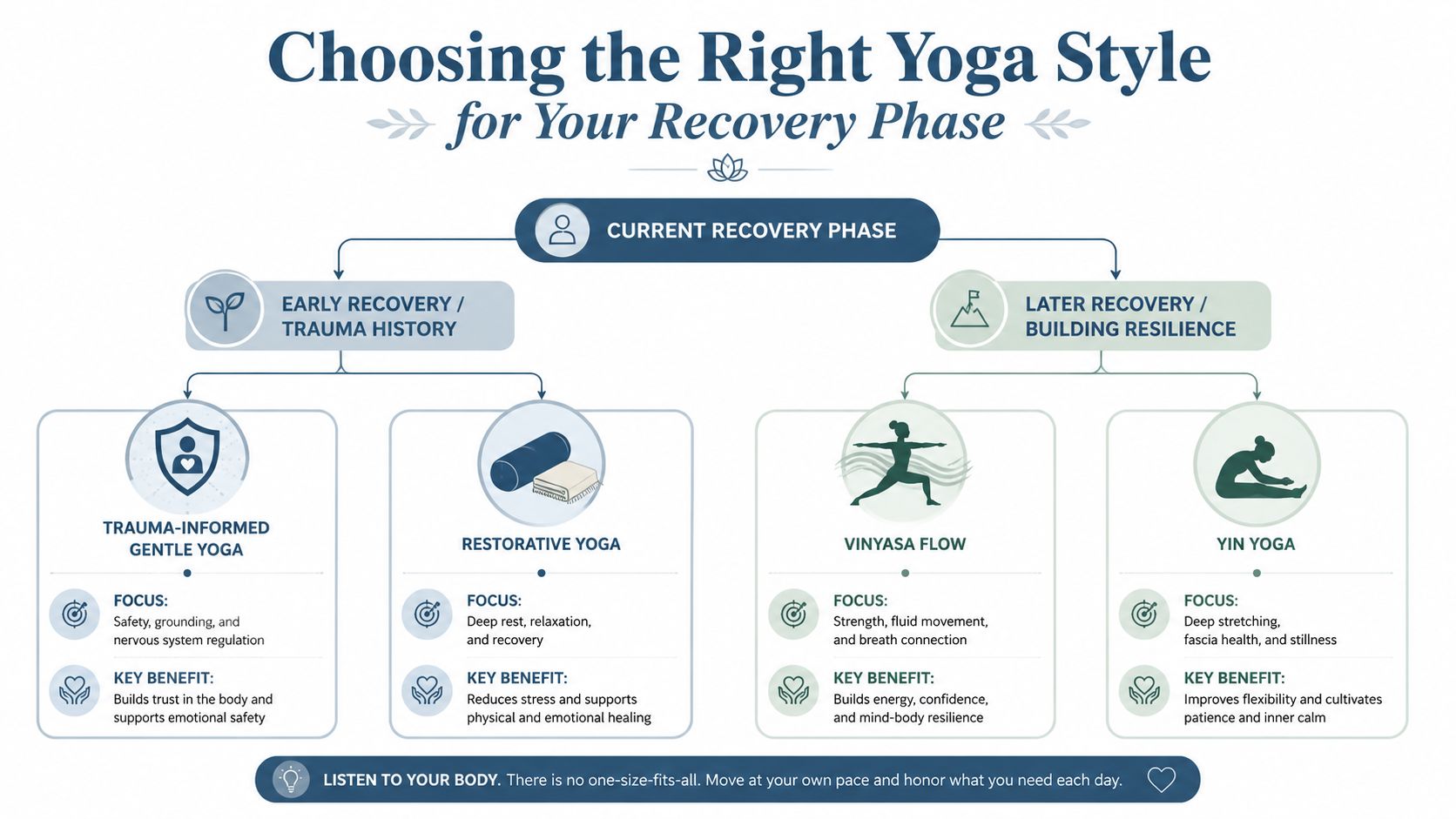
Trauma-informed yoga gives clients meaningful choice. They may be invited to keep their eyes open, change a posture, use a chair, or pause without being singled out. The instructor emphasizes present-moment orientation and internal experience rather than physical performance.
Restorative yoga uses supported positions, blankets, bolsters, and longer periods of stillness. It may fit clients whose primary needs include downshifting arousal, recovering sleep, and reducing physical tension. Stillness must remain optional, because extended body awareness can feel unsafe for some trauma survivors.
Gentle hatha offers simple, accessible movement with clear transitions. It can serve clients with chronic pain, medication-related fatigue, limited mobility, or low confidence. The instructor should offer modifications rather than treating discomfort as a test of commitment.
Later recovery and resilience building
As stability improves, some clients may tolerate more flowing movement. Vinyasa-style practice can build coordination, stamina, and attention, but only when pace and intensity remain clinically appropriate. Yin yoga involves sustained positions and may help some clients explore emotional and physical sensations. It can also overwhelm clients who experience pain, dissociation, or difficulty with prolonged stillness.
Power yoga and hot yoga deserve caution in early recovery. Heat, exertion, dehydration risk, rapid transitions, and intense internal sensations may increase discomfort or emotional flooding. They shouldn't be treated as evidence of commitment.
| Clinical presentation | Usually more appropriate | Main caution |
|---|---|---|
| Anxiety or acute withdrawal | Restorative, breath-centered, gentle practice | Avoid pushing breath retention or intensity |
| Depression and low energy | Gentle hatha, gradually paced movement | Avoid framing fatigue as a character flaw |
| PTSD or trauma history | Trauma-informed, choice-based practice | Don't require eyes closed or hands-on adjustments |
| Chronic pain | Supported, modified movement | Pain should guide adaptation, not be ignored |
The instructor and treatment team should reassess the fit as recovery progresses. Yoga is a clinical tool when it adapts to the person, not when the person is pressured to adapt to a fixed class.
Integrating Yoga with Clinical Treatment Modalities
Yoga contributes most when clinicians assign it a specific role in the treatment plan. Cognitive behavioral therapy helps clients identify thoughts, beliefs, and behavior patterns. Yoga adds body-based observation, allowing clients to notice tension, breath changes, or agitation before they can clearly name the associated thought.
Dialectical behavior therapy teaches distress tolerance, emotion regulation, mindfulness, and interpersonal effectiveness. A trauma-informed yoga session can provide physical practice for those skills. The client notices an urge to leave a posture, chooses a safer modification, and remains engaged without treating every sensation as an emergency.
Medication-assisted treatment remains necessary when clinically indicated. Yoga should support, never replace, medical oversight, withdrawal management, or medication decisions. As noted earlier, research on combined treatment examined yoga alongside standard medication care. In an executive program, the medical team manages those decisions while yoga supports regulation, sleep, pain management, and participation in therapy.
A schedule built around clinical work
A high-end program can schedule a gentle morning session before individual therapy, a short afternoon practice between demanding clinical or professional commitments, and an evening relaxation sequence before sleep. The plan must allow changes for psychiatric appointments, family sessions, work obligations, travel, and shifts in medical status.
Executive clients need a program that respects responsibility without turning attendance into another performance measure. Yoga may support work capacity by improving transition between meetings and treatment, but the schedule should reduce demands when symptoms rise.
A client addressing depression, trauma, or grief may also get depression counselling Kelowna as a complementary resource from Interactive Counselling. A structured integrated wellness program should connect yoga with nutrition, sleep, psychotherapy, medical care, and continuing support, rather than isolating movement from the treatment plan.
The clinical director should review attendance, response, discomfort, emotional activation, and transfer of skills. If yoga increases dissociation, pain, agitation, or shame, the team should modify or pause it. Clinical integration requires documented coordination, clear accountability, and permission to stop.
Vetting Qualified Instructors and Programs
A general yoga instructor may understand alignment and sequencing without understanding withdrawal, trauma, medication side effects, suicidality, dissociation, or co-occurring psychiatric conditions. Executive rehab programs should treat instructor selection as a clinical governance issue, not an amenity purchase.
Five questions for program leadership
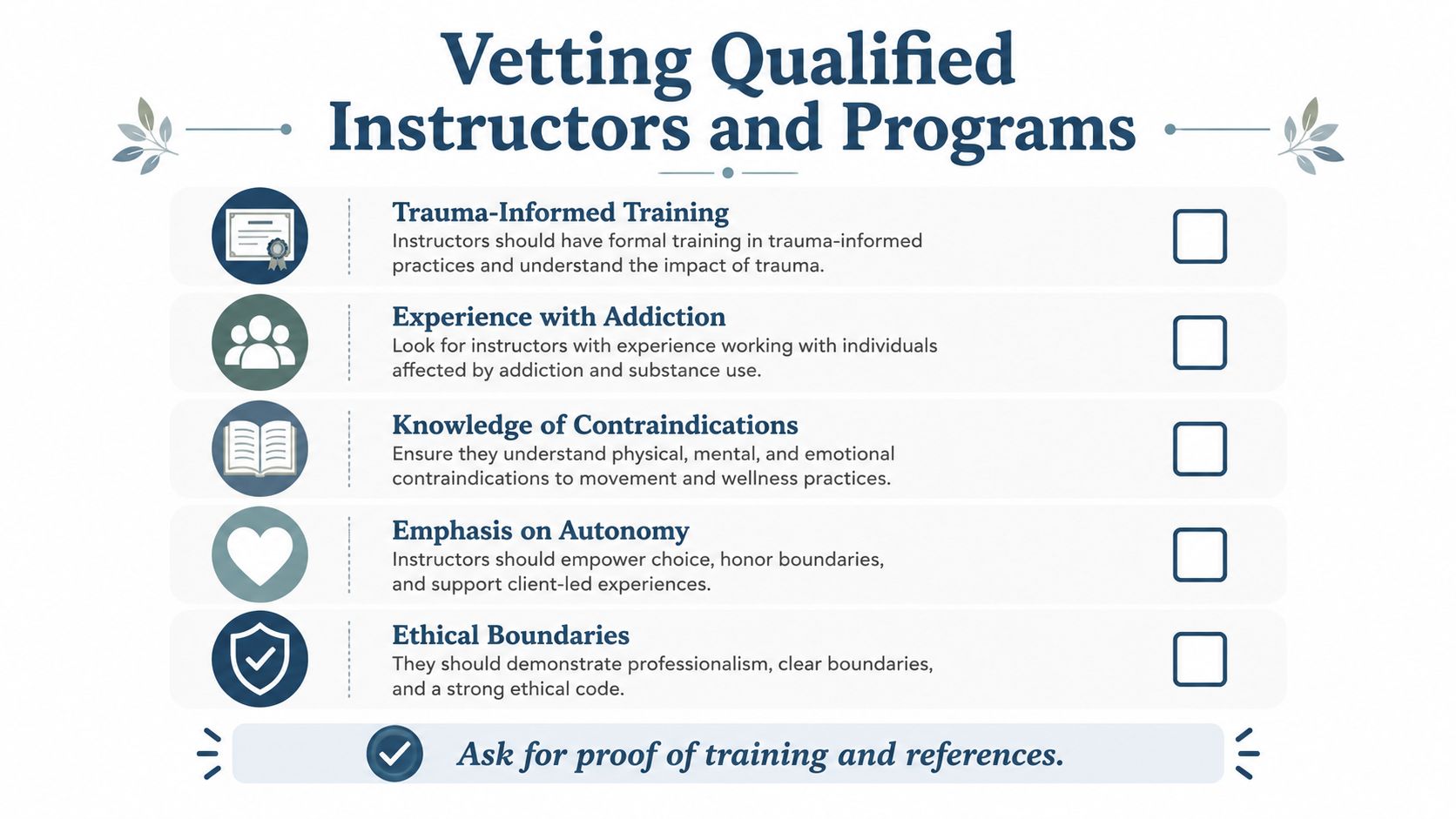
What trauma-informed training does the instructor hold? Ask for the name of the training, completion documentation, and how the instructor applies choice, consent, and emotional safety.
What experience does the instructor have with addiction treatment? Experience should include substance use disorders and, ideally, dual-diagnosis populations rather than general fitness classes.
How does the instructor handle co-occurring symptoms? The program should explain modifications for PTSD, anxiety, depression, chronic pain, fatigue, balance limitations, and medication effects.
How does the instructor preserve autonomy? Clients should be able to pause, change position, use support, keep their eyes open, or decline touch without embarrassment.
What are the ethical boundaries? The instructor shouldn't diagnose, promise sobriety, pressure disclosure, provide unconsented adjustments, or operate outside the treatment team's plan.
Credentials and red flags
Training associated with trauma-sensitive yoga, yoga for recovery, and similar clinically oriented programs can be relevant, but a certificate alone doesn't establish competence. Leadership should also verify supervision, references, emergency procedures, and communication protocols with the medical and psychotherapy teams.
A useful yoga therapy program should document goals and responses rather than just record attendance. Red flags include instructors who push through pain, insist that discomfort is spiritually necessary, interpret emotional reactions without clinical authority, or treat refusal as resistance.
A premium setting should offer privacy and polish, but clinical safety still depends on boundaries, training, and accountable supervision.
The program should be able to explain who reviews a client's readiness for participation, what happens if withdrawal symptoms change, and how yoga observations enter the broader treatment record. Those answers separate therapeutic integration from decorative wellness programming.
Addressing Common Objections from High-Performing Professionals
Executives may reject yoga because they associate it with stretching, spirituality, or leisure. That concern is valid when a program offers an unstructured class without a clinical purpose. It is less persuasive when yoga functions as a measurable, trauma-informed adjunct to medical and psychological care.
“It isn't rigorous enough”
Rigor comes from matching practice to a defined problem, delivering it consistently, monitoring response, and adjusting the plan. During opioid withdrawal, the trial described earlier used structured yoga alongside buprenorphine and reported faster stabilization, with improvements in heart rate variability, anxiety, sleep, and pain. As outlined in the trial evidence, this is a clinical intervention, not an occasional recreational class.
“It won't address the core issues”
Yoga does not process trauma narratives, repair relationships, or treat psychiatric illness on its own. Psychotherapy, psychiatric care, medication management, family work, and relapse prevention remain central. Yoga supports the physiological and attentional conditions that can make those therapies more accessible. A client who recognizes rising activation may be better prepared to use a coping skill before turning to avoidance or substance use.
“It is too spiritual”
Trauma-informed yoga can use secular language. Sessions can focus on breathing, movement, consent, attention, and nervous-system regulation without requiring a religious framework. Clients should understand the session and remain free to decline practices that conflict with personal beliefs.
“Work can't stop”
Private-pay executive programs can establish explicit policies for phones, computers, and other electronics. Facilities set their own rules, which may begin with restricted access before permitting devices during non-treatment hours, as described in executive treatment guidance. Some programs provide secure work areas and device access outside therapy and group activities.
That flexibility does not make work more important than treatment. The team should protect therapy windows while helping the client manage urgent responsibilities through boundaries, delegation, and scheduled recovery time. Yoga can fit within that structure when the program preserves clinical priorities, obtains informed consent, and adapts practice to trauma history, withdrawal status, and work demands.
What a Week Looks Like in an Executive Yoga-Integrated Program
A well-designed week places yoga around medical care, psychotherapy, groups, family work, personal recovery tasks, and limited professional responsibilities. It does not replace those services. The schedule should also change with withdrawal status, trauma history, psychiatric symptoms, and the client's capacity for physical activity.
During detox, the first practice may follow medical review and last only briefly. Breathing, orientation, gentle mobility, and rest take priority over exertion or performance. After medical stabilization, the client may attend a structured yoga group, individual therapy, psychiatric appointments, and recovery work, then return to a private room for quiet reflection or approved work.
A practical weekly rhythm
- Morning regulation: Gentle movement and paced breathing build body awareness at the start of the day. With consent and appropriate limits, the instructor shares clinically relevant observations with the treatment team.
- Clinical treatment block: Individual psychotherapy, psychiatric care, and process groups address substance use, trauma, mood symptoms, relationships, and decision-making.
- Protected work window: Under an individualized electronics policy, the client may review urgent messages, join a scheduled call, or delegate responsibilities from a private workstation. Therapy and groups remain protected.
- Afternoon integration: A slower session can support recovery after difficult clinical work. Grounding, supported movement, and pain-aware modifications may be more appropriate than a demanding sequence.
- Evening recovery routine: Breath awareness, restorative positions, or a short body scan can prepare the client for sleep without requiring intense concentration.
Private rooms can give executives space to decompress, speak with family, and complete limited professional duties while preserving confidentiality. A high-end program may offer individualized scheduling, but flexibility must not become continuous availability. The clinical director should distinguish work demands that support stability from those that interfere with treatment, then set boundaries around both.
The private-pay model also affects planning and access. Luxury residential programs commonly range from $30,000 to $80,000 or more per month, while ultra-luxury or executive programs can reach $80,000 to $120,000 or more. Insurance often covers medically necessary clinical care, not premium amenities or private accommodations, as outlined in this luxury rehab pricing overview. A separate executive luxury program details example lists a 5-week package at $69,500 to $79,500, 90-minute individual therapy seven days per week, Joint Commission accreditation, LegitScript certification, and California DHCS licensing for residential and detoxification services.
Family sessions can help relatives understand the client's regulation plan and maintain consistent routines after discharge. Continuing care should convert yoga into practical maintenance, such as a brief morning sequence, grounding before difficult conversations, or an evening routine paired with sleep planning. The goal is a clinically appropriate skill that transfers into leadership, family life, and long-term recovery.
Reflections provides California-licensed, Joint Commission-accredited luxury dual-diagnosis care with private rooms, clinically managed detox, individualized psychotherapy, yoga and meditation, and appropriate electronics access for clients managing essential work responsibilities. Executives and families can visit Reflections to discuss whether a confidential, yoga-integrated plan fits the client's medical, psychiatric, and professional needs.