
Massage therapy became more common among U.S. adults, rising from 4.8% in 2002 to 10.9% in 2022. In executive recovery, massage therapy treatment can support comfort, pain management, and regulation, but it belongs alongside psychotherapy, psychiatric care, addiction treatment, and recovery support, not instead of them.
A senior executive may arrive at residential care after months of poor sleep, escalating anxiety, persistent muscle tension, and alcohol or medication misuse. The person may still be responsible for a company, family decisions, legal matters, or a public reputation. Privacy matters. So does clinical structure. A massage session can be useful in that setting, but only when it's selected, timed, and documented as part of an individualized plan.
Understanding Massage Therapy in Executive Recovery
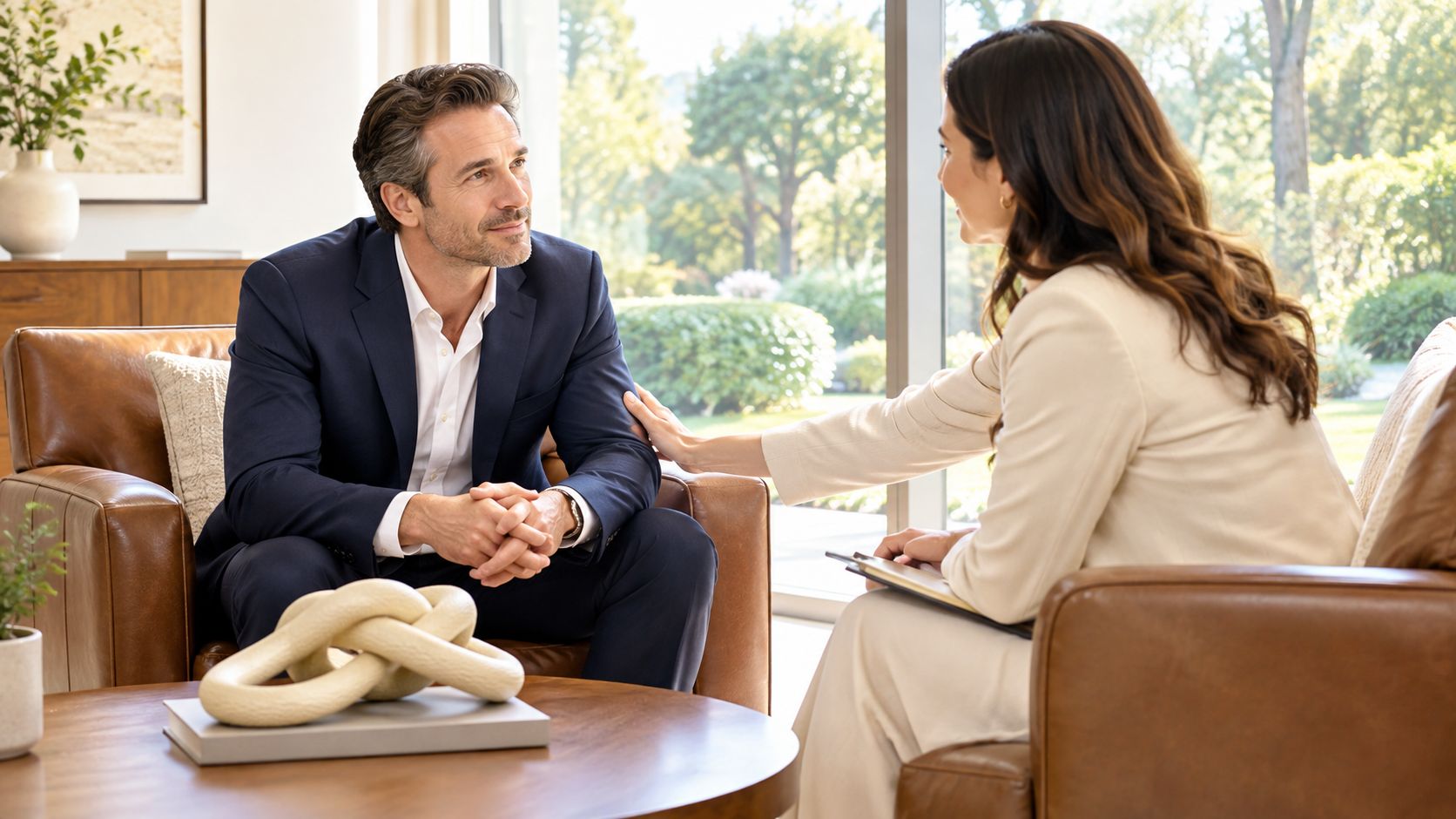
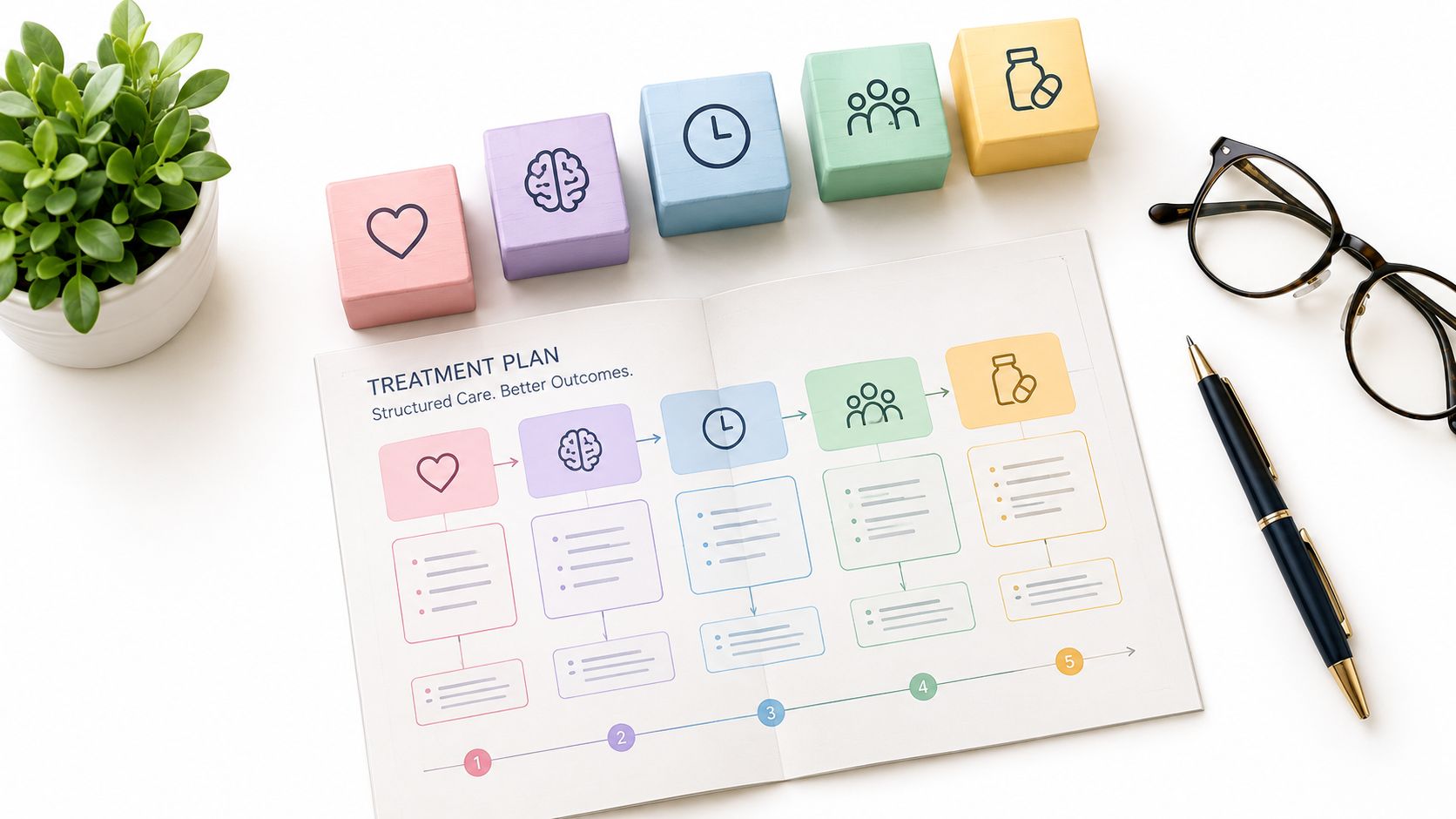
Consider a representative admission. An executive enters a private residential program after anxiety has begun affecting judgment, sleep, relationships, and substance use. During the first clinical meetings, the treatment team identifies several priorities: medically supervised stabilization, psychiatric assessment, individual psychotherapy, addiction counseling, and a plan for restoring daily function.
Massage may be offered as one supportive service. It can help the resident address physical tension or pain and create a calmer transition into therapy, but it doesn't treat the causes of addiction, replace medication management, or resolve trauma by itself. The therapist's work should remain connected to the broader treatment record, with the clinical team aware of the client's symptoms, medications, consent, and response.
Massage is increasingly familiar to adults in the United States. The National Center for Complementary and Integrative Health evidence summary reports that use increased from 4.8% of U.S. adults in 2002 to 10.9% in 2022, more than doubling over two decades. For a private-pay executive program, that familiarity can make massage feel like a credible adjunctive service rather than an unfamiliar intervention.
The executive context
High-performing professionals often need a treatment environment that protects privacy without abandoning accountability. A luxury residential setting may provide private rooms, discreet scheduling, and a carefully managed routine. Reflections states that it's a California-licensed, Joint Commission-accredited residential provider serving adults with co-occurring mental health and substance use disorders, with private rooms available in both its detox and rehabilitation programs.
Controlled access to laptops and cell phones can also matter. Executive programs commonly establish boundaries around electronics, therapy hours, and confidential communication, while allowing limited professional obligations when clinically appropriate. The purpose isn't to let work dominate treatment. It's to reduce avoidable disruption while the resident develops enough stability to participate fully.
Massage therefore works best as one coordinated element among psychotherapy, psychiatric medication management, group programming, recovery meetings, family work, and continuing-care planning. The resident's comfort matters, but clinical governance comes first.
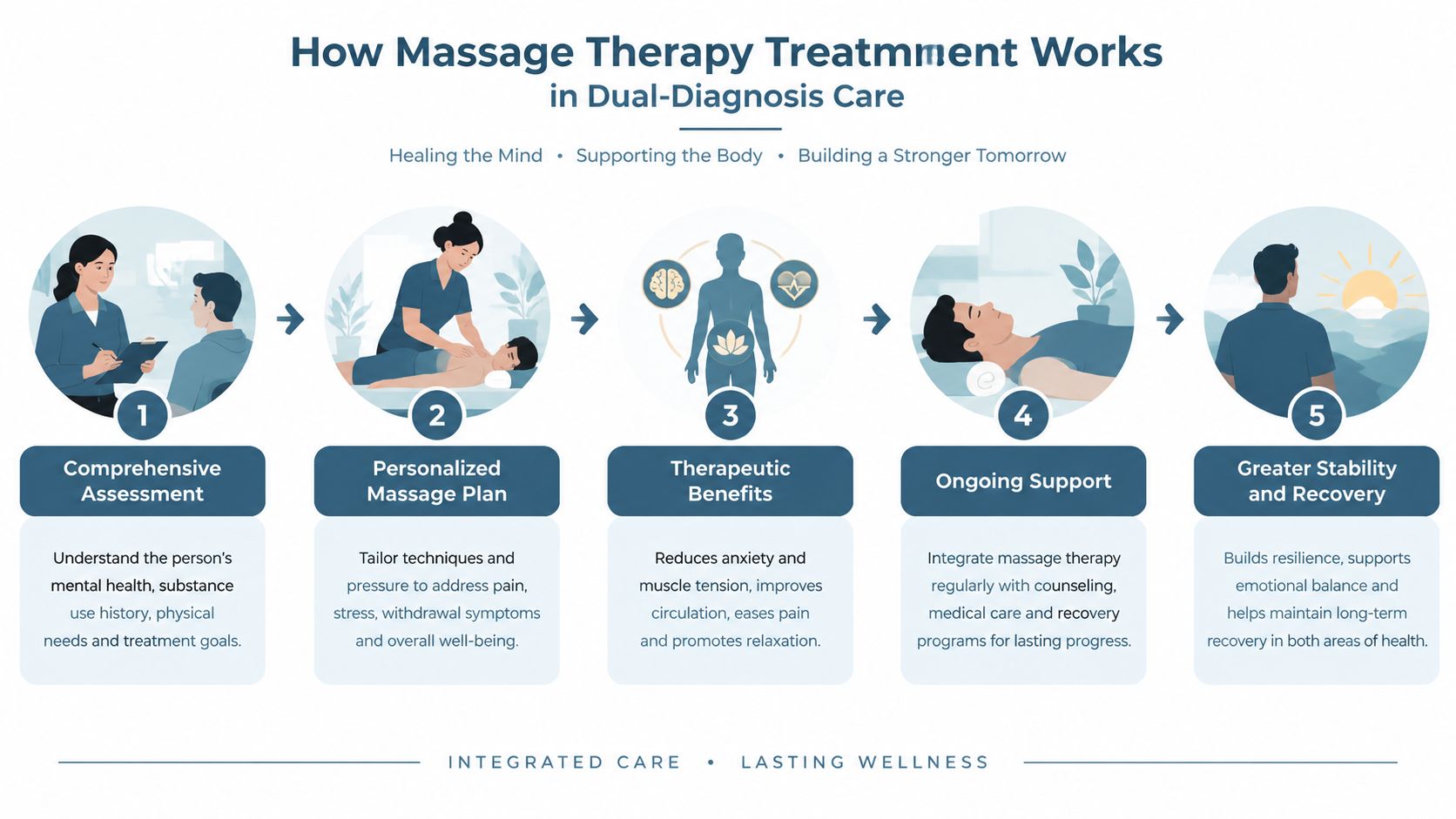
How Massage Therapy Treatment Works in Dual-Diagnosis Care
Massage therapy treatment is structured manual care delivered by a trained practitioner within a defined plan. The practitioner may use techniques involving muscles, connective tissue, positioning, pressure, and paced touch. In dual-diagnosis care, the treatment isn't selected in isolation from psychiatric symptoms, substance-use history, withdrawal status, medications, or trauma-related responses.
The care team and the plan
A coordinated team may include physicians, psychiatrists, psychologists, licensed therapists, addiction counselors, nurses, and the massage therapist. The supervising clinicians review whether massage is appropriate, what goals it should serve, and when it should occur. Reflections describes its multidisciplinary team approach as part of its broader residential model.
A typical process includes:
- Clinical review: The team considers current symptoms, medical conditions, medication changes, withdrawal concerns, and the resident's treatment priorities.
- Pre-session check-in: The massage therapist asks about pain, sensitivity, fatigue, anxiety, consent, and desired pressure. Nursing information may affect whether the session proceeds.
- Privacy and positioning: Draping, room temperature, music, conversation, and body position are discussed before treatment begins. Consent remains active throughout the session.
- Technique selection: The therapist chooses pressure, pace, duration, and body areas based on the day's presentation rather than relying on a fixed routine.
- Debrief and documentation: The resident reports comfort, symptoms, and any concerning response. The therapist records the session and communicates relevant information to the clinical team.
Timing matters
A session may be moved, shortened, or postponed during acute withdrawal, intense agitation, dissociation, unstable vital signs, or a medication change. A lighter session after group therapy might support a transition into rest, while treatment immediately before an emotionally demanding appointment may not be the right choice for every resident.
Some clients also ask about topical products or wellness-oriented approaches. A neutral educational resource on CBD massage wellness benefits can help frame questions, but any product must be reviewed for medication interactions, legal considerations, allergies, and program policy before use.
Comparing Massage Techniques and Treatment Goals
No technique is universally appropriate for an executive in residential dual-diagnosis care. Pressure, pace, tissue depth, positioning, and client tolerance all matter. The same person may need gentle work during early stabilization and a more targeted approach later, once symptoms and medical factors have been reviewed.
| Technique | Pressure & Pace | Primary Goal | Practical Fit |
|---|---|---|---|
| Swedish | Light to moderate, flowing and steady | Relaxation and general comfort | Often considered when the resident wants predictable, calming touch |
| Deep tissue | Slower, more focused, potentially firmer | Addressing persistent muscular tension | Requires careful screening and may not fit acute withdrawal, medication changes, or high sensitivity |
| Myofascial release | Sustained, measured pressure | Supporting mobility and tissue awareness | May suit chronic holding patterns when the resident is medically stable |
| Neuromuscular | Targeted pressure with specific attention to tender areas | Addressing localized tension and postural strain | Useful only when the therapist can modify pressure and the client communicates clearly |
| Sports massage | Variable, often focused and active | Recovery from physical exertion and movement demands | More relevant to an executive maintaining structured fitness than to a client in acute stabilization |
| Lymphatic techniques | Very light, rhythmic strokes | Supporting gentle fluid movement and relaxation | Requires medical review when swelling or systemic illness is present |
| Craniosacral approaches | Gentle, slow, and minimally forceful | Quiet sensory regulation and relaxation | May appeal to clients who find stronger pressure uncomfortable, though goals should remain realistic |
Trauma-informed pacing applies across all approaches. The resident should know what area will be treated, how draping works, how to pause the session, and what sensations might occur. A client who has experienced trauma may prefer less conversation, more control over positioning, or no work on particular body areas.
A therapist may also begin with a narrow goal, such as reducing shoulder tension before sleep, rather than promising broad emotional transformation. This keeps expectations clinically appropriate and makes the response easier to evaluate.
Evidence for Mental Health and Recovery Support
Massage research is substantial, but certainty varies. A 2024 evidence map identified 129 systematic reviews of massage for painful adult health conditions published from 2018 through 2023. Only 41 used formal evidence-rating methods, and just 17 were mapped across 13 health conditions. No conclusion received a high-certainty rating, while 7 conclusions reached moderate certainty, all supporting massage as beneficial for pain, according to the 2024 evidence review.
A separate umbrella-style review of massage for adult pain conditions reached the same central conclusion. The strongest current evidence supports massage as a pain-reducing adjunct, not as a uniformly proven stand-alone intervention for every condition.
What the trial evidence can and can't show
A systematic review and meta-analysis of randomized trials reported pain improvement compared with no treatment, with SMD -1.14, and a smaller improvement compared with active comparators, with SMD -0.26. The same review reported beneficial effects on fatigue, SMD -1.06, and anxiety, SMD -1.24, compared with active comparators, as detailed in the randomized-trial meta-analysis.
These findings can support a reasonable clinical expectation: a resident may experience short-term relief in pain, fatigue, or anxiety that makes participation in therapy more manageable. They don't establish that massage prevents relapse, resolves trauma, replaces psychiatric treatment, or treats substance use independently. Research populations, techniques, session schedules, and comparison groups differ, so results shouldn't be transferred mechanically to every residential client.
| Condition or Outcome | Evidence Strength | Key Findings | Limits and Cautions |
|---|---|---|---|
| Pain | Moderate support for selected conclusions | The strongest evidence supports pain improvement as an adjunct | No high-certainty conclusions across the reviewed conditions |
| Anxiety | Measurable benefit in randomized-trial synthesis | Anxiety may improve alongside physical symptoms | Effects vary by comparator, population, and protocol |
| Fatigue | Benefit reported against active comparators | Reduced physical burden may support daily participation | Fatigue can reflect withdrawal, medication, sleep loss, or medical illness |
| Sleep disruption | Plausible supportive role | Relaxation may help a resident prepare for sleep | Massage isn't a substitute for sleep assessment or psychiatric care |
| Substance-use recovery | Adjunctive, indirect role | Comfort and regulation may help engagement | It shouldn't be presented as a treatment for addiction or cue reactivity |
| Trauma-related distress | Requires individualized pacing | Predictability and consent may improve tolerability | Touch can also activate distress and must remain optional |
The holistic wellness programs offered within a coordinated residential model may include massage alongside evidence-based psychotherapy, medication optimization, recovery support, and other adjunctive services. Athletic recovery resources, including recovery strategies for athletes, can offer general context about physical recovery, but executive residential care requires additional psychiatric, addiction, and safety considerations.
Massage Within a Luxury Residential Program
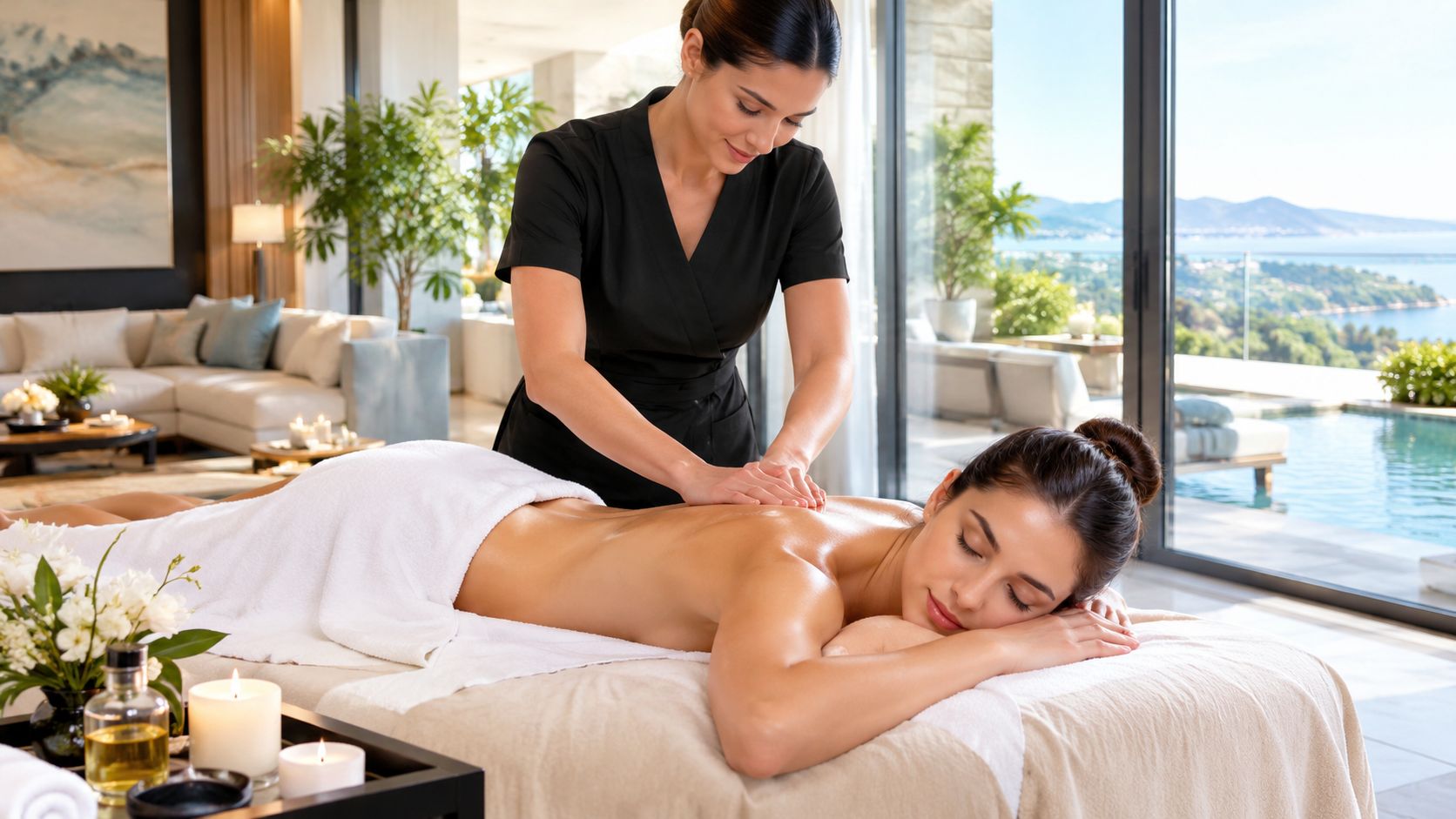
A well-designed day doesn't treat massage as an isolated spa appointment. A resident may complete intensive morning groups, meet privately with a therapist, attend a psychiatric consultation, and then receive an evening relaxation session if the clinical team believes the timing supports rest and participation.
Another resident may experience increased tension after a difficult family call. The lead clinician may recommend grounding work, nursing may review current symptoms and medication timing, and the massage therapist may provide a shorter, lighter session focused on the shoulders and back. If the resident becomes uncomfortable, the session stops. The response is documented and discussed rather than treated as a personal failure.
Privacy without clinical isolation
Luxury care should mean more than attractive surroundings. It should include clear consent practices, private rooms, discreet communication, credentialed clinicians, and a schedule that protects therapeutic priorities. Reflections describes private rooms for residents in both detox and rehabilitation programming, supporting a more confidential residential experience.
Executives may need limited access to a laptop or phone for urgent professional responsibilities. Policies vary by facility, but common executive-program arrangements include private rooms, Wi-Fi, computer access, and managed cellphone use outside or around therapy hours, as described in guidance on executive rehab programs. Access should remain bounded. A confidential call window shouldn't displace psychotherapy, medical monitoring, recovery meetings, or sleep.
Reflections also describes spa treatments for executives in luxury rehab within a broader treatment environment. The important distinction is governance. The massage therapist, lead clinician, and nursing team should communicate about medications, acute symptoms, consent, and recovery goals, while the resident retains meaningful choice about whether to participate.
Contraindications and Safe Treatment Decisions
Massage is often described as low risk, but “low risk” doesn't mean appropriate for everyone on every day. Reputable clinical guidance notes that harmful effects are generally uncommon, while rare serious events, including blood clot, nerve injury, or bone fracture, have been reported in connection with massage. The NCCIH clinical guidance on massage therapy safety supports careful screening rather than blanket reassurance.
When treatment should wait
A suspected or confirmed deep vein thrombosis, active infection, or recent surgery may require massage to be avoided until a qualified medical professional reviews the situation. The same caution applies when a resident has unexplained swelling, sudden severe pain, unstable cardiovascular symptoms, or an acute medical concern.
Other conditions may call for modification or clearance rather than an automatic ban:
- Anticoagulant use: Pressure may need to be lighter because bruising or bleeding risk can be relevant.
- Osteoporosis: Positioning and pressure require particular care because fragile bones may be vulnerable.
- Pregnancy: The care team should review positioning, timing, and technique.
- Cardiovascular conditions: The resident may need medical approval and closer symptom monitoring.
- Active skin lesions: The therapist may avoid affected areas or postpone treatment.
- Acute withdrawal: Massage may be delayed or adjusted while vital signs, agitation, hydration, and medication response are being monitored.
Screening is an active process
Before treatment, the therapist should review relevant intake information, confirm consent, ask about changes since the last session, and coordinate with nursing or medical staff when needed. Vital-sign review may be appropriate in a medically supervised setting. If the plan changes, the therapist should document the reason, the modified technique, the resident's response, and any follow-up required.
Clinical boundary: The resident can describe preferences and withdraw consent, but the treatment team determines whether massage is appropriate on a particular day.
A high-end program should never pressure a resident to continue because a session was scheduled or included in a service plan. The safest massage treatment is one that remains optional, clinically reviewed, and easy to stop.
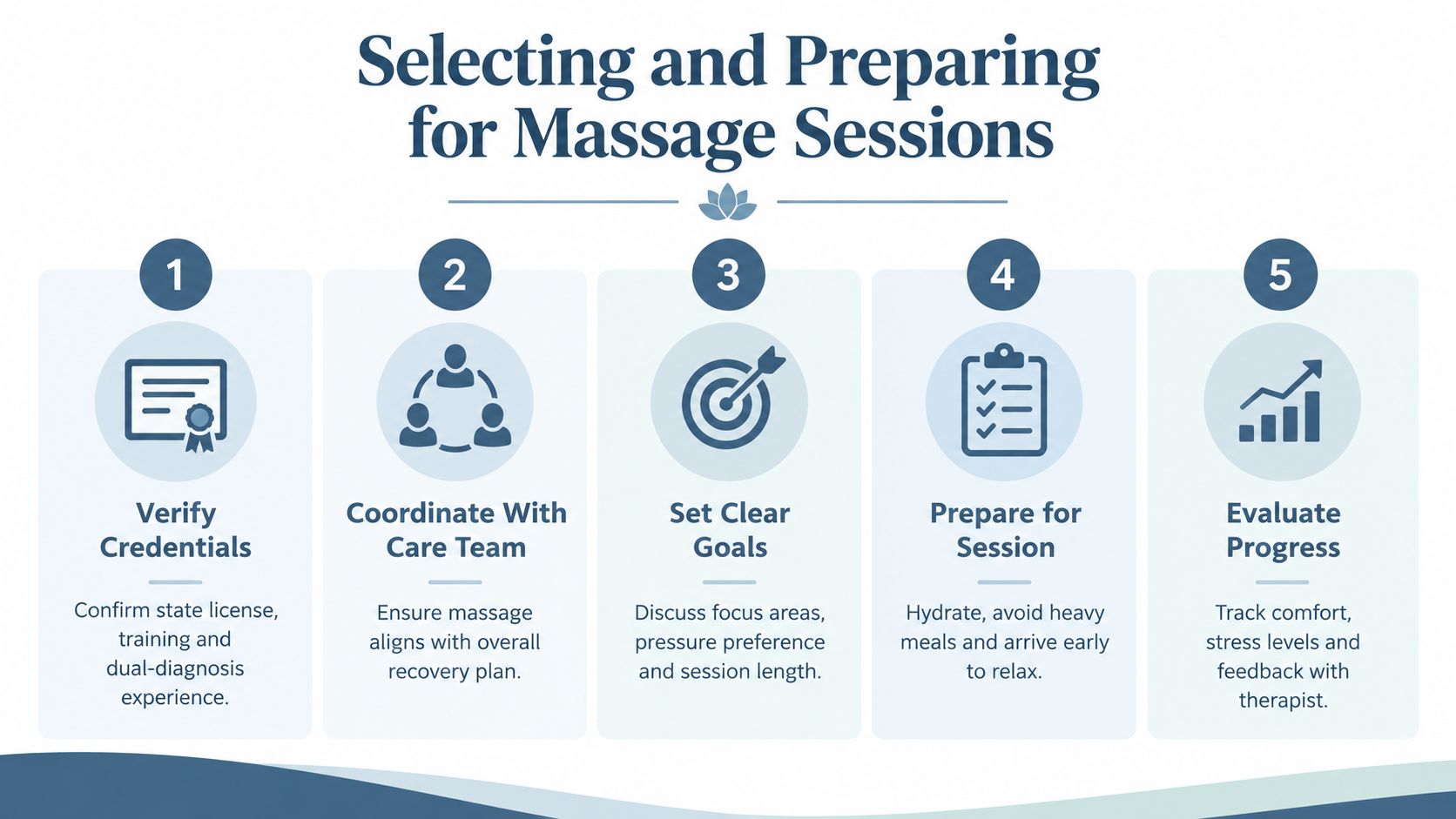
Selecting and Preparing for Massage Sessions
Families evaluating executive residential care should ask who provides massage, what credentials and licensure the practitioner holds, and whether the therapist has experience working around trauma, psychiatric symptoms, substance use, withdrawal, and medication changes. The program should also explain how a supervising clinician reviews sessions and how information enters the unified treatment record.
The first appointment should feel like an assessment, not a performance test. The resident can describe pain locations, previous injuries, sensitivity to touch, trauma-related boundaries, pressure preferences, and areas that shouldn't be treated. Draping, music, conversation, positioning, and the signal to pause should be agreed upon before the session begins.
Preparing around treatment and work
Preparation can remain simple:
- Choose the right window: Avoid scheduling massage immediately before a demanding therapy group or medical appointment if relaxation could make concentration difficult.
- Discuss body needs: Hydration, meals, sleep, pain, and medication changes can affect comfort and technique selection.
- Protect clinical boundaries: If a laptop or phone is permitted, establish confidential call windows that don't interfere with therapy, nursing checks, or rest.
- Evaluate the response: The resident should report whether the session helped, caused discomfort, increased distress, or produced symptoms requiring review.
Home wellness equipment, such as products discussed in home wellness equipment recommendations, may be relevant after discharge, but equipment shouldn't replace professional assessment during residential treatment. A massage chair or self-directed device can't screen for contraindications or coordinate with psychiatric and addiction care.
Questions to Ask Before Beginning Treatment
Before admission or the first session, clients and families can ask:
- Who provides the massage, and what training, licensure, and dual-diagnosis experience do they have?
- Does a physician, psychiatrist, nurse, or lead clinician review suitability?
- How are trauma history, withdrawal, medications, surgery, anticoagulants, osteoporosis, and cardiovascular concerns screened?
- How will massage fit around psychotherapy, psychiatric appointments, groups, recovery meetings, and sleep?
- What are the usual session length, frequency, pressure options, consent practices, and draping policies?
- How are missed sessions handled during acute symptoms?
- How are confidentiality, electronics access, and urgent professional obligations managed?
- Where are outcomes, discomfort, adverse events, and treatment changes documented?
The strongest program treats massage therapy treatment as optional, individualized, and measurable within a complete recovery plan. Comfort can support engagement, but clinical care remains the foundation.
Reflections offers California-licensed, Joint Commission-accredited residential dual-diagnosis care with private rooms, clinician-coordinated wellness services, and managed electronics access for appropriate professional obligations. Families and executives can visit Reflections to learn how confidential luxury treatment can integrate massage with psychotherapy, psychiatric care, addiction treatment, and continuing recovery support.