
For high-performing leaders, chronic anxiety is more than just stress. It's a hidden barrier to peak performance and a significant threat to long-term career longevity. When outpatient options are no longer enough, inpatient therapy for anxiety offers a strategic and decisive solution—an immersive, confidential retreat to recalibrate the nervous system and build sustainable resilience.
Why Leaders Consider Inpatient Therapy for Anxiety
For executives, C-suite members, and other driven professionals, the decision to pursue inpatient therapy isn’t a sign of weakness. It’s a proactive investment in both personal and professional well-being. When the pressures of a high-stakes career lead to persistent anxiety that weekly therapy sessions can't contain, a structured, immersive environment becomes the logical next step. It is a calculated action to regain clarity, control, and the mental fortitude required for leadership.
This approach moves beyond crisis management into strategic recalibration. Chronic anxiety can erode decision-making abilities, disrupt sleep, and strain relationships, which ultimately hinders performance. An inpatient stay provides the time and space to step away from daily triggers and engage in intensive, focused healing.

A Strategic Retreat for Lasting Resilience
Unlike traditional perceptions of rehab, this level of care is designed for individuals who can't simply disconnect from their obligations. It's a setting that respects professional status and the need for absolute discretion, offering amenities like private rooms and secure access to electronics like cell phones and laptops.
The core principle is providing an environment where a leader can heal without sacrificing their career. It’s about building resilience, not just escaping pressure.
Understanding the various forms of anxiety is crucial to appreciating the need for specialized treatment, and resources are available to help you find mental health support. The growing necessity of this care model is also reflected in broader trends. For instance, data from the UK's National Health Service showed that admission rates for anxiety disorders nearly doubled over a 22-year period, indicating a growing recognition of inpatient care as a critical solution.
Ultimately, choosing this path is about recognizing that your mental health is your most valuable asset. If you are exploring what this level of care involves, you might be interested in our guide on what is inpatient mental health treatment.
The Hallmarks of an Executive Treatment Experience
When you're a busy professional, the idea of stepping away for inpatient therapy for anxiety can seem impossible. True executive treatment understands this. It’s not just about providing excellent clinical care; it’s about creating an environment that respects your responsibilities and need for privacy. This is where a luxury, private-pay facility truly shines, blending uncompromising therapy with the comfort and discretion you’d expect from a five-star retreat.
The entire experience is built on a foundation of comfort and privacy. Forget shared rooms and crowded spaces. Here, you'll have a private, beautifully designed suite to call your own. This personal sanctuary gives you the quiet space you need to rest, reflect, and decompress from the high-pressure world you're used to. It feels less like a clinic and more like an exclusive estate.
Discretion and Connectivity
For any working professional, the thought of being completely disconnected from your career is a major roadblock to getting help. An executive program gets it—staying connected isn't just a preference, it's a necessity.
You'll be given secure, structured access to your phone and laptop. This allows you to handle critical work tasks and check in with your team, ensuring your business runs smoothly while you dedicate the majority of your time to your recovery.
This balance is what makes it work:
- Structured Access: Our highly accredited clinical team collaborates with you to build a schedule that carves out time for both intensive therapy and essential work communications.
- Confidential Environment: Every activity takes place in a setting where total discretion is the top priority, protecting both your personal and professional reputation.
- Peer Support: You’ll be surrounded by a small, carefully selected group of peers—other leaders and professionals who genuinely understand the pressures you face.
A World-Class Blend of Clinical Care and Wellness
The executive treatment experience pairs a highly credentialed clinical team with premier amenities. The goal is to heal the whole person, addressing not just the psychological roots of anxiety but the physical toll it takes on your body. This is where truly exceptional care becomes a reality.
An outstanding program is defined by its ability to deliver intensive, evidence-based therapy while providing the comfort, privacy, and flexibility a leader needs to heal without putting their entire life on hold.
This integrated approach includes things like gourmet meals prepared by professional chefs, access to state-of-the-art fitness facilities for stress relief, and restorative therapies like massage. These aren't just perks; they are essential parts of a program designed to restore your mind-body connection. This ensures that when you return to your life, you’re equipped not only with new coping skills but with a renewed sense of total well-being.
The Clinical Blueprint for Executive Recovery
Real, lasting recovery from anxiety isn’t about finding a temporary escape. It's about getting to the root of the issue and fundamentally changing the psychological and even neurological patterns that keep you stuck. For a leader, an executive, or a professional, this process has to be efficient, discreet, and intensely practical.
A truly effective inpatient program understands this. It’s built around a core of intensive, one-on-one psychotherapy, delivered by a PhD-level clinical team. This isn’t your typical weekly therapy session. It’s an immersive, deep-dive approach that allows our clinicians to move past surface-level symptoms and address the core drivers of anxiety, like unresolved trauma or executive burnout. This is where the real work happens.
Evidence-Based Therapies That Deliver Results
To get those results, expert clinicians use specific, proven therapeutic methods. These aren’t chosen at random; they are selected for their ability to build concrete, real-world skills that apply directly to the pressures of a high-stakes environment.
We often build a client's therapeutic program around a few core, evidence-based models that are particularly effective for professionals and leaders.
Core Therapeutic Modalities in Executive Anxiety Treatment
| Therapy Model | Core Principle | Benefit for Professionals |
|---|---|---|
| Cognitive Behavioral Therapy (CBT) | Identifies and restructures the negative, distorted thought patterns that fuel anxiety and self-doubt. | Helps you regain cognitive clarity, challenge the "imposter syndrome," and make strategic decisions without being hijacked by anxious thoughts. |
| Dialectical Behavior Therapy (DBT) | Provides practical skills for managing intense emotions, tolerating distress, and improving interpersonal relationships. | Essential for maintaining composure under pressure, navigating difficult negotiations, and leading your team with a steady hand. |
| Acceptance and Commitment Therapy (ACT) | Teaches you to accept difficult thoughts and feelings without over-identifying with them, so you can commit to value-driven actions. | Allows you to stay focused on your purpose and long-term goals, even when facing internal or external turmoil. |
These therapies aren't just about talking; they're about building a functional toolkit you can take back to the boardroom and your personal life.
A Mindful Approach to Medication
Many high-achieving individuals worry that medication will dull their cognitive edge or impede performance. It’s a valid concern. That's why a premier executive program operates on a "less is more" philosophy, guided by psychiatrists who specialize in this exact demographic.
The goal isn’t to numb you with medication. It’s to use it as a strategic, short-term tool to create enough stability for the deep therapeutic work to take hold. Optimization is about finding the lowest effective dose to quiet the noise, not silence your mind.
This careful, precise approach ensures you can stay sharp and fully engaged in your recovery. We recognize that your mental acuity is a non-negotiable asset. This level of clinical precision is a hallmark of luxury care, as the chart below illustrates.
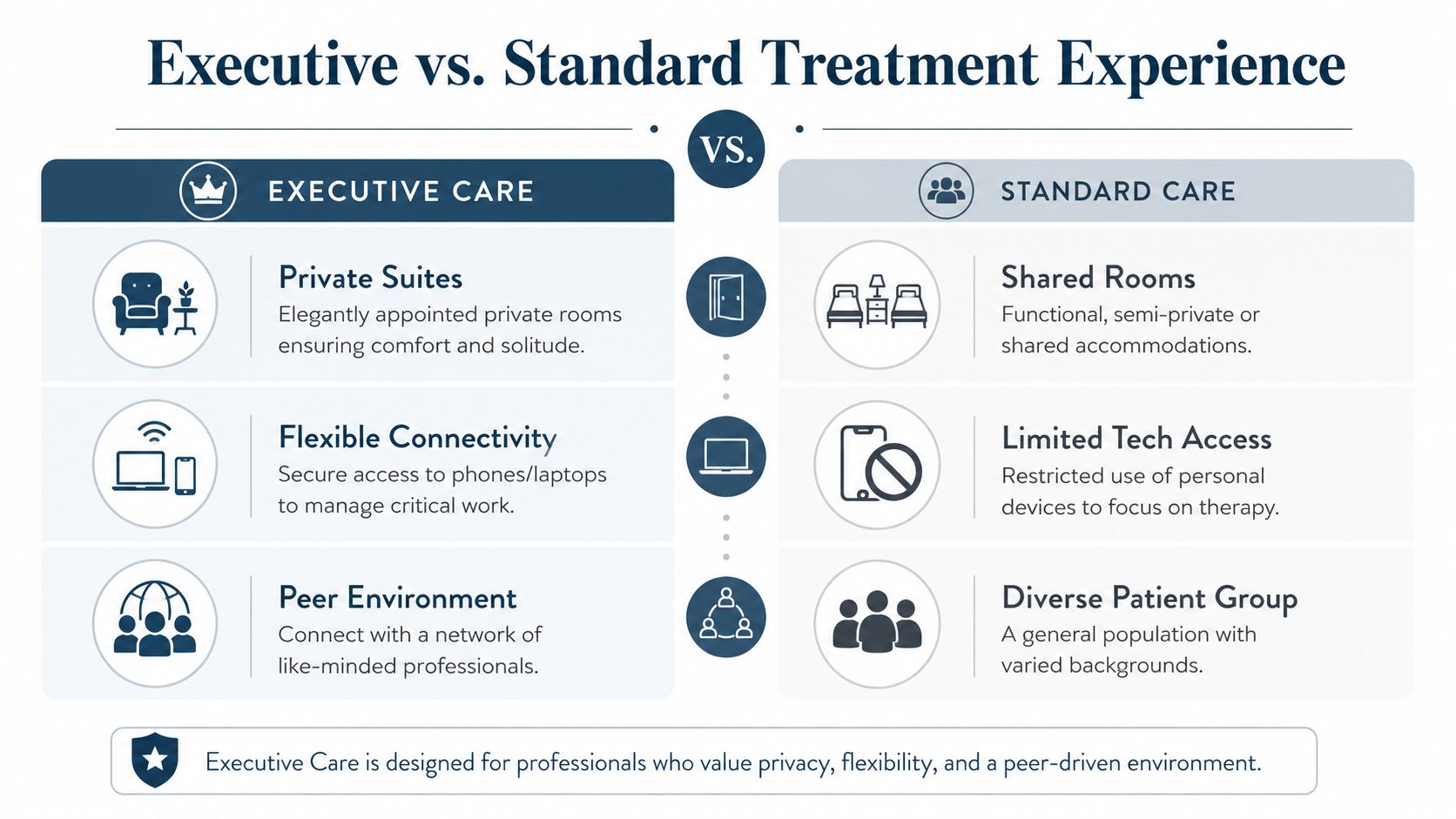
As you can see, the executive model is built around privacy, continued connectivity, and a peer environment—all critical for professional clients. The results of this intensive approach speak for themselves. Inpatient psychotherapy for anxiety has a strong clinical track record.
One major study published in Frontiers in Psychiatry found that after intensive treatment, 35.1% of patients achieved full remission of their anxiety symptoms. For those facing both anxiety and a co-occurring substance use issue, this immersive model is even more critical. Treatment in these cases often begins with a medically supervised detox before the deeper psychological work can begin. You can read the full research on these clinical outcomes to learn more.
Navigating Co-Occurring Anxiety and Substance Use
For many successful professionals, the immense pressure of a high-stakes career can make anxiety feel like a constant companion. Over time, it's not uncommon to turn to alcohol or other substances as a way to cope—a temporary fix to quiet a racing mind or take the edge off after a stressful day. This cycle can quickly lead to a co-occurring disorder, where anxiety and substance use become deeply intertwined.
This isn't a sign of personal failing; it's a common, and very human, response to relentless stress. While a substance might seem to offer relief at first, it often ends up making the underlying anxiety much worse in the long run. When dealing with these co-occurring conditions, understanding alcohol's link to anxiety is a critical piece of the puzzle.
An Integrated Solution for Lasting Recovery
To find genuine, lasting recovery, both conditions have to be treated at the same time. Focusing only on the substance use without addressing the anxiety that fuels it is like treating a symptom while ignoring the disease itself. A specialized inpatient therapy for anxiety program offers an integrated solution, addressing both issues concurrently with a sophisticated, dual-diagnosis approach. This is where a luxury program truly excels—it has the clinical depth to unravel this complexity.
Clinical studies show just how common this overlap is. In fact, more than one in four general hospital inpatients experience clinically significant anxiety symptoms. With a pooled prevalence of 28%, anxiety is a pervasive issue that often complicates recovery from other conditions like substance use.
The First Step: A Comfortable and Medically Supervised Detox
For many, this integrated process begins with a medically supervised detox. The thought of withdrawal can be intimidating, but in a premier executive treatment center, it’s managed with the utmost care, comfort, and discretion.
Detox is not a punishment; it is a safe, medically managed transition. Our highly accredited clinical team ensures this initial phase is as comfortable as possible, allowing your body to stabilize so the deeper psychological healing can begin.
This crucial first step takes place in the privacy of your own elegant room, ensuring a serene and confidential environment. Once your system is clear, the intensive therapeutic work of addressing the root causes of your anxiety can truly begin. You can learn more about our dedicated approach in our guide to anxiety and substance use disorder treatment. This ensures you build a foundation for recovery that is strong, stable, and sustainable.
A Day of Structured Healing and Professional Life
For any busy professional, the thought of stepping away for inpatient therapy for anxiety can feel impossible. The common fear is of a restrictive, isolating environment that completely disconnects you from your responsibilities. A high-end program, however, is built with your life in mind, creating a structured schedule that balances intensive healing with the need to stay connected.
A typical day is a thoughtful blend of deep clinical work, restorative wellness, and protected time for your career. It’s designed to dispel the old myths of a rigid "rehab" setting. Instead, you'll find a bespoke program that nurtures both mind and body while respecting your role as a leader. It's a structured day, but it’s your structure.
Morning Focus on Intensive Clinical Work
Your day usually begins with activities meant to ground you and set a positive tone, like a private meditation session or a healthy breakfast planned with a nutritionist. The heart of the morning, though, is dedicated to intensive, one-on-one psychotherapy with your primary, PhD-level therapist. This is where you do the deep, foundational work.
After your individual therapy, you might join a small, focused group session with peers who truly understand the unique pressures you face. These sessions are a confidential space to explore shared challenges and build practical skills, all under the guidance of expert clinicians.

Afternoon Blend of Therapy and Professional Life
The afternoons shift focus, weaving experiential therapies together with your essential career obligations. This part of the day is designed for integration and balance. It might include:
- Experiential Therapies: Engaging in powerful modalities like equine-assisted therapy, art therapy, or mindfulness practices to process emotions in ways that words sometimes can't.
- Protected Work Time: You’ll have a designated block of time in the privacy of your room to connect with your office, handle critical emails, and manage your team from your laptop or phone.
- Physical Wellness: A session with a personal trainer in a state-of-the-art gym or a therapeutic massage helps release the physical tension that anxiety stores in the body.
This schedule isn't about escaping your life; it’s about building the skills to re-engage with it in a healthier, more resilient way. To learn more about how this is possible, check out our article about how you can work from rehab and stay connected.
A day in executive treatment is not a day "away" from your life; it's a day invested in mastering it. The structure provides a framework for healing that honors both your personal needs and professional identity.
Ensuring Lasting Success After Treatment
Completing an immersive program of inpatient therapy for anxiety is a major milestone. But the real goal isn’t just getting through the program—it's about fundamentally changing how you navigate your high-stakes life long after you leave. The transition back to your career and family is where true, lasting recovery begins to take hold.
This is where a solid continuing care plan becomes your most important tool. Think of it as the bridge between the supportive, structured environment of a private residential facility and the complex realities of your world. A well-crafted plan protects the profound investment you've made in yourself and sets you up for success.
Building a Foundation for Lifelong Resilience
A thoughtfully designed aftercare strategy ensures your progress doesn't stop when you walk out the door. This isn’t a generic checklist; it’s a personalized extension of your treatment, tailored to the specific challenges and demands of your life as a professional.
Some key components of a strong plan include:
- Ongoing Virtual Therapy: Maintaining the connection with your primary therapist via secure virtual sessions is crucial. It provides consistency and expert guidance as you start applying new coping strategies in real-world situations.
- Executive Alumni Networks: Connecting with a peer group of like-minded professionals who’ve been through the program offers a unique kind of support. They understand your challenges firsthand and provide invaluable accountability.
- Family Integration Sessions: Private, structured sessions with family members help strengthen your support system at home. This ensures your loved ones understand how to best support your continued healing and growth.
True recovery isn’t measured by the progress made inside a facility, but by the resilience you sustain in the world outside. A comprehensive continuing care plan is the architecture for that lasting success.
This deliberate focus on aftercare is what helps the powerful insights and strategies you’ve gained become second nature. It reinforces new, healthier neural pathways and provides a safety net as you re-engage with your responsibilities, but this time, with newfound clarity and strength. Ultimately, this ongoing support is what turns a 30- or 60-day stay into a lifetime of well-being.
Answering Your Practical Questions
Deciding to pursue something as significant as inpatient therapy for anxiety naturally brings up a lot of practical questions. For high-achieving professionals and their families, getting clear answers about privacy, work, and the first steps is crucial. We’ve found that having this information upfront makes the process feel much more manageable.
Will My Privacy Be Protected?
Without question. Confidentiality is the foundation of everything we do. From your very first phone call, every conversation and detail is handled with the utmost discretion.
We understand that protecting your personal and professional life is non-negotiable. Your identity, your treatment, and your story are kept in the strictest confidence, always.
Can I Stay Connected to My Work and Family?
Yes. We know that for most leaders and executives, completely unplugging from work isn't a realistic option. Our program was specifically created to accommodate this reality, providing secure access to your phone and laptop.
Together, we’ll create a daily schedule that perfectly balances intensive therapeutic work with protected time for you to manage your career obligations and, just as importantly, stay in touch with your loved ones. This ensures your responsibilities are handled while you focus on healing.
What Is the Admissions Process Like?
We've made our admissions process straightforward and entirely confidential. It all starts with a simple, private phone call with one of our experienced admissions coordinators.
During this initial conversation, we will:
- Take the time to listen and understand the challenges you're facing.
- Answer all your questions about the program and what to expect.
- Conduct a pre-assessment to make sure our services are the right fit for you.
- Walk you through all the logistics, from travel arrangements to what to bring.
Our team takes care of every detail, making your transition into treatment as smooth and stress-free as possible so you can focus on the important work ahead.
At Reflections, we provide a clinically sophisticated and entirely discreet environment for leaders to heal from anxiety and co-occurring conditions. To learn more about our approach, please visit us at https://livingatreflections.com.