

Dual diagnosis, also called co-occurring disorders, is the presence of a mental health disorder and a substance use disorder during the same period. The pattern affects roughly half of people who experience mental illness during their lives, according to the National Institute on Drug Abuse's overview of common comorbidities, and it calls for integrated treatment rather than disconnected care.
A senior leader may still be answering late-night messages, joining board calls, and meeting deadlines while drinking more each evening and taking increasing amounts of anxiety medication. The work continues, so the warning signs can look like a private coping strategy rather than a clinical problem. But success at work doesn't tell clinicians whether someone is safe, well, or receiving care for both conditions.
For executives and working professionals, the question isn't only what dual diagnosis means. It's whether psychiatric care, addiction treatment, and the demands of daily life can be coordinated without leaving critical gaps. High-end residential treatment can offer privacy and clinical structure, but the quality of coordination matters more than a polished setting.
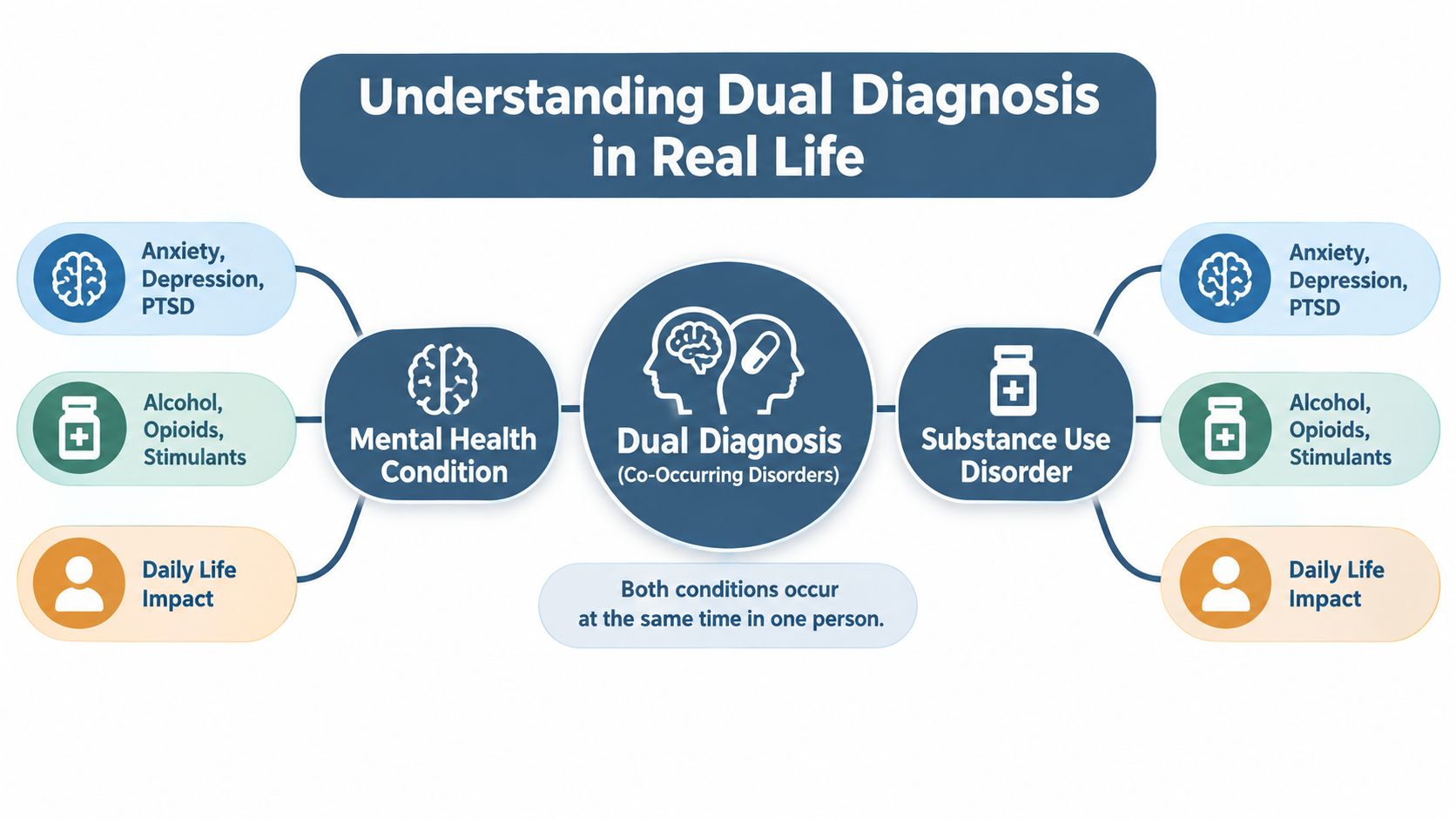
Understanding Dual Diagnosis in Real Life
Dual diagnosis, also called co-occurring disorders, means that a person experiences a mental health disorder and a substance use disorder during the same period. The mental health condition may include depression, anxiety, post-traumatic stress disorder (PTSD), bipolar disorder, a psychotic disorder, or a personality disorder. The substance use disorder may involve alcohol or drugs.
Consider a senior professional whose work remains on track while alcohol becomes a nightly way to settle down. As stress and sleep problems grow, the person also takes more anxiety medication. Colleagues and family may see continued performance, while the pattern of use becomes harder to control.
Why professional success can conceal the pattern
For high-functioning adults, work performance can mask changes in mood, sleep, relationships, or substance use. Drinking or medication use may be described as stress management, even as greater amounts are needed for relief or use begins to affect health and judgment. Career achievement does not rule out a disorder. A visible crisis is not required before assessment.
The overlap also appears among people with more serious symptoms and young people in treatment. The National Institute on Drug Abuse reports that about 1 in 4 people with serious mental illness have a substance use disorder. It also reports that more than 60% of adolescents receiving community-based substance-use-disorder treatment meet diagnostic criteria for another mental illness, as summarized in its comorbidity materials.
Clinical point: A dual diagnosis calls for more than addiction treatment with occasional counseling added. The care plan needs to assess and address both conditions together.
For a working professional, continuity is part of the treatment decision. The team needs to assess psychiatric symptoms and substance use together, then coordinate care as treatment progresses. Residential care may provide privacy and structure, while planning for work obligations helps reduce disruption. The trade-off is time away from ordinary responsibilities; the benefit depends on whether psychiatric and addiction care remain connected throughout the stay and after discharge.
Why Mental Health and Substance Use Feed Each Other
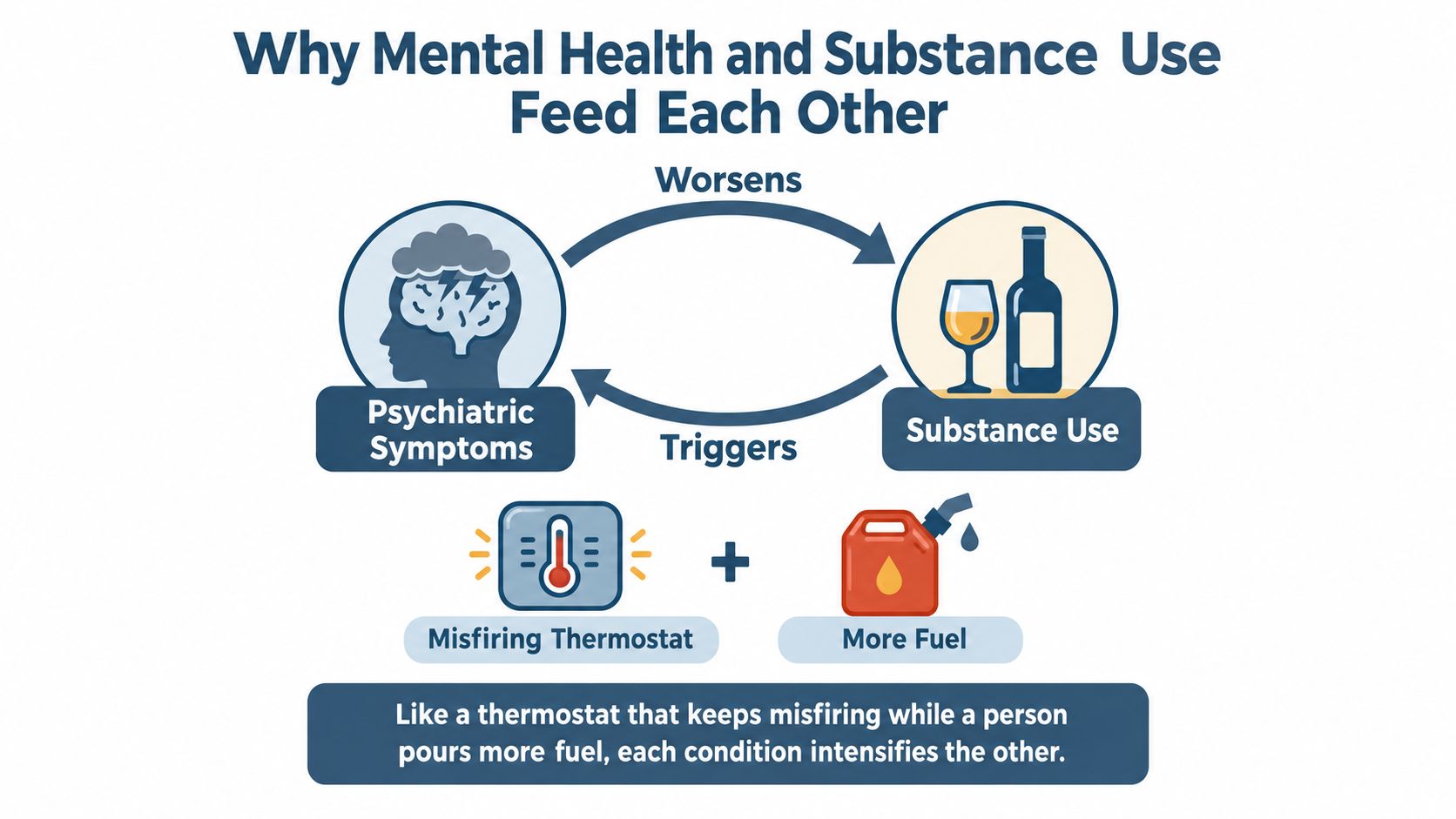
Co-occurring disorders often operate like a misfiring thermostat. Anxiety, trauma, depression, or bipolar symptoms raise distress; a person uses a substance to cool it down quickly. The relief can be brief, and the substance can then intensify the symptoms that prompted its use.
Alcohol may seem to quiet anxiety, while stimulants may be used to push through fatigue or low mood. Someone living with trauma may use opioids or alcohol to blunt intrusive memories. Those choices can become more entrenched when distress feels unmanageable and other coping strategies haven't been developed or supported.
How the feedback loop develops
Substance use can also worsen psychiatric symptoms directly. Intoxication, withdrawal, and chronic exposure may affect mood, sleep, cognition, impulse control, and psychosis. Medication effects and interactions add complexity, so symptoms that appear psychiatric may have several possible contributors that clinicians need to distinguish.
That two-way relationship is why treating one condition while setting the other aside can fall short. A person may stop using temporarily but remain vulnerable to the untreated panic, depression, or trauma that substance use had been suppressing. Conversely, psychiatric treatment may help while substance-related risks continue to disrupt sleep, medication adherence, safety, and mood.
For a closer explanation of the relationship between these conditions, see this discussion of how addiction affects mental health.
The practical implication is not that every symptom has one cause, or that every person follows the same cycle. It's that the treatment team should keep both conditions in view, reassess as the person stabilizes, and coordinate decisions rather than assuming one problem will resolve automatically when the other is treated.
Common Dual-Diagnosis Combinations Readers Recognize
Dual diagnosis describes co-occurrence, not a single signature pairing. Any mental disorder can occur alongside a substance use disorder, and the same symptoms can look different depending on intoxication, withdrawal, medication effects, trauma, or the person's baseline mental health.
Some combinations are easy to recognize in hindsight but difficult to identify while someone is trying to function. Depression may appear as exhaustion, withdrawal from family, or loss of interest, while alcohol use becomes a private way to get through the evening. Anxiety can lead to increased use of benzodiazepines or stimulants, even though those substances may complicate sleep, mood, or judgment.
| Mental Health Condition | Frequent Substance Pairing | Typical Red Flags |
|---|---|---|
| Depression | Alcohol | Drinking to manage low mood or sleep, followed by worsening mood or isolation |
| Anxiety disorders | Benzodiazepines, alcohol, or stimulants | Escalating use for relief or focus, mounting concern about functioning without a substance |
| PTSD | Alcohol or opioids | Using to suppress intrusive memories, hyperarousal, or emotional distress |
| Bipolar disorder | Alcohol or cocaine | Substance use alongside significant shifts in mood, energy, sleep, or judgment |
| Borderline or antisocial personality features | Multiple substances | Risky use, unstable relationships, impulsive decisions, or recurring crises |
Why familiar patterns still need assessment
The table can help readers recognize patterns, but it cannot establish a diagnosis. For example, substance use can intensify anxiety or low mood, and intoxication or withdrawal can resemble other psychiatric symptoms. A person may also have an independent mental health disorder that remains present after substance-related effects have eased.
That uncertainty is one reason self-assessment can be misleading. A person who attributes every change in mood to stress may overlook a psychiatric condition; someone else may assume a psychiatric diagnosis explains symptoms that need a substance-use assessment too. Clinicians evaluate both possibilities rather than treating a recognizable pairing as proof.
The useful question is not whether a particular combination “counts.” It's whether a qualified clinician has assessed mental health and substance use together, considered how one affects the other, and built a plan that can adapt as symptoms change.
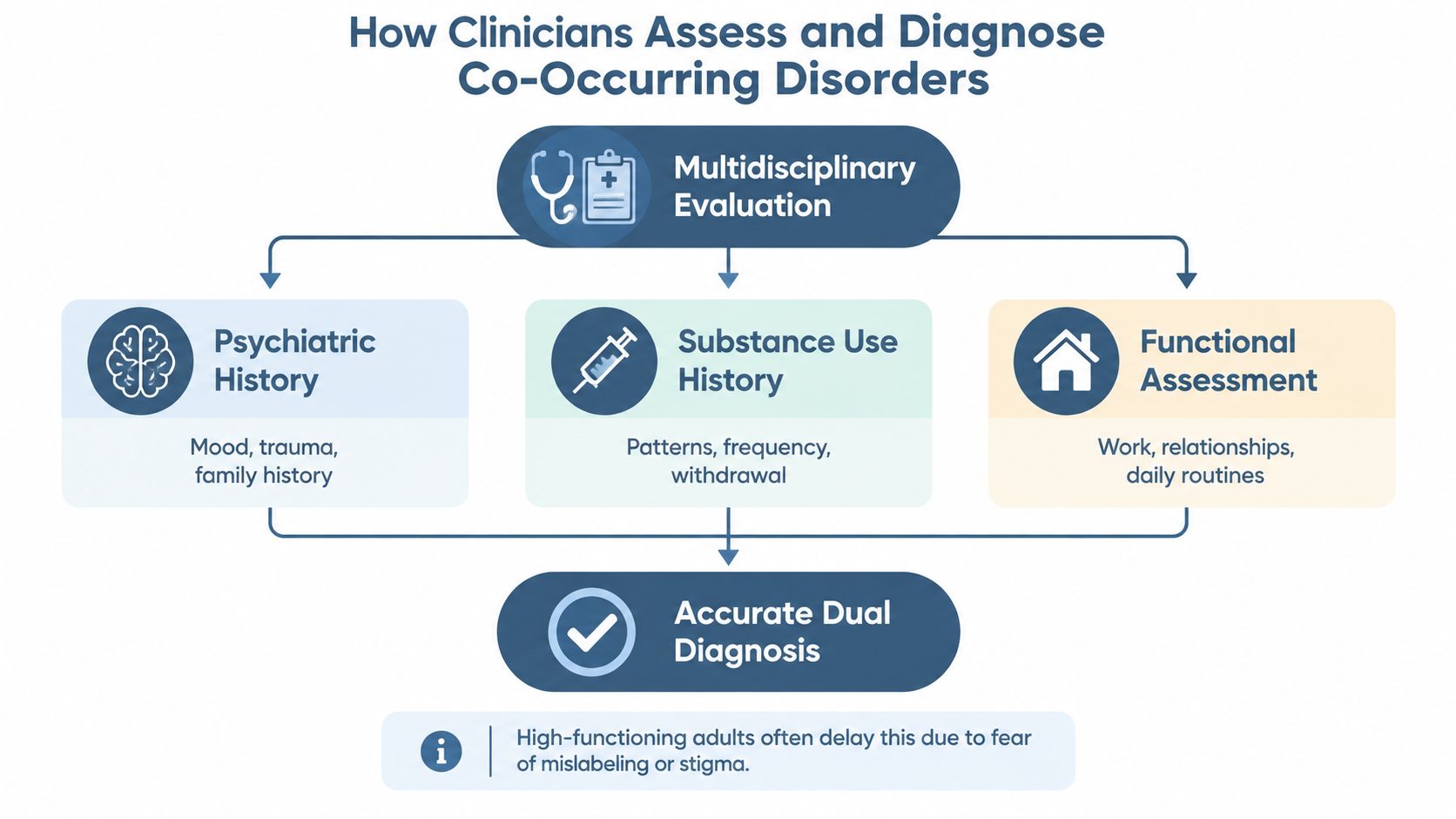
How Clinicians Assess and Diagnose Co-Occurring Disorders
A dual-diagnosis assessment is a clinical process, not a label assigned from one symptom or one conversation. A multidisciplinary evaluation considers psychiatric history, substance use patterns, medical history, trauma, medications, withdrawal or intoxication effects, and the impact on work, relationships, and daily routines.
Timing matters
Clinicians look at when symptoms began, how severe they became, and whether they persist during periods without substance use. Intoxication and withdrawal can affect mood, sleep, thinking, and behavior. Medication interactions can create another layer of uncertainty, so the clinician needs a clear account of prescribed and non-prescribed substances.
Residential care can provide a structured setting for observation when a person needs stabilization and a closer look at how symptoms change over time. That doesn't mean every assessment requires residential treatment, or that a diagnosis should be delayed until a person has reached a particular milestone. It means clinicians should be cautious about drawing conclusions from symptoms observed only during intoxication or acute withdrawal.
For readers preparing for an evaluation, this guide to what to expect in a drug assessment offers a useful overview of the assessment process. A broader high-end rehab setting may also be relevant for people considering a structured residential environment with added privacy.
Ongoing monitoring keeps the plan responsive
Assessment continues after admission. The team can monitor cravings, substance use, sleep, mood, suicidal thoughts, withdrawal risk, medication response, and functioning. Those observations help clinicians adjust treatment as the person stabilizes instead of treating the original assessment as final.
A person's diagnosis or treatment needs may change as substance-related effects lessen and psychiatric symptoms become clearer. Accurate care requires room for that possibility, along with direct communication among the clinicians involved.
Integrated Treatment and Why Fragmented Care Falls Short
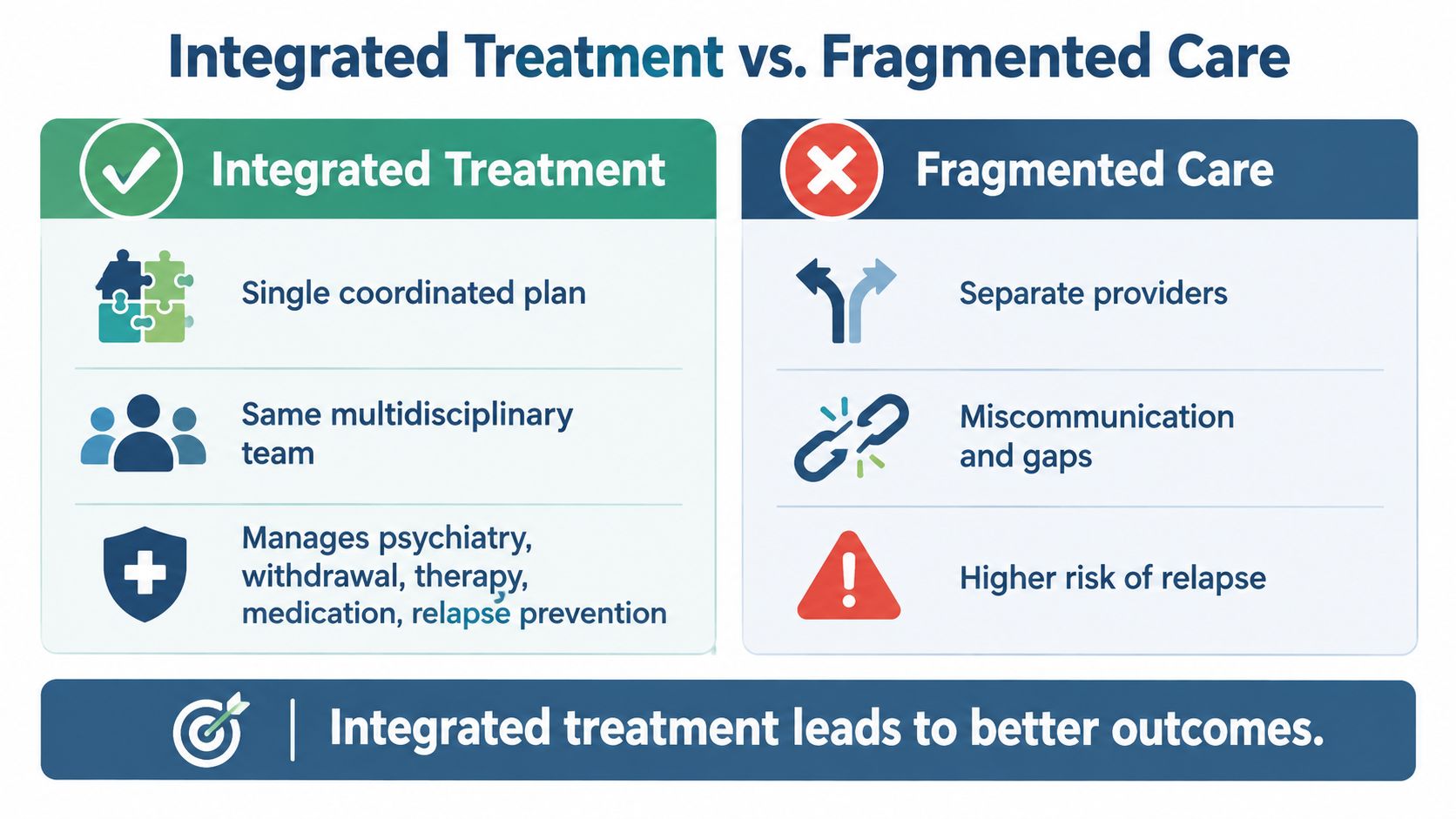
Integrated treatment means that a coordinated multidisciplinary team assesses and treats the mental health disorder and substance use disorder within one plan. Psychiatric evaluation, withdrawal management, psychotherapy, medication decisions, relapse prevention, and discharge planning are connected rather than handled as separate tasks by providers who may not communicate.
The alternative can leave a person caught between services. One program may expect psychiatric symptoms to be stabilized before addressing substance use, while another may focus on abstinence without managing the condition that contributed to using. Each provider may be doing useful work, yet the patient still has to connect the pieces.
What coordination looks like in practice
Evidence summarized by the National Institute on Drug Abuse's co-occurring disorders guidance supports integrated treatment as an approach associated with improvements in substance-use outcomes, psychiatric symptoms, functioning, hospitalization rates, housing stability, arrest rates, and quality of life compared with nonintegrated approaches. The guidance also describes practical elements such as screening in both directions, measurement-based monitoring, behavioral interventions, and medication decisions that account for safety and interactions.
In a residential program, the same team can coordinate therapy with withdrawal management and psychiatric care. Evidence-based approaches such as cognitive behavioral therapy and motivational approaches may address both conditions, while family involvement can help relatives understand the treatment plan and prepare for transitions.
A multidisciplinary team approach is useful only when communication changes care. The key questions are whether clinicians share relevant information, whether medication decisions account for both diagnoses, and whether discharge planning includes continuing support for each condition. A list of services is not the same as a coordinated treatment plan.
How to Evaluate a Dual-Diagnosis Program Before You Enroll
A program's use of the phrase “dual-diagnosis expertise” doesn't establish that its care is integrated. The decisive details are operational: who assesses the person, who communicates with whom, and whether the team continues to address both conditions as treatment progresses.
For high-profile professionals, discretion and quality assurance deserve close scrutiny alongside clinical fit. Joint Commission behavioral-health accreditation involves an on-site survey evaluating compliance with performance standards intended to improve quality and patient safety, including care delivery, the physical environment, information security, and organizational performance. Its behavioral-health accreditation information describes the review process. Accreditation is a meaningful external benchmark, but it doesn't prove a specific clinician-to-client ratio or a particular level of credentials.
Questions that reveal how care works
A prospective resident or family can ask direct questions before admission:
- One team or separate services? Does the same team coordinate psychiatric assessment, withdrawal management, psychotherapy, medication decisions, relapse prevention, and discharge planning?
- Who provides clinical care? Ask which psychiatrists, psychologists, licensed therapists, and addiction specialists are involved, and how their work is coordinated. Verify specific credentials rather than relying on broad claims.
- What does accreditation cover? Ask which independent body accredited the program, what kind of review it conducts, and how the program handles privacy and safety.
- How is trauma addressed? Ask whether trauma-informed care is integrated into treatment and how clinicians respond when trauma symptoms emerge.
- How are relatives involved? Clarify whether family sessions, education, or other involvement are available and how consent and confidentiality are handled.
- What happens in a crisis? Ask how the team responds to worsening symptoms, safety concerns, or withdrawal complications.
- What follows residential care? Ask how continuing care and alumni support are structured and how handoffs are coordinated.
A refined setting can support comfort and privacy, but amenities can't substitute for clinical communication.
Executive and family decisions often involve competing needs: intensive treatment, privacy, work obligations, and confidence in the clinical team. A careful conversation about the program's actual processes is more useful than relying on a brochure's language.
What High-End Residential Dual-Diagnosis Care Looks Like
For executives and working professionals, residential treatment needs to address more than the clinical plan. Privacy, continuity, and a realistic approach to career obligations can affect whether someone is willing to enter care and how well they engage once there.
Reflections offers private rooms for residents in both its detox and rehabilitation programs, with appropriate access to electronics such as cell phones and laptops so residents can manage career obligations while in treatment. That flexibility doesn't mean work should take priority over care. It gives the clinical team and resident a way to discuss boundaries and make work involvement part of a broader treatment plan.
Clinical rigor alongside privacy
Reflections' program combines psychiatric evaluation, medication management, clinically managed sub-acute withdrawal when appropriate, and medication optimization. Its multidisciplinary team includes PhD-level psychologists, psychiatrists, licensed marriage and family therapists, certified addiction counselors, and adjunctive therapists. Treatment may include CBT, DBT, ACT, motivational interviewing, individual psychotherapy, and intensive groups, alongside mindfulness, meditation, art and music therapy, somatic and equine work, fitness, massage, and nutrition.
Family involvement is encouraged through private sessions and educational workshops. Treatment typically ranges from 30 to 90 days, followed by continuing care and alumni programming. That transition matters: recovery doesn't end at discharge, and ongoing support can help connect residential work to life at home and at work.
A high-end program should be judged by more than its accommodations. The useful combination is a safe and private environment, coordinated clinical care, appropriately bounded access to work, meaningful family participation, and planning that continues after residential treatment. When those elements work together, executives don't have to treat professional responsibilities and recovery as mutually exclusive.
Reflections offers private-room detox and rehabilitation, coordinated dual-diagnosis treatment, and appropriate electronics access for residents managing career obligations. To discuss whether its residential care fits your clinical needs and work circumstances, visit Reflections.