
You are in a boardroom, on a video call, or in the back seat between two client meetings, and the pressure is already climbing. The email thread is piling up, a decision is waiting, and your body has started to react before your calendar gives you permission to pause. For leaders who have to keep functioning while anxiety rises, grounding techniques for anxiety are not a wellness accessory, they are a practical way to stay present, protect judgment, and hold composure when the stakes are public.
The best grounding work is simple, discreet, and fast enough to fit into executive life. Clinical guidance from the U.S. National Center for PTSD frames grounding as a way to observe the surrounding environment, reduce emotional intensity, distract from overwhelming states, and use breathing to regain control, which places it firmly in trauma-informed care rather than trend-based self-help (National Center for PTSD grounding overview). Major health systems also use the 5-4-3-2-1 sequence, and that familiarity matters when a professional needs something that works without visible disruption (Cleveland Clinic grounding techniques). For executives who must keep electronics, preserve privacy, and continue work obligations during treatment, the right tool is the one that can be used cleanly, and repeatedly.
relax with lavender and bergamot
1. Executive Power Grounding
A boardroom can turn tense without warning. A difficult email, a delayed decision, or a room full of people waiting for your response can push the body into alarm before the day slows down enough to catch up. In that moment, grounding techniques for anxiety give leaders a discreet way to stay present, protect judgment, and keep their composure when the pressure is visible to everyone else.
The classic 5-4-3-2-1 sequence stays useful because it gives the mind a task it can finish quickly. The person identifies 5 things seen, 4 touched, 3 heard, 2 smelled, and 1 tasted, which matches the structure used in clinical guidance from the University of Rochester Medical Center (URMC 5-4-3-2-1 coping technique). For a senior professional, the method works best when it stays short, private, and tied to a natural pause, such as before a negotiation, after a difficult call, or while walking to the next meeting.
What makes it strong in executive settings
The strongest version does not require a special object, a posture change, or any public sign that you are regulating stress. It shifts attention from internal alarm to concrete external details, so it can be used in airports, client offices, hotel lobbies, and the hallway outside a conference room. Clinical guidance also describes grounding as a brief way to orient to the present moment and reduce emotional intensity, which is why it fits high-pressure work where you cannot step away for long (National Center for PTSD grounding overview).
A practical approach is to start with whatever is easiest to notice, then move through the senses in order. If the room is visually plain or acoustically noisy, that sequence still gives the brain a clear path back to the present. The goal is interruption, not perfect mindfulness.
The trade-off is that it can feel mechanical the first few times, especially for professionals who prefer action over reflection. It also requires deliberate participation, so it will not rescue a panic surge on its own if someone expects it to work automatically. In sensory-restricted settings, the exercise can feel less vivid, yet it remains one of the cleanest ways to preserve executive presence without visible strain.
For leaders balancing treatment and career obligations, the method also fits well alongside quieter recovery routines, including meditation practices for recovery. That kind of integration matters when discretion, consistency, and function all have to stay intact.
2. Strategic Breathing
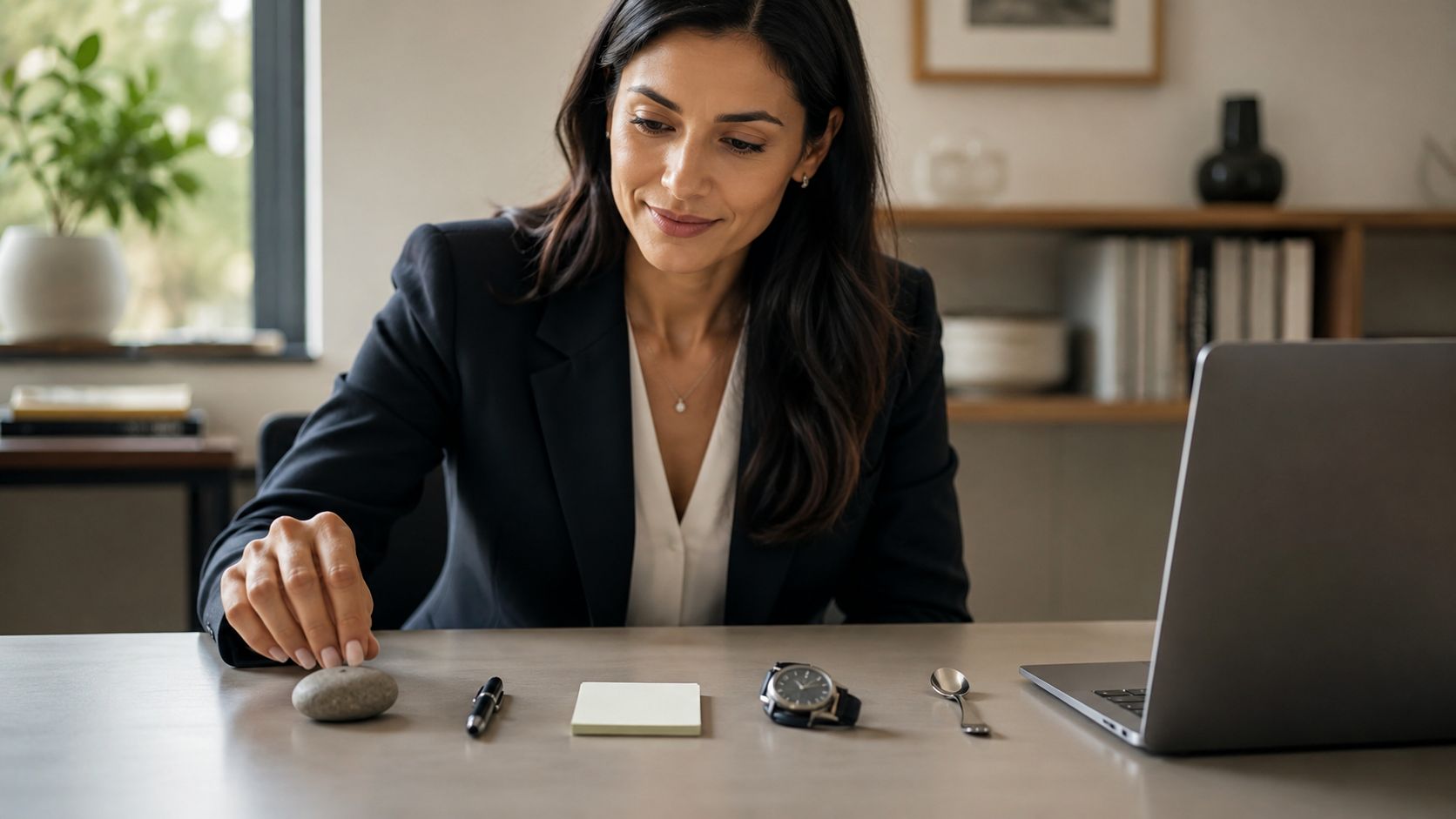
A board meeting runs long, your inbox keeps filling, and your shoulders start to tighten while you stay seated at the table. In that moment, box breathing gives high-performing professionals a structure they can use without leaving the room. Inhale for 4, hold for 4, exhale for 4, hold empty for 4, then repeat at a steady pace. It is a simple way to re-establish control when the body feels ahead of the mind.
Why executives tend to adopt it quickly
Analytically minded professionals usually respond well to a method that feels measurable. Box breathing gives them a count, a rhythm, and a clear beginning and end, which can be used in a desk chair, a conference room, or a car service ride without attracting attention. Breathing-based grounding is often taught this way because it helps restore control and reduce the sense of being flooded by symptoms, which is why it fits people who have to keep functioning while under pressure.
If the technique is performed too quickly, the body may feel lightheaded or overstimulated, so slower pacing matters. The first few uses can feel mechanical, especially for people who want an immediate emotional shift, but repetition makes the sequence easier to access under stress. For professionals in treatment, this pairs well with structured recovery work, and a program-specific resource such as meditation for recovery can support the habit of slowing down enough to use breath as a regulation tool.
Box breathing works best when the aim is control, not performance. The count creates containment, which is often what a strained executive nervous system is missing.
The limitation is straightforward. If the person does not remember to start, the benefit never begins. It is a skill, not a reflex, and that is why it should be practiced while calm, not only during a crisis.
3. Tactile Grounding with Luxury Materials
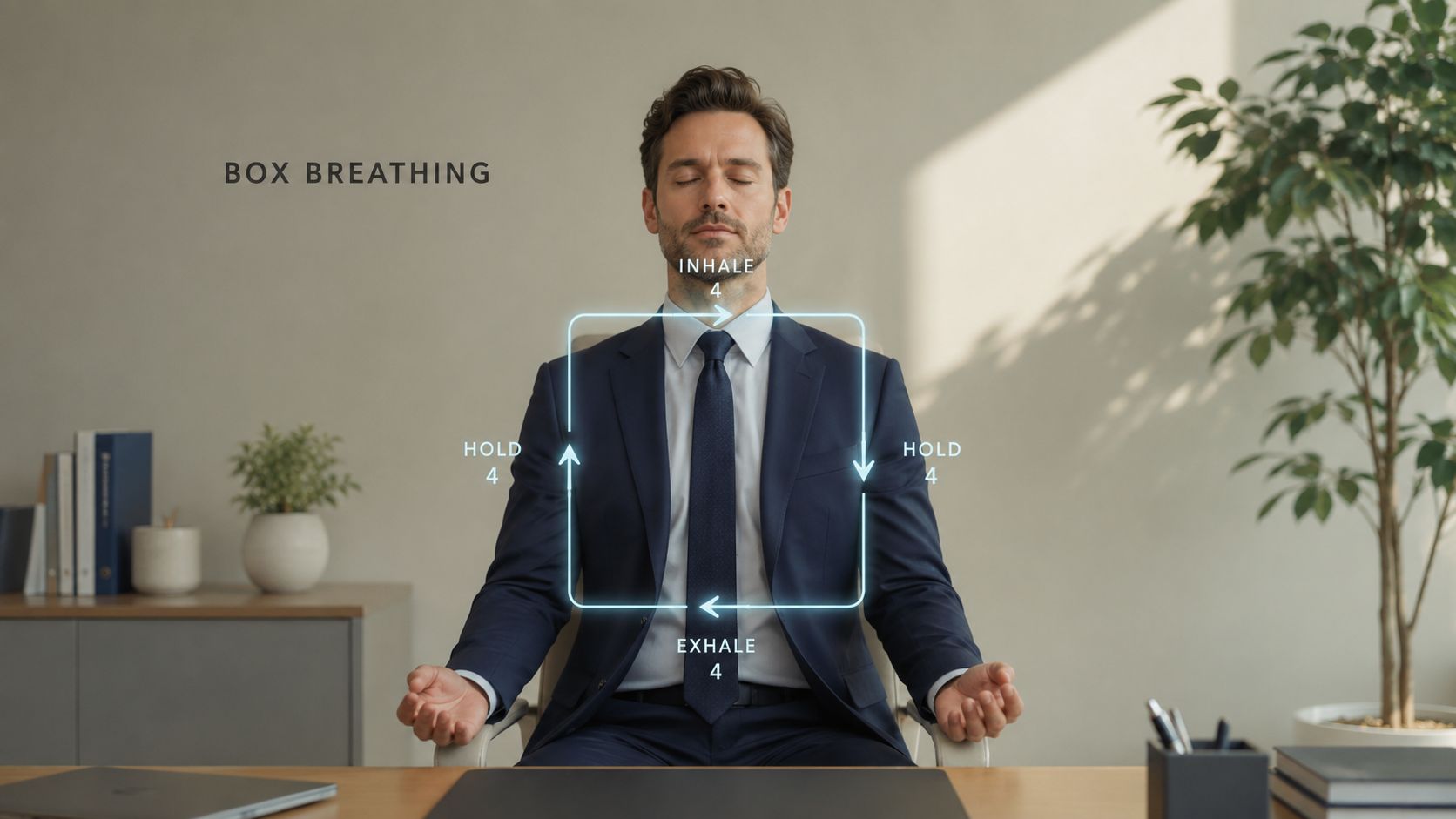
High-end tactile grounding works because the nervous system responds to texture, temperature, and weight before the mind has time to overcomplicate the moment. A polished stone, fine leather piece, smooth metal, or natural wood object can become a private anchor at a desk, in a briefcase, or inside a treatment suite. The clinical logic is still simple sensory regulation, but for executives, presentation matters, and the object should fit the environment instead of looking like an interruption.
Why premium materials matter in executive spaces
A grounding object does not need to be branded or expensive to work, yet many professionals are more likely to use it if it feels consistent with their workspace and identity. That matters in luxury treatment settings, where clients may keep electronics, continue professional responsibilities, and still need discreet ways to regulate anxiety between obligations. An object that can sit next to a laptop or on a conference table without drawing attention is more usable than something that looks like a toy.
The advantages are practical. Touch can interrupt spiraling thoughts quickly, the technique requires no verbal processing, and there is almost no learning curve. The downside is habituation, because any object used too often can lose novelty and become background noise. It also depends on preference, and some professionals will find hard surfaces calming while others will prefer warmth or pliability.
- Polished stone: useful for weight and cool temperature, especially during calls.
- Leather accessory: helps when the texture itself becomes the cue to return to the body.
- Metal object: gives a sharper sensory contrast, which can be useful during acute stress.
- Natural wood: works well in offices that already lean toward understated luxury.
When used well, the object becomes part of the room, not a special event. That is why tactile grounding can fit naturally into executive life, and why it often works better than more elaborate wellness rituals.

4. Mindful Movement Micro-Practices
Movement-based grounding is often the most practical choice for executives whose anxiety shows up first in the body, as tension, restlessness, jaw clenching, or shallow breathing. Short sequences borrowed from yoga, tai chi, and somatic therapy can be done in 2 to 5 minutes, which makes them realistic between meetings or during a private break. These are not workouts. They are regulated transitions that tell the nervous system the body is safe enough to soften.
A client in a boardroom, a car between appointments, or a quiet office can use the same principle. Roll the shoulders, shift weight from one foot to the other, stretch the neck, or walk slowly while paying attention to each step. Movement works well after prolonged sitting, difficult negotiations, or conflict-heavy calls because it gives the body a clear discharge point and reduces the sense of being trapped inside the stress response.
The strongest use case
This approach is strongest when the pressure is already physical. Tension builds after long hours at a desk, the chest feels tight after a hard conversation, or the legs feel restless before a presentation. In those moments, even a brief sequence can interrupt the stress loop without pulling the professional out of work for long.
For clients in residential care, private rooms and protected space matter because movement works better when the person can stop monitoring how they look. That is one reason body-based support can fit well with a setting that still preserves work continuity, and a dedicated somatic experiencing program can deepen this kind of regulation.
Movement grounding should feel contained, not performative. If the sequence is too visible, too long, or too athletic, executives often skip it.
The trade-offs are real. It works best when some privacy is available, and it can be harder for clients with mobility limitations or chronic pain. It also asks for a little courage, because many high-status professionals are more comfortable thinking than moving, even though the body is often where the anxiety is stored first.
5. Cognitive Anchoring
Cognitive anchoring is the right tool when anxiety is driven by catastrophic thinking, not just physical agitation. Rather than fighting the thought stream, the executive creates a short, reality-tested mental phrase that brings the mind back to what is known, what is controllable, and what matters now. CBT and ACT-informed thinking patterns are especially useful in this context, because they give analytical professionals a framework instead of a vague reassurance.
What works for analytically minded leaders
The best anchors are specific and personal. A good one might refer to the immediate decision, the current facts in the room, or a chosen value such as steadiness, clarity, or discretion. That makes the technique portable, because it does not depend on a quiet room or any external object. It also fits the way many executives already solve problems, by reducing noise and returning to the next actionable step.
A useful anchor should be short enough to remember under pressure and honest enough to avoid sounding sentimental. Phrases like “This meeting does not define the whole quarter” or “Focus on the next decision, not the entire forecast” can be more effective than generic reassurance. The advantage is strategic clarity, but the limitation is that the person must practice the phrase before a crisis, or it may feel forced when the amygdala is already driving the response.
For professionals in recovery, cognitive anchoring can complement broader treatment instead of replacing it. It pairs naturally with structured support, and it fits well alongside calm and focus techniques when the goal is to keep thought patterns from spiraling into avoidance or urgency.
A strong mental anchor does not argue with anxiety. It narrows the frame until the next useful step becomes visible.
This technique is especially valuable in executive life because it protects decision quality. It does not erase stress, but it can keep a leader from making a fear-based call that costs more later.
6. Temporal Anchoring
Temporal anchoring uses an executive's own structure, deadlines, task sequencing, and calendar awareness against anxiety's habit of racing far ahead. Instead of spiraling into the quarter, a merger, or the next several hard conversations, the person narrows attention to “this meeting,” “the next 90 minutes,” or “today's primary objective.” That shift can interrupt future projection without denying responsibility.
Why this feels natural in a leadership role
Executives already think in blocks of time, so this method does not ask for a new mindset. It asks them to use language they already trust and direct it toward the present. That reduces abstraction, which is often what makes anxiety feel oversized, and it can be done while sitting at a desk, reviewing notes, or waiting for a call to begin.
The main benefit is cognitive relief. A narrower time frame means fewer competing thoughts, less catastrophic forecasting, and a clearer path back to action. The trade-off is real, though. If a leader uses present-focus to avoid planning, temporal anchoring turns into a delay tactic instead of a grounding reset.
In high-end treatment settings, this matters for residents who still have work obligations and need discretion. A private room, a comfortable setting, and continued access to electronics can make it easier to use temporal anchoring without disrupting professional life. For individuals who also want a sensory cue, calm and focus techniques can support the habit of shortening the mental horizon.
The most useful version is precise. “After this call” works better than “later.” “At 3:00” works better than “soon.” That level of specificity gives the nervous system something concrete to hold when pressure starts to spread.
7. Environmental Optimization
The room itself can serve as a grounding tool when the environment is shaped to lower stimulation and protect privacy. For executives in luxury residential treatment, that means more than quiet. It includes natural light, calming finishes, biophilic elements, and the ability to keep working when necessary without feeling exposed. Environmental regulation matters because it reduces the number of times the nervous system has to recover from avoidable triggers.
Why the setting matters for sustained regulation
A private suite or sanctuary-like space gives room for emotional processing without image management, which is important for high-profile professionals who are accustomed to performing competence. Natural elements, such as plants and daylight, can make the space feel less clinical and more human, which helps some clients settle faster. In a treatment setting that supports balanced engagement with work and loved ones, the environment is not a backdrop. It is part of the intervention.
Reflections' model is relevant here because it supports clients who need discretion, clinical structure, and room to continue professional obligations while receiving treatment. The broader program emphasizes individualized care, and the website's luxury residential treatment setting reflects that design philosophy. Environmental grounding is not enough by itself for significant anxiety, but it can make every other technique easier to use.
A well-designed room lowers the effort required to regulate. That matters when the person is already carrying a demanding schedule.
The limitation is portability. A beautifully designed space does not travel to every office, airport, or courtroom. Still, for executives in treatment, it can become the place where recovery skills are learned quickly enough to be carried back into real life.
8. Accountability Partnership
For many executives, anxiety improves faster when another trusted person helps keep the practice honest. A peer-support structure creates that external accountability without turning treatment into a generic group experience. The person does not need constant supervision, but they do need a reliable check-in that makes grounding practice part of the week instead of an idea that gets postponed.
Why peer structure matters in discreet care
High-achieving professionals often isolate when they feel overwhelmed, especially if they are managing dual-diagnosis concerns such as anxiety and substance use. A peer partner who understands the pressure of leadership can reduce shame, normalize treatment engagement, and make it easier to speak plainly about stress. That kind of support can be especially valuable in residential care, where confidentiality and shared background matter.
A structured peer relationship also improves follow-through. It can turn grounding from an individual intention into a shared commitment, which is useful when the person's own motivation is inconsistent. Reflections' peer support groups fit this model by giving clients access to community while preserving privacy and professional dignity.
The trade-off is that peer accountability is not a substitute for clinical care. It helps with consistency, transparency, and encouragement, but it cannot resolve deeper anxiety patterns, trauma, or substance use by itself. It also depends on the stability and honesty of the partner, which means the relationship has to be selected carefully.
For executives, that balance is often exactly right. They do not need a crowd, they need one or two people who understand pressure, respect confidentiality, and can say, with credibility, “Use the tool now.”
Executive Grounding Techniques, 8-Point Comparison
| Technique | Implementation complexity | Resource requirements | Expected outcomes | Ideal use cases | Key advantages |
|---|---|---|---|---|---|
| Executive Power Grounding: 5-4-3-2-1 Sensory Protocol | Low–Moderate, simple sequence but requires mindful recall | Minimal, no equipment; portable | Rapid anxiety reduction, present-moment anchoring in 2–3 minutes | Virtual meetings, negotiations, between high-stakes obligations, travel | Discreet, multi-sensory, quick, maintains professional composure |
| Strategic Breathing: Box Breathing | Low, straightforward rhythmic practice requiring brief training | Minimal, none; can be done seated anywhere | Measurable parasympathetic activation, improved HRV, cognitive clarity in ~1–3 min | Pre-call/presentation prep, acute stress moments, travel | Fast, evidence-backed (military/neuroscience), reproducible physiological effects |
| Tactile Grounding with Luxury Materials | Low, simple to use once objects are curated | Moderate, purchase/curate premium tactile objects; portable storage | Immediate tactile anchoring, discreet sensory reset | Desk, briefcase, private meetings where touch is acceptable | Elegant aesthetic integration, no learning curve, tangible physical anchor |
| Mindful Movement Micro-Practices: Somatic Reset | Moderate, requires practice and brief private space | Low, 2–5 minutes; private area recommended | Reduced muscle tension, somatic regulation, improved resilience over time | Between meetings, private office, hotel rooms, transition periods | Addresses body-based anxiety, cumulative nervous-system benefits, boosts focus |
| Cognitive Anchoring: Mental Reframing Protocol | Moderate–High, requires upfront cognitive work and rehearsal | Minimal, time for reflection or therapy; notes/cards | Lasting cognitive restructuring, faster decision-making, reduced catastrophizing | Strategic decisions, pervasive anxious thoughts, analytically-minded executives | Evidence-based (CBT/ACT), aligns with analytical strengths, durable change |
| Temporal Anchoring: Present-Moment Focus Protocol | Low–Moderate, learning to narrow temporal focus takes practice | Minimal, calendar/time-blocking tools | Immediate reduction in future-focused rumination; narrowed task scope | Time-managed roles, planning-heavy tasks, meetings | Intuitive for executives, integrates with productivity systems, concrete focus |
| Environmental Optimization: Executive Sanctuary Protocol | High, requires design, procurement, and implementation | High, financial investment, dedicated space, maintenance | Passive, sustained anxiety reduction while in optimized space; supports work continuity | Private offices, residential treatment suites, executive retreats | Passive management, preserves privacy/image, cumulative environmental benefits |
| Accountability Partnership: Executive Peer-Support Grounding Structure | Moderate, needs careful matching and agreed structure | Moderate, time commitment, confidentiality systems, coordination | Increased adherence to practices, reduced isolation, ongoing relapse prevention | Dual-diagnosis treatment, long-term recovery, executives needing external structure | External accountability, peer understanding of pressures, sustained support |
Integrating Grounding into Your Executive Wellness Strategy
Mastering these grounding techniques is not about eliminating stress, but about responding to it with skill. In executive life, stress is often unavoidable, and the difference comes from whether the body and mind can recover quickly enough to keep judgment sharp. The tools that work best are the ones that can be used in private, repeated often, and adapted to a private office, a travel schedule, or a residential treatment setting.
The strongest pattern is usually a small toolkit rather than a single favorite method. A leader may use 5-4-3-2-1 when the senses need anchoring, box breathing when the body is activated, tactile grounding when a physical cue helps, and cognitive or temporal anchoring when the mind starts projecting too far ahead. Clinical guidance already places grounding alongside breathing, relaxation, and broader coping strategies, which is exactly how it should be used in practice, as part of a larger self-regulation system rather than a stand-alone cure (National Center for PTSD grounding overview; NHS inform grounding exercises).
For high-achieving professionals, the luxury version of care is not excess. It is precision, privacy, and continuity. That means a treatment plan that respects electronics, preserves work obligations when appropriate, and still creates enough clinical structure for real change. Reflections offers that kind of environment, and its anxiety treatment and mindfulness resources align naturally with the present-moment skills discussed here.
The most effective executive strategy is simple. Choose two or three methods, practice them when calm, and use them before anxiety becomes visible in your face, voice, or decisions. Centered leaders do not avoid pressure, they recover faster inside it.
Reflections supports adults who need confidential, luxury dual-diagnosis care while staying connected to their professional lives. If grounding techniques are becoming part of a larger plan for anxiety, a private residential setting with structured clinical support may help make those skills stick. Visit Reflections to learn how executive-focused treatment can support stability, discretion, and continued responsibility.