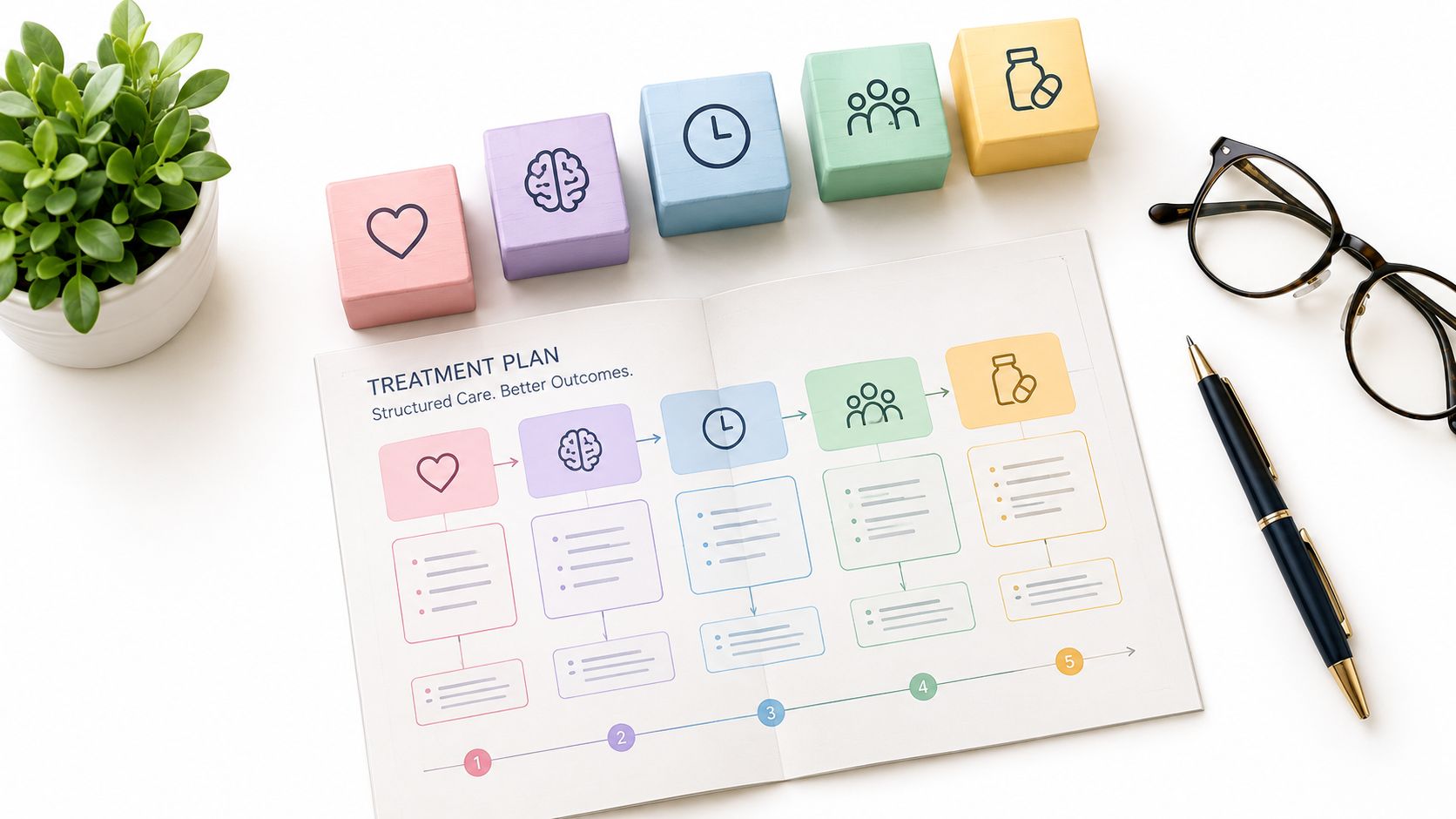

A senior leader can keep a board meeting on the calendar, hide a worsening alcohol pattern for months, and still feel the whole situation is close to visible collapse. The hardest part is often not deciding to get help, it's figuring out how to do it without turning a private health decision into a career event. In confidential rehab, privacy is not a luxury detail, it's the condition that makes treatment feel possible at all.
Confidential Rehab for Executive Recovery
A lot of executives do not delay treatment because they doubt the need. They delay because they cannot afford the exposure, the gossip, or the chain reaction that can follow a visible absence. That is why privacy is the condition that makes treatment feel possible at all, a required part of care rather than a luxury detail.
The treatment gap helps explain why this matters. Analysts at American Addiction Centers summary of 2024 NSDUH data report that 52.6 million people in the U.S. needed treatment and only 23% received it, while 48.4 million people age 12+ had a substance use disorder in the 2024 survey, including 21.2 million adults with both a mental health disorder and a substance use disorder. Those figures are not just public health background. They show how often concern about exposure keeps people from entering care.
For high-level professionals, confidentiality is about reducing the social cost of getting well. A private-pay, luxury setting can support that by limiting the number of people involved, protecting identity, and keeping treatment contained instead of public. That matters for executives, c-suite leaders, and working professionals who need a path to care without forcing them to disappear from their lives.
A helpful comparison comes from high-profile households, where privacy depends on clear rules, limited access, and tight communication boundaries. Superstar Nannies confidentiality guidance explains how sensitive information is protected in elite homes, and that same logic carries into treatment. For readers who want a more executive-specific framework, the executive rehab track at Reflections is built around that exact tension, clinical intensity paired with discretion.
Practical rule: the more public a person's role, the more important it is that treatment feel operationally private, not just politely private.
That is why luxury residential care often uses private rooms, controlled communication, and carefully structured schedules. Some clients also keep electronics available so work obligations can continue without opening the door to unnecessary disclosure. In that setting, confidential rehab preserves dignity while care begins.
Understanding Dance Movement Therapy
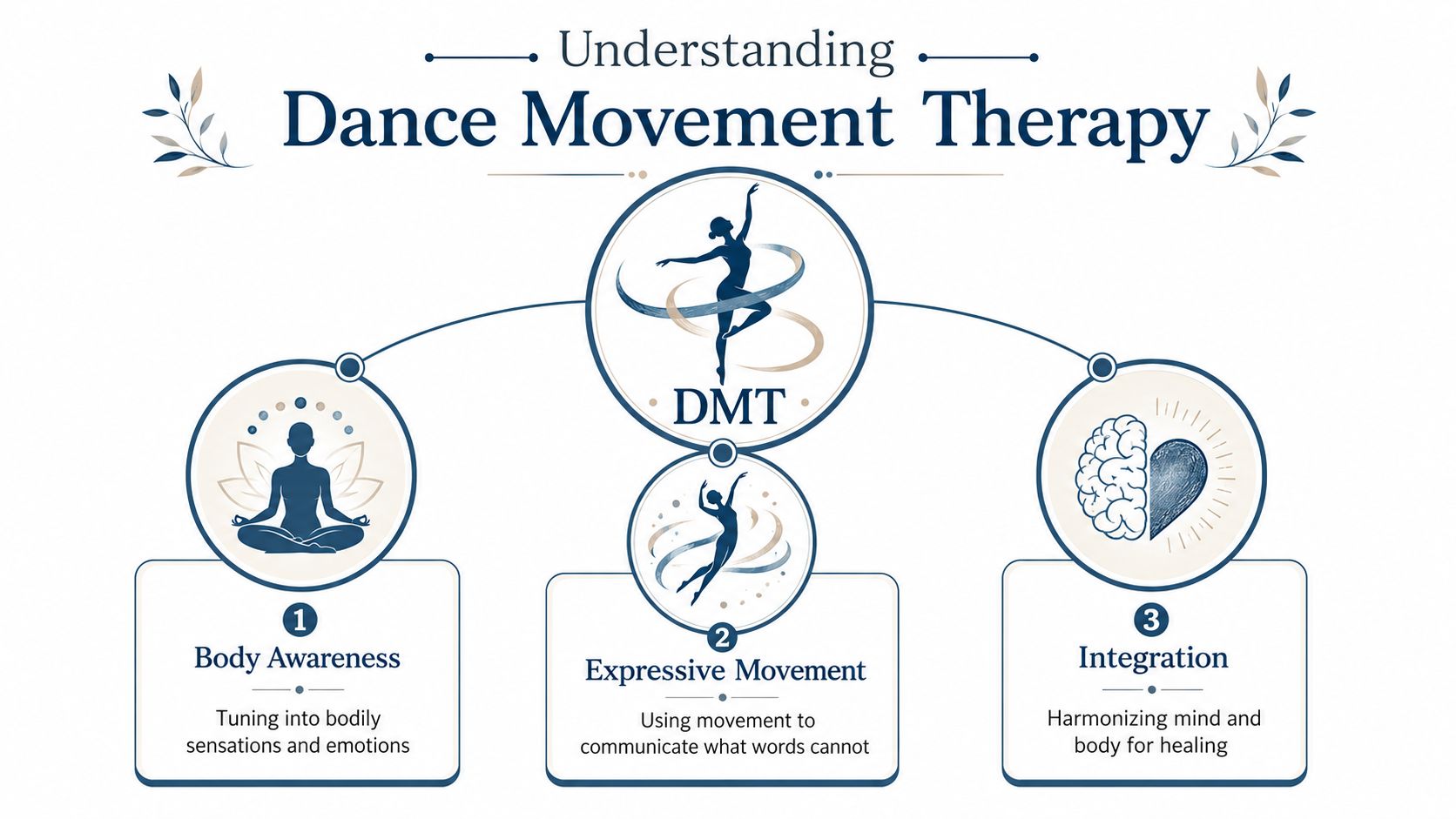
Dance movement therapy, often shortened to DMT, is easier to understand if it's compared to talk therapy with the volume turned down on words and turned up on the body. A person still communicates, but through posture, rhythm, breath, gesture, and distance instead of only through speech. That matters in rehab because stress, trauma, and craving often show up physically before they ever become a sentence.
How the body becomes part of treatment
In a guided session, the therapist watches how someone holds tension, how quickly they settle, and where movement becomes guarded. Those small details can reveal a lot about emotional state without forcing disclosure before someone is ready. For executives who are used to controlling every meeting, that can feel surprisingly relieving, because the body can tell the truth without needing a polished explanation.
The first pillar is body awareness, which means noticing sensations before they become overwhelm. The second is expressive movement, which gives shape to feelings that may be hard to name. The third is integration, where the person connects movement, thought, and emotion so the experience doesn't stay isolated in the studio.
The point is not performance. It's recognition, regulation, and a safer way to process what's been held in silence.
Confidential rehab supports that work because the person has to feel safe enough to experiment. If privacy is weak, movement work often gets tense and overly self-conscious. If privacy is strong, the session can become a controlled space where the client practices being honest without being observed by the wrong people.
Key Aspects of Dance Movement Therapy
DMT fits especially well in dual-diagnosis care because it works with the part of distress that often lives outside language. A client may understand triggers intellectually and still feel hijacked by the body when stress spikes. Movement-based work can help create enough regulation to stay present for other therapies, including CBT, psychiatric care, and relapse-prevention planning.
Benefits and limits in real treatment
For trauma-related symptoms, rhythmic movement and body tracking can help clients notice activation earlier and settle more quickly. For substance use concerns, DMT can support the broader work of managing cravings by giving the person another way to respond when verbal coping alone feels thin. It's not a cure, and no responsible program should present it that way.
DMT is also not appropriate in every situation. Acute orthopedic injury can make movement unsafe, and severe dissociation that has not been clinically stabilized can make embodied work too activating. A careful team screens for those issues before scheduling this kind of session.
A useful way to frame the modality is this, DMT is strongest when it is part of a larger plan, not when it is treated as a stand-alone fix. In a luxury confidential rehab setting, that means movement sessions should sit alongside medication review, individual psychotherapy, and structured clinical oversight. The client gets a body-based therapy, but the treatment team still watches the whole picture.
What to ask a treatment team
Good question: who is leading the movement work, and how does that therapist coordinate with psychiatry and the primary clinical team?
That question matters because credentialing and integration shape the quality of care. It also matters because movement work can become vague if no one is responsible for translating what happens in the session into the rest of the treatment plan. For adults who want depth without chaos, the best version of DMT feels clinically grounded, not improvised.
Dance Movement Therapy Session Examples
A confidential studio session often looks quiet from the outside, but the internal work can be intense. The structure matters just as much as the movement itself, because the therapist is watching for pacing, grounding, and emotional shifts the whole time.
The first example is a c-suite woman with anxiety and alcohol use disorder who arrives after a week of high-pressure calls and too little sleep. She starts with a simple guided warm-up, then mirrors the therapist's slow gestures while talking only when needed. By the end, the movement has given shape to grief she had been carrying in a tightly controlled way, and the session closes with breathing and a plan for the next trigger point.
The second example is a professional with combat PTSD who prefers less verbal processing at first. He joins a structured group movement session focused on boundaries, where the therapist uses spacing, direction changes, and stop-start cues to help participants notice how their bodies react to threat. His phone stays available for urgent work matters, which helps him stay in treatment without feeling cut off from real obligations.
A few details make both sessions feel workable for executives, not juvenile or performative:
- Private setting: the studio is controlled so movement stays inside the treatment boundary.
- Paced entry: the therapist doesn't push for emotional disclosure before the body is ready.
- Work continuity: limited electronics access can reduce the fear of losing control over the day.
- Clear closeout: the session ends with a grounding routine so the client returns to daily responsibilities steadier.
Those details matter because high-achieving clients often worry that body-based therapy will feel awkward or exposed. In practice, it can feel more contained than talking in circles, especially when the room is quiet, the therapist is skilled, and the program respects privacy at every step.
Integrating DMT into Reflections Treatment
A luxury confidential rehab program works best when DMT is not treated as a side activity. It should be built into the treatment architecture from the first contact, then connected to the client's larger plan so the movement work supports withdrawal management, psychiatric stabilization, and family planning without exposing protected information.
The privacy workflow that makes it workable
The legal backbone is 42 CFR Part 2, which is stricter than ordinary HIPAA for substance use treatment. Under that framework, a program generally can't disclose information that would identify someone as having a substance use disorder unless there is written consent, a court order, or a narrow emergency exception (HHS Part 2 guidance). That means intake, scheduling, notes, billing, and referrals all need to be designed so SUD-related data are segmented and redisclosure is controlled.
That privacy standard also explains why strong technical safeguards matter. Best-practice rehab security uses encrypted EHRs, role-based access control, multi-factor authentication, audit trails, and secure messaging or telehealth platforms so only authorized staff can access client data and every access event is logged (privacy architecture guidance for rehab centers). In a high-confidentiality setting, that kind of control is what lets family involvement happen without oversharing.
A program like Reflections can operationalize this by pairing movement sessions with a segmented record structure, because not every staff member needs the same level of detail. The client can still receive DMT, CBT, medication management, and private-room residential care while limiting disclosure to only what is necessary for treatment.
How the care plan stays coordinated
One useful model is to anchor DMT to the rest of the clinical week rather than treating it as a one-off experience. Intake identifies the client's goals, the team sets disclosure boundaries, and movement work is scheduled where it fits alongside individual therapy and medication review. That structure also makes it easier to involve spouses or family only to the extent the client authorizes.
Referrals work best when the outside clinician or attorney understands that confidential rehab is not just a promise, it's an operating system. For a related somatic approach, the somatic experiencing program at Reflections shows how body-based work can be integrated into a broader luxury residential setting without sacrificing privacy.
Family Involvement and Referral Guidance
Family questions are where confidentiality often gets blurry, especially for adults who manage staff, boards, partners, or household decisions. The rule is straightforward, but real-world application needs care. Without written consent, treatment staff may not confirm to a spouse, parent, employer, or attorney that the person is even a patient, and they may not share diagnosis or progress information (AA Center confidentiality guidance).
What can be shared and what stays protected
Federal guidance is also clear that programs should protect sexual-orientation information and avoid disclosure outside the program unless the client consents or another exception applies (federal confidentiality guidance). In practical terms, that means family updates, private-pay billing discussions, and executive leave coordination all need to be tightly scoped. A standard medical-release form is not enough if it doesn't cover the specific disclosure being requested.
A few scenarios often create confusion:
- A spouse calls for an update: staff can't confirm treatment status unless the client has authorized that specific disclosure.
- An employer asks about an absence: the program can help with logistics only within the boundary the client approves.
- An attorney requests records: the request still has to pass the Part 2 rules, not just ordinary assumptions about access.
- A family member wants reassurance: support can be offered in general terms, but protected details stay protected without consent.
That is why referral sources should be careful and specific. A psychiatrist, therapist, or attorney can send a client to a confidential program with confidence if they understand that the admission process is built to preserve privacy from the start. It also helps to know that research use of client-identifying information is limited under strict safeguards, including qualified researchers, security protections, and reviewer oversight, which further shows how seriously the federal framework treats identity protection (NCBI summary of research-use rules).
For families who need education and structure, the family therapy for addiction recovery page at Reflections can help clarify how involvement works without crossing confidentiality lines. The key point is simple, support can be real without being indiscriminate.
Confidential Rehab DMT Program Takeaways
Executives rarely need persuasion that stress can become expensive. They usually need a treatment path that respects their responsibilities while addressing the root problem directly. Confidential rehab does that by reducing exposure, and DMT adds a body-based way to process what talk alone sometimes can't reach.
The strongest programs combine private rooms, a highly accredited clinical team, and policies that let residents keep cell phones and laptops so career obligations don't vanish the moment treatment starts. That blend matters for working professionals who need care without a dramatic public interruption. It also matters for dual-diagnosis recovery, because privacy lowers resistance, and embodied therapy can then do deeper work.
For clients who want a discreet, clinically serious residential setting, Reflections is one option that combines luxury accommodations with structured treatment and family-aware privacy practices. The point isn't to make recovery look polished. It's to make it feasible for people whose lives can't stop, even when treatment must begin.
Frequently Asked Questions on Confidential Rehab
Does DMT require a certain fitness level
No. DMT can be adapted to mobility limits, energy levels, and medical restrictions. The therapist can work with small gestures, seated movement, breath pacing, and spatial awareness, so the client doesn't need athletic ability to participate.
Can movement therapy happen during detox
Yes, if the medical team says it's appropriate. In sub-acute withdrawal management, movement work should be gentle and supervised, because the goal is regulation, not exertion. If the client is unstable, too sedated, or medically uncomfortable, the session should wait.
What paperwork does a psychiatrist need for a confidential admission
A psychiatrist usually needs to send clinical information that supports placement, but the disclosure has to fit the program's consent and Part 2 requirements. That means the referral should be limited to what the client authorizes, and any transfer of records should be segmented so protected substance use information isn't shared broadly by default.
For executives, professionals, and families who need treatment to stay private, the next step is a confidential conversation about fit, clinical need, and movement-based care. Reflections offers luxury residential treatment with private rooms, electronics access, and coordinated body-based therapy in a setting designed for discretion, so a person can get help without losing control of the rest of life. Visit Reflections to start a private inquiry.