
A chief executive has spent years turning pressure into performance. Then the pattern changes. A difficult conversation triggers hours of emotional escalation, a trusted colleague becomes an enemy overnight, substance use starts interfering with judgment, and the family receives messages that suggest immediate safety concerns. Weekly therapy and occasional crisis visits no longer create enough stability, yet stepping away from the company feels impossible.
That's when families and advisers begin searching for borderline personality residential treatment centers. The question isn't whether treatment works. It's whether a highly structured setting can provide serious clinical care without treating an executive like a problem to be hidden from professional and family responsibilities.
Premium residential care is designed for that decision. It combines continuous supervision, intensive psychotherapy, privacy, private accommodations, and a practical plan for maintaining carefully defined work and communication obligations. The right program won't promise a consequence-free retreat. It will explain the trade-offs clearly, protect clinical boundaries, and build a transition plan that supports recovery beyond discharge.
When High-Achievers Need a Higher Level of Care
A founder may still be answering investor messages while cycling through rage, panic, shame, and impulsive decisions. A law-firm partner may be managing a major case while privately experiencing self-harm urges. A senior executive may look composed in the boardroom and become unable to regulate emotion once the meeting ends. High performance can conceal severe instability for a long time.
Residential treatment becomes relevant when outpatient care can't reliably contain the risk or provide enough repetition for new skills to become usable under pressure. A person may have tried weekly psychotherapy, medication management, crisis stabilization, or an intensive outpatient program. If the same crises continue, the issue isn't a lack of intelligence or motivation. The treatment environment may be too light for the current level of need.
What changes at the residential level
A residential center provides supervised living alongside intensive daily programming. Staff can observe patterns as they happen, help a resident use coping skills during interpersonal conflict, coordinate psychiatric care, and respond quickly when safety concerns emerge. That continuity matters for someone whose symptoms intensify between appointments or after contact with family, colleagues, or romantic partners.
For executives, the setting must also address practical exposure:
- Confidentiality: Admissions, transportation, records, visitors, and communications require careful handling.
- Career continuity: Electronics and work policies should be explicit before admission, not negotiated after arrival.
- Privacy: Private rooms and discreet operations reduce unnecessary exposure during an already vulnerable period.
- Family stability: Loved ones need structured involvement, education, and boundaries rather than improvised crisis management.
- Clinical depth: The team must understand BPD, trauma, substance use, and the demands of high-responsibility work.
Practical rule: A premium program should be able to explain exactly what it protects, what it restricts, and why.
The phrase “residential treatment” shouldn't automatically mean a long absence from every professional obligation. It should mean that clinical safety and skill development become the primary commitments, while appropriate contact with work is managed rather than ignored. A credible center will assess whether continued work access supports treatment or keeps the resident trapped in avoidance.
What Residential BPD Treatment Actually Is
Residential BPD treatment is a structured, supervised living program for people who need more support than outpatient therapy can provide but may not require an acute hospital setting. Residents live on site, follow a daily clinical schedule, receive psychiatric oversight, and practice emotional regulation and interpersonal skills in real time.
The difference between levels of care is best understood through an executive analogy. Weekly therapy resembles a private coaching engagement, valuable but limited to scheduled meetings. PHP is closer to a leadership retreat, with substantial daytime structure while the person returns to a home environment. IOP offers repeated support while preserving more independence. Residential care is an immersion sabbatical, with the therapeutic environment surrounding the person throughout the day and night.
When residential care makes sense
The online discussion can be confusing. Some expert-facing material argues against residential treatment for BPD, while specialty programs present 24/7 care as appropriate for people who aren't safe or stable in outpatient treatment. The contradiction is resolved by focusing on clinical fit, not the label of the program.
Residential treatment deserves serious consideration when any of these conditions are present:
- Active safety concerns: Self-harm, suicidal thinking, or inability to follow a safety plan requires immediate professional assessment.
- Crisis cycling: Repeated emergency visits or rapid destabilization indicates that intermittent appointments may not be enough.
- Co-occurring substance use: Intoxication, withdrawal risk, or compulsive use can undermine outpatient psychotherapy.
- Failure at lower care levels: Continued deterioration despite consistent outpatient, PHP, or IOP participation signals a need for greater containment.
- Severe relational disruption: Recurrent conflict, impulsivity, or abandonment fears may require daily coaching and observation.
Residential care isn't automatically the right answer. A licensed clinician should assess current safety, medical needs, substance use, home support, and the person's ability to participate. A program such as borderline personality disorder treatment at Reflections should be evaluated against those factors, not selected solely because it offers a private setting.
The Clinical Backbone of a Quality Program
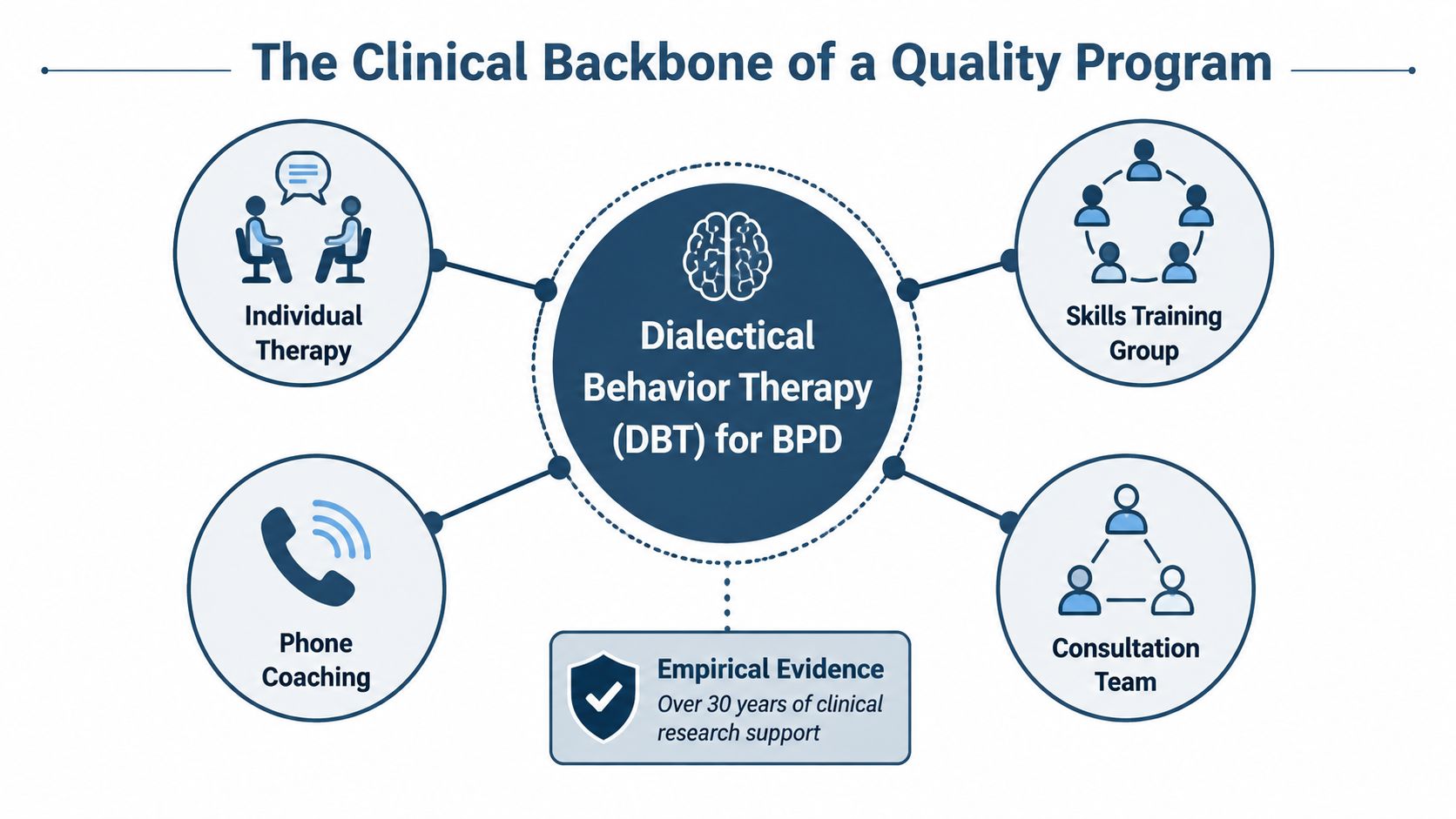
Dialectical behavior therapy, or DBT, should be the clinical backbone of a serious BPD program. DBT addresses mindfulness, distress tolerance, emotion regulation, and interpersonal effectiveness through coordinated individual therapy, skills training, between-session support, and clinician consultation.
A 5-week inpatient DBT study found significant improvement in symptom severity and emotion regulation. Reported effect sizes ranged from d = 0.47 to 0.38 for symptom reduction and d = 0.84 to 0.68 for emotion-regulation improvement, depending on the analysis; stronger emotion-regulation gains were associated with greater overall benefit the inpatient DBT findings. The practical implication is clear: a program shouldn't merely mention DBT in its brochure. It should show how residents learn, rehearse, measure, and apply DBT skills.
What should sit around DBT
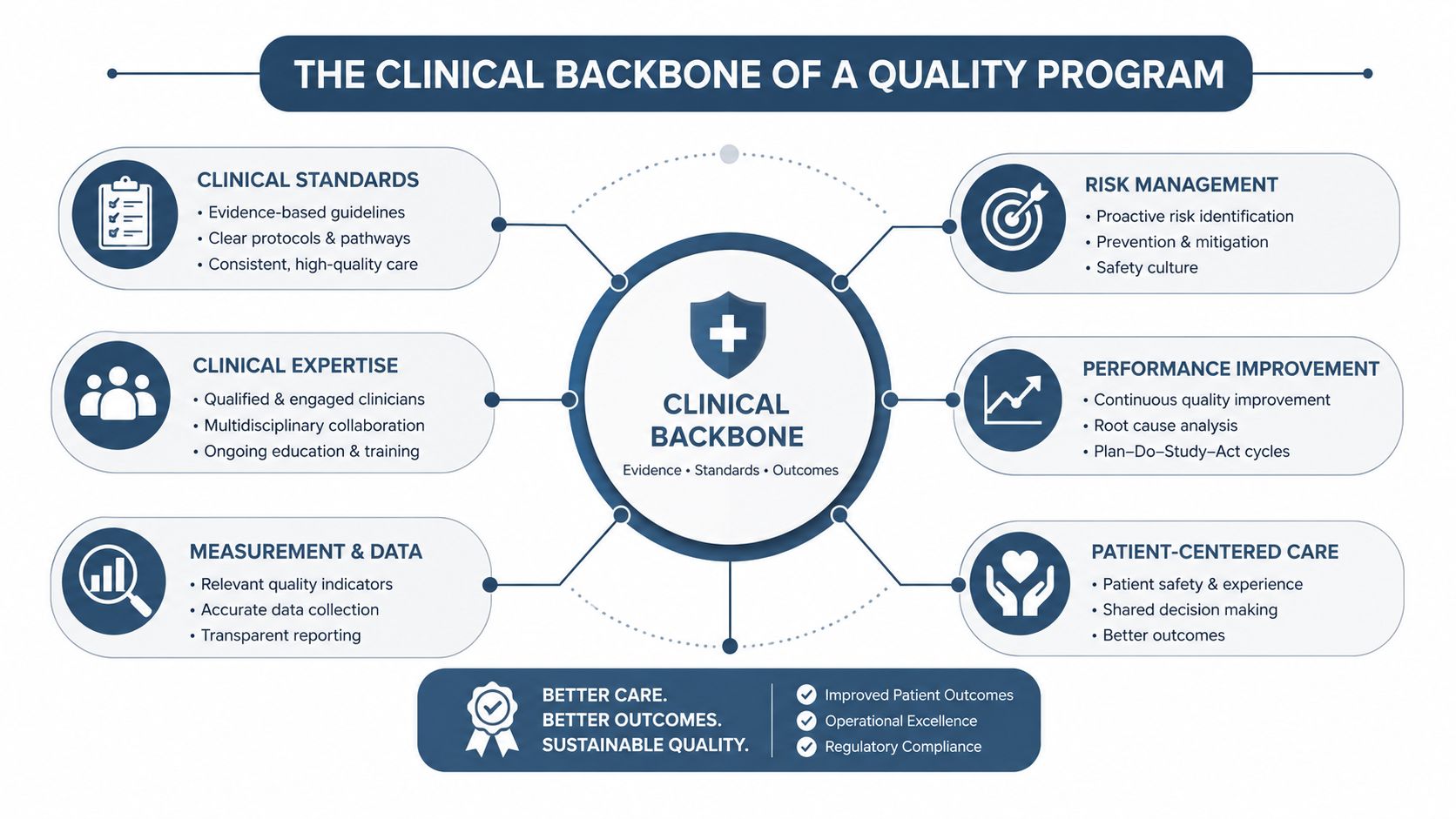
DBT is a foundation, not the entire building. Trauma-focused treatment may be necessary when traumatic experiences, PTSD symptoms, dissociation, or attachment injuries drive emotional reactivity. Substance use treatment must be integrated rather than placed in a separate track when alcohol or drugs are part of the pattern.
A strong clinical package may include:
- Individual psychotherapy: Personalized work on identity, relationships, shame, impulsivity, and behavioral patterns.
- Structured skills groups: Repeated practice with emotion regulation, distress tolerance, mindfulness, and interpersonal effectiveness.
- Trauma-informed care: Stabilization first, followed by carefully paced trauma processing when clinically appropriate.
- Dual-diagnosis treatment: One coordinated plan for BPD symptoms and substance use, rather than competing treatment goals.
- Adjunctive therapies: CBT, ACT, motivational interviewing, somatic work, mindfulness, fitness, and expressive therapies can reinforce the central treatment plan.
The team's credentials matter, but credentials alone don't prove quality. Families and referral professionals should look for PhD-level psychologists, board-certified psychiatrists, LMFTs, certified addiction counselors, and therapists with direct BPD experience. Supervision, documentation, outcome tracking, and collaboration matter just as much as degrees.
A program that offers dialectical behavior therapy at Reflections should be able to describe the actual schedule, therapist access, crisis response, medication approach, family involvement, and step-down process. Vague promises about transformation are less useful than a precise account of what happens on an emotionally difficult Tuesday.
What a Luxury Residential Stay Looks Like Day to Day
Luxury residential care should feel different in ways that support treatment, not merely aesthetics. The resident needs a calm, private environment where clinical intensity can coexist with dignity, physical comfort, and carefully managed professional obligations.
A typical day includes individual therapy, DBT skills training, process work, psychiatric contact, meals, recreation, and periods for reflection. The difference is in the surrounding conditions. Private rooms for every resident, including both detox and rehabilitation programs, eliminate the disruption and exposure that shared accommodations can create. Accredited hospital standards recognize that private rooms may be required and that residents may retain personal clothing and possessions unless safety or therapeutic needs justify a restriction Joint Commission hospital standards.

Privacy and continuity for working professionals
Executives often need access to cell phones and laptops to address limited, defined career obligations. That doesn't mean unrestricted work should displace treatment. It means the program should establish a written plan covering call windows, confidential workspaces, emergency business decisions, delegation, and situations when devices need to be paused.
Luxury executive programs commonly distinguish themselves through private rooms, work-continuity features, conference access, and electronics policies. Independent guidance also notes that facilities set their own cellphone and computer rules, with some allowing electronics after an initial blackout period during non-treatment hours executive rehabilitation guidance. A resident should ask for the exact policy before admission.
The physical environment may include gourmet nutrition, fitness, massage, outdoor space, mindfulness, art, music, and somatic or equine work. These offerings don't replace psychotherapy. They can give residents additional ways to regulate arousal, restore sleep routines, and practice healthy self-care without turning the program into a luxury hotel.
Family involvement should be structured. Private family sessions, scheduled communication, and monthly educational workshops can help relatives understand BPD patterns, set boundaries, and stop reinforcing crisis cycles. Confidentiality still applies, so the program must explain what families can learn and what requires the resident's authorization.
How to Evaluate and Choose the Right Center
Families should evaluate a residential center like a major professional engagement. The setting may be beautiful, but clinical structure, licensing, staff depth, and continuity of care determine whether the investment is defensible.
Five dimensions deserve direct questions
Accreditation and licensing come first. Joint Commission accreditation and state licensure show that the organization operates within formal standards, although they don't replace a detailed clinical review. Ask who holds the license, which services it covers, and whether detox and residential treatment operate under the same oversight.
Therapeutic model comes next. DBT should be operational, not decorative. Ask how often individual DBT sessions and skills groups occur, how skill use is documented, and how clinicians respond when a resident struggles to apply a skill during conflict.
Staff qualifications reveal the program's actual depth. Ask whether PhD-level psychologists, board-certified psychiatrists, LMFTs, addiction counselors, and adjunctive therapists are involved directly or merely listed on a website. The BPD and addiction treatment program at Reflections is one example of a model that should be examined through its staffing, dual-diagnosis process, and clinical schedule.
Environment and philosophy matter for high-profile clients. Confirm private-room availability, discreet admissions, visitor procedures, records protection, electronics access, and the process for handling work responsibilities. A high-end setting should preserve dignity without weakening safety rules.
Family and aftercare support determine whether gains survive discharge. Ask about family sessions, educational workshops, step-down care, alumni contact, medication follow-up, and therapist handoffs.
Questions that expose weak programs
A referral call should produce specific answers, not general assurances:
- What happens during a self-harm or suicidal crisis?
- Which clinicians specialize in BPD and trauma?
- How does the center treat co-occurring substance use?
- How are medications reviewed and adjusted?
- What is the expected treatment pathway, and what determines a step-down?
- How does the program measure progress?
- Who coordinates care after discharge?
Length of stay should be discussed as a clinical pathway rather than a sales target. Reflections describes treatment lengths that typically range from 30 to 90 days, with continuing care and alumni support afterward. Families should still ask how progress, safety, and readiness determine the actual transition.
Cost, Insurance, and the Real Economics of Premium Care
Specialized BPD residential care costs far more than routine outpatient treatment. A highly regarded personality-disorder residence publishes a self-pay model, no insurance or third-party reimbursement, a minimum 60-day stay, and a daily fee of $1,800 published residence payment information. Treat that figure as a reference point, not a universal quote.
Private-pay care may sometimes involve a single-case agreement, but families should not assume PPO benefits will cover a luxury residential stay. Many premium programs sit outside standard in-network arrangements. Before admission, require a written review of the daily rate, clinical services, medication, transportation, laboratory work, family programming, extensions, refunds, and discharge planning.
For an executive or high-profile professional, the financial review must also include operational limits. Ask whether electronics access, confidential work, travel, and communication carry separate rules or fees. Protecting a career can matter, but work access must not become a way to avoid treatment.
What the premium pays for
The price reflects several layers of care:
- Clinical staffing: Lower client-to-staff ratios and experienced psychological and psychiatric professionals.
- Continuous oversight: Residential supervision and a coordinated response when risk changes.
- Specialized programming: DBT, trauma work, dual-diagnosis treatment, individual therapy, and intensive groups.
- Private infrastructure: Secure accommodations, confidential work areas, and discreet operations.
- Family services: Private sessions, education, communication planning, and transition support.
- Continuity: Step-down coordination, alumni programming, and post-residential contact.
The decision should remain candid. If private-pay care cannot be sustained, an insurance-based residential program, public hospital, PHP, IOP, or specialized outpatient DBT may fit better. Choose care that can be maintained safely and clinically, not the option with the highest price.
Families comparing coverage should review tips for picking health coverage, focusing on network status, authorization, exclusions, and out-of-pocket exposure. Complete that review before admission, while alternatives remain available.
Questions to Bring to Your Referral Call
A referral call should end with written answers. The executive, family, and referring clinician each need a different set of questions.
For the executive
- Are private rooms guaranteed in both detox and residential care?
- Can residents keep cell phones and laptops?
- Is there a private office or conference space for confidential work?
- What work limits protect treatment from becoming avoidance?
- How are privacy, records, transportation, and visitors handled?
- What happens after residential care ends?
For the family
- How often are private family sessions offered?
- Are monthly educational workshops available?
- How frequently can approved family members communicate with the resident?
- What information can staff share, and what requires authorization?
- How will relatives learn boundary-setting and crisis-response skills?
- Who participates in discharge planning?
For the referring clinician
- Which clinicians have specialized BPD training?
- How are DBT skills taught, practiced, and documented?
- What supervision structure supports the treatment team?
- How are trauma and substance use integrated?
- What outcomes or progress measures can the center provide?
- How are medication changes and clinical handoffs managed?
The strongest process is simple: tour two or three programs, ask the same questions at each, and compare the answers rather than the marketing. Choose the center that combines credentialed clinical depth with the operational flexibility to protect a career, a family, and the resident's safety.
Reflections provides private-room detox and residential rehabilitation, electronics access for appropriate work continuity, and coordinated treatment for BPD, trauma, and co-occurring substance use disorders. Executives, families, and referral professionals can visit Reflections to review the clinical model, privacy approach, and admission process.