

A senior partner finishes a demanding day, notices aching muscles and unusual restlessness, and realizes the last Vicodin dose was taken earlier than planned. The medication was prescribed after surgery or an injury, not obtained for recreation, so the sudden anxiety, sweating, poor sleep, and stomach discomfort can feel confusing and unsettling. For executives and other professionals, the concern often extends beyond discomfort. They may be asking whether they can keep working, protect privacy, and get care without stepping away from every responsibility.
Withdrawal from Vicodin is a medical process, not a moral failure. Vicodin is a common brand name for short-acting hydrocodone combined with acetaminophen, and hydrocodone withdrawal can begin quickly after the last dose. A careful clinical assessment can distinguish physical dependence from addiction, identify risks related to acetaminophen and mental health, and create a plan that protects both safety and continuity.
Understanding Withdrawal From Vicodin and Why It Happens
A managing director takes prescribed Vicodin after an orthopedic procedure. The pain improves, but the body adjusts to regular hydrocodone exposure. When the prescription ends or doses are delayed, the person develops sweating, yawning, anxiety, muscle aches, and insomnia. The experience can feel like a sudden illness, even though the symptoms reflect the nervous system adapting to the medication's absence.
Hydrocodone acts on opioid receptors that help regulate pain, stress responses, and bodily functions. With repeated exposure, the nervous system compensates for the medication's effects. A useful analogy is a thermostat set too high. While hydrocodone is present, the body turns down some of its own signaling. When the medication leaves quickly, the system temporarily overshoots in the opposite direction.
Immediate-release hydrocodone commonly produces withdrawal symptoms about 6 to 12 hours after the last dose, with symptoms often reaching their greatest intensity around 48 to 72 hours and the acute physical phase often easing within 5 to 10 days. Clinical guidance on hydrocodone withdrawal timing describes why short-acting products can feel abrupt compared with longer-acting formulations.
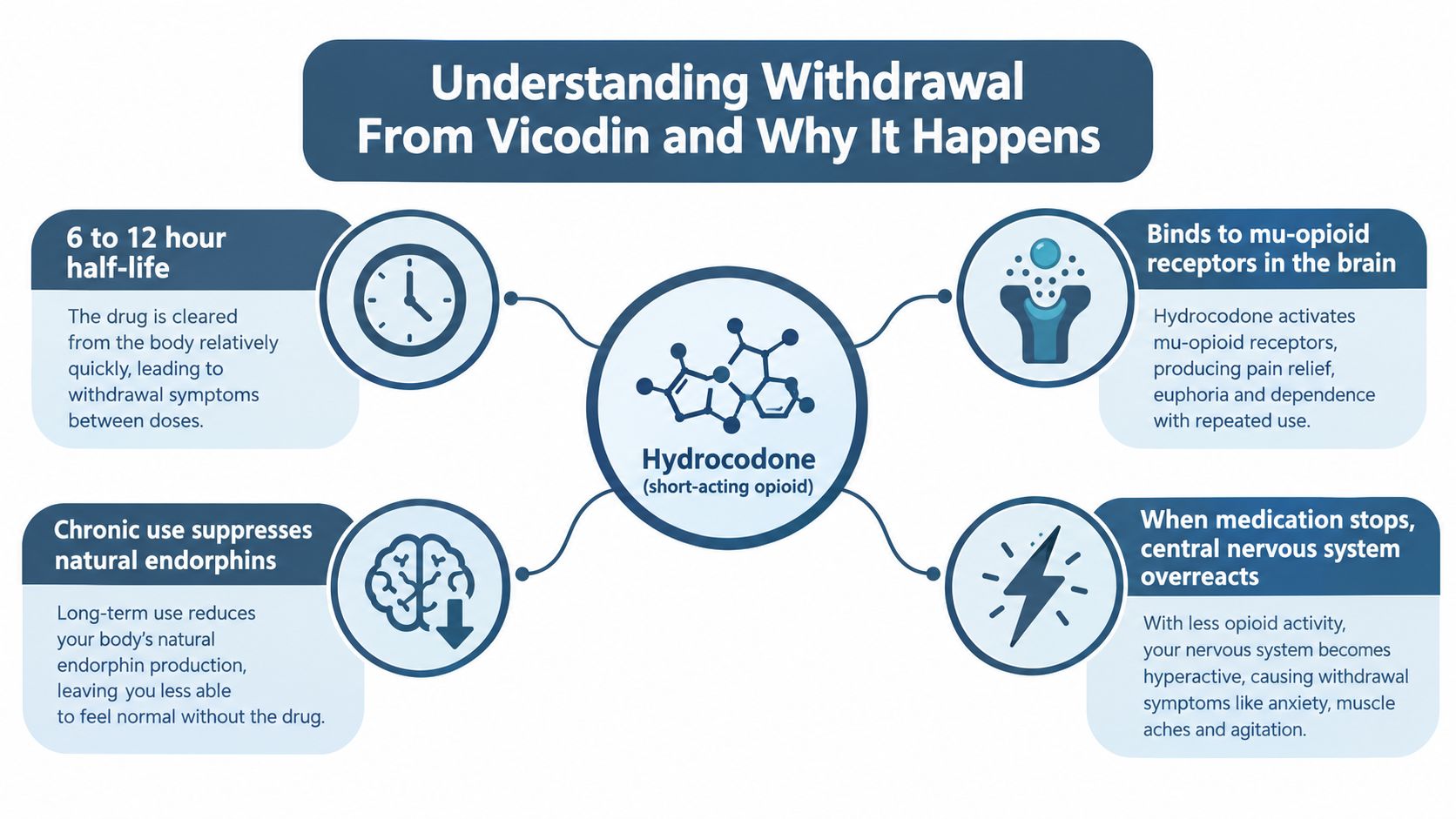
Dependence isn't the same as addiction
Physical dependence means the body has adapted to regular opioid exposure and reacts when the medication is reduced or stopped. It can occur during appropriate prescribed treatment. Addiction, by contrast, involves a pattern of compulsive use, loss of control, continued use despite harm, or persistent efforts to obtain and use the medication outside the treatment plan. More information about hydrocodone addiction and dependence can help families understand why these terms shouldn't be used interchangeably.
Short-acting Vicodin deserves medication-specific attention. Its faster decline can bring autonomic and gastrointestinal symptoms forward, while an extended-release formulation may delay onset to roughly 24 to 30 hours and extend the acute phase toward 10 to 14 days, as described in the same clinical review linked above. The FDA label for NORCO also warns patients not to discontinue without first discussing a tapering plan with the prescriber. Abrupt cessation can create unnecessary distress, disrupt pain management, and complicate an otherwise orderly recovery.
Early and Late Symptoms of Vicodin Withdrawal to Recognize
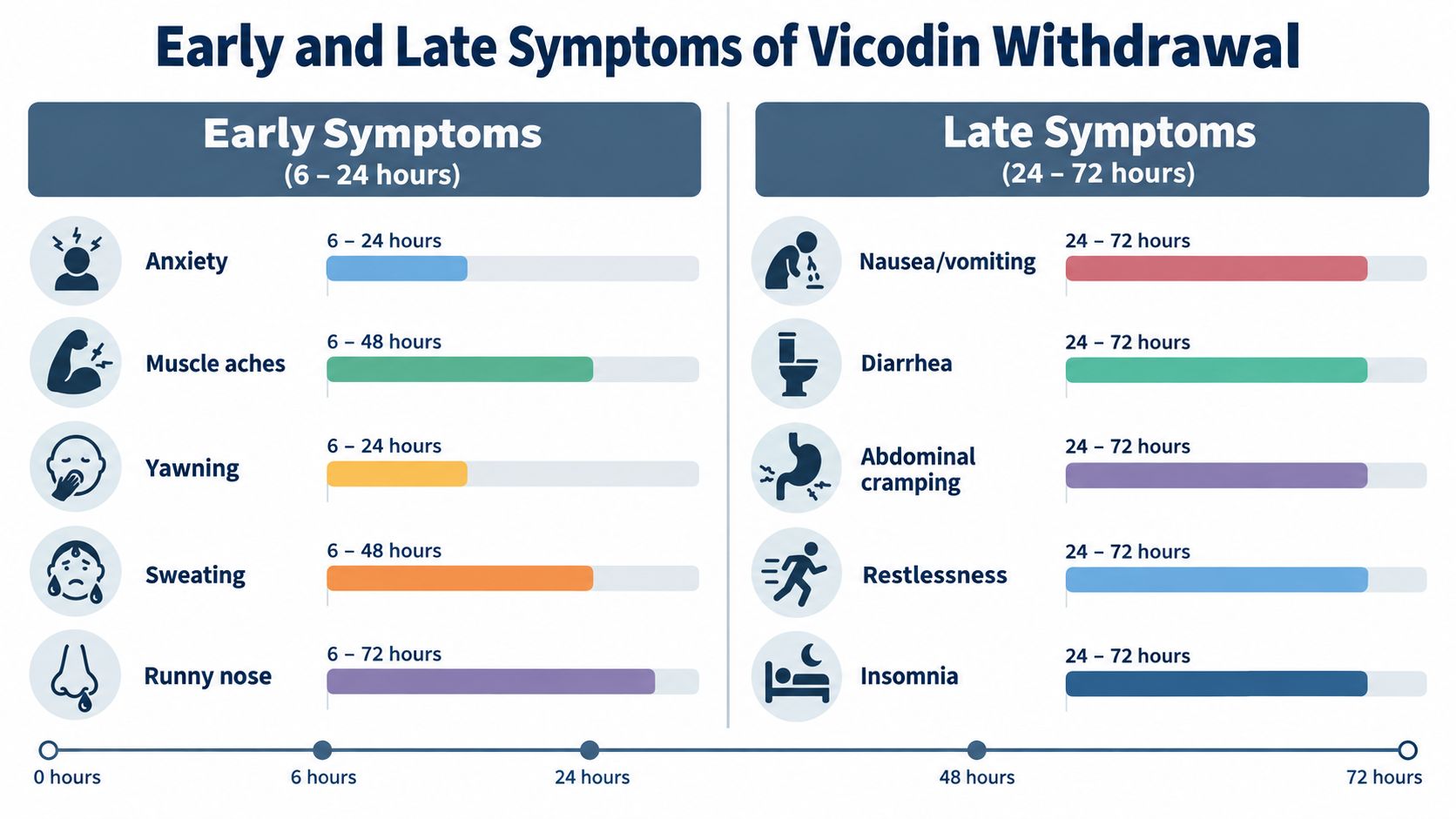
Withdrawal often unfolds in a recognizable sequence, although individual experiences vary. Early signs can resemble a combination of stress, influenza, and a sleepless night. Later symptoms often involve the gastrointestinal system, while emotional discomfort may appear throughout the process.
Early signals from a nervous system rebound
During the early period, the body begins reacting to the falling hydrocodone level. Common symptoms include:
- Muscle aches: Pain can return alongside generalized soreness.
- Restlessness: The person may find it difficult to sit still or settle into bed.
- Anxiety and agitation: Internal tension can feel disproportionate to the situation.
- Tearing and runny nose: Lacrimation and rhinorrhea are recognized opioid withdrawal signs.
- Sweating and yawning: Autonomic changes often appear before severe stomach symptoms.
- Insomnia: The person may feel exhausted but unable to sleep.
These symptoms don't mean the person is imagining the problem. The body had adjusted to opioid signaling, and the central nervous system is recalibrating. A professional who keeps checking email at night or repeatedly changes position in bed may be experiencing withdrawal rather than ordinary work stress.
Later gastrointestinal effects
As symptoms intensify, nausea, vomiting, abdominal cramping, and diarrhea can become prominent. A clinical overview of Vicodin withdrawal symptoms describes the common progression from early flu-like and autonomic effects to later gastrointestinal distress.
A symptom log can help a clinician see the pattern clearly. The record doesn't need to be elaborate. It can include the last dose time, the appearance of sweating or restlessness, sleep quality, fluid intake, vomiting or diarrhea, pain, mood, and cravings. Clinicians may also use the Clinical Opioid Withdrawal Scale, or COWS, which tracks signs such as yawning, tearing, runny nose, diarrhea, nausea, tremor, dilated pupils, and clammy skin. Neutral withdrawal-management guidance explains how structured symptom scoring supports clinical decisions.
Practical rule: A worsening symptom pattern, inability to keep fluids down, or escalating psychiatric distress calls for professional evaluation rather than private endurance.
How Long Vicodin Withdrawal Lasts and What Affects Severity
The most useful timeline is a range, not a promise. For immediate-release hydrocodone, symptoms often begin 6 to 12 hours after the last dose, intensify during the first 24 to 72 hours, and acute physical symptoms usually ease within about 5 to 7 days. Other clinical summaries describe the acute phase as lasting about 5 to 10 days, reflecting differences in formulation, exposure, health, and the way symptoms are measured. A hydrocodone-specific withdrawal timeline connects the early onset to hydrocodone's short half-life and faster serum decline.
The sequence often matters more than the calendar. Early autonomic symptoms may appear first, followed by more intense restlessness, aches, insomnia, nausea, cramping, vomiting, or diarrhea. A person can feel physically depleted even when the opioid level is falling in a predictable way.

Why two people can have different experiences
Several variables shape severity and duration:
- Dose and duration: Longer exposure and larger prescribed or nonprescribed amounts can increase physical adaptation.
- Formulation: Long-acting hydrocodone can delay onset to roughly 24 to 30 hours and extend the acute phase toward 10 to 14 days, according to the clinical review cited earlier.
- Acetaminophen exposure: Vicodin contains acetaminophen, so clinicians must review total acetaminophen use and liver health rather than treating hydrocodone as the only relevant ingredient.
- Mental health: Anxiety, depression, trauma symptoms, and prior sleep problems can make withdrawal feel more severe and can persist after physical symptoms improve.
- Past withdrawal: A previous difficult experience may increase fear, anticipatory anxiety, and the temptation to resume dosing without guidance.
- Other substances and medications: Alcohol, sedating medications, and other drugs can change medical risk and require careful review.
The calendar shouldn't become a test of willpower. It should help clinicians anticipate changing needs, monitor hydration and mood, and decide whether outpatient care is appropriate or whether a private residential setting offers safer containment.
Medical Options for Managing Vicodin Withdrawal Safely
A safe plan starts with evaluation, not guesswork. A prescriber or withdrawal team reviews the hydrocodone formulation, dose pattern, duration of use, pain condition, acetaminophen exposure, other medications, medical history, and current mental health. Clinicians then determine whether a gradual taper, symptom-focused withdrawal management, or medication treatment is appropriate.
Tapering and abrupt cessation
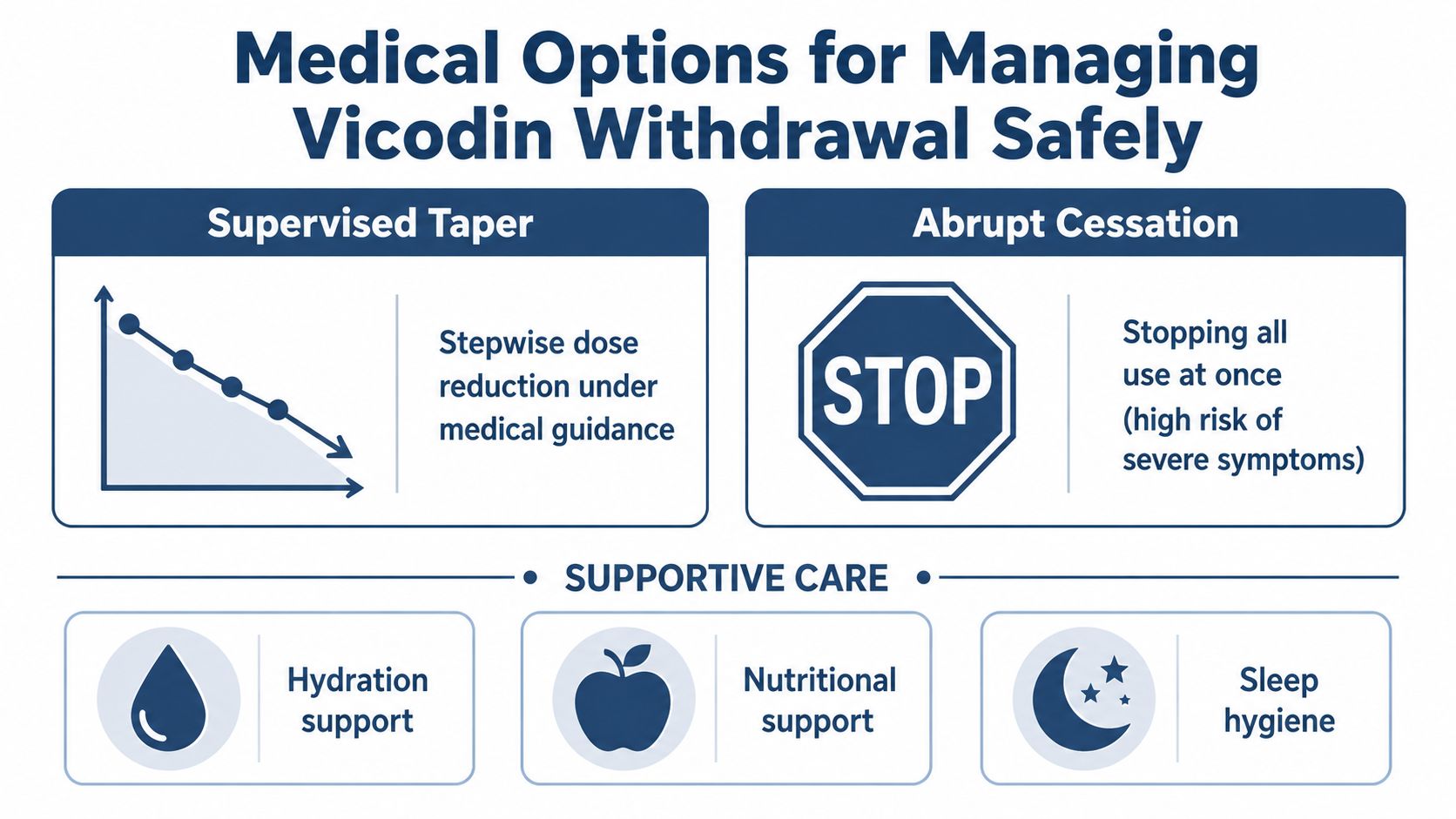
A supervised taper reduces the medication step by step under clinical direction. It may help limit withdrawal symptoms and give the prescriber time to reassess pain, sleep, anxiety, and function. The FDA labeling for NORCO specifically advises discussing a tapering plan before discontinuation, because rapid reduction in a physically dependent patient can trigger withdrawal and a return of pain. Medical-assisted detox information provides additional context about clinically managed withdrawal.
Abrupt cessation removes the medication at once. That approach may create a faster, more intense rebound, particularly after regular use. It also makes it harder to distinguish returning pain from withdrawal-related aches and can encourage unsupervised dose changes.
Supportive care and medication options
Supportive care may include hydration monitoring, nutrition as tolerated, a calm sleep environment, and treatment for specific gastrointestinal or autonomic symptoms. Clinicians don't need to medicate every sensation. The aim is minimal, effective pharmacology that addresses safety and function without creating additional sedation or interaction risks.
When objective withdrawal is present, clinicians may consider medication-assisted approaches, including a short buprenorphine and naloxone regimen when clinically appropriate. Treatment decisions depend on timing, current opioid exposure, the risk of precipitated withdrawal, and the person's goals. Medication should never be borrowed, shared, or started without medical direction.
COWS gives the team a consistent way to observe change over time. A residential program may be appropriate when symptoms are difficult to control, home support is limited, or depression, anxiety, trauma, or relapse risk complicates withdrawal. Withdrawal management is a bridge, not the complete treatment. Therapy, pain planning, psychiatric care, and continuing support determine what happens after the body stabilizes.
Beyond the Acute Phase When Withdrawal Lingers
A prescribed hydrocodone user may return to work after the vomiting stops and energy begins to return, yet still wake repeatedly, feel anxious before meetings, or experience a flat, dysphoric mood. Short-acting Vicodin can produce a sharp early withdrawal pattern, while sleep, mood, concentration, and cravings may recover more slowly. These symptoms can persist for weeks to months after the last dose. This period is often described as post-acute withdrawal syndrome. Further clinical discussion of hydrocodone detox and prolonged symptoms explains why follow-up care remains important.
For a high-performing professional, lingering symptoms can look like a character problem rather than a recovery phase. A chief executive might deliver a strong presentation and feel emotionally detached afterward. A physician, attorney, or founder may blame poor concentration and fragmented sleep on personal failure, then consider restarting hydrocodone to regain relief or productivity. Shame can strengthen that cycle.
Three care paths serve different needs
| Care path | Main strength | Limitation to consider |
|---|---|---|
| Supervised taper | Reduces medication gradually while clinicians monitor pain and withdrawal | Requires adherence, prescribing oversight, and regular reassessment |
| Supportive withdrawal care | Targets hydration, nutrition, sleep, and individual symptoms | May not address an established opioid use disorder by itself |
| Medication-assisted treatment | Can reduce cravings and stabilize opioid-related symptoms when clinically indicated | Requires careful timing, monitoring, and a longer-term treatment plan |
Each path should include mental health assessment when symptoms continue. Depression, anxiety, PTSD, grief, and related conditions can intensify during sleep disruption and opioid reduction. Psychotherapy, psychiatric evaluation, behavioral strategies, and family support help address the reasons hydrocodone became difficult to stop, rather than quieting discomfort.
Sedating co-medications require careful review. Guidance for opioid use disorder treatment and co-occurring concerns emphasizes structured assessment and cautious prescribing, including attention to combinations that can increase sedation or complicate recovery.
Withdrawal ending is not the same as recovery ending. Sleep, mood, cravings, and confidence still deserve active clinical care.
A discreet treatment plan can protect professional privacy without placing work above health. Planned communication, defined boundaries, and appropriate access to essential responsibilities may help a client remain connected while receiving intensive support. The goal is stable recovery, not a rapid return to performance at the cost of sleep or emotional health.
When to Seek Supervised Detox and Luxury Dual Diagnosis Care
Home management may be reasonable for some people after a clinician evaluates the situation. It becomes less suitable when symptoms are escalating, the person can't maintain hydration, vomiting is uncontrolled, psychiatric distress is significant, or previous attempts have ended in relapse. Overdose concerns, severe confusion, breathing problems, or thoughts of self-harm require urgent medical attention rather than a private detox experiment.
Executives and high-profile professionals often delay care because they fear exposure, disruption, or loss of control. A discreet residential setting can address those concerns while providing something comfort alone can't deliver, namely structured medical oversight, psychiatric care, intensive therapy, and continuity from withdrawal management into rehabilitation.
What private residential care can provide
- Private rooms: Individual rooms support dignity, rest, and confidential recovery in both detox and rehabilitation settings.
- Career continuity: Reflections allows residents appropriate access to electronics, including cell phones and laptops, so essential professional obligations can be managed within a clinically defined routine. Independent residential-treatment packing guidance notes that many programs restrict internet-enabled devices, with laptops and tablets commonly prohibited, so electronics access should be confirmed before admission. Residential treatment packing guidance illustrates how much policies vary.
- Dual-diagnosis treatment: A multidisciplinary team can address opioid dependence alongside depression, anxiety, PTSD, trauma, grief, bipolar symptoms, or borderline traits.
- Family participation: Private family sessions and educational work can help relatives respond without blame, secrecy, or enabling.
- Continuity of care: Residential treatment can connect detox, psychotherapy, medication optimization, discharge planning, and aftercare rather than treating withdrawal as an isolated event.
Reflections is a California-licensed, Joint Commission-accredited provider offering private residential dual-diagnosis care, clinically managed medication-assisted withdrawal when appropriate, private rooms, and balanced access to work and family responsibilities. Treatment commonly includes evidence-based psychotherapy, intensive groups, medication optimization, experiential therapies, and continuing care after residential treatment.
The luxury element should support clinical effectiveness, not distract from it. For a working professional, the value lies in privacy, individualized scheduling, qualified medical and behavioral health care, and a setting where the person can address both the medication and the conditions that made continued use feel necessary.
Moving Forward After Vicodin Withdrawal With Confidence
Withdrawal from Vicodin becomes more manageable when the person understands the difference between physical dependence, addiction, acute symptoms, and the longer emotional tail. Short-acting hydrocodone can produce an early and uncomfortable rebound, but a clinician-guided plan can reduce unnecessary risk. The safest next step is a confidential evaluation before changing the dose, especially when Vicodin has been used regularly or when acetaminophen, alcohol, sedating medications, chronic pain, depression, or anxiety are also present.
A practical recovery plan should answer several questions clearly:
- Who will manage the taper or medication plan?
- How will clinicians track withdrawal symptoms and hydration?
- What support will address sleep, anxiety, depression, trauma, or cravings?
- What level of privacy and work access will protect treatment engagement?
- What continuing care will begin before residential treatment ends?
Professionals don't need to wait for a public crisis, a failed presentation, or a family ultimatum. Early care can preserve dignity while giving clinicians time to design a measured response. Family involvement can be added thoughtfully, with the client's consent and clear guidance about helpful support.
Long-term stability comes from treating the whole picture. Physical withdrawal may be the first visible problem, but sleep, mood, pain, relationships, professional pressure, and relapse vulnerability determine whether recovery lasts. A private, accredited program can provide the structure needed to move through that process with discretion and clinical clarity.
Reflections offers private, California-licensed dual-diagnosis treatment for professionals managing Vicodin withdrawal, opioid dependence, and co-occurring mental health concerns, with private rooms, clinically managed withdrawal support, appropriate electronics access, and continuing care. To arrange a confidential evaluation and discuss a plan that protects health, privacy, and essential responsibilities, visit Reflections.