
A senior executive can look composed in a board meeting while sleeping poorly, second-guessing decisions, withdrawing from family, or using alcohol and other substances to quiet an overactive mind. Career obligations continue, yet anxiety starts affecting judgment, relationships, health, and the ability to recover between demanding days.
Complementary therapies for anxiety can support that recovery when they're integrated with evidence-based psychotherapy, psychiatric care, clinically appropriate detox, and continuing care. They shouldn't replace diagnostic assessment or individualized treatment. The most useful options are judged by clinical fit, evidence level, privacy, practicality, and how well they fit a coordinated residential plan.
Reflections is a California-licensed, Joint Commission-accredited luxury provider with a multidisciplinary clinical team, private rooms in both detox and rehab, and appropriate access to phones and laptops. That combination can help executives remain connected to work and loved ones while participating in structured care. For readers examining the physical side of stress, this comprehensive cortisol guide offers additional background.
1. Executive-Focused Mindfulness and Meditation Programs
Mindfulness is most useful for executives when practiced as a clinical skill, not a luxury add-on. A structured program may combine mindfulness-based stress reduction, meditation, breath awareness, and coaching principles. The aim is practical: notice worry, urgency, and avoidance before they shape a decision.
The evidence supports measured use. A 2012 systematic review and meta-analysis pooled 25 randomized controlled trials with 1,608 unique observations and found lower anxiety symptoms than waiting-list controls, with SMD = -0.52, p <.001, and attention controls, with SMD = -0.59, p <.001. The advantage over alternative treatments was smaller but significant, SMD = -0.27, p <.01. The review considered the evidence consistent enough to support clinical use (systematic review of meditative therapies for anxiety).
A later review reported a large effect against inactive or unspecified controls, Hedges' g = -1.92, 95% CI [-3.44, -0.40], p = 0.014, across 3 trials with 212 participants. Mindfulness did not significantly outperform psychoeducation in 2 trials with 211 participants. That finding supports using it alongside psychotherapy and psychiatric care rather than presenting it as a replacement (2023 mindfulness meta-analysis).
Making practice workable
Private sessions, flexible scheduling, and time-zone awareness can help global professionals maintain practice without ignoring work responsibilities. A resident might meditate at the start of the day, use a guided recording between meetings, or practice brief breathwork before a difficult call. Individual scheduling, private rooms, and agreed electronics access can protect confidentiality while the clinical team monitors progress and distress.
Practical supports include:
- Consistent timing: Attach meditation to an established routine, such as morning coffee or the end of the workday.
- Clinical accountability: Review barriers with the treatment team instead of treating missed sessions as personal failure.
- Grounding skills: Use these grounding techniques for anxiety if meditation increases distress or detachment.

Mindfulness may improve awareness and regulation, but it will not address withdrawal risk, severe depression, trauma symptoms, or unsafe substance use alone. In residential care, it works best as a discreet adjunct within coordinated treatment.
2. Luxury Somatic and Trauma-Informed Bodywork
Anxiety often appears in the body before a professional can describe it. Jaw tension, shallow breathing, gastrointestinal discomfort, restlessness, numbness, and difficulty settling at night can all become part of the clinical picture. Trauma-informed bodywork addresses those experiences carefully, without assuming that every physical sensation represents stored trauma or that intense touch is automatically therapeutic.
A luxury residential setting can provide private treatment rooms and practitioners who understand both clinical boundaries and the privacy expectations of senior professionals. Massage, gentle body awareness, breathwork, somatic experiencing, and movement may help a resident recognize the difference between activation, exhaustion, dissociation, and ordinary muscular tension.
Consent and pacing come first
Bodywork should be coordinated with psychotherapy and medical care, particularly when a resident has trauma, dissociation, chronic pain, medication changes, or a history of unwanted touch. The resident should be able to state touch preferences, areas to avoid, pressure limits, and stop signals before the session begins.
Practical rule: Deep work isn't automatically better work. The right level of stimulation is the level the nervous system can process without losing a sense of safety.
Body scans can help track changes between appointments. A resident may notice that tension rises before a presentation, after a family call, or when trying to rest without access to familiar distractions. That information can guide psychotherapy and relapse-prevention planning.
The clinical context matters as much as the spa experience. Reflections' approach to trauma-informed residential treatment places body-based work within a broader program rather than treating massage as a stand-alone anxiety cure.
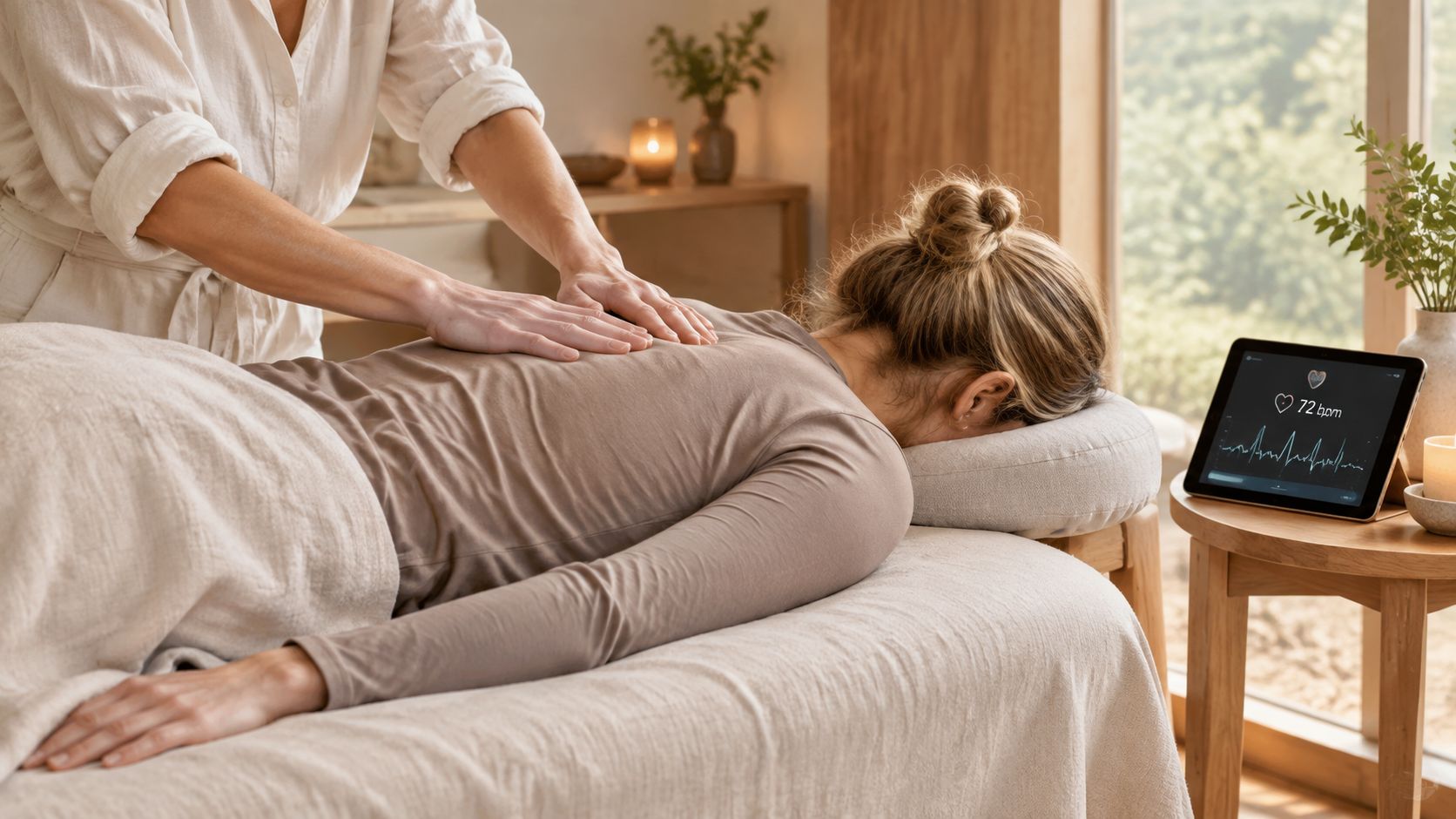
Somatic work can be especially useful when a resident intellectualizes emotions or remains constantly busy to avoid them. It can also feel too activating for some people, so pacing, consent, and clinical oversight aren't optional.
3. Equine-Assisted Therapy for Executive Resilience
A horse offers a different kind of feedback from a conference room. The animal responds to proximity, movement, tension, and inconsistency without being impressed by status or persuaded by polished explanations. In a properly supervised program, a licensed mental health professional uses that interaction to explore emotional awareness, communication, boundaries, control, and relational habits.
Executives who rely heavily on analysis may notice their first impulse around a horse before they can rationalize it. They may become controlling, hesitant, overly accommodating, or frustrated by a lack of predictable outcomes. Those reactions can become clinically useful material when the therapist connects them to workplace anxiety, perfectionism, trust, or conflict.
Experiential work needs a defined target
Equine-assisted therapy shouldn't be sold as a dramatic breakthrough experience. The therapist should identify the anxiety pattern being examined and help the resident translate observations into daily behavior. A session might focus on tolerating uncertainty, communicating a clear request, noticing physiological activation, or staying present when an interaction doesn't proceed according to plan.
A private facility and individualized scheduling can protect confidentiality for high-profile residents. The work may also appeal to professionals who struggle to engage through conventional talk therapy alone.
Useful preparation includes:
- Name the target: Decide whether the session is addressing control, avoidance, social anxiety, grief, trauma responses, or leadership relationships.
- Notice the first response: Record the immediate emotional and physical reaction before analyzing it.
- Integrate afterward: Process the experience through psychotherapy, somatic awareness, or a written reflection.
- Keep expectations realistic: Experiential insight doesn't automatically produce lasting behavioral change.
The strongest programs pair equine sessions with licensed clinical care and follow-up practice. A resident can then carry a new response into family conversations, delegation, feedback, and recovery planning instead of leaving the insight at the barn.
4. Precision Nutritional Psychiatry and Microbiome Optimization
Food can influence energy, sleep, medication tolerance, gastrointestinal comfort, and the ability to participate in treatment. Those connections make nutrition a sensible part of residential anxiety care, but they don't justify claiming that anxiety is always caused by nutrient deficiency, gut dysbiosis, inflammation, or a single food.
An executive-focused program can provide medically informed meals, nutrition counseling, and coordinated evaluation of relevant health concerns. Gourmet preparation matters because residents are more likely to sustain a plan that accommodates preferences, culture, work habits, and medical needs. Testing should answer a clinical question, not create an expensive catalogue of abnormalities with no treatment implication.
Where nutrition helps and where claims overreach
A food and mood journal may reveal that caffeine, irregular meals, alcohol, or late-night eating worsens sleep and next-day anxiety. A clinician can then adjust the pattern gradually while coordinating with psychiatry and primary care. Supplements such as magnesium, omega-3 products, or B vitamins should be considered only after reviewing indications, interactions, contraindications, and product quality.
The nutrition and holistic rebalancing program can fit into a broader residential plan that also addresses sleep, movement, medication oversight, and substance use.
The National Center for Complementary and Integrative Health reports that evidence remains limited or inconclusive for several popular options. Acupuncture has low-quality evidence, yoga is inconclusive for anxiety disorders, and chamomile findings are preliminary (NCCIH guidance on anxiety and complementary health approaches). Those limitations should shape informed consent.
Nutrition is supportive infrastructure. It isn't a substitute for trauma treatment, psychiatric assessment, or medically managed withdrawal.
5. Advanced Biofeedback and Neurofeedback Technology Programs
A resident preparing for a board presentation may notice rapid breathing, jaw tension, or a racing pulse before anxiety becomes overwhelming. Biofeedback makes these physiological patterns visible through monitored breathing, muscle tension, or heart-rate activity. With clinician guidance, the resident practices slower breathing, relaxation, and attention control. Neurofeedback provides feedback based on monitored brain activity, although available systems differ in quality, relevance, and clinical support.
For executives who value measurement, this approach can make an invisible process more concrete. Sleep quality, perceived anxiety, recovery patterns, and heart-rate variability trends may support discussion with the treatment team. They should remain clinical reference points, not another performance dashboard that encourages compulsive self-monitoring.
Technology needs clinical interpretation
A reputable program explains what a device measures, what it cannot establish, and how the findings may influence care. A QEEG report or wearable reading is not a diagnosis on its own. Training also needs adjustment for trauma, panic, ADHD, sleep disruption, medication changes, and sensory sensitivity.
Privacy and scheduling matter in residential care. Private sessions, controlled electronics access, and individualized appointments can let a resident continue selected work responsibilities without allowing monitoring to replace therapy, psychiatric assessment, or medical oversight. Portable heart-rate variability tools may support practice between sessions, while meditation can reinforce regulation skills without equipment.
The value lies in transfer. If a resident can regulate before a difficult presentation, during a family conversation, or after a craving, the technology has served a practical purpose.
Measurement should clarify treatment, not turn recovery into another executive scorecard.
Evaluate specialized services for evidence, cost, privacy, and data handling. A resident considering hyperbaric oxygen for sharper cognitive function should discuss the proposed indication and medical suitability with the treatment team, rather than assuming a wellness technology will treat anxiety.
6. Executive Psychodynamic Therapy and Depth Psychology Integration
High achievement can conceal long-standing emotional rules. A chief executive may believe mistakes make them unworthy, a physician may equate rest with irresponsibility, and an entrepreneur may experience dependence as dangerous. Psychodynamic therapy examines how those rules formed and how they continue to shape anxiety, relationships, work, and substance use.
This work is intensive and private. A psychologist with relevant training can explore family dynamics, attachment, grief, trauma, identity, perfectionism, and existential concerns while keeping the treatment connected to present behavior. The therapist should avoid turning every professional ambition into pathology. Achievement can be a value, a strength, or a coping strategy, depending on how rigidly it operates.
Insight must become observable change
A resident can track whether psychological insight changes specific behaviors. Examples include delegating without repeated checking, tolerating a delayed response, setting a boundary with a colleague, sleeping without reviewing work, or discussing fear without using substances to suppress it.
A strong therapeutic alliance is central. The resident needs enough trust to discuss shame, anger, envy, vulnerability, and family history without performing competence for the clinician. Trauma training also matters because depth work can activate memories and emotions that require careful pacing and stabilization.
Concurrent somatic therapy may help connect intellectual insight with bodily experience. Medication oversight, group therapy, family sessions, and relapse-prevention work can provide additional settings in which new patterns are practiced.
This approach isn't designed for rapid symptom suppression alone. It can be valuable when anxiety repeatedly returns despite surface-level coping skills, particularly when the resident wants to understand why achievement, control, or professional identity has become tied to emotional survival.
7. Luxury Integrative Herbal Medicine and Botanical Pharmacology
Botanical products deserve the same caution as prescription medications. They can affect sedation, blood pressure, liver function, bleeding risk, metabolism, and the action of psychiatric medications. “Natural” describes an origin, not a safety profile or a level of evidence.
An integrative physician or appropriately qualified clinician should review the resident's diagnoses, medications, substance-use history, medical conditions, allergies, sleep pattern, and professional demands before discussing herbs. Product sourcing and independent testing are relevant, but they don't eliminate interaction risks or guarantee anxiety relief.
A conservative framework is safer
The clinician should define one target at a time, use a traceable product, document the reason for use, and monitor anxiety, sleep, cognition, and adverse effects. A resident who must remain alert for work may be particularly concerned about sedation or impaired concentration. Someone in detox or early recovery may need to avoid products that complicate withdrawal assessment or create additional physiological uncertainty.
The evidence for popular botanicals varies by product, preparation, diagnosis, and study quality. NCCIH specifically characterizes chamomile findings as preliminary, so it shouldn't be presented as an established treatment for a diagnosed anxiety disorder (NCCIH anxiety and complementary health information).
Educational material on ashwagandha for anxiety support may help a reader form questions, but it isn't a substitute for medication reconciliation. A clinical team should also be cautious about claims that herbs can reduce or replace psychiatric medication without a monitored plan.
Botanical care may have a place as an adjunct for selected residents. It shouldn't delay evidence-based psychotherapy, psychiatric treatment, medically appropriate detox, or evaluation of severe symptoms.
8. Intensive Executive Coaching and Cognitive Behavioral Integration
Executive coaching becomes clinically relevant when it addresses anxiety mechanisms rather than just improving productivity. A coach with advanced training in CBT and clinical anxiety can help a resident identify catastrophic predictions, perfectionistic standards, reassurance-seeking, avoidance, and overwork. The work stays practical by applying those skills to real professional situations.
A resident might examine the thought, “If this presentation isn't flawless, credibility will disappear,” then test that belief through graded exposure, delegation, or a deliberately bounded preparation process. Another might use values clarification to decide whether a new role fits personal priorities rather than accepting every opportunity to avoid disappointing others.
Skills need practice outside the office
CBT works through repetition. Thought records, behavioral experiments, exposure exercises, and scheduled recovery periods allow the resident to test new responses while anxiety is present. Coaching should remain coordinated with psychotherapy when trauma, depression, obsessive symptoms, panic, or substance use complicates the picture.
Useful applications include:
- Target the trigger: Identify the meeting, decision, conflict, travel demand, or performance situation that reliably activates anxiety.
- Challenge the prediction: Separate evidence from assumption and identify the behavior anxiety is demanding.
- Run a behavioral experiment: Change one response, such as reducing checking or postponing reassurance, then review what happened.
- Pair cognitive and body skills: Use breathing, mindfulness, movement, or biofeedback when anxiety is physiological as well as mental.
Remote or in-person delivery should be selected according to clinical needs and privacy. A 2025 randomized trial found that remotely delivered mindfulness-based stress reduction didn't clearly match escitalopram on its primary endpoint and didn't support non-inferiority, which is an important counterpoint to claims that a natural or remote option is automatically equivalent to medication (trial report).
8-Point Comparison: Holistic Therapies for Anxiety
| Approach | Implementation Complexity | Resource Requirements | Expected Outcomes | Ideal Use Cases | Key Advantages |
|---|---|---|---|---|---|
| Executive-Focused Mindfulness & Meditation Programs | Moderate, personalized protocols + coaching | Moderate: trained instructors, biofeedback, private scheduling | Measurable anxiety biomarker reduction within weeks; improved focus/decision-making | Time-pressed executives needing scalable daily tools | Neuroscience-backed, portable techniques; integrates with work |
| Luxury Somatic & Trauma-Informed Bodywork | High, requires trauma-trained practitioners | High: certified therapists, spa-quality suites, biometric monitoring | Immediate relaxation and embodied trauma release; repeated sessions for lasting change | Executives with somatic tension, dissociation, or trauma-related anxiety | Direct body-level regulation; rapid calming when talk therapy insufficient |
| Equine-Assisted Therapy for Executive Resilience | High, specialized equine facilities and staff | High: private stables, trained therapeutic horses, licensed clinicians | Rapid nonverbal insight, nervous-system co-regulation, lasting behavioral shifts | Leaders resistant to talk therapy or needing relational/leadership insight | Bypasses intellectual defenses; powerful somatic biofeedback |
| Precision Nutritional Psychiatry & Microbiome Optimization | High, multi-omic testing and clinical integration | High: lab testing, psychiatric nutritionists, chefs, pharma-grade supplements | Biomarker improvements, energy/cognitive gains; anxiety reduction over 8–12 weeks | Anxiety linked to gut dysbiosis, inflammation, metabolic or nutrient issues | Targets root biological causes; objective biomarker tracking |
| Advanced Biofeedback & Neurofeedback Technology Programs | High, clinical-grade neurotech and specialist protocols | High: QEEG, neurofeedback systems, HRV devices, technical staff | Objective EEG/HRV changes; rapid symptom improvement and neuroplastic gains | Data-driven executives, performance anxiety, ADHD, hypervigilance | Objective metrics and gamified training; measurable progress |
| Executive Psychodynamic Therapy & Depth Psychology | High, long-term, specialist psychotherapy | Moderate: PhD-level clinicians, private sessions, potential med coordination | Deep unconscious processing; lasting personality integration over months | High-achievers with perfectionism, imposter syndrome, childhood-rooted anxiety | Addresses root unconscious patterns; durable psychological change |
| Luxury Integrative Herbal Medicine & Botanical Pharmacology | Moderate, individualized botanical protocols with oversight | Moderate: board-certified herbalists, pharmaceutical-grade botanicals, monitoring | Symptom reduction over weeks (2–4); supports cognition and medication strategies | Mild–moderate anxiety or adjunctive support to reduce med dependence | Gentler alternative/adjunct to meds; customizable, well-tolerated |
| Intensive Executive Coaching & CBT Integration | Moderate, CBT adapted for executive contexts | Moderate: clinically-informed coaches, structured exercises, flexible scheduling | Rapid practical changes in thinking/behavior; improved leadership resilience | Performance anxiety, perfectionism, imposter syndrome in workplace | Actionable skills with immediate workplace application; skill retention |
Building a Luxury Residential Plan That Holds Together
The strongest luxury residential plan isn't a menu of premium services. It's a clinical sequence built around the resident's diagnosis, safety, goals, professional responsibilities, and response to treatment.
Assessment should come first. The team needs to understand anxiety symptoms, trauma history, sleep, medical conditions, medication use, substance use, mood symptoms, risk, family dynamics, and the demands of the resident's role. For people with co-occurring mental health and substance use disorders, anxiety may intensify during intoxication, withdrawal, medication changes, or early sobriety. Treating only the anxiety label can miss the driver.
A practical sequence may look like this:
- Stabilization first: Address withdrawal risk, acute symptoms, sleep disruption, medication oversight, and medical needs when clinically appropriate.
- Daily regulation next: Build repeatable skills through mindfulness, breathwork, yoga, movement, or biofeedback.
- Process deeper patterns: Use psychotherapy for trauma, attachment, perfectionism, grief, relational conflict, and identity concerns, adding somatic or experiential work when appropriate.
- Reinforce physical recovery: Coordinate nutrition, sleep routines, fitness, and massage without presenting wellness services as stand-alone treatment.
- Translate skills into continuing care: Practice work boundaries, family communication, relapse prevention, medication follow-up, and outpatient therapy before discharge.
Privacy and practicality deserve direct questions during program comparison. Joint Commission accreditation means a provider is reviewed at least every three years against hundreds of national safety and quality standards, making it a concrete credential to verify when a clinical team serves high-acuity residential residents.
Electronics policies also vary. Some residential programs require a phone blackout at intake and restore access after stabilization, with scheduled use windows and staff control. Other programs permit phones and laptops in rooms during non-program hours, making room-level access a specific differentiator for residents who need discreet work continuity. Residential care may also provide supervised computer access for legitimate work or legal needs, with time-limited laptop use during treatment hours.
Executives should verify whether private rooms are available throughout detox and rehab, how phone and laptop access is supervised, whether scheduling can accommodate essential responsibilities, how family involvement works, and what post-residential support continues after discharge. Reflections provides private rooms in detox and rehab, appropriate electronics access, multidisciplinary care, family involvement, and continuing support in a discreet residential setting.
A confidential conversation with Reflections can clarify whether the appropriate level of care is detox, residential treatment, or another setting, and which complementary therapies fit the resident's clinical plan rather than adding more services.
Reflections offers private, individualized residential care for adults with co-occurring mental health and substance use disorders, including coordinated psychotherapy, psychiatric oversight, somatic and experiential therapies, nutrition, mindfulness, and appropriate work connectivity. Visit Reflections to speak confidentially with the admissions team about clinical fit, privacy, level of care, and a personalized plan for anxiety and recovery.