

The call usually comes late. A founder has missed another morning meeting after drinking to sleep. A physician has started hiding pills in a travel case. A public figure is functioning well enough in public, but privately knows the margin for error is gone. The problem isn't only substance use. It's the fear that getting help could damage a career, a family, a reputation, or all three at once.
That's why rehab centers for celebrities exist as a distinct category of care. At their best, they aren't indulgent retreats. They're tightly run, clinically serious treatment environments built for people whose lives are visible, demanding, and difficult to pause. For executives, C-suite leaders, and other high-earning professionals, the right program protects privacy, preserves dignity, and treats the underlying psychiatric and emotional drivers that often sit beneath addiction.
For this population, luxury is the setting. Clinical depth is the intervention. Private rooms, discreet admissions, and access to work devices matter because they remove barriers to entering treatment. But lasting recovery depends on whether the program can accurately diagnose, stabilize, and treat co-occurring conditions while supporting a safe return to real life.
Seeking Confidential Treatment for Addiction
A high-achieving professional rarely arrives at treatment because life has completely collapsed. More often, the warning signs are subtle at first. Sleep becomes dependent on alcohol or sedatives. Anxiety is managed with stimulants, cannabis, or prescription medication. Relationships tighten. Work still gets done, but the effort required to keep everything looking normal becomes exhausting.
For a public-facing client, that internal debate can drag on for months. Entering treatment may feel like admitting weakness. It may also feel risky. A board, investor group, patient panel, legal matter, or media cycle doesn't stop because someone needs detox or psychiatric care.

That's where specialized, confidential treatment changes the equation. Programs designed for executives and public figures are built around controlled admissions, strict confidentiality, private accommodations, and a level of clinical staffing that can handle both addiction and mental health complexity. A useful starting point for families considering this type of care is this overview of where celebrities go for rehab.
What keeps people stuck
Three fears drive delay more than almost anything else:
- Professional fallout: Leaders worry that stepping away will trigger instability at work, invite scrutiny, or raise questions they aren't ready to answer.
- Loss of privacy: Public figures and executives often assume treatment means exposure. In a well-run private program, it shouldn't.
- Getting the wrong kind of care: Many people fear landing in a setting that feels institutional, chaotic, or clinically thin.
Practical rule: If a person needs confidentiality in order to say yes to treatment, that need isn't vanity. It's a clinical access issue.
Luxury treatment for this audience works when it reduces threat and increases honesty. A private room can lower vigilance. A discreet residence can reduce the sense of being watched. A calm environment can help a person admit what's really happening, often for the first time in years.
What specialized care actually offers
The best rehab centers for celebrities give high-functioning adults room to step out of performance mode. They don't ask an executive to become a different person before treatment can begin. They create conditions where a person can stabilize medically, tell the truth safely, and begin addressing the drivers beneath the behavior.
That distinction matters. The goal isn't to hide from life. It's to enter treatment without sacrificing everything that life has taken years to build.
Beyond Luxury The Hallmarks of Elite Rehab
Many people hear “celebrity rehab” and picture a resort with therapy added on. That's the wrong standard. A private chef, beautiful grounds, and upscale accommodations may improve comfort, but they don't treat addiction, trauma, panic, depression, or compulsive behavior. Elite rehab is defined by clinical excellence first.
For high-profile clients, outcome quality is driven primarily by clinical excellence rather than luxury amenities. Treatment duration at premium residential facilities typically ranges from 60 to 120 days for initial stabilization, while complex dual-diagnosis cases often require 90 to 180 days for extensive intervention, as outlined in this discussion of high-end rehab facilities.
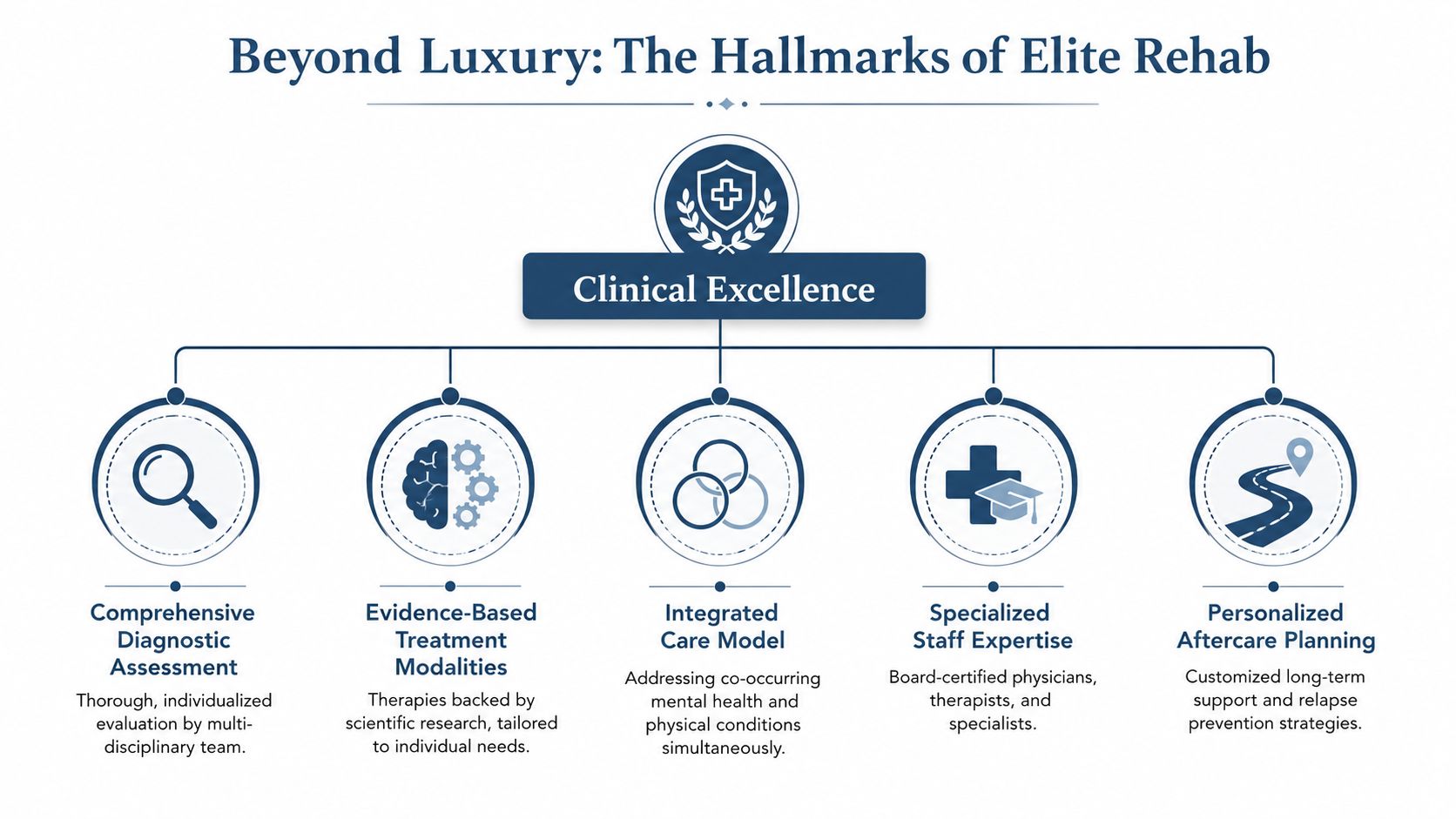
What separates an elite program from a dressed-up one
A serious executive program has a few recognizable markers.
| Hallmark | What it means in practice |
|---|---|
| Comprehensive assessment | Substance use, psychiatric symptoms, trauma history, sleep, medications, family dynamics, and occupational stress are evaluated together. |
| Integrated treatment | Addiction and mental health care happen at the same time, not in separate tracks that barely communicate. |
| Advanced staffing | The program uses doctoral-level psychologists, psychiatrists, experienced therapists, and medical personnel who can manage complexity. |
| Private accommodations | Private rooms in detox and residential care reduce overstimulation, improve sleep, and protect dignity. |
| Structured aftercare planning | Discharge is treated as part of treatment, not the end of it. |
Why the environment still matters
A serene setting does have value. It lowers unnecessary stress. It can interrupt the sensory overload that many executives and public figures live with daily. It also supports treatment adherence. When someone feels physically safe and respected, resistance often drops.
But there's an important distinction between comfort that supports treatment and comfort that replaces treatment.
- Helpful luxury: private rooms, discreet transportation, calm grounds, chef-prepared meals that support medical stabilization, and space for confidential individual therapy.
- Misleading luxury: amenities used to distract from weak psychiatric care, thin staffing, or a vague treatment plan.
“Luxury should make it easier to engage in treatment, not easier to avoid it.”
Questions that reveal substance over appearance
When evaluating rehab centers for celebrities, the right questions are clinical.
- Who leads treatment? The answer should identify licensed medical and mental health professionals with advanced credentials.
- How is care individualized? A real program can explain how assessment findings shape the treatment plan.
- What happens in detox? There should be medical oversight, symptom monitoring, and a clear medication philosophy.
- How are private rooms used clinically? They should support rest, stabilization, and confidentiality in both detox and rehab.
A highly accredited team matters here. So does an approach that allows working professionals to retain appropriate access to electronics such as phones and laptops while receiving treatment. In an executive setting, these details aren't perks. They're part of how the program meets the actual conditions of a client's life.
The Critical Role of Dual Diagnosis Treatment
Many high-performing adults don't use substances in isolation. Alcohol may quiet panic after investor meetings. Cocaine may mask exhaustion. Benzodiazepines may become a shortcut to sleep after years of overactivation. Opioids may numb grief, trauma, or relentless internal pressure. If treatment addresses only the substance, the original drivers remain intact.
That's why dual diagnosis treatment is essential in this population. It recognizes that addiction and mental health conditions often operate together and reinforce each other. Anxiety, depression, trauma, PTSD, burnout, and certain personality patterns can all shape how a person uses substances and why stopping feels intolerable.
Most content on celebrity rehab treats addiction as a standalone issue, failing to address the critical need for dual-diagnosis treatment. Many luxury centers lack the PhD-level psychologists and psychiatrists required to treat the root causes of addiction, such as trauma or PTSD, alongside substance use, leaving clients without guidance on finding true clinical excellence, as discussed in this article on where celebrities go to rehab.
Why high-functioning clients are often misread
Executives and public figures are good at compensating. They can appear organized, articulate, and successful while experiencing severe psychiatric distress. That surface competence sometimes leads underqualified programs to underestimate the depth of the problem.
A clinically sound program looks beyond appearance and asks better questions:
- What is the substance doing for this person emotionally?
- What symptoms emerge when the substance is removed?
- Is the client self-medicating trauma, mood instability, insomnia, or chronic anxiety?
A practical overview of what to expect in a dual diagnosis rehab program can help families and referring professionals understand what integrated care should include.
What integrated treatment looks like
Dual-diagnosis treatment isn't a brochure phrase. It should show up in the daily structure of care.
- Psychiatric evaluation: medication needs are assessed carefully, with a goal of minimal and effective pharmacology where appropriate.
- Psychological treatment: therapy addresses trauma, mood symptoms, shame, compulsive patterns, and the meanings attached to achievement and failure.
- Addiction treatment: cravings, triggers, relapse patterns, and behavioral habits are treated directly, not assumed to resolve once mood improves.
A person can stop drinking and still remain highly vulnerable if the panic, grief, or trauma underneath it hasn't been treated.
This is the quiet dividing line in rehab centers for celebrities. Some provide privacy and comfort. Fewer provide integrated, credentialed care that can hold both the addiction and the psychiatric complexity at the same time. For high-achieving adults, that difference often determines whether treatment becomes a turning point or a brief interruption.
Privacy Security and Maintaining Your Career
For an executive or public figure, privacy isn't a cosmetic preference. It's operationally necessary. The concern is rarely limited to embarrassment. Exposure can affect shareholder confidence, legal matters, licensing, family systems, media attention, and the client's ability to focus on treatment at all.
Celebrity rehab centers use non-disclosure agreements, gated estates, and private villas to ensure confidentiality. Their Executive Track model allows professionals to maintain business contact via phone and laptop access during treatment, which is a critical feature for high-earning individuals, according to this discussion of celebrities and anonymous rehab.
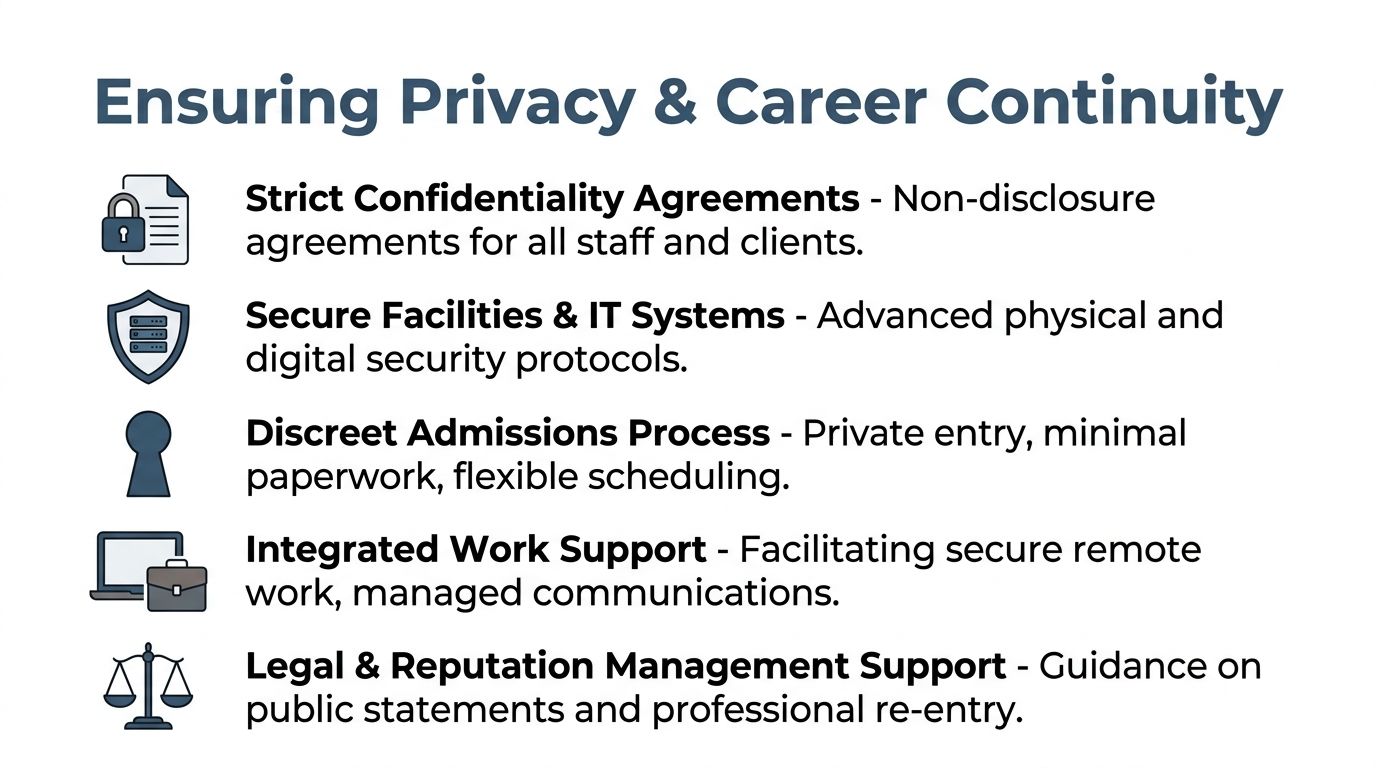
The mechanics of real confidentiality
A discreet program doesn't rely on a vague promise to be private. It builds privacy into operations.
- Legally binding NDAs: Staff, clinicians, and anyone with client contact are bound by confidentiality requirements.
- Private rooms throughout care: This reduces exposure and gives the client a place to decompress, sleep, and work through difficult moments without constant proximity to others.
- Controlled admissions: Scheduling, arrival, paperwork flow, and transportation are handled to minimize visibility.
- Secure setting: Gated properties and private residences reduce unnecessary traffic and attention.
For some clients, the logistical chain matters almost as much as the therapy itself. Families often arrange low-profile transportation from an airport, hotel, or residence so the transition into care feels contained and calm. For international travelers accustomed to private movement, resources such as luxury car service in Dubai illustrate the kind of discreet transport planning many high-profile clients expect before they ever arrive at a treatment facility.
Why electronics access matters
Many traditional programs remove phones and laptops completely. For some clients, that's clinically appropriate. For executives and C-suite leaders, however, a blanket ban can create so much fear about abandonment of duty that it prevents admission in the first place.
A structured executive model takes a different view. It allows access to electronics within boundaries that protect treatment.
| Need | Clinical response |
|---|---|
| Time-sensitive decisions | Limited windows for secure work communication |
| Leadership transition during leave | Supported contact with counsel, assistants, or boards |
| Fear of disappearing professionally | Planned communication instead of frantic checking |
| Work as a trigger | Staff help distinguish essential engagement from compulsive overinvolvement |
Clinical reality: The goal isn't unrestricted work. The goal is enough continuity to reduce panic while preserving the integrity of treatment.
That balance is especially important in expensive private-pay rehab for working professionals. Clients often need the reassurance that they can remain connected to essential responsibilities while still participating in detox, therapy, and psychiatric care. When done well, electronics access doesn't weaken treatment. It removes one of the biggest reasons high-functioning people refuse treatment.
Understanding the Investment in Executive Rehab
High-end treatment is expensive, and it makes sense to say that plainly. Luxury drug rehab centers typically cost $30,000 to $100,000 or more per month, with costs driven by low client-to-staff ratios and evidence-based therapies. Some 5-week executive programs are priced between $69,500 and $79,500, according to this review of luxury rehab pricing.
That price point reflects more than décor. In the executive and celebrity space, cost usually follows intensity, privacy, staffing depth, medical oversight, and the operational demands of a secure residential setting. WebMD also notes that luxury rehabilitation centers catering to celebrities command monthly fees ranging from $30,000 to over $100,000, with some exclusive facilities estimated at approximately $60,000 per month, and ties those costs to private settings, low client-to-staff ratios, multidisciplinary teams, and medical monitoring in its article on whether celebrity rehabs work.
What the investment is paying for
A private-pay executive program typically concentrates resources in a few places:
- Low client-to-staff ratios: More individual attention, faster response to clinical changes, and less generic programming.
- Advanced clinicians: PhD-level psychologists, psychiatrists, and experienced addiction professionals cost more because their training is deeper and their work is more specialized.
- Private rooms in detox and rehab: These support confidentiality, medical recovery, sleep, and emotional regulation.
- Medical supervision: Detox can require around-the-clock monitoring for withdrawal symptoms and medication adjustments.
- Operational privacy: Secure residences, discreet admissions, and controlled access all add cost.
For some clients, transportation and scheduling logistics also become part of the total planning process, especially when travel needs to remain quiet and efficient. Business travelers familiar with private ground coordination may recognize that same premium for reliability in services such as NSB Luxury Transport services.
Cost without clinical substance is a bad deal
High pricing by itself proves nothing. Some facilities operate more like housing situations or spas and place too much emphasis on non-medical treatments while underdelivering on evidence-based care. That's the central trade-off in this market. A beautiful environment can support recovery. It can't substitute for psychiatric competence.
A practical overview of the average cost of addiction treatment can help families compare levels of care and understand what drives pricing.
One California option in this category is Reflections, a private-pay, California-licensed, Joint Commission-accredited residential provider focused on adults with co-occurring mental health and substance use disorders. Its model includes private rooms, dual-diagnosis care, and appropriate access to electronics for working professionals. That combination is often what executives are paying for: discretion, continuity, and enough clinical sophistication to treat the root problem rather than just interrupt the pattern.
Next Steps How to Vet and Choose a Program
By the time someone is seriously looking at rehab centers for celebrities, the decision often feels urgent. Urgency can lead families to focus on appearance, availability, or reputation alone. That's understandable, but it's risky. The better approach is due diligence.
Addiction relapse rates are estimated between 50% and 90%, and relapse often occurs within months for those without sustained support. Medical experts emphasize that robust aftercare and follow-up are critical for long-term success, as noted in this analysis of celebrity rehab in California.
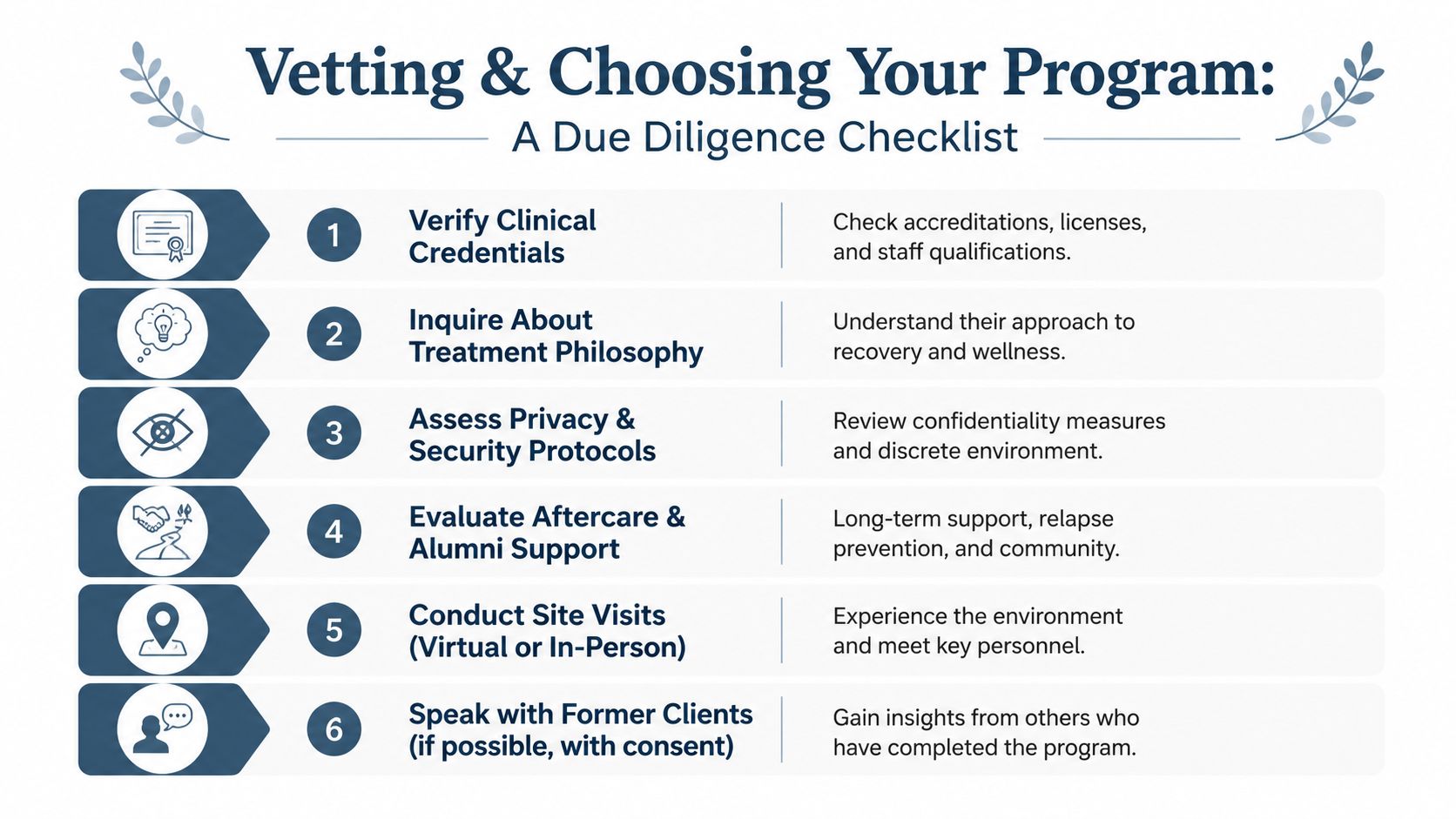
A due diligence checklist
Use this checklist during admissions calls, consultations, or site visits.
Verify licenses and accreditation
Ask whether the program is state-licensed and accredited. Also ask which parts of care are provided in-house and which are referred out.Ask who is on the clinical team
“Therapist” can mean many things. The answer should clarify whether the program includes psychiatrists, psychologists, licensed therapists, medical staff, and addiction specialists.Get specific about dual diagnosis
Don't settle for “yes, we treat mental health.” Ask how trauma, PTSD, depression, anxiety, and personality-related concerns are evaluated and treated alongside substance use.Review detox capability carefully
If detox is needed, ask who monitors withdrawal, how medications are managed, and whether the client will have a private room during that stage.Clarify electronics and work access
Executives should ask exactly how phone and laptop use is structured. There's a big difference between “allowed sometimes” and a thoughtfully designed executive track.Examine continuing care before admission
Ask what happens after residential treatment. The answer should include discharge planning, outpatient recommendations, relapse prevention work, family involvement where appropriate, and alumni or follow-up support.
Red flags that deserve caution
Some warning signs show up quickly when a facility is more style than substance.
- Vague answers about staffing: If admissions can't clearly explain who provides psychiatric and psychological care, keep looking.
- Amenity-heavy messaging: If most of the pitch is about food, views, and comfort, the treatment core may be thin.
- No clear aftercare structure: Discharge shouldn't sound improvised.
- One-size-fits-all programming: High-achieving adults with complex lives rarely fit standardized treatment plans.
The right program should be able to describe its clinical model in plain language without hiding behind luxury branding.
What a strong final decision looks like
The strongest choice is usually the one that meets four tests at once:
| Decision area | What to confirm |
|---|---|
| Clinical depth | The team can assess and treat co-occurring psychiatric conditions competently |
| Privacy | Admissions, housing, records, and staff conduct protect confidentiality |
| Career continuity | Work access is structured, realistic, and therapeutically managed |
| Long-term planning | Aftercare is defined before treatment even begins |
Families often feel pressure to choose fast. Fast is fine. Blind isn't. A careful admissions conversation should leave the client feeling less afraid, not more confused. It should answer direct questions with direct answers. It should explain how private rooms, electronics access, detox, psychotherapy, and ongoing care all fit together into a coherent plan.
Reflections provides confidential, California-licensed residential care for adults with co-occurring mental health and substance use disorders in a private upscale setting. For executives, public figures, and families looking for a clinically rigorous program with dual-diagnosis treatment, private rooms, and appropriate work access, Reflections is a practical place to begin the conversation.