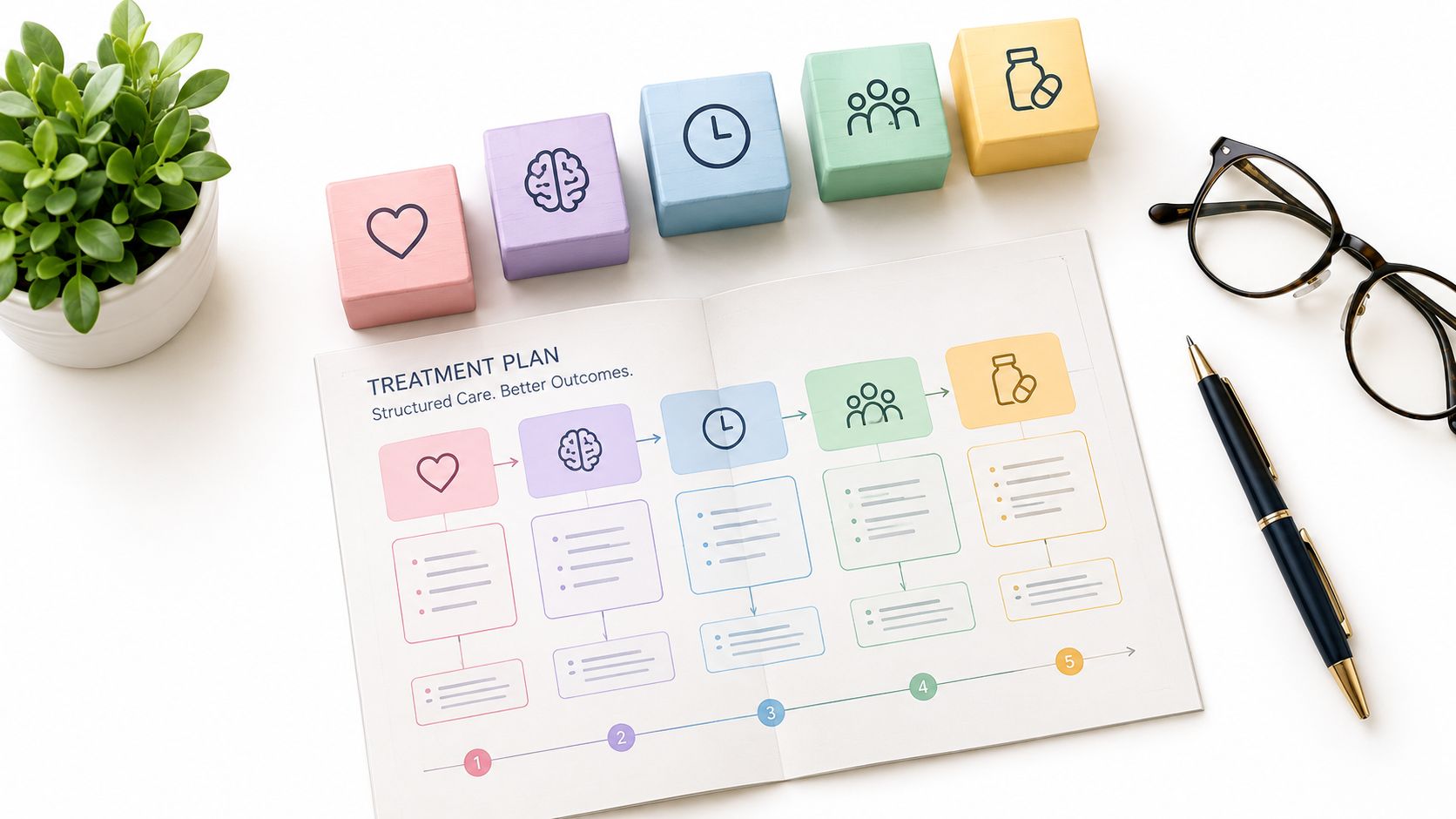

Understanding the link between depression and alcohol
If you are searching for depression and alcohol addiction treatment, you are likely already sensing that these two struggles are deeply connected in your life. Research backs up what you may feel every day. Depression and alcohol use disorder (AUD) have a bidirectional relationship, which means each one can increase the risk of the other and both conditions can worsen one another over time.
You might drink to quiet racing thoughts, numb emotional pain, or briefly feel more social. Over time, that “coping strategy” can turn into dependence, blackouts, or withdrawal symptoms, and your mood often drops even further. People with major depressive symptoms frequently use alcohol to self‑medicate, yet this pattern can progress into full AUD and intensify both depression and alcohol-related problems.
Co‑occurring depression and alcohol addiction are also linked to greater overall severity, a more difficult prognosis, and a higher risk of suicidal thinking or behavior than either condition alone. Recognizing how these conditions interact is an important first step. The next step is choosing an approach to treatment that addresses both at the same time, not in isolation.
How alcohol affects your mood and brain
Alcohol can feel like relief in the moment, but its impact on your brain chemistry and mood is significant. Over time, alcohol changes how your brain manages serotonin and other neurotransmitters that regulate mood. Studies show that serotonin levels and its metabolites are low in certain brain regions of alcohol‑preferring animals and in the cerebrospinal fluid of people with alcohol dependence. When researchers enhance serotonin signaling, alcohol consumption decreases in rats and depressive symptoms sometimes lessen in humans.
Alcohol is also a central nervous system depressant. That does not just mean it can make you sleepy. It can:
- Lower your baseline mood
- Reduce motivation and energy
- Disrupt sleep architecture
- Impair judgment and impulse control
- Intensify anxiety and irritability as it wears off
Even mild to moderate alcohol consumption, defined in one review as less than 1 ounce per day, has been shown to diminish the effectiveness of medication treatments for depression. If you are taking an antidepressant and still drinking, you may not be getting the full benefit of your medication.
Many people with AUD experience intense depression or anxiety that interferes with daily functioning. More than one in three individuals with alcoholism report episodes of severe depression or anxiety that impact their ability to live, work, and relate to others. These symptoms are closely linked to an elevated suicide risk, estimated to be as high as 10 percent among alcoholics during depressed states.
Alcohol‑induced depression vs clinical depression
If you are dealing with both low mood and alcohol use, it is important to sort out what you are truly experiencing. Clinicians generally differentiate between:
- Alcohol‑induced depression
- Primary major depressive disorder (MDD) that exists independent of alcohol use
Research indicates that for many people with AUD, depressive and anxiety symptoms are largely alcohol‑induced and improve significantly within the first several weeks to a month of abstinence. Depression rating scale scores in people with alcohol dependence typically drop after a few weeks of sobriety or significantly reduced drinking, which is why some experts recommend waiting before making a firm diagnosis of a long‑term depressive disorder.
Depressive symptoms that are primarily driven by alcohol often:
- Worsen after heavy drinking or during withdrawal
- Improve noticeably after 3 to 4 weeks of abstinence
- Fluctuate along with your drinking patterns
In contrast, primary MDD tends to:
- Precede heavy drinking, or persist regardless of alcohol use
- Continue beyond four weeks of sobriety
- Show a more stable pattern of low mood, hopelessness, and loss of interest
Differentiating between alcohol‑induced depression and primary MDD is critical because it shapes your treatment plan. Clinical guidelines emphasize that if symptoms persist after four weeks of abstinence, you are likely dealing with an independent depressive disorder that deserves direct treatment, including the use of antidepressant medication when appropriate.
Why integrated treatment matters
If you feel like you are constantly bouncing between “mental health” problems and “substance use” problems, you are not alone. In 2017, an estimated 5.9 million adults in the United States had both alcohol use disorder and a mental health condition. That represented 41.8 percent of people with current AUD and 12.7 percent of those with a current mental health condition.
Despite that high overlap, only 8.3 percent of adults with co‑occurring mental health and substance use disorders received both mental health and substance use services in the same year. In other words, most people are still being treated in fragmented systems.
Integrated treatment takes a different approach. Instead of asking you to handle depression in one place and addiction somewhere else, integrated care uses one team to address both conditions at the same time. This model is now considered the standard of care for co‑occurring disorders.
For co‑occurring alcohol use disorder and major depressive disorder, integrated treatment has been shown to produce better outcomes than treating each condition separately or sequentially. That is especially true when your treatment team combines:
- Evidence‑based psychotherapy that targets both mood and alcohol use
- Appropriate pharmacotherapy for depression and AUD
- Ongoing follow‑up and relapse prevention planning
You can think of integrated depression and alcohol addiction treatment as treating the whole story at once. If your drinking is bound up with PTSD, bipolar disorder, anxiety, borderline traits, or unresolved grief, you may also benefit from specialized programs such as a ptsd and substance abuse treatment center, a bipolar disorder and addiction treatment program, or a grief and loss addiction treatment program.
What evidence‑based treatment looks like
An effective plan for depression and alcohol addiction treatment usually combines several components. Medication alone is rarely enough, and therapy on its own may not fully address cravings or withdrawal. You have the best chance at long‑term recovery when each piece supports the others.
Medical and psychiatric care
You may start with a comprehensive medical and psychiatric assessment. This allows your team to:
- Evaluate the severity of AUD and any withdrawal risks
- Clarify whether you meet criteria for alcohol‑induced depression or primary MDD
- Screen for other mental health conditions such as PTSD, bipolar disorder, anxiety, or borderline personality traits
- Review your current medications and physical health
For many people, supervised detox is the first step. Medical professionals can manage withdrawal symptoms, monitor vital signs, and initiate medication to reduce cravings or stabilize your mood. Programs that offer a dedicated psychiatric care and addiction treatment program ensure that your emotional state is monitored as closely as your physical health.
Medications that may help
Several medications have evidence for treating AUD, depression, or both, especially when combined.
- For AUD: Naltrexone and acamprosate are considered first‑line medications for reducing cravings and helping you maintain abstinence or significantly reduce drinking. Naltrexone can decrease alcohol’s rewarding effects, while acamprosate helps reduce negative cravings during abstinence and may prevent relapse.
- For depression: Selective serotonin reuptake inhibitors (SSRIs) and tricyclic antidepressants (TCAs) are commonly used to treat co‑occurring depression in people with AUD. A Cochrane review found moderate‑quality evidence that antidepressants increased the number of participants who remained abstinent from alcohol during treatment and reduced the number of drinks per drinking day by about 1.13 drinks.
- Combination pharmacotherapy: A 2025 meta‑analysis of 12 randomized clinical trials found that combined pharmacotherapy for AUD increased abstinence rates by about 4 percent compared to single medications, a modest but clinically meaningful improvement. The analysis highlighted naltrexone, acamprosate, and sertraline, alone or in combination, as particularly helpful, and found that psychiatric comorbidities such as depression were associated with better outcomes when combination therapies were used.
Your treatment team may not rely on medication alone. For many people with alcohol‑induced depression, abstinence itself improves mood faster than antidepressants can, and long‑term medication may only be necessary when a lasting depressive disorder is present. You and your providers can review the risks, benefits, and timing of each option.
Psychotherapy and behavioral support
Evidence‑based therapy is a cornerstone of integrated care. Several approaches have strong support for co‑occurring AUD and depression:
- Cognitive Behavioral Therapy (CBT). CBT helps you identify and change thinking patterns and behaviors that feed both depression and drinking. Meta‑analyses show that CBT, especially when combined with Motivational Interviewing, yields small but meaningful improvements in both mood and alcohol outcomes in people with co‑occurring conditions.
- Motivational Interviewing (MI). MI is a collaborative style of counseling that helps you explore ambivalence about change. This can be particularly helpful when you feel torn between wanting to stop drinking and fearing what life will be like without it.
- Behavioral Activation (BA). BA focuses on rebuilding a life that feels worth living by increasing engagement in meaningful and rewarding activities, a powerful antidote to both anhedonia and cravings.
- Supportive and skills‑based therapies. Counseling, crisis intervention, relaxation techniques, and desensitization have all been identified as important supportive treatments for people with AUD who are experiencing depression or anxiety.
If trauma, anxiety, bipolar disorder, or personality factors play a central role in your alcohol use, you may benefit from specialized programs such as a trauma informed addiction treatment center, anxiety and substance use disorder treatment, dual diagnosis rehab for mood disorders, or borderline personality disorder addiction treatment.
Residential and integrated program options
For moderate to severe co‑occurring conditions, a structured residential environment can provide the safety and consistency you need to heal. In a co occurring disorder residential treatment program, you typically receive:
- Daily individual and group therapy
- Ongoing psychiatric oversight and medication management
- Education on relapse prevention and mood management
- Peer support and community, which reduce isolation and shame
- Holistic services such as mindfulness, yoga, or fitness to support overall well‑being
Programs that focus on integrated mental health and addiction treatment are specifically designed to treat depression, trauma, anxiety, or mood disorders at the same time as substance use. This reduces the risk of one condition derailing progress in the other.
Many people do not realize that what feels like “just drinking” is often rooted in unresolved trauma, mood swings, or chronic anxiety. When you treat those root causes in a coordinated way, sobriety becomes more than willpower. It becomes a natural outcome of a more stable and meaningful life.
If trauma is a central part of your history, seeking dual diagnosis treatment for trauma and addiction can help you address flashbacks, nightmares, and hypervigilance that may be driving your urge to drink.
What to expect in the first weeks of recovery
The first month of depression and alcohol addiction treatment is often intense, but it is also where many of the biggest shifts begin.
In the early days, you may:
- Experience withdrawal symptoms, anxiety, sleep problems, or mood swings
- Work closely with medical staff to stabilize your body and brain chemistry
- Start exploring the timeline of your drinking and mood to clarify diagnosis
Within several weeks of abstinence or significant reduction, many people notice:
- Marked improvements in depressive and anxiety symptoms, especially when those were primarily alcohol‑induced
Better sleep, more consistent energy, and sharper thinking - More accurate insight into which mood symptoms remain and need targeted treatment
Your care team will monitor how your depression and cravings change during this phase. If significant depressive symptoms persist past the four‑week mark, they may recommend ongoing antidepressant treatment and more intensive mood‑focused therapy.
Persistent insomnia can predict relapse in people with comorbid depression and alcohol dependence, so sleep often becomes a key focus of early care. Addressing sleep hygiene, using temporary medications when indicated, and integrating relaxation or mindfulness practices can all support this process.
Getting support for yourself and your family
You do not have to navigate depression and alcohol addiction treatment alone. In addition to professional care, you can draw on community, peer, and family support.
At the national level, SAMHSA’s National Helpline is a free, confidential, 24/7 service that offers treatment referrals and information for individuals and families facing mental and substance use disorders, including depression and alcohol addiction. The helpline can connect you with local treatment facilities, support groups, and community organizations, regardless of insurance status. For those without coverage or with limited insurance, it can help you find state‑funded programs or providers that use sliding fee scales.
In 2020, this helpline received 833,598 calls, a 27 percent increase from 2019, which reflects how many people are reaching out for help with intertwined mental health and substance use concerns. SAMHSA also offers resources such as “What Is Substance Abuse Treatment? A Booklet for Families” and “Family Therapy Can Help: For People in Recovery From Mental Illness or Addiction” to support your loved ones as they learn how to be part of your healing process.
Family involvement can:
- Improve your treatment engagement and outcomes
- Help your loved ones understand depression, trauma, and addiction more clearly
- Repair communication patterns and rebuild trust over time
When you choose a treatment program, you can ask how they include family or close supports in the process and what resources they offer for them as well as for you.
Moving forward with confidence
Living with both depression and alcohol use can feel overwhelming, especially if you have been blamed for your symptoms or told to work on only one problem at a time. The research clearly shows that you are dealing with a complex, interconnected condition that is best treated as a whole.
By seeking integrated depression and alcohol addiction treatment, you give yourself the chance to:
- Stabilize your brain and body
- Understand whether your depression is alcohol‑induced or an independent condition
- Address trauma, anxiety, bipolar disorder, or personality patterns that may be driving your alcohol use
- Build practical skills to manage cravings, mood swings, and stress
- Create a support network that continues well beyond formal treatment
You do not have to have everything figured out before you reach out. Your willingness to ask questions, explore options like integrated mental health and addiction treatment, or consider a co occurring disorder residential treatment program is already a meaningful step.
From here, your next move might be as simple as:
- Talking honestly with a trusted medical or mental health provider
- Contacting a program that specializes in dual diagnosis care
- Calling the SAMHSA National Helpline for local referrals
You deserve care that sees the full picture of what you are going through. With accurate diagnosis, coordinated psychiatric and addiction treatment, and consistent support, long‑term recovery becomes not just possible, but achievable.